
Venezuela Twin Quakes Kill 2,595 Amid Rescue Criticism
DW News coverage of the Venezuela earthquake disaster reveals deep public anger over the official response, echoing concerns familiar to Mexican audiences who remember their own devastating quakes. As a Mexican journalist based in Mexico City, I see clear parallels between the suffering in Yaracuy and the resilience shown by communities after Mexico’s 1985 and 2017 disasters. T
DW News coverage of the Venezuela earthquake disaster reveals deep public anger over the official response, echoing concerns familiar to Mexican audiences who remember their own devastating quakes. As a Mexican journalist based in Mexico City, I see clear parallels between the suffering in Yaracuy and the resilience shown by communities after Mexico’s 1985 and 2017 disasters. The Sheinbaum administration is actively monitoring developments while Venezuelan migrants in Mexico City, Tijuana and Monterrey organize support drives tied to longstanding PEMEX and PDVSA energy partnerships.
Venezuela Earthquake Disaster Exposes Government Failures as International Teams Rush to Aid Survivors
Mexico City, Mexico — July 5, 2026 — On June 24, 2026, twin earthquakes measuring Mw 7.2 and Mw 7.5 struck just 39 seconds apart near Veroes in Yaracuy state, 160 kilometers west of Caracas, triggering widespread destruction across five Venezuelan regions and leaving 2,595 people dead with thousands more injured. The disaster has drawn sharp criticism toward Acting President Delcy Rodríguez, who dismissed international concerns as “propaganda laboratories,” while journalist Noris Soto captured the prevailing mood of citizens who feel “frustrated and abandoned.” Mexican readers will recognize the pain, given our national memories of the 1985 Mexico City quake and the 2017 Puebla earthquake, prompting the Sheinbaum administration to closely track events and coordinate with Protección Civil and SEDENA. Venezuelan migrant communities in Mexico City, Tijuana and Monterrey have launched community drives and remittance campaigns to help families back home, building on decades of energy cooperation between PEMEX and PDVSA. International teams including US DART, LA County Fire and French Civil Security deployed micro drones for search operations, successfully rescuing Hernán Alberto Gil Flores after eight days trapped beneath a collapsed mall. The following sections examine every dimension of this unfolding tragedy.
The Twin Quakes Strike Veroes and Yaracuy
The seismic sequence began at 11:47 a.m. local time on June 24 when the first Mw 7.2 shock hit the Veroes fault system. Thirty-nine seconds later an Mw 7.5 event released even greater energy, amplifying ground motion across Yaracuy, Carabobo, La Guaira, Miranda and the capital Caracas. Buildings constructed decades earlier without modern seismic codes collapsed within minutes. Roads cracked, power lines fell and water mains burst, isolating entire neighborhoods. The combined shaking lasted nearly a minute, far longer than most residents had ever experienced. Seismologists later confirmed the events were linked through stress transfer along the same fault segment. Aftershocks continued for days, preventing many families from returning indoors. The location 160 kilometers west of Caracas meant the capital felt strong but not catastrophic shaking, yet peripheral districts suffered heavy damage. Venezuelan authorities initially underestimated the scale, delaying the first national alert by several hours. This slow start contributed to higher casualty figures in rural areas where communication was already limited. The geological setting of northern Venezuela has long been known for high seismic risk, yet preparedness measures remained inadequate. International monitoring stations recorded the events clearly, providing rapid magnitude estimates that helped guide the first foreign rescue offers. Mexican seismologists at UNAM compared the doublet sequence to rare historical pairs recorded in our own Pacific subduction zone. The physical destruction stretched across more than 12,000 square kilometers, affecting hospitals, schools and markets essential to daily life. Recovery will require years of coordinated national and international effort.
Death Toll Reaches 2,595 With Thousands Injured
Official figures released on July 3 placed the confirmed death toll at 2,595, though humanitarian workers believe the true number may be higher because many rural victims remain unaccounted for. Hospitals in Valencia and Caracas reported treating more than 8,400 injured patients in the first ten days. Crush injuries, fractures and internal trauma dominated the caseload. Field hospitals set up by international teams performed hundreds of emergency surgeries under difficult conditions. The injured included large numbers of children who were in schools when the quakes struck. Morgues overflowed, forcing authorities to use refrigerated trucks for temporary storage. Families waited days for identification of loved ones because many identification documents were lost in collapsed homes. The death toll continues to rise slowly as rescue teams reach previously inaccessible villages. Psychological trauma is widespread, with survivors reporting nightmares and anxiety attacks. Medical supplies ran low within 48 hours, prompting urgent airlifts coordinated through regional partners. Mexican doctors with experience from the 2017 earthquake offered remote consultation on triage protocols. The scale of human loss has overwhelmed Venezuela’s already strained health system, highlighting chronic underinvestment in emergency services. Community volunteers worked alongside professional responders to transport the wounded over damaged roads. Long-term rehabilitation needs will strain resources for months to come.
Acting President Delcy Rodríguez Faces Mounting Criticism
Acting President Delcy Rodríguez drew immediate criticism for describing foreign media reports and opposition statements as “propaganda laboratories.” Her remarks were viewed by many citizens as dismissive of genuine suffering. Opposition leaders accused the government of prioritizing political messaging over rapid relief distribution. Social media posts from affected areas showed residents waiting hours for water trucks that never arrived. Rodríguez later clarified that she welcomed all genuine humanitarian assistance, yet the initial tone had already damaged public trust. Independent journalists documented empty government warehouses while private donations piled up at collection points. The phrase “propaganda laboratories” was repeated in international coverage, further isolating Venezuela diplomatically. Mexican analysts noted similarities to past political responses during our own disasters when blame deflected attention from operational shortcomings. Civil society groups called for an independent commission to investigate response delays. Rodríguez’s administration maintains that sanctions have limited access to equipment and fuel needed for heavy machinery. Critics counter that political will, not external factors, remains the primary obstacle. The controversy continues to dominate Venezuelan airwaves and social platforms.
Journalist Noris Soto Reports Widespread Frustration
Journalist Noris Soto, reporting for independent outlets, described citizens as “frustrated and abandoned” after visiting multiple hard-hit neighborhoods in Yaracuy. Her interviews captured residents who had received no official visit days after the quakes. One mother told Soto her family had survived on crackers and rainwater for 72 hours. Soto’s dispatches highlighted the contrast between official statements claiming rapid aid delivery and the reality on the ground. She noted that many people had lost everything yet felt invisible to national authorities. International viewers following DW News gained insight into these personal stories that statistics alone cannot convey. Soto emphasized that frustration stems not only from material loss but from the sense that political divisions are slowing rescue priorities. Her reporting also documented spontaneous community kitchens organized by neighbors when state aid failed to appear. Mexican journalists covering the story recognized familiar patterns of citizen self-organization seen after our 2017 quake. Soto continues to file daily updates despite restricted access to certain zones. Her work has become a reference point for diaspora communities seeking accurate information.
Heroic Rescue of Hernán Alberto Gil Flores After Eight Days
One of the most remarkable stories emerged when 47-year-old Hernán Alberto Gil Flores was pulled alive from the rubble of a collapsed shopping mall in San Felipe, Yaracuy, after eight full days. Rescue teams using micro drones located a small air pocket where Flores had survived on minimal water and sheer determination. 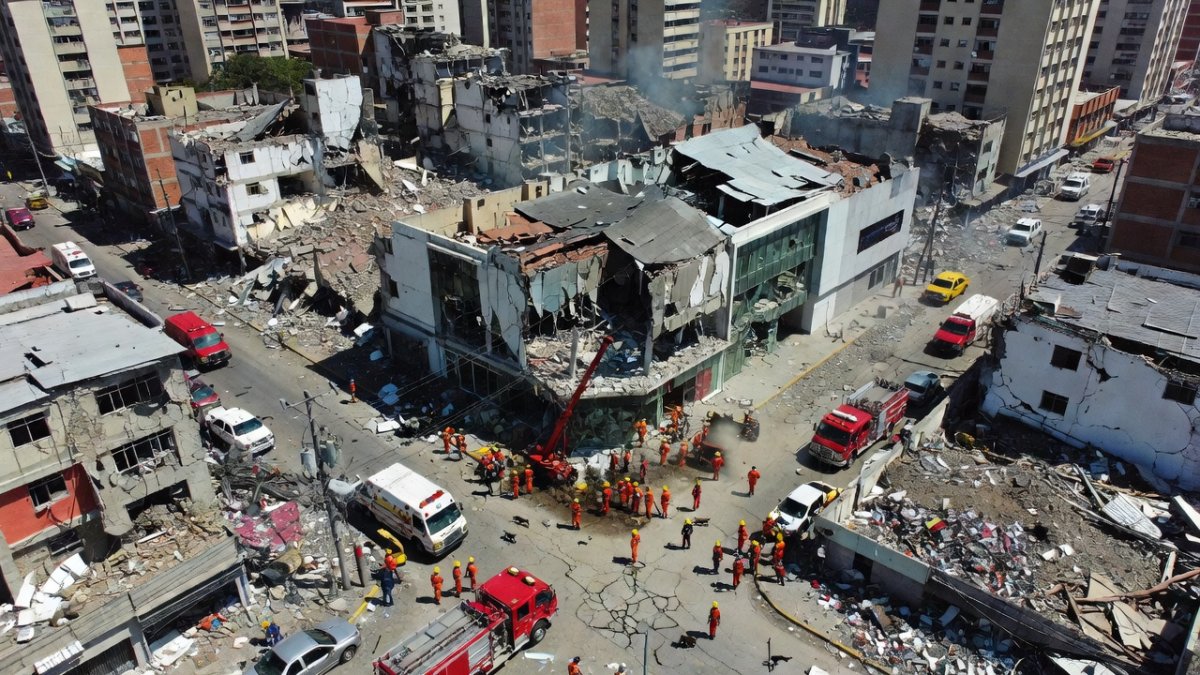 US DART specialists, LA County Fire Department personnel and French Civil Security experts coordinated the delicate extrication. Flores later described hearing the drones overhead and tapping on pipes to signal his location. His survival boosted morale among search teams facing mostly grim outcomes. Medical staff stabilized him before transfer to a field hospital. The case demonstrated the value of advanced technology combined with traditional listening techniques. Mexican rescue veterans recalled similar dramatic extractions during the 2017 earthquake. Flores’s family credited international cooperation for his survival. His story has been shared widely by Venezuelan migrants in Mexico as a symbol of hope.
International Rescue Teams Deploy Advanced Technology
Search operations benefited from the arrival of US DART teams, LA County Fire specialists and French Civil Security units equipped with micro drones capable of navigating tight rubble spaces. These drones transmitted real-time video and thermal images, allowing teams to prioritize locations with potential survivors. Canine units worked alongside the technology, but drones proved especially effective in unstable structures. Coordination centers in Caracas integrated data from multiple nations for the first time in recent Venezuelan history. Mexican Protección Civil observers participated in technical briefings, sharing lessons from past deployments. The use of drones reduced risk to human rescuers while increasing coverage area each day. Fuel shortages occasionally hampered operations, requiring creative logistics solutions. Training exchanges between Venezuelan and foreign teams are expected to continue after the acute phase. The successful rescues validated the investment in modern search equipment.
Mexico Monitors Crisis Drawing on 1985 and 2017 Memories
The Sheinbaum administration activated monitoring protocols within hours of the first reports, recalling Mexico’s painful experiences in 1985 and 2017. Protección Civil and SEDENA placed specialized units on standby for possible deployment. Mexican seismic networks shared real-time data with Venezuelan counterparts. Community organizations in Mexico City began collecting donations within 24 hours. The historical memory of our own disasters has created strong empathy and practical knowledge that now informs Mexico’s supportive stance. Officials emphasize that any assistance will respect Venezuelan sovereignty while meeting urgent humanitarian needs. 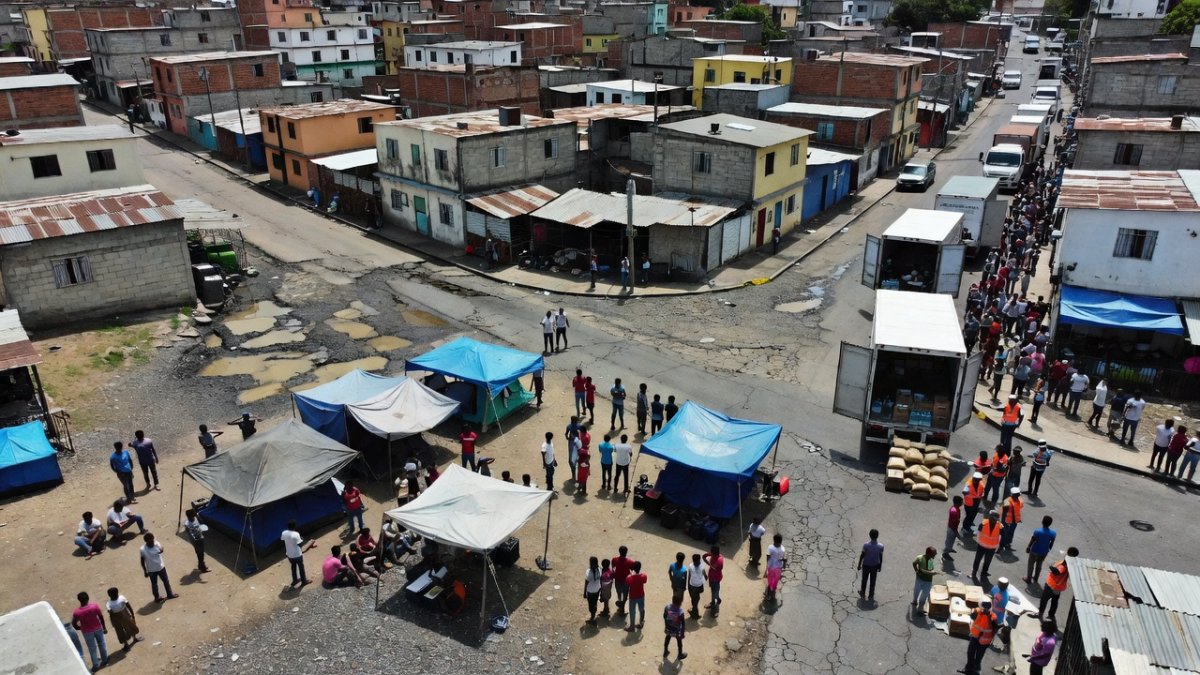 Regular briefings keep the Mexican public informed of developments. Past cooperation through energy ties between PEMEX and PDVSA provides additional channels for dialogue. Mexico’s response reflects both solidarity and hard-won expertise.
Venezuelan Migrants in Mexico Organize Community Support
Venezuelan migrants living in Mexico City, Tijuana and Monterrey quickly mobilized collection centers and remittance campaigns to assist relatives affected by the quakes. Many had already established informal networks through years of displacement. Community drives collected clothing, medicine and non-perishable food for shipment via commercial flights. Local Mexican families joined the efforts, strengthening cross-cultural bonds. Remittances, already a lifeline for many Venezuelan households, surged in the days following the disaster. Migrants also shared technical knowledge gained from Mexico’s earthquake drills. These grassroots actions complement official diplomatic channels. Stories of solidarity have circulated widely on social media, countering narratives of division. The migrant response underscores the transnational nature of the crisis.
By Rosa Martinez, Staff Writer
This article was produced with AI-assisted research and editorial support. Reporting is based on sources cited in the article.
What's Your Reaction?
 Like
0
Like
0
 Dislike
0
Dislike
0
 Love
0
Love
0
 Funny
0
Funny
0
 Wow
0
Wow
0
 Sad
0
Sad
0
 Angry
0
Angry
0
Latin America/Andes Correspondent at Global1.News. Based in Bogota, covering politics, environment, energy, and social movements across the Andean region. Passionate about environmental journalism and communities protecting their land.









Comments (0)