
British Steel Nationalisation: China's Strategic Response
The United Kingdom’s seizure of British Steel through the Steel Industry (Nationalisation) Act 2026 has triggered an unusually sharp rebuke from Beijing, exposing the deepening friction between Western efforts to secure strategic industries and China’s defence of its overseas investments. China’s Ministry of Commerce condemned the move as a direct assault on Chinese commercial interests, warning of further countermeasures.
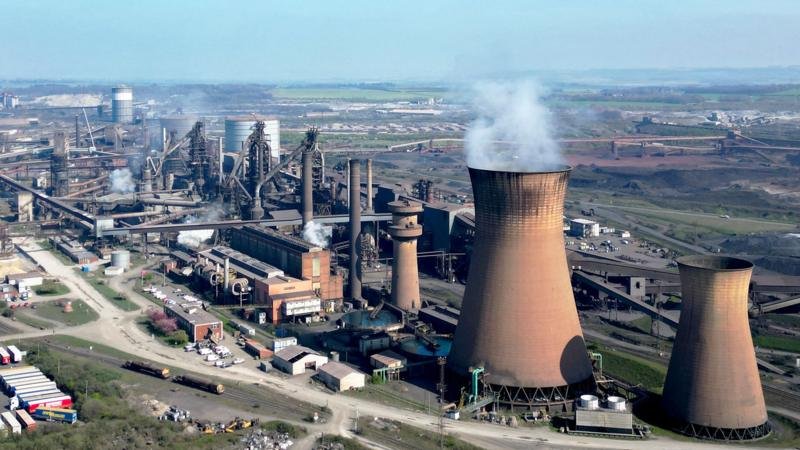
The United Kingdom’s seizure of British Steel through the Steel Industry (Nationalisation) Act 2026 has triggered an unusually sharp rebuke from Beijing, exposing the deepening friction between Western efforts to secure strategic industries and China’s defence of its overseas investments. China’s Ministry of Commerce condemned the move as a direct assault on Chinese commercial interests, warning of further countermeasures. The episode marks a significant escalation in the politicisation of critical materials supply chains.
British Steel Nationalisation: China's Strategic Response to a Strategic Challenge
Beijing, China — Article continues...
The nationalisation decision and its immediate aftermath
On July 16, 2026, the Steel Industry (Nationalisation) Act 2026 received royal assent, formally bringing British Steel into public ownership. The UK government framed the move as a necessary step to protect a critical industrial asset amid concerns over supply chain resilience. Immediate reactions from Scunthorpe highlighted both relief among some workers and uncertainty for the Jingye Group, which had owned the firm since 2020. The Department for Business and Trade issued statements underscoring that the transition would maintain operations while addressing long-term viability.
MOFCOM's official response and diplomatic protest
China's Ministry of Commerce (MOFCOM) spokesperson expressed that Beijing "firmly opposes and is strongly dissatisfied" with the nationalisation. The statement demanded fair treatment of Chinese enterprises operating in the United Kingdom and called for dialogue to resolve the matter. MOFCOM emphasised that such actions undermine investor confidence and run counter to principles of open economic cooperation. Diplomatic channels have been activated to convey these concerns directly to UK counterparts.
MOFCOM spokesperson He Yadong employed unusually direct language on 17 July 2026, stating that the United Kingdom had “seriously undermined the legitimate rights and interests of Chinese enterprises” and that Beijing would “take all necessary measures to safeguard its interests.” This phrasing, echoed by Foreign Ministry spokesperson Mao Ning the following day, signalled a coordinated inter-ministerial posture rather than routine trade friction. The statements referenced both the 2021 UK-China Joint Statement on Trade and Investment and the 1986 Bilateral Investment Treaty, framing the nationalisation as a breach of “mutual respect and non-discrimination” principles. Diplomatic channels were activated immediately. The Chinese Embassy in London delivered a formal démarche to the Foreign, Commonwealth and Development Office on 18 July, while MOFCOM requested urgent consultations under the trade and investment dialogue mechanism established in 2022. Although WTO dispute settlement remains an option, Beijing has so far prioritised bilateral pressure to avoid setting a precedent that could be cited by other members. Beyond steel, the episode risks collateral damage to £18 billion in annual bilateral services trade and ongoing negotiations on a renewed financial-services memorandum, areas where City of London institutions have lobbied for continued Chinese market access.
The timeline from emergency intervention to full nationalisation
The sequence began in March 2025 with Jingye Group's consultation process on the future of its UK assets. By April 2025, the UK government assumed emergency control of the Scunthorpe site. A nationalisation bill was introduced in May 2026, followed by Jingye Group initiating compensation proceedings under the UK-China Bilateral Investment Treaty in June 2026. Royal assent on July 16, 2026, completed the legal transfer, marking a phased approach rather than an instantaneous shift.
Jingye Group's investment and compensation claims under the UK-China BIT
Jingye Group acquired British Steel in 2020 and has since invested in modernisation efforts at the Scunthorpe facility. The company has formally launched arbitration proceedings under the UK-China Bilateral Investment Treaty to seek compensation for the loss of its asset. Jingye representatives have stated that the nationalisation constitutes an expropriation requiring adequate remedy, while continuing to monitor the treaty's dispute resolution mechanisms.
Since acquiring British Steel in 2020 for £70 million, Jingye Group committed more than £1.2 billion to the Scunthorpe works, including a new electric-arc furnace, hydrogen-ready reheating systems, and digital-twin process controls certified under the UK’s Industrial Decarbonisation Strategy. These capital expenditures, documented in annual filings with Companies House, form the core of any compensation claim. Jingye’s June 2026 notice of arbitration under the 1986 UK-China BIT invokes the investor-state dispute settlement clause (Article 7), requesting appointment of a three-member tribunal through the Permanent Court of Arbitration in The Hague. Valuation disputes will centre on the difference between the asset’s going-concern value and the compensation ultimately offered by the UK government. Precedent from cases such as Ping An v. Belgium suggests tribunals may award discounted cash-flow projections adjusted for political risk, potentially reaching several hundred million pounds. The outcome will be closely watched by other Chinese state-linked investors in Europe; analysts at the Mercator Institute for China Studies note that a low award could accelerate divestment from UK critical materials, while a substantial settlement might encourage further litigation against similar nationalisation measures.
The economic stakes — Scunthorpe steelworks, employment, supply chains
The Scunthorpe steelworks directly employs approximately 2,700 workers, with an additional 4,000 jobs potentially at risk across the regional supply chain. The facility plays a role in UK manufacturing sectors including construction and automotive production. Nationalisation aims to stabilise these operations, yet the transition raises questions about future investment levels and integration into broader European steel markets.
UK national security rationale and the new Steel Industry Act
The UK Department for Business and Trade justified the action on national security grounds, describing British Steel as a "vital national capability." The Steel Industry (Nationalisation) Act 2026 provides the legal framework for public ownership while incorporating safeguards against foreign control of strategic materials. This reflects a reactive posture toward economic security that prioritises domestic oversight of critical industries.
The Steel Industry (Nationalisation) Act 2026 grants the Secretary of State explicit powers to acquire designated steel assets, issue directions on production priorities, and restrict foreign equity above 25 percent without prior approval. Schedule 3 introduces a statutory definition of “vital national capability” that encompasses not only defence-grade steel but also plate for offshore wind and low-carbon transport infrastructure. This language mirrors the “critical technology” criteria used by the Committee on Foreign Investment in the United States and the European Union’s Foreign Subsidies Regulation, yet goes further by enabling outright public ownership rather than mitigation orders alone. The measure reflects a reactive turn in UK economic security policy. Unlike the proactive investment-screening regime introduced by the National Security and Investment Act 2021, the 2026 statute was drafted after emergency control had already been exercised, illustrating how acute supply concerns can override earlier market-oriented frameworks. Think-tank assessments from the Royal United Services Institute suggest this approach may deter future foreign capital while offering limited long-term technological upgrading unless accompanied by sustained public R&D commitments.
Broader implications for China-UK economic relations and Chinese overseas investment
The episode signals heightened scrutiny of Chinese investments in Western strategic sectors, potentially affecting future projects in infrastructure and manufacturing. China's foreign policy doctrine of mutual benefit may face challenges as UK policy evolves, prompting Beijing to recalibrate its approach to overseas acquisitions. Analysts note that this case could influence how Chinese firms assess political risks in similar jurisdictions.
Chinese foreign direct investment into the United Kingdom fell 37 percent year-on-year in the first half of 2026, according to data compiled by the China-Britain Business Council, with greenfield manufacturing projects most affected. The British Steel case has intensified due-diligence requirements for Chinese bidders in ports, semiconductors and life sciences, sectors already under enhanced scrutiny following the 2020 Huawei 5G exclusion and ongoing reviews of Nexperia’s Newport facility. Institutional investors now price an elevated “expropriation premium” into UK assets, lengthening negotiation timelines and raising required rates of return. Beijing is recalibrating its Global Development Initiative outreach accordingly. Rather than pursuing controlling stakes in strategic infrastructure, policy banks are shifting toward minority equity, technology-licensing agreements and third-market joint ventures that reduce political exposure. For the United Kingdom, post-Brexit trade strategy faces a narrowing corridor: retaining access to Chinese capital and export markets while satisfying domestic demands for supply-chain sovereignty.
Comparative analysis — how other Western nations are handling Chinese ownership of strategic industries
Similar trends appear across Western economies, where governments are tightening reviews of foreign ownership in steel, semiconductors, and energy. The European Union has advanced its foreign subsidies regulation, while the United States continues to apply enhanced Committee on Foreign Investment scrutiny. These measures illustrate a global shift toward protecting strategic industries without fully closing markets, a pattern that aligns with China's own emphasis on industrial self-reliance in key sectors.
By Prof. Marcus Chen, Staff Writer
This article was produced with AI-assisted research and editorial support. Reporting is based on sources cited in the article.
What's Your Reaction?
 Like
0
Like
0
 Dislike
0
Dislike
0
 Love
0
Love
0
 Funny
0
Funny
0
 Wow
0
Wow
0
 Sad
0
Sad
0
 Angry
0
Angry
0

World Politics Analyst at Global1.News. Based in Beijing, covering US-China relations, global trade, and geopolitical strategy. Brings deep analytical perspective to the power dynamics shaping international affairs.














Comments (0)