
UK Heatwave 2026: 2,700 Deaths as Wildfires Spread Across Britain
The United Kingdom is enduring its third heatwave of 2026, now stretching toward the two-week mark, while wildfires rage across nineteen locations and the Met Office warns this could become the longest such spell since 1976. With temperatures already surpassing historic benchmarks and health systems buckling under unprecedented demand, the crisis has exposed deep vulnerabilities in infrastructure, agriculture and emergency response.
The United Kingdom is enduring its third heatwave of 2026, now stretching toward the two-week mark, while wildfires rage across nineteen locations and the Met Office warns this could become the longest such spell since 1976. With temperatures already surpassing historic benchmarks and health systems buckling under unprecedented demand, the crisis has exposed deep vulnerabilities in infrastructure, agriculture and emergency response. Experts attribute much of the severity to human-induced climate change that has made such extremes at least ten times more likely.
UK Heatwave Surpasses 1976 Record With 2,700 Deaths
London, UK — The Office for National Statistics has confirmed more than 2,700 excess deaths in England and Wales during the May and June heatwaves, while wildfires burn across nineteen UK locations and the nation enters its third heatwave of the year.
Heatwave Surpasses 1976 Drought Benchmark
The current heatwave has already surpassed the grim benchmark set by the 1976 drought, when 2,500 excess deaths were recorded across England and Wales amid prolonged water shortages. Hosepipe bans now cover Kent, Hampshire and the Isle of Wight, with Southern Water imposing strict usage limits that prohibit garden watering and car washing, while reservoirs in the south-east sit at just 42 per cent capacity. These restrictions echo the 1976 crisis yet arrive against a backdrop of population growth and intensified agricultural demand. Farming communities face acute pressure as wheat and barley yields in East Anglia are projected to fall by up to 18 per cent, according to Defra harvest estimates. Rail operators have imposed speed restrictions of 50 mph on key lines including the West Coast Main Line to prevent track buckling, causing widespread delays. Supermarket chains report that 50 per cent of cold-storage warehouses have experienced refrigeration failures, leading to spoilage of fresh produce worth millions.
Record Temperatures Reshape Daily Life
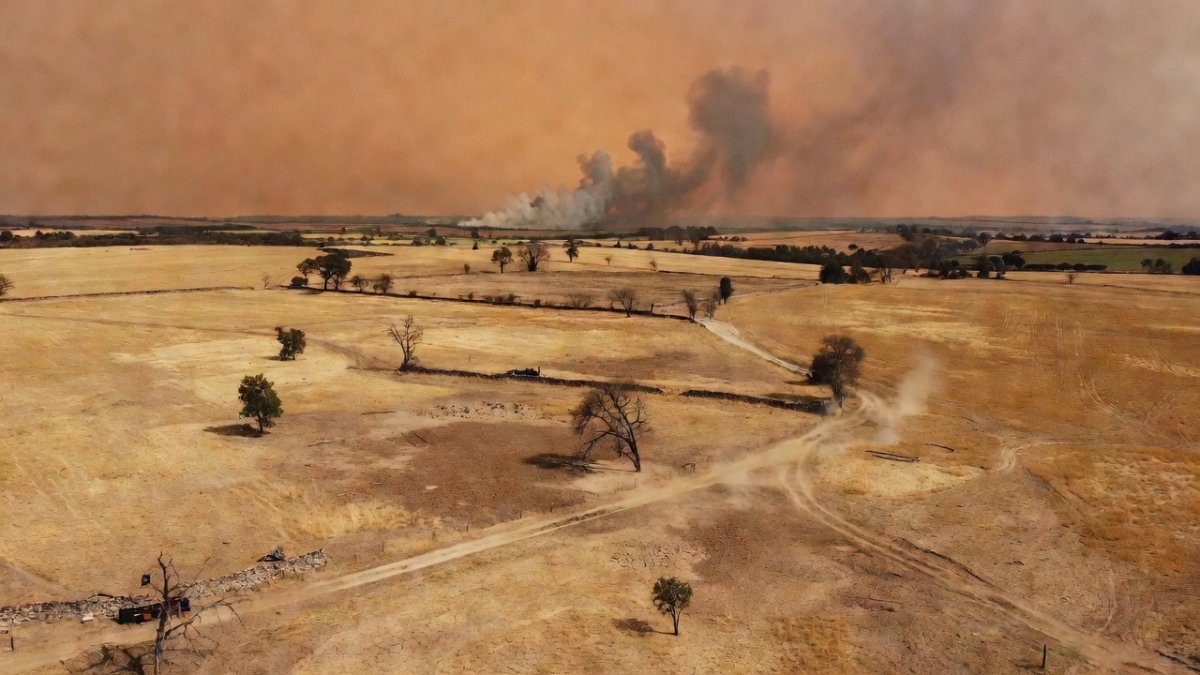
Temperatures reached 37.7°C at Lingwood on Strumpshaw Hill in Norfolk on 26 June, part of a year that has already recorded six separate days above 35°C. Eight days have now exceeded 34°C, surpassing the previous records set in 2020 and 1976. Twenty-five non-consecutive days of extreme heat have already been logged, forcing hosepipe bans from South East Water in Kent and Southern Water across Hampshire and the Isle of Wight. The UK Health Security Agency's heat-health alert system issued its highest-level warnings for 12 consecutive days. This death toll already exceeds the 2,803 deaths attributed to the 2022 heatwaves, underscoring a worsening trend.
More Than 2,700 Excess Deaths Linked to Heat
The Office for National Statistics and UK Health Security Agency estimate more than 2,700 excess deaths occurred in England and Wales during the May and June heatwaves alone. Around 550 people died between 21 and 29 May, while approximately 2,200 perished in the 18-28 June period. Professor Friederike Otto of Imperial College London states that climate change added 3-4°C to maximum temperatures and is responsible for roughly 42 per cent of those fatalities. Attribution studies demonstrate that such events are now at least ten times more likely due to human-induced climate change. NHS England has incurred an estimated £720 million in additional costs from heat-related admissions.
NHS and Emergency Services Under Unprecedented Strain
NHS England recorded average A&E attendances exceeding 80,000 for the first time in June. The South Central Ambulance Service reported a 118 per cent surge in 999 calls for defibrillators. More than 1,000 schools closed or operated on reduced timetables, while rail operators imposed speed restrictions to prevent track buckling. Average ambulance response times for category-two emergencies stretched to 42 minutes in London and the Midlands, breaching targets by more than double. A&E departments recorded median waits of seven hours and 50 minutes, with several trusts declaring critical incidents. Health Secretary Steve Barclay emphasised individual responsibility in a Downing Street briefing, urging vulnerable groups to stay hydrated while stopping short of additional NHS emergency funding.
European Wildfires Mirror UK Firewave
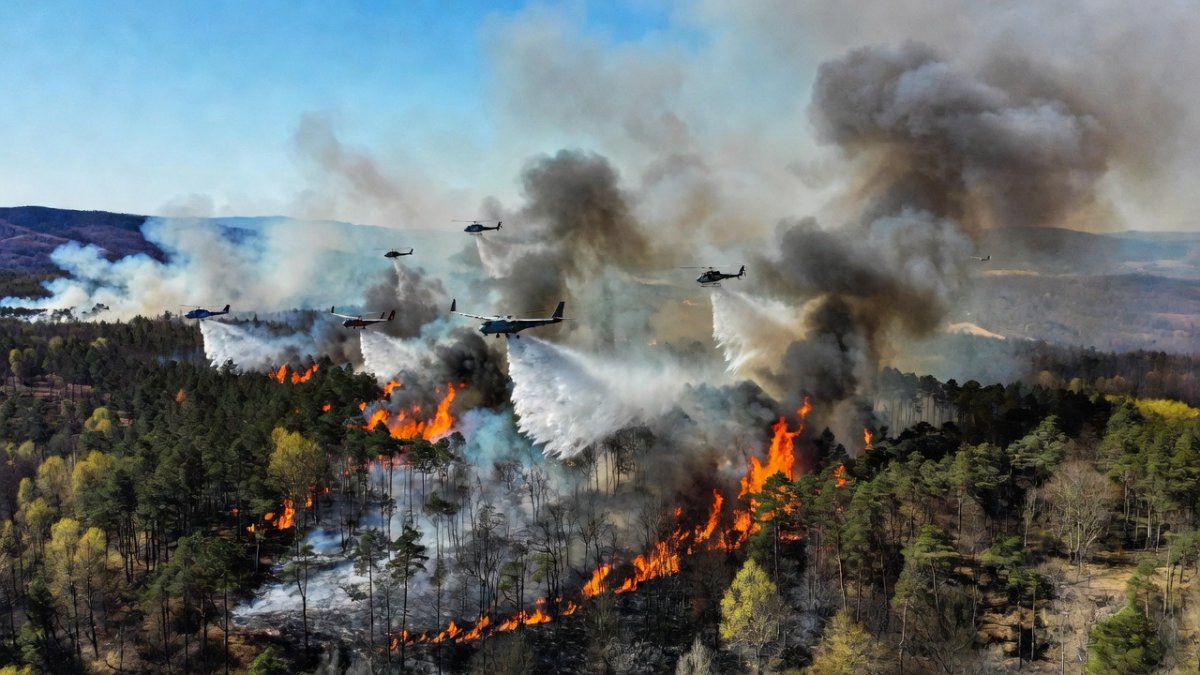
Across the Channel, 42,000 acres burned in Spain, France and Portugal during early July. The Fontainebleau forest near Paris required water-dumping aircraft operating from the Seine, with 3,800 hectares scorched south-east of the capital. The blaze forced the temporary shutdown of two reactors at the nearby Nogent nuclear plant after cooling-water temperatures exceeded safe limits. Belgium recorded 1,747 excess deaths in June; Germany recorded 5,120. The European death toll could exceed 20,000. The same "firewave" conditions now threaten nineteen UK sites, with firefighters warning that even small sparks can rapidly develop into large blazes under current conditions.
Political Response and Economic Impact
Downing Street has so far resisted calls to declare a national emergency. Defra ministers have issued updated heat-health alerts through the UK Health Security Agency, with Environment Secretary Thérèse Coffey announcing £15 million for local authority cooling initiatives — a sum critics note falls well below the £200 million requested by the Local Government Association for retrofitting public buildings. Household budgets face immediate pressure: energy regulator Ofgem data shows average daily electricity use for fans and portable air-conditioning units has risen by 18 per cent in southern regions, adding roughly £12 to monthly bills. Crop failures in East Anglia have pushed lettuce and berry prices up 22 per cent at major supermarkets, compounding existing cost-of-living strains. Water companies including Thames Water have imposed temporary use bans that coincide with planned bill increases of 4.5 per cent from October.
Global Climate Context and Adaptation Failures
Channel 4 News reports June 2026 became Western Europe's hottest June on record, according to Copernicus and the World Meteorological Organization, which has confirmed Europe as the fastest-warming continent with average temperatures rising at twice the global rate since 1980. The Met Office describes these conditions as the "new normal." Professor Otto warns: "Climate today is not stable — what is 'normal' keeps shifting." Long-term adaptation measures remain piecemeal. Building regulations updated in 2022 require new homes to limit overheating, yet the policy applies only to developments approved after June 2023 and exempts most existing stock. Heat-pump adoption has stalled at under 50,000 installations annually, while cooling centres opened in libraries and leisure facilities during this spell often fail to reach the most deprived postcodes where heat-related mortality is highest.
The Bottom Line — What Comes Next
Defra convened emergency Cobra-style meetings last week to coordinate water allocation and agricultural support, yet long-term adaptation plans remain fragmented. Experts warn that if the heatwave persists into September, further crop failures and health-system strain could push total economic losses beyond £4 billion. Southern European nations offer clearer models for what the UK could adopt: France's nationwide "Plan Canicule" deploys automatic cooling centres and SMS alerts, cutting excess deaths by an estimated 4,000 during the 2019 heatwave, while Spain's Madrid has mandated reflective roofing on public buildings. Without comparable statutory frameworks, Britain risks repeating costly reactive responses each summer. Sustained investment in urban green infrastructure, resilient transport networks and targeted protection for at-risk groups will be essential — otherwise, each successive summer threatens to normalise disruption on a scale previously considered exceptional.
By Erica Thornton, Staff Writer
This article was produced with AI-assisted research and editorial support. Reporting is based on sources cited in the article.
What's Your Reaction?
 Like
0
Like
0
 Dislike
0
Dislike
0
 Love
0
Love
0
 Funny
0
Funny
0
 Wow
0
Wow
0
 Sad
0
Sad
0
 Angry
0
Angry
0

US Politics and Policy Correspondent at Global1.News. Based in Washington DC, covering American politics, policy, elections, and the courts. Knows how the system works and tells you what it actually means.













Comments (0)