
US-Iran War Night 7: Iran Strikes Kuwait as Blockade Bites
After seven nights of US strikes on Iran, the conflict escalates as Iran retaliates by targeting Kuwait's power, water, and oil facilities, leading to a Hormuz blockade, oil prices surging to $120 per barrel, 38 deaths, over 400 wounded, and 10,000 without water in Iran amid a diplomatic impasse.
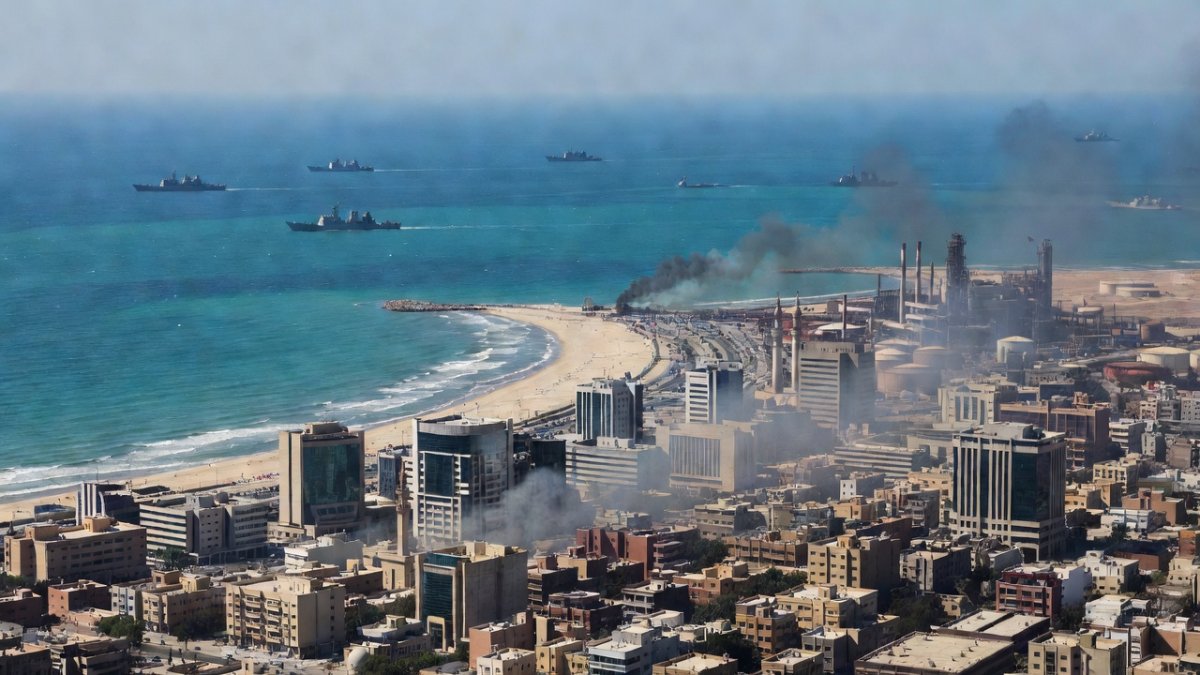
The seventh night of US strikes has pushed the US-Iran war into a dangerous new phase. Iran responded by striking Kuwait with direct hits on power, water, and oil infrastructure, while the naval blockade tightens and civilian suffering intensifies. This is no longer contained escalation—it is open regional combustion on day 141.
US-Iran War Night 7: Iran Strikes Kuwait as Blockade Bites
Washington, D.C. — Article continues...
The Latest Strikes
Night seven of US strikes targeted Iranian military sites across Hormozgan, Bushehr, Sistan and Baluchestan, and Khuzestan provinces. Bridges, road tunnels, surveillance sites, underground weapons depots, and maritime assets were struck. CENTCOM described the operations as degrading capabilities and enforcing the naval blockade on Iranian ports. GlobalSecurity.org confirms ongoing strikes on bridges, tunnels, and surveillance nodes. Army Recognition reported precision strikes on the Bandar Abbas road bridges, the Qeshm Island access tunnel, and an S-200 surface-to-air missile launcher near Bushehr. CENTCOM stated the operations were intended to further degrade Iran's integrated air defenses and port logistics, extending the campaign beyond the initial February 28, 2026 strikes that killed Supreme Leader Khamenei.
Iran's Retaliation
Iran responded with drones and missiles striking US allies Kuwait, Bahrain, and Jordan. Health ministry spokesperson Hossein Kermanpour reported at least 38 killed and over 400 wounded inside Iran from the American strikes. Al Jazeera and Reuters confirmed the figures. Iranian retaliation employed Shahed-136 drones alongside Sejjil and Emad ballistic missiles, with documented launches striking Kuwaiti power and desalination plants as well as reported near-misses on Saudi facilities and intercepts over Bahrain and Jordan. The IRGC framed the attacks as defensive measures against U.S. aggression, while the regime has used the conflict to justify renewed crackdowns on dissent that began after the February 28, 2026 massacre of anti-government protesters.
Kuwait Under Fire
Kuwait sustained the heaviest impact. A power plant and water desalination facility were struck and set ablaze. The airport suspended all flights, and an oil facility sustained damage, with several military personnel wounded. Bloomberg reported the escalation of these attacks following the latest US operations. Kuwait's airport closure and strikes on its power and desalination plants have exposed the fragility of Gulf Cooperation Council infrastructure, while Bahrain's reported interceptions of Iranian drones and Jordan's border attacks signal widening spillover that could fracture regional alliances. These incidents threaten to destabilize monarchies balancing domestic dissent with external security guarantees, potentially triggering refugee flows and renewed sectarian tensions across the Arabian Peninsula.
The Hormuz Blockade
The naval blockade is in full enforcement. CENTCOM is restricting access to Iranian ports while the Strait of Hormuz remains under pressure. The ceasefire collapsed July 8 after Iran allegedly struck commercial ships there. Analysts at Asia Times noted that President Trump lacks viable escalation options short of a full ground invasion or acceptance of a prolonged ceasefire, with continued airstrikes risking further closure of the Strait of Hormuz for weeks or months.
Economic Shockwaves
Oil prices spiked to $120 a barrel in April, and global reserves face mounting strain. The Washington Post reported that strikes are widening and hitting critical infrastructure on both sides. The economic effects reach consumers from Atlanta gas stations to European factories. The Strait of Hormuz remains the critical chokepoint where roughly 20 percent of global oil shipments transit daily, and the ongoing US naval blockade has already pushed Brent crude to $120 per barrel as of April, with analysts warning that sustained disruptions could drain strategic reserves faster than OPEC+ can replenish them. Chevron's reported consideration of rerouting Iraqi crude through alternative pipelines underscores how energy majors are adjusting to mitigate risks, yet these workarounds face their own logistical bottlenecks and higher costs. With inventories already stretched thin across Europe and Asia, any prolonged closure threatens stagflationary pressures from Atlanta gas stations to Asian manufacturing hubs. Sustained disruption could exhaust global strategic petroleum reserves within 45 days, driving Brent crude beyond $180 per barrel and triggering stagflation across import-dependent Asian economies.
Diplomatic Dead End
Diplomatic channels remain ineffective. No serious talks are underway, only continued strikes and counter-strikes. The July 8 collapse of the ceasefire left diplomatic channels in ruins, with Iran's top negotiator Ghalibaf still floating the possibility of renewed talks even as US forces intensified strikes. President Trump's public stance has offered little room for compromise, and Asia Times analysis highlights the absence of viable escalation ladders that avoid catastrophic miscalculation. Without credible back-channel mechanisms or third-party mediators, both sides appear locked into a cycle where each kinetic response further erodes the political space needed for de-escalation. The pattern is clear: each side doubles down, civilians bear the costs, and the region faces escalating risks.
The Human Cost
In Iran's Hormozgan province, 10,000 people lost access to water after a desalination plant was struck. The Guardian and AP reported that the renewed strikes killed at least 38 and wounded hundreds more. Inside Iran, the confirmed toll of 38 dead and more than 400 wounded from precision strikes on critical infrastructure raises urgent legal and ethical questions under international humanitarian law, particularly when desalination facilities serving 10,000 civilians in Hormozgan province are rendered inoperable. Targeting water and power systems transforms essential civilian lifelines into instruments of pressure, accelerating humanitarian crises that could produce long-term public-health emergencies and displacement. Independent monitors have documented how such degradation of basic services compounds the suffering of non-combatants already navigating an economy under blockade. In Hormozgan province, the loss of desalination capacity for 10,000 residents projects a humanitarian emergency within 30 days, including widespread dehydration, cholera outbreaks, and mass displacement as documented in similar past conflicts by the International Committee of the Red Cross. Wikipedia's "2026 Iran war" entry records that civilian infrastructure strikes have already produced over 2,000 internal refugees in southern Iran since the initial U.S.-Israeli operations.
The War's Bloody Origins
The conflict's roots trace back to widespread anti-government protests that erupted across Iran in late 2025, fueled by economic hardship and political repression. According to Wikipedia's "2026 Iran war" page and BBC's detailed timeline, these demonstrations intensified after security forces opened fire on crowds in multiple cities, resulting in a massacre that claimed hundreds of lives. This brutal crackdown prompted a coordinated US-Israeli military response, with initial strikes on February 28, 2026, that reportedly killed Supreme Leader Ayatollah Khamenei and several top military officials, marking the formal onset of hostilities.
Internationally, reactions have been swift and divided. The United Nations has issued urgent calls for de-escalation, with the Security Council convening emergency sessions to address potential violations of international law. The European Union has condemned the violence while advocating for diplomatic solutions and imposing targeted sanctions. Meanwhile, China and Russia have expressed support for Iran's sovereignty, with Beijing urging restraint to protect regional trade routes and Moscow providing rhetorical backing. India has called for immediate ceasefire talks to safeguard energy supplies and diaspora communities.
In Hormozgan province, the plight of 10,000 residents without access to clean water underscores the war's devastating civilian toll. Daily life has ground to a halt as families ration meager supplies from contaminated sources, leading to widespread dehydration and outbreaks of waterborne diseases like cholera. Children and the elderly are particularly vulnerable, with hospitals overwhelmed by cases of dysentery and malnutrition. This localized crisis signals a broader humanitarian catastrophe, as disrupted infrastructure threatens to displace millions more across the region.
What Comes Next
De-escalation pathways remain narrow. Sustained diplomatic engagement through third-party mediators or back-channel communications could create openings, yet both sides continue to prioritize military responses. Observers should monitor whether the naval blockade expands further, whether additional civilian infrastructure is targeted, and whether regional actors such as Saudi Arabia or Oman attempt to broker limited ceasefires. The stakes include prolonged closure of the Strait of Hormuz, accelerated humanitarian emergencies across southern Iran and the Gulf states, and the risk that miscalculation draws additional powers into direct confrontation. Without credible off-ramps, the conflict risks entrenching a cycle of retaliation that further erodes prospects for regional stability.
By Jessica Ali, Staff Writer
This article was produced with AI-assisted research and editorial support. Reporting is based on sources cited in the article.
What's Your Reaction?
 Like
0
Like
0
 Dislike
0
Dislike
0
 Love
0
Love
0
 Funny
0
Funny
0
 Wow
0
Wow
0
 Sad
0
Sad
0
 Angry
0
Angry
0

Editor-in-Chief at Global1.News. Atlanta-based journalist who cuts through the BS and tells it like it is. Lead anchor, host, and the voice you hear when the spin stops and the truth starts.











Comments (0)