
Nobel Laureate Yaghi Leads AI Materials Institute at Tsinghua
In a significant move signaling shifting global research dynamics, Nobel Laureate Omar Yaghi has relocated from UC Berkeley to Tsinghua University to head a new AI-integrated materials institute. This transition highlights China's strategic push to attract top talent amid evolving US science funding landscapes. Yaghi's expertise in metal-organic frameworks will now drive accelerated discoveries in sustainable technologies through AI and robotics.
In a significant move signaling shifting global research dynamics, Nobel Laureate Omar Yaghi has relocated from UC Berkeley to Tsinghua University to head a new AI-integrated materials institute. This transition highlights China's strategic push to attract top talent amid evolving US science funding landscapes. Yaghi's expertise in metal-organic frameworks will now drive accelerated discoveries in sustainable technologies through AI and robotics.
Nobel Laureate Yaghi Leads AI Materials Institute at Tsinghua
Beijing, China — Article continues...
Yaghi's Background and Path to Tsinghua
The research conducted by Omar Yaghi on metal-organic frameworks has transformed the field of materials science by enabling precise control over molecular structures for applications ranging from gas storage to environmental remediation. His development of water harvesting technology from desert air stands out as a breakthrough that allows extraction of potable water from atmospheric moisture under extremely arid conditions, offering solutions to water scarcity in regions previously considered uninhabitable for such purposes. This work builds on decades of foundational studies that have influenced global research agendas in sustainable technologies.
Yaghi's personal journey from a Palestinian refugee background to achieving US citizenship underscores the role of immigrant talent in advancing American scientific leadership. Tsinghua University has strategically cultivated this relationship, beginning with his appointment as honorary professor in 2022 and culminating in his election as a foreign member of the Chinese Academy of Sciences in 2025, positioning the institution to leverage his expertise for domestic innovation priorities.
Prof. Omar M. Yaghi, aged 61 and born in Palestine before immigrating to the United States, brings decades of pioneering work in reticular chemistry to his new position. His appointment as Chair Professor at Tsinghua was formalized through an official ceremony on July 3, 2026, following his earlier roles as Honorary Professor at the institution since 2022 and Foreign Member of the Chinese Academy of Sciences since 2025. These prior affiliations provided the foundation for deeper engagement. Yaghi's move aligns with China's emphasis on attracting established researchers whose work supports national priorities in advanced materials and emerging technologies. Tsinghua University's official announcement underscores the strategic nature of this recruitment, positioning Yaghi to contribute directly to domestic innovation ecosystems.
Launch of the AIMATRY Institute
The launch of the AIMATRY Institute marks a decisive shift toward integrating artificial intelligence and robotics into materials discovery pipelines. Traditional trial-and-error methods often require years to decades for meaningful progress, whereas AI-driven screening compresses these timelines to weeks or months through systematic evaluation of vast chemical spaces. Specific applications include carbon capture, hydrogen storage, and catalysis for green chemistry, each benefiting from accelerated identification of viable candidates.
Integration with China's existing AI infrastructure investments further amplifies these capabilities, allowing the institute to draw on national computational resources and data ecosystems already optimized for large-scale modeling. This convergence reduces experimental bottlenecks and supports iterative refinement at speeds unattainable in conventional laboratory settings, thereby reshaping competitive dynamics in advanced materials development.
The newly established AIMATRY (AI x Materials x Chemistry) Institute at Tsinghua will focus on deploying artificial intelligence and robotics to accelerate materials discovery and synthesis. According to details shared in the CGTN interview, the institute aims to compress traditional development cycles by orders of magnitude through automated experimentation and predictive modeling. Yaghi's established research on metal-organic frameworks for harvesting water from desert air offers a concrete application area. This work demonstrates how porous materials can address resource challenges in arid regions, connecting fundamental chemistry to practical outcomes in sustainability.
Context of US Science Funding Shifts
Trump administration budget cuts to NSF and NIH reflect a broader trend of constrained federal support for basic research, raising concerns about long-term capacity in the United States. With 40 percent of recent US Nobel winners being immigrants, the potential for accelerated brain drain has become a focal point of strategic analysis. In contrast, China's steady R&D spending increases under the 14th Five-Year Plan demonstrate consistent prioritization of scientific infrastructure.
Frameworks administered through MOFCOM and NDRC provide structured channels for tech investment that complement initiatives such as the Thousand Talents Plan. These mechanisms facilitate targeted recruitment of elite researchers, creating institutional pathways that align individual expertise with national development objectives and intensify competition for high-impact talent.
Yaghi's relocation occurs against a backdrop of reduced federal support for basic research in the United States under the current administration. Reports from Nature (d41586-026-02143-x) and the New York Times frame this transition as part of a measurable trend in which senior researchers are evaluating opportunities outside traditional American institutions. China's Thousand Talents Plan and related national initiatives have operated for years to draw international expertise by offering dedicated resources and long-term stability. These programs prioritize fields with dual civilian and strategic value, allowing recruited scholars to scale projects that might face constraints elsewhere.
Convergence of AI and Materials Science
The AIMATRY Institute exemplifies the strategic convergence of artificial intelligence with chemistry and materials engineering. Traditional materials development has relied on sequential trial-and-error processes that span years or decades. AI-driven approaches enable simultaneous screening of vast chemical spaces, robotic synthesis platforms, and real-time optimization loops. This domain carries implications for energy storage, catalysis, and environmental remediation. For China, leadership in such integrated research supports broader objectives under the Dual Circulation strategy, reducing reliance on imported technologies while exporting standards in AI-enabled manufacturing. The timing coincides with the 2026 World AI Conference in Shanghai, where discussions on governance frameworks further embed these technical advances within national policy.
Strategic Calculus in US-China Research Competition
This development extends beyond the relocation of a single scientist to encompass broader geopolitical competition in research leadership. The US CHIPS and Science Act seeks to bolster domestic capabilities, yet it faces direct comparison with China's coordinated AI development plans that emphasize convergence between artificial intelligence and fundamental science. Competition for talent at this intersection carries direct implications for semiconductor materials, battery technology, and rare earth processing.
Second-order effects are already visible among European research institutions such as Max Planck and CNRS, as well as Japan's RIKEN, where recruitment and retention strategies must now account for expanded opportunities in China. These shifts signal a reconfiguration of global talent flows that could alter collaborative patterns and priority-setting across multiple national systems.
Each side pursues distinct advantages in this competition. The United States retains strengths in foundational university ecosystems and venture-backed commercialization, yet faces domestic budgetary pressures that limit sustained investment. China offers scale in experimental infrastructure, centralized coordination through ministries such as the Ministry of Science and Technology, and explicit linkages between academic output and industrial application. Yaghi's decision illustrates how individual researchers weigh these factors. Access to consistent funding, large interdisciplinary teams, and policy alignment with long-horizon projects can outweigh established networks abroad.
Implications for Multilateral Scientific Networks
China's approach to institutional partnerships increasingly serves as a vehicle for soft power projection in the Global South. Yaghi's water-harvesting technology offers concrete avenues for engagement in Middle East and African contexts through Belt and Road science cooperation, linking advanced materials research to development priorities in water-stressed regions. Comparisons with other high-profile dual appointments or transitions among CAS foreign members highlight recurring patterns in elite mobility.
These movements collectively indicate an emerging wave of scientist relocation driven by resource availability and strategic alignment rather than isolated individual decisions. Multilateral networks will likely experience further strain as destination institutions consolidate advantages in targeted domains.
Beyond bilateral dynamics, the relocation signals evolving patterns in global talent flows. European institutions and universities in the Global South are monitoring whether similar incentives will emerge to retain or attract comparable expertise. China's approach emphasizes institutional building over short-term contracts, fostering environments where foreign members of the Chinese Academy of Sciences can influence curriculum and international partnerships. This development reinforces Beijing's objective of technological self-sufficiency while expanding influence through multilateral forums.
By Prof. Marcus Chen, Staff WriterThis article was produced with AI-assisted research and editorial support. Reporting is based on sources cited in the article.
What's Your Reaction?
 Like
0
Like
0
 Dislike
0
Dislike
0
 Love
0
Love
0
 Funny
0
Funny
0
 Wow
0
Wow
0
 Sad
0
Sad
0
 Angry
0
Angry
0
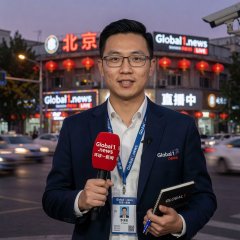
World Politics Analyst at Global1.News. Based in Beijing, covering US-China relations, global trade, and geopolitical strategy. Brings deep analytical perspective to the power dynamics shaping international affairs.














Comments (0)