
Sanctions at ILA Haifa: Public reception has been suspended
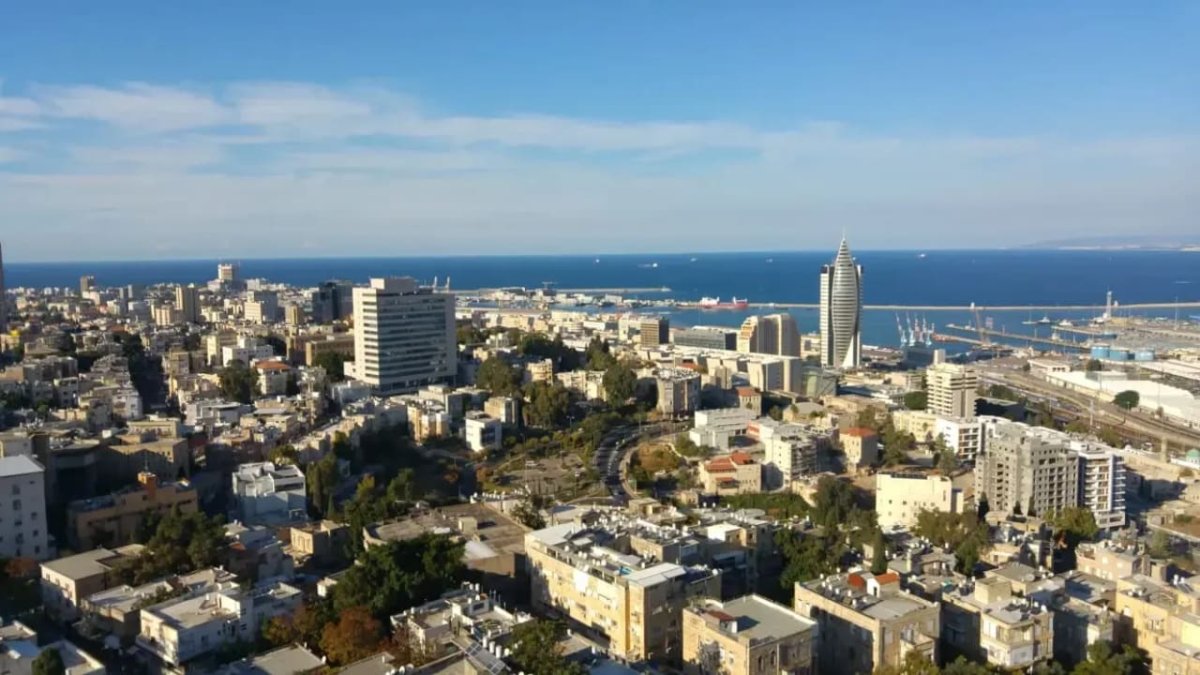
The Iranian Missile Strike on Sail Tower and Its Aftermath The Sail Tower in the Haifa Government Quarter suffered a direct hit from an Iranian missile on the afternoon of Friday, June 20, 2025. The i

The Iranian Missile Strike on Sail Tower and Its Aftermath
The Sail Tower in the Haifa Government Quarter suffered a direct hit from an Iranian missile on the afternoon of Friday, June 20, 2025. The impact left the office tower severely damaged and later declared a hazardous structure. One year later the building remains closed and abandoned, with no return to normal operations in that location.
Haifa has long served as a key administrative hub for northern Israel. The loss of the Sail Tower removed a central point for multiple government offices and forced immediate adjustments across several agencies. Employees and residents in the area continue to feel the effects through changed commuting patterns and reduced access to services that once operated from the downtown government quarter.
(Source: Jerusalem Post)
Relocation of Government Services and Disruption to Haifa
Following the strike, several core services were moved out of Haifa entirely. The Income Tax Authority shifted operations to Acre, while the Population and Immigration Authority under the Ministry of Interior was transferred to Kiryat Atta. Other units stayed within Haifa but left the accessible downtown area, including Ministry of Justice offices such as the State Attorney's Office and the Police Internal Investigations Unit.
These moves altered daily routines for both staff and the public. Residents who previously handled matters in central Haifa now face longer travel times to reach relocated offices. The changes also affected coordination between agencies that once shared the same government quarter, creating new logistical challenges for northern district operations.
The Finance Ministry's Decision on Adaptation Periods
This week the Chairman of the Union of State Employees, Adv. Ofir Alkalay, sent a letter to Noy Sofer, Deputy Director of Salary and Employment Agreements at the Ministry of Finance. The letter protests the termination of the half-hour adaptation period previously granted to Haifa district employees.
According to the letter, the Salary Department has taken the position that there is no room for continued adaptation conditions over time. The department argues that the alternative premises have effectively become the routine workplace of the employees. This stance represents a unilateral change from the existing arrangement that had been in place after the relocation.
The Union's Protest and Legal Arguments
Adv. Ofir Alkalay described the move as a violation of the existing arrangement between employees and the state. Copies of the letter were also sent to Arnon Bar-David, Chairman of the Histadrut, Yehuda Eliyahu, Director General of the Israel Land Authority, and Effie Malkin, Director of Salary and Employment Agreements at the Ministry of Finance.
The union maintains that the adaptation period was an established condition tied to the sudden relocation caused by the damage to Sail Tower. Removing it without agreement, the letter states, alters working conditions in a manner that requires proper negotiation rather than a unilateral decision by the Salary Department.
Broader Implications for Government Operations and Security
The situation in Haifa highlights ongoing questions about how government offices respond when facilities are damaged by missile strikes. With the Sail Tower still closed a year later, agencies have had to maintain services from dispersed locations, affecting both efficiency and employee conditions across the northern district.
Discussions between the union and the Ministry of Finance will likely continue to address whether adaptation periods remain appropriate when relocations become long-term. The outcome may influence how similar disruptions are handled in other parts of the country where security threats have forced changes to government infrastructure.
Haifa's experience also connects to wider regional dynamics, as the city remains an important center for both civilian administration and security coordination in northern Israel. Maintaining stable operations for state employees while addressing the physical damage from the June 2025 strike continues to shape daily administrative work in the area.
By Hannah Berg, Staff WriterWhat's Your Reaction?
 Like
0
Like
0
 Dislike
0
Dislike
0
 Love
0
Love
0
 Funny
0
Funny
0
 Wow
0
Wow
0
 Sad
0
Sad
0
 Angry
0
Angry
0













Comments (0)