
China's Ethnic Unity Law Raises Concerns Over Global Reach of Beijing's Policies
The Case of Zhang Yadi: A Warning for Overseas Voices Zhang Yadi, also known as Tara, a 23-year-old student, illustrates the personal risks tied to the Ethnic Unity Law now coming into force. She was expected to pursue studies at a leading university in the United Kingdom yet is reported to be held in detention inside China. Her final public messages on the social media platfor
The Case of Zhang Yadi: A Warning for Overseas Voices
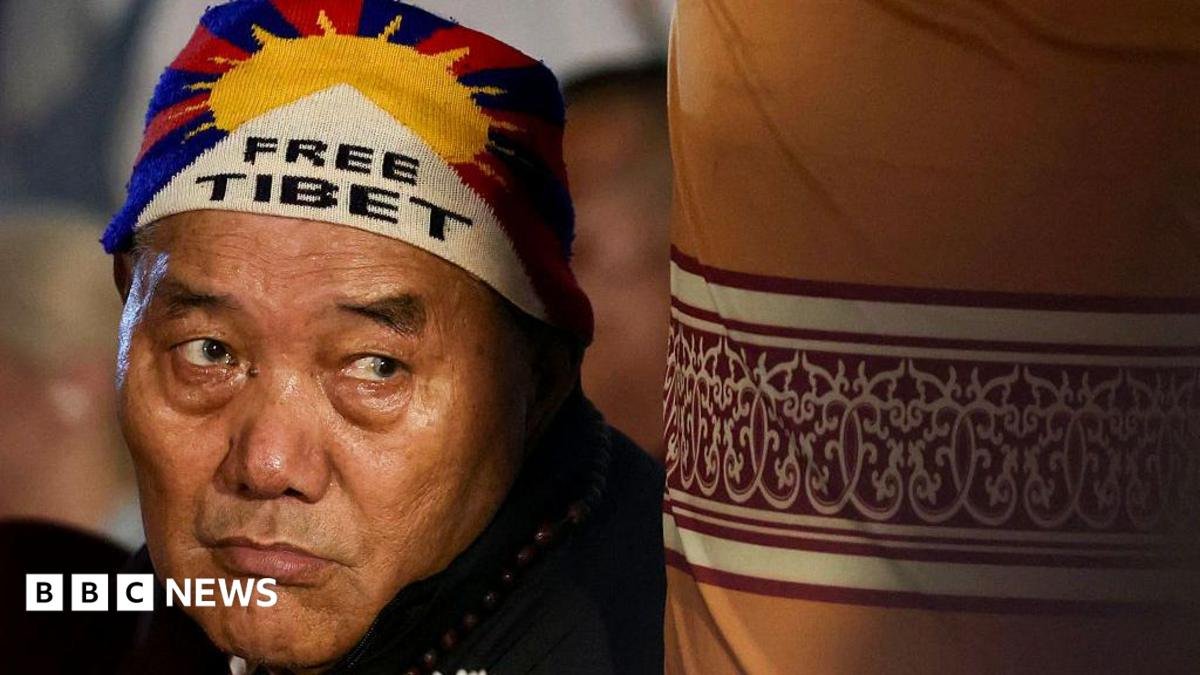
Zhang Yadi, also known as Tara, a 23-year-old student, illustrates the personal risks tied to the Ethnic Unity Law now coming into force. She was expected to pursue studies at a leading university in the United Kingdom yet is reported to be held in detention inside China. Her final public messages on the social media platform X included birthday wishes for the Dalai Lama, who turned 90 at the time. While studying in France she contributed to an online platform that promoted Tibetan rights and posted remarks supporting Tibetans from abroad. These expressions are understood to have led to her arrest in Shangri-La, Yunnan province, in July of the previous year during a visit home. She now faces charges of inciting others to split the country and undermine national unity.
Beijing regards the exiled spiritual leader as a separatist and treats the Tibet Autonomous Region, annexed in 1950, as an inseparable part of its territory. The case demonstrates how statements made outside China can trigger legal consequences upon return. Critics abroad view her situation as evidence that the new legislation formalises existing pressures on those who question official narratives about ethnic regions. The law’s provisions extend scrutiny to activities conducted beyond national borders, creating uncertainty for students, activists and ordinary citizens who maintain ties to China while living overseas. Families remaining inside the country may also face indirect effects when relatives speak out from afar.
Article 63 and the Extraterritorial Reach of Chinese Law
Article 63 of the Ethnic Unity Law grants Chinese authorities the authority to take measures against organisations and individuals located outside China that undermine ethnic unity and progress or create ethnic division. This clause supplies a domestic legal basis for actions previously conducted through informal channels. The measure targets advocacy for ethnic minority rights when such advocacy is judged to threaten the required conformity among the country’s 56 recognised ethnic groups. Amnesty International’s Deputy Regional Director Sarah Brooks states: “Rather than protecting diversity and equality, the law requires conformity. Peaceful advocacy for minority rights in China by anyone, anywhere could be characterised as undermining ‘ethnic unity.’ This law puts a national legal framework behind policies that have already devastated the rights of Uyghurs, Tibetans and other non-Han ethnic groups.”
Enforcement against foreign nationals or in foreign jurisdictions remains practically difficult. Observers therefore interpret the provision primarily as a deterrent signal. Individuals with relatives still residing in China receive a clear message that public commentary, even from distant locations, may affect family members at home. Tibetans in exile express heightened concern because the legislation begins to apply only days before the Dalai Lama’s 91st birthday. The clause does not alter the physical reach of Chinese police but codifies an existing pattern of transnational pressure into statutory language.
Strategic Timing: Soft Power Offensive Meets Hard Legal Authority
The Ethnic Unity Law is coming into force while Beijing conducts a visible campaign to improve its international image. Visa restrictions have been eased for citizens of as many as 77 countries, including most European nations, and online promotions highlight scenic diversity in regions such as Tibet and Xinjiang. Several world leaders, among them US President Donald Trump and UK Prime Minister Sir Keir Starmer, have been received at the Great Hall of the People for meetings with Chinese leader Xi Jinping. These gestures aim to project openness and stability.
At the same time the legislation supplies formal instruments to address overseas criticism that challenges the curated narrative. Accounts from ethnic-minority advocates contradict portrayals of harmonious development in sensitive regions. The juxtaposition of hospitality initiatives and expanded legal authority reflects a calculated balance: economic and diplomatic overtures proceed alongside measures that discourage narratives Beijing deems harmful. The timing suggests an effort to neutralise reputational risks precisely when greater numbers of foreign visitors are encouraged to travel to previously restricted areas.
Historical Roots: From Sinicisation to the Ethnic Unity Law
Efforts described as the “sinicisation” of minority groups began in the late 2000s. The policy seeks to foster a unified national identity by aligning ethnic communities more closely with the dominant Han culture, which constitutes more than 90 percent of the population. Successive measures have emphasised shared identity, social harmony and a single national narrative across Tibet, Xinjiang and Inner Mongolia. The Ethnic Unity Law consolidates these objectives into a single statute that defines acceptable expressions of ethnic identity and limits activities viewed as divisive.
Critics contend that the framework further restricts space for distinct cultural or political expression among non-Han groups. The legislation’s emphasis on conformity rather than diversity formalises long-standing administrative practices. By embedding these requirements in national law, authorities create a durable reference point that can be invoked both domestically and, through Article 63, in relation to conduct abroad. The evolution from earlier assimilation campaigns to the current statute illustrates continuity in Beijing’s approach to managing ethnic relations while extending the geographic scope of oversight.
Geopolitical Fallout: European Parliament and the Risk to Extradition Treaties
Members of the European Parliament have already issued warnings that the Ethnic Unity Law could affect bilateral legal arrangements. They have urged member states to consider suspending extradition treaties with China. Should the legislation be applied to European citizens, the parliamentarians stated, the outcome could “lead to severe consequences for EU-China relations.” Such statements indicate that European capitals may reassess judicial cooperation mechanisms that have facilitated the return of individuals to Chinese jurisdiction.
The prospect of extraterritorial application introduces new variables into ongoing diplomatic engagements. European governments must weigh the benefits of continued engagement against the possibility that their nationals or residents could face legal exposure for activities protected under domestic free-speech standards. The law therefore functions as both an internal regulatory instrument and an external signalling device that may prompt adjustments in extradition policy and consular practice across the European Union.
What This Means for the Global South and ASEAN
Although the source material focuses primarily on European reactions, the same logic of deterrence extends to countries in the Global South and ASEAN that maintain close economic and educational ties with China. Students and diaspora communities from these regions who have family members inside China may moderate public commentary on ethnic issues to avoid indirect repercussions. The law’s provisions do not differentiate by nationality, creating a uniform risk profile for any overseas advocate whose statements are deemed to undermine ethnic unity.
Beijing’s simultaneous promotion of tourism and investment from these same regions could be complicated if perceptions grow that visitors or scholars risk legal jeopardy for expressing views on minority rights. The legislation therefore carries secondary effects on people-to-people exchanges that China has sought to expand. Governments in Southeast Asia and elsewhere may quietly advise their citizens to exercise caution when discussing sensitive topics while in China or when maintaining online profiles accessible to Chinese authorities.
The Bottom Line: Deterrence Over Enforcement
Practical enforcement of Article 63 outside Chinese territory faces significant jurisdictional obstacles. Experts assess that the clause is intended chiefly to discourage open debate rather than to enable routine prosecutions abroad. For prominent activists whose families remain in China, however, the signal is unambiguous: words spoken at a distance can still produce consequences for relatives at home. Individuals may therefore limit their activities or refrain from returning to China altogether.
The Ethnic Unity Law thus strengthens an existing architecture of control by placing it within a statutory framework. While the measure supports Beijing’s domestic objective of a unified national identity, it simultaneously introduces new frictions in relations with countries that value freedom of expression. The legislation’s long-term impact will depend on how selectively authorities invoke its extraterritorial language and how foreign governments respond to the resulting legal uncertainties.
By Prof. Marcus Chen, Staff WriterThis article was produced with AI-assisted research and editorial support. Reporting is based on sources cited in the article.
What's Your Reaction?
 Like
0
Like
0
 Dislike
0
Dislike
0
 Love
0
Love
0
 Funny
0
Funny
0
 Wow
0
Wow
0
 Sad
0
Sad
0
 Angry
0
Angry
0

World Politics Analyst at Global1.News. Based in Beijing, covering US-China relations, global trade, and geopolitical strategy. Brings deep analytical perspective to the power dynamics shaping international affairs.














Comments (0)