
From 1994 to 2026: Americas Football Revolution and What It Means for South African Sport
The United States marks its 250th anniversary today with the 2026 FIFA World Cup in full swing, and Al Jazeera English has charted the nation's remarkable football journey since the 1994 tournament first planted the seeds of professional soccer on American soil. For South African sports fans who packed Soccer City in 2010, the story of how one home World Cup transformed a sport
The United States marks its 250th anniversary today with the 2026 FIFA World Cup in full swing, and Al Jazeera English has charted the nation's remarkable football journey since the 1994 tournament first planted the seeds of professional soccer on American soil. For South African sports fans who packed Soccer City in 2010, the story of how one home World Cup transformed a sporting culture offers parallel lessons in national pride and grassroots development.
From 1994 to 2026: America's Football Revolution and What It Means for South African Sport
Johannesburg, South Africa – July 4, 2026 —
The 1994 World Cup Ignites American Soccer Dreams
On July 4 1994 the United States lost 1-0 to Brazil at Stanford Stadium before more than 84 000 fans in a match that marked the start of modern American soccer growth. FIFA volunteer Ulf Dreschke was present that day and witnessed the electric atmosphere that would later shape league development across the country. This single fixture delivered the foundation for Major League Soccer which launched in 1996 and changed how the sport was organised and funded in the United States.
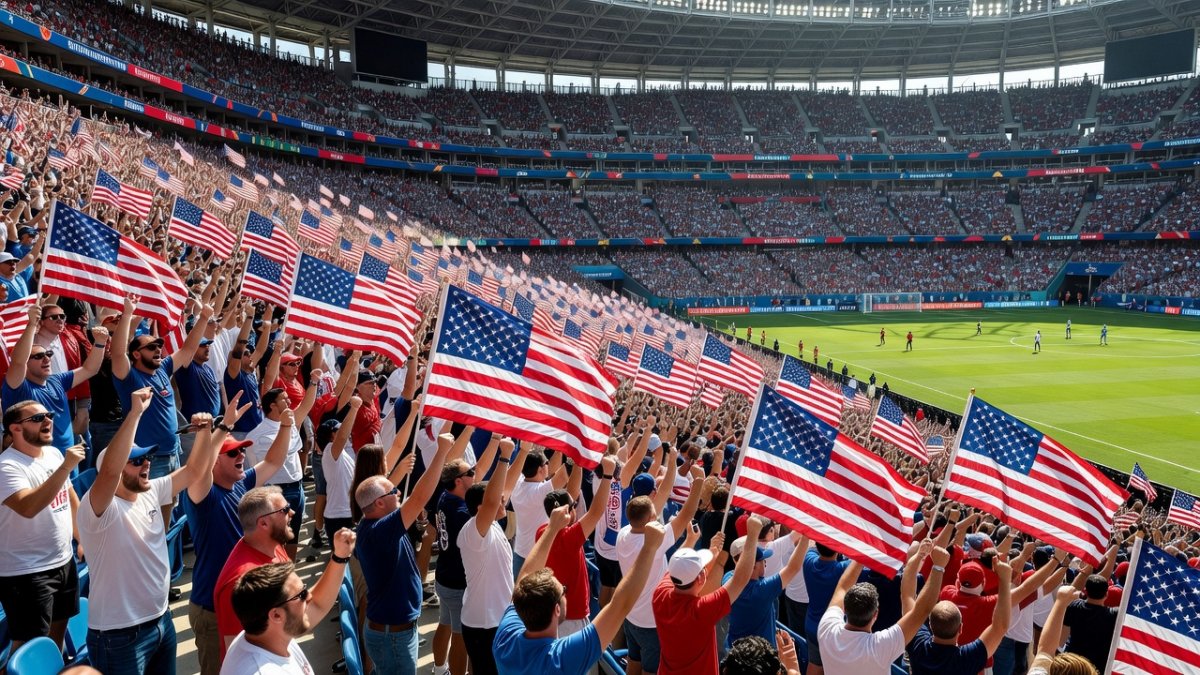
South African sports fans understand the host-nation dynamic because Bafana Bafana carried the hopes of an entire continent during the 2010 FIFA World Cup at Soccer City. The parallels between the 1994 American experience and South Africa hosting the first African World Cup remain striking. Both nations used the global spotlight to accelerate domestic structures and create lasting infrastructure that still supports grassroots programmes today.
Cobi Jones Leads the Charge from 1994 Onwards
Cobi Jones earned his first World Cup start in that 1994 match against Brazil and went on to collect 164 caps becoming the United States all-time appearance leader. His journey from that Stanford Stadium afternoon to national icon shows how one tournament can launch careers that inspire generations. Jones spoke to Reuters on June 30 about the lasting impact noting that 1994 delivered MLS while the current edition carries potential for exponential growth that remains untapped.
In South Africa the same principle applies to players who emerged after the 2010 World Cup and helped strengthen the Premier Soccer League. SAFA used the tournament to expand youth academies in townships and the MultiChoice Diski Challenge continues to develop talent in the same way MLS academies grew from the 1994 platform. Jones story therefore resonates with South African supporters who watched their own football ecosystem expand after hosting duties.
USMNT Captures Group D and Advances in 2026
The United States men's national team won Group D at the 2026 tournament and then defeated Bosnia-Herzegovina 2-0 in the Round of 32 at Levi's Stadium in front of 68 827 spectators. Folarin Balogun opened the scoring in the 45th minute before receiving a red card in the 64th minute for a foul on Tarik Muharemović. Malik Tillman scored the decisive goal from a free kick while the team played with ten men securing the first American knockout-stage victory since 2002.
South African football supporters recognise the significance of such breakthroughs because Bafana Bafana also experienced the pressure of performing on home soil in 2010. The 2026 American progress mirrors the post-2010 push by SAFA to professionalise structures and improve results in continental competitions. Both countries understand that one strong World Cup campaign can accelerate investment in coaching education and youth pathways across provinces and states alike.
Balogun's Record Chase and Tactical Impact
Folarin Balogun has scored three goals in three games at the 2026 tournament and sits one goal short of Bert Patenaude's United States record of four goals set in 1930. His suspension for the July 6 match against Belgium at Lumen Field in Seattle removes a key attacking threat yet also highlights the depth the squad has developed since 1994. Coach Mauricio Pochettino publicly disagreed with the red-card decision while players including Christian Pulisic Weston McKennie Tyler Adams and Chris Richards all addressed the incident in post-match comments.
South African fans have seen similar individual milestones shape national conversations after the 2010 World Cup when local strikers gained exposure that boosted PSL attendances. The Balogun situation echoes debates around transformation and opportunity in South African sport where every suspended or injured player forces coaches to rely on emerging township talent. The American record chase therefore offers a direct comparison for how individual excellence can drive broader structural change in both nations.
Host-Nation Energy Fuels 2026 Momentum
The Al Jazeera English video produced by Paul Rhys from Dallas and San Jose and published on July 4 2026 captures the current wave of American soccer enthusiasm. Large crowds at Levi's Stadium and the prospect of another packed house at Lumen Field demonstrate how the 1994 foundation has matured into genuine national interest. The United States now prepares for Belgium on July 6 with the knowledge that a win would extend their deepest World Cup run in more than two decades.
South African sports culture carries the same host-nation memory from the 2010 FIFA World Cup when FNB Stadium became the centre of continental pride. That experience taught local supporters how global attention can accelerate domestic league growth and fan engagement. The 2026 American story therefore provides South African readers with a living example of what sustained investment after a home tournament can achieve across multiple generations.
Comparing American and South African Football Growth
The path from 1994 to MLS in 1996 offers South African administrators a clear timeline for measuring progress after 2010. SAFA and the PSL have introduced initiatives such as the MultiChoice Diski Challenge to mirror the academy systems that grew from the American World Cup. Both countries have used major tournaments to professionalise coaching structures and increase participation numbers in previously underserved communities.
Transformation remains a shared priority. Just as American soccer expanded beyond traditional markets after 1994 South African football continues efforts to develop talent in townships and rural areas. The 2026 United States campaign shows that consistent national-team success can attract sponsorship and media coverage that then filters down to lower divisions exactly as South African stakeholders hope will happen following the Springboks' 2019 and 2023 Rugby World Cup triumphs.
Siya Kolisi Model and Soccer's Unifying Potential
Siya Kolisi's leadership of the Springboks to Rugby World Cup victories in 2019 and 2023 demonstrated how sport can unite South Africa across racial and economic lines. American soccer now seeks similar unifying power through its 2026 performances. The diverse USMNT squad and growing MLS fan bases in cities such as Dallas and San Jose reflect the same inclusive ambition that South African football administrators pursue when they promote township development programmes.
Both nations recognise that national-team visibility translates into grassroots participation. After the 2010 World Cup South African schools and clubs recorded increased registration numbers. The current American run suggests a comparable surge could occur in the United States and offers South African readers a blueprint for channelling World Cup excitement into sustained investment in coaching education and facility upgrades across all nine provinces.
Looking Forward from Seattle to Future Cycles
The July 6 clash against Belgium at Lumen Field will test whether the United States can maintain momentum after the dramatic Round of 32 victory. Balogun's absence places greater responsibility on midfield creators and defensive organisers who have already spoken about the red-card decision. Whatever the outcome the 2026 campaign has already confirmed that the potential identified by Cobi Jones on June 30 is beginning to materialise on the field.
South African sports fans will watch with particular interest because their own football development continues to draw lessons from nations that hosted major tournaments. The American journey from 1994 to 2026 illustrates how one World Cup can seed decades of growth when paired with professional league creation and youth investment. For South Africa the message remains clear: the infrastructure and passion built around Soccer City in 2010 can still deliver similar long-term gains if administrators maintain the same focus and energy that American soccer has shown across three decades.
By Dante Williams, Staff WriterThis article was produced with AI-assisted research and editorial support. Reporting is based on sources cited in the article.
What's Your Reaction?
 Like
0
Like
0
 Dislike
0
Dislike
0
 Love
0
Love
0
 Funny
0
Funny
0
 Wow
0
Wow
0
 Sad
0
Sad
0
 Angry
0
Angry
0

Breaking News and Investigations Correspondent at Global1.News. Based in London, covering global breaking news, security, and investigative stories. Known for digging deeper and connecting the dots across continents.











Comments (0)