
Serena Williams Forced to Bring Wimbledon Comeback to Premature End
The Abrupt End to Serena Williams' Wimbledon Return Serena Williams' much-anticipated Wimbledon comeback has been cut short by injury, with the 44-year-old forced to withdraw from her scheduled first-round doubles match alongside sister Venus Williams. The decision follows a right knee tweak sustained during her opening singles encounter on Tuesday night, a contest that marked
The Abrupt End to Serena Williams' Wimbledon Return
Serena Williams' much-anticipated Wimbledon comeback has been cut short by injury, with the 44-year-old forced to withdraw from her scheduled first-round doubles match alongside sister Venus Williams. The decision follows a right knee tweak sustained during her opening singles encounter on Tuesday night, a contest that marked her first appearance in the singles draw at the All England Club in four years. The withdrawal means the pair will not face the unseeded South American combination of Camila Osorio and Solana Sierra, originally set for Saturday on one of the outer courts.
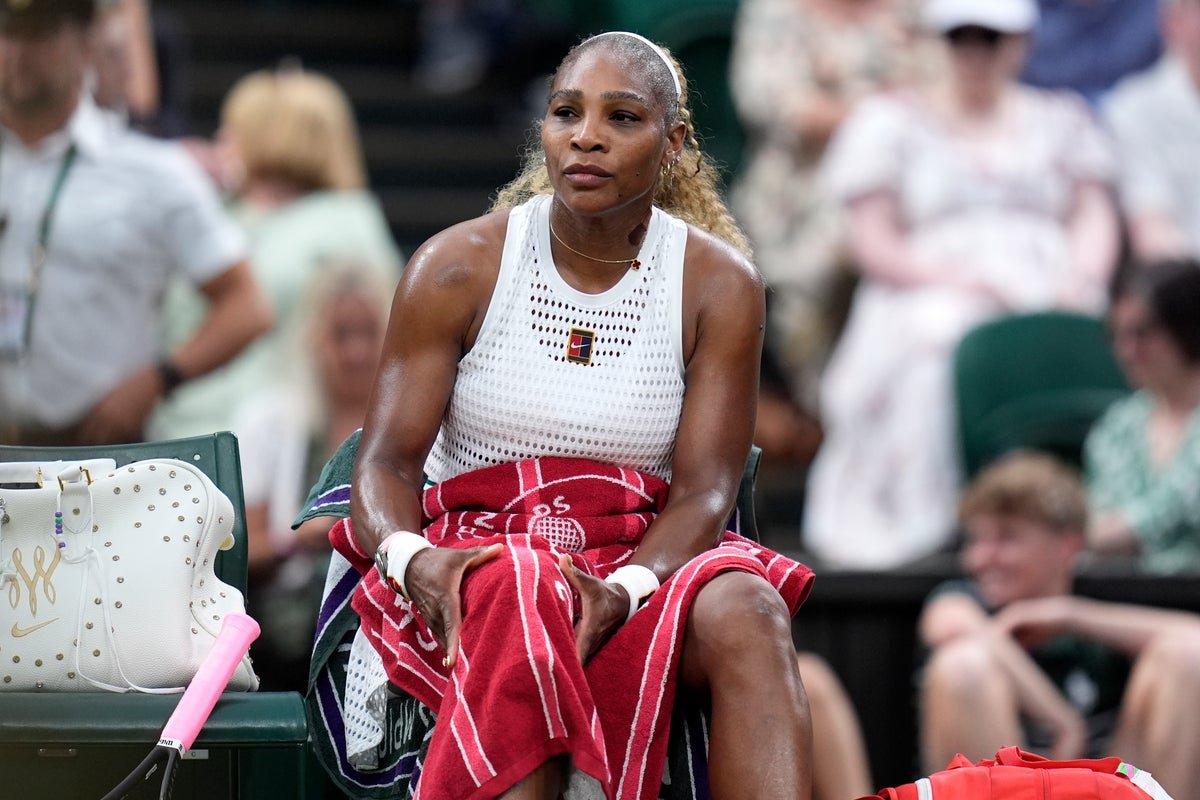
Serena Williams during her singles match on Centre Court at Wimbledon. The 23-time grand slam champion was forced to withdraw from the doubles after tweaking her knee.
(The Independent)
The 23-time grand slam champion expressed her disappointment directly through social media, describing the setback as heartbreaking while acknowledging the physical limitations that prevented further participation. This development arrives at a moment when British sporting attention turns sharply towards the grass-court season, with Wimbledon serving as the centrepiece of the domestic summer calendar and drawing millions of viewers across the United Kingdom.
The Centre Court Singles Defeat and Immediate Injury Concerns
During her three-set loss to Maya Joint on Centre Court, Williams felt discomfort in her right knee towards the conclusion of the opening set yet continued in characteristic fashion, saving a match point to force a deciding set. The final scoreline read 6-3, 6-7(6), 6-3 after two hours and 22 minutes of play under the roof. Joint, the 20-year-old Australian, secured victory in a match that showcased both Williams' competitive resilience and the physical demands of returning to elite-level competition after an extended absence.
Medical staff monitored the situation closely following the match, and subsequent assessment confirmed that the knee would not be sufficiently recovered for doubles action. The All England Club issued a statement in which Williams reflected positively on the atmosphere and the simple act of walking onto the famous court once more, noting that she had relished the occasion more than she had anticipated.
A Historic Partnership and Six Wimbledon Doubles Titles
The Williams sisters have long been synonymous with success at the Championships, securing six doubles titles together across their careers. With a combined age of 90, their wildcard entry this year carried particular resonance for spectators who have followed their journey since the late 1990s. The opportunity to compete once more as a pair represented a rare chapter in modern tennis history, one that many fans had hoped would extend at least through the opening round.
Williams emphasised in her Instagram statement the personal significance of sharing the court with Venus again, describing the prospect as meaning the world to her. She also extended gratitude to tournament director Jamie Baker and the wider All England Club team for facilitating every possible opportunity to participate, underscoring the institutional support that enabled her return to the venue.
Wimbledon Tradition Within Britain's Summer Sporting Landscape
Each July, Wimbledon occupies a distinctive position in the United Kingdom's sporting rhythm, blending centuries-old customs with contemporary athletic drama. The Championships coincide with a period when national attention shifts between tennis, cricket, and other outdoor pursuits, creating a collective sense of occasion that extends far beyond SW19. For many households, the fortnight serves as an annual marker of the season, complete with familiar rituals around television schedules and conversations in workplaces and community spaces.
Williams' participation this year added an extra layer of narrative interest to proceedings, reconnecting older audiences with a player whose achievements have shaped perceptions of the sport over two decades. The decision to withdraw from doubles, while disappointing, does not diminish the cultural weight of her appearance on Centre Court, an event that resonated with viewers who value the tournament's role in showcasing both established names and emerging talent.
Reactions from Supporters and the Broader Tennis Community
Tennis followers across Britain have responded to the news with a mixture of sympathy and appreciation for the effort Williams invested in preparing for the event. Her earlier doubles appearances at Queen's Club in London and in Berlin provided a gradual reintroduction to competitive play, yet the knee issue ultimately proved decisive at the highest-profile stage. The statement released by the All England Club captured her enjoyment of the return, highlighting how the experience exceeded expectations despite the physical challenge.
Williams concluded her message by assuring supporters that the knee should avoid further significant swelling, while noting the difficulty of achieving full readiness for doubles despite exhaustive preparation. She closed with a characteristically forward-looking remark, inviting continued attention to future activities in cities yet to be announced.
Looking Ahead for Fans and the Williams Sisters' Influence
The withdrawal leaves an immediate gap in the doubles draw, yet it also prompts reflection on the enduring appeal of the Williams sisters within British sporting culture. Their presence at Wimbledon has consistently drawn diverse crowds and elevated interest in the women's game, contributing to the tournament's reputation as a global yet distinctly British occasion. For those who queued for tickets or followed coverage from home, the brief return served as a reminder of the personal narratives that often define memorable Championships editions.
As the tournament continues without the sisters in doubles, attention naturally turns to the remaining singles and doubles contests, with the grass-court surface continuing to test players' movement and adaptability. Williams' experience this week illustrates both the physical realities of elite sport and the emotional pull that keeps athletes returning to venues such as the All England Club. Supporters will undoubtedly carry the images of her Centre Court appearance into future seasons, preserving the significance of a comeback that, though shortened, reaffirmed her connection to the sport and its audience.
By Erica Thornton, Staff WriterThis article was produced with AI-assisted research and editorial support. Reporting is based on sources cited in the article.
What's Your Reaction?
 Like
0
Like
0
 Dislike
0
Dislike
0
 Love
0
Love
0
 Funny
0
Funny
0
 Wow
0
Wow
0
 Sad
0
Sad
0
 Angry
0
Angry
0

US Politics and Policy Correspondent at Global1.News. Based in Washington DC, covering American politics, policy, elections, and the courts. Knows how the system works and tells you what it actually means.














Comments (0)