
China's 15th Five-Year Plan Puts AI at the Core of Economic Revival Strategy
China has unveiled its most ambitious technology-driven economic blueprint to date, placing artificial intelligence at the center of the 15th Five-Year Plan (2026–2030). The strategy, approved at the March 2026 Two Sessions in Beijing, aims to embed AI across 90 percent of the economy by 2030, with related industries projected to exceed 10 trillion yuan. The development carries
China has unveiled its most ambitious technology-driven economic blueprint to date, placing artificial intelligence at the center of the 15th Five-Year Plan (2026–2030). The strategy, approved at the March 2026 Two Sessions in Beijing, aims to embed AI across 90 percent of the economy by 2030, with related industries projected to exceed 10 trillion yuan. The development carries significant implications for Japan and the broader Asia Pacific region as competitive dynamics in AI, robotics, and semiconductor supply chains intensify.
China's 15th Five-Year Plan Puts AI at the Core of Economic Revival Strategy
Tokyo, Japan – April 2026 — China's latest blueprint for economic development places artificial intelligence at the center of efforts to restore growth momentum. The approach, outlined in official planning documents released after the March 2026 Two Sessions, marks a decisive shift toward technology-led expansion.
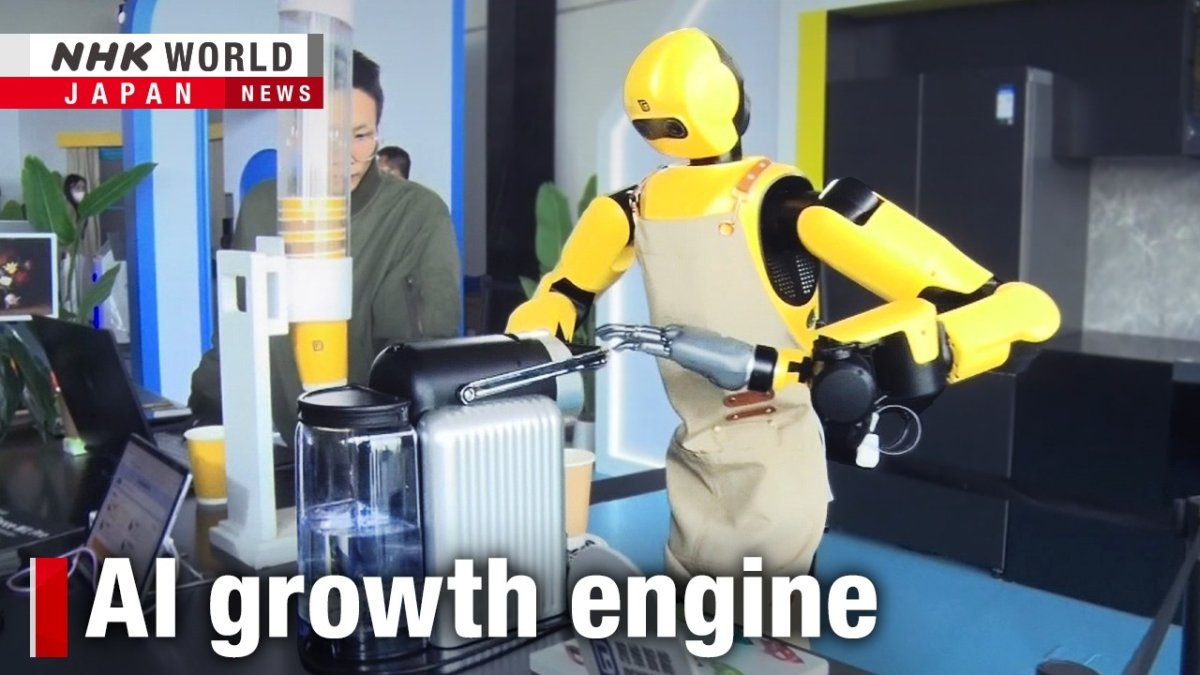
China's AI-Centric Five-Year Plan
The 15th Five-Year Plan, approved in March 2026, explicitly positions artificial intelligence as a core pillar of national economic growth. The term “artificial intelligence” appears more than 50 times throughout the document, underscoring the priority assigned to the technology.
The “AI Plus” initiative sets a target of integrating AI across 90 percent of the economy by 2030. AI-related industries are projected to reach a value exceeding 10 trillion yuan by the end of the plan period. These figures reflect a coordinated national effort to embed intelligent systems into manufacturing, services, agriculture, and public administration.
Implementation timelines remain phased rather than immediate. Early measures focus on infrastructure and talent development, with broader application targets scheduled for later years of the 2026-2030 period.
Embodied Intelligence and Robotics Strategy
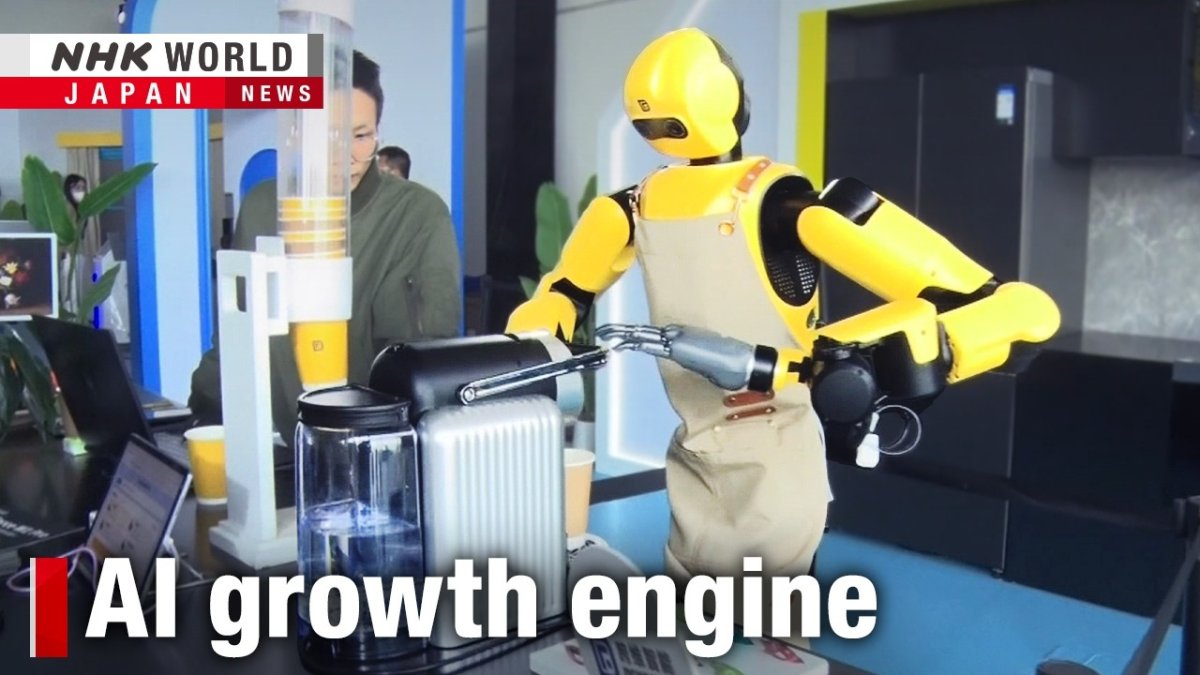
Embodied intelligence, particularly AI-powered robots, has been elevated to a core national strategy. The International Federation of Robotics noted this designation in its May 2026 assessment of Chinese policy documents.
Priority sectors include humanoid robots, domestic semiconductor chips, a national compute network, flying cars, and intelligent connected vehicles. These areas receive explicit support through funding allocations and regulatory frameworks designed to accelerate commercialization.
Children’s AI education programs are also being expanded nationwide to build long-term human capital. Curricula adjustments aim to introduce foundational concepts at earlier grade levels than in previous plans.
Implications for Japan's AI Strategy
Japan continues to trail both the United States and China in the scale of AI investment. The Takaichi administration has nevertheless placed artificial intelligence at the center of its growth strategy, seeking to leverage existing strengths in robotics and precision manufacturing.
Japan’s Society 5.0 vision, promoted by the government for several years, emphasizes human-centered integration of digital technologies. METI’s AI strategy complements this framework by focusing on practical applications in healthcare, mobility, and disaster response.
Chinese advances in embodied intelligence may intensify competitive pressure on Japanese firms, particularly in the humanoid robot segment where domestic manufacturers have historically held technical advantages.
Asia Pacific Competition
US-China AI competition remains the dominant regional dynamic. Shifting priorities within the United States have raised questions about the sustainability of American leadership in certain AI subfields, creating openings that Chinese planners appear determined to exploit.
China’s emphasis on a national compute network and domestic chip production directly addresses previous vulnerabilities exposed by export controls. These measures aim to reduce reliance on foreign technology while scaling domestic capabilities.
Regional supply chains are likely to experience continued realignment as both major powers pursue greater technological self-sufficiency.
Expert Perspectives
Policy analysts observe that the frequency of AI references in the plan document signals a level of commitment exceeding earlier five-year cycles. Industry observers note that the combination of embodied intelligence targets and education initiatives creates a multi-decade pipeline for technology adoption.
Japanese government officials have indicated that METI will monitor Chinese progress closely when updating domestic AI guidelines. Corporate Japan is evaluating opportunities for selective collaboration alongside heightened competition in global markets.
What to Watch For
Key milestones include the rollout of the national compute network and initial commercial deployments of domestically developed humanoid robots. Progress on semiconductor self-sufficiency targets will also serve as an indicator of plan effectiveness.
International responses, particularly adjustments to Japanese and US technology policies, will shape the competitive landscape through the remainder of the decade. Continued expansion of AI education programs may influence long-term talent flows across Asia.
By the end of 2030, the degree to which AI Plus integration reaches the stated 90 percent target will provide the clearest measure of the plan’s overall impact on China’s economic trajectory.
By Kenji Tanaka, Staff Writer
This article was produced with AI-assisted research and editorial support. Reporting is based on sources cited in the article.
What's Your Reaction?
 Like
0
Like
0
 Dislike
0
Dislike
0
 Love
0
Love
0
 Funny
0
Funny
0
 Wow
0
Wow
0
 Sad
0
Sad
0
 Angry
0
Angry
0

Japan Correspondent at Global1.News. Tokyo-based voice covering Japanese politics, technology, economy, and culture. Tracks the intersection of tradition and innovation in one of the world's most dynamic societies.














Comments (0)