
Somalia's Debut, Senegal's Gold, and Ethiopia's Silence: African Art Takes Centre Stage at the 2026 Venice Biennale
In the floating city of Venice, where canals have carried merchants and artists for centuries, Africa is making its presence felt at the 61st Venice Biennale like never before. A record thirteen African nations are participating in the world's oldest and most prestigious contemporary art exhibition, with first-time pavilions from Somalia and Equatorial Guinea joining establishe
In the floating city of Venice, where canals have carried merchants and artists for centuries, Africa is making its presence felt at the 61st Venice Biennale like never before. A record thirteen African nations are participating in the world's oldest and most prestigious contemporary art exhibition, with first-time pavilions from Somalia and Equatorial Guinea joining established participants from Senegal, Ethiopia, South Africa, Egypt, and others in a powerful display of the continent's artistic vitality.
Somalia's Debut, Senegal's Gold, and Ethiopia's Silence: African Art Takes Centre Stage at the 2026 Venice Biennale
Dakar, Senegal — The 61st Venice Biennale, titled "In Minor Keys" and curated by the late Cameroonian-Swiss curator Koyo Kouoh, opened on May 9, 2026, and runs through November 22. It is the first Biennale curated by an African woman, featuring approximately 111 artists, collectives, and duos from across the globe. For Africa, this edition marks a historic milestone — not only in record participation but in the depth and ambition of the artistic statements being made.
A Record African Presence at the World's Most Prestigious Art Exhibition
The 61st Venice Biennale titled "In Minor Keys" showcases a record 13 African national pavilions, the highest number in Biennale history. This surge reflects a continent stepping forward with confidence after years of being sidelined. Curated by Koyo Kouoh, the first African woman to lead the main exhibition, the event draws from her deep roots in Dakar where she founded RAW Material Company.
Koyo Kouoh passed away unexpectedly in 2025, yet her vision endures through this edition. She had also directed Zeitz MOCAA in Cape Town, shaping spaces where African voices could thrive on their own terms. The Biennale, founded in 1895, now feels more inclusive than ever before.
Earlier editions often featured minimal African representation, with artists appearing more as tokens than equals. This year changes that narrative across the Giardini and Arsenale venues. The central exhibition includes approximately 111 artists, collectives, and duos, many from the continent.
Controversy marked the lead-up when the jury resigned before opening. A public "Visitor Lion" vote replaced them, and artists from the main exhibition along with 16+ national pavilions withdrew from award consideration in solidarity. Such acts highlight tensions but also strengthen communal resolve.
Sierra Leone joins Somalia and Equatorial Guinea in debuting, expanding the map of African presence. These pavilions sit alongside veterans from Egypt and South Africa, creating a rich dialogue that spans generations and regions.
Visitors sense a shift in how the world encounters African creativity. The scale alone signals progress, yet the substance of the works reveals even deeper layers of storytelling and resistance.
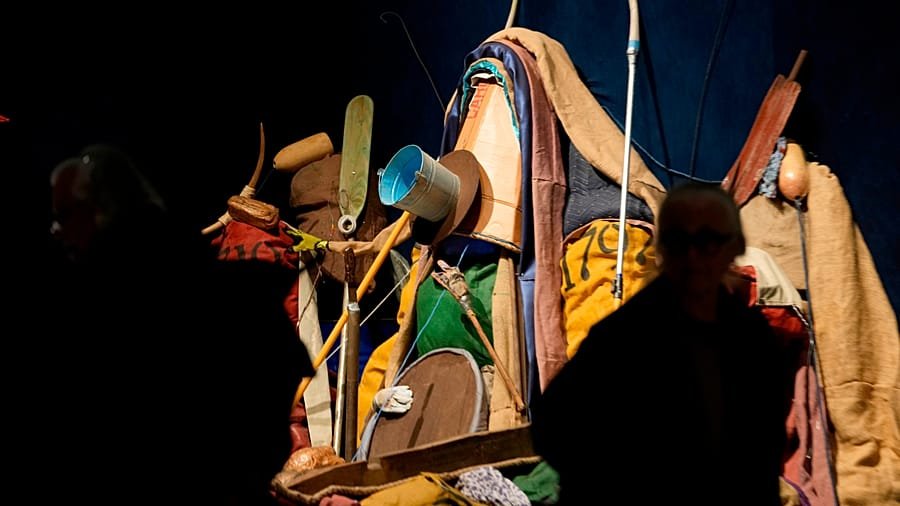
Somalia Makes History with Poetry-Driven Pavilion at Palazzo Caboto
Somalia's first-ever participation at the Venice Biennale unfolds at Palazzo Caboto between the Giardini and the Arsenale. The three-floor space transforms into something intimate, like stepping into a living room that echoes a typical Somali home. Soft textiles and familiar objects invite quiet reflection amid the bustle of the international crowd.
Curator Mohamed Mire places poetry at the heart of the installation. He explains that poetry is the backbone of Somali social structures and history, a way generations transmit knowledge and stories across time. This approach turns the pavilion into a living archive of oral tradition.
Artists Ayan Farah, Asmaa Jamaa, and Warsan Shire bring distinct voices to the space. Their works blend personal memory with collective experience, showing how Somali culture persists despite decades of hardship. The result feels both rooted and forward-looking.
Ayan Farah creates quiet, meditative pieces inspired by nature. She wants viewers drawn into serene environments that encourage pause and contemplation. These works contrast with the louder narratives often attached to Somalia, offering instead a sense of inner strength.
The pavilion marks a cultural re-emergence on the global stage. After years of conflict, Somalia reclaims its place through art that honors resilience without sensationalism. Visitors leave with a fuller picture of a nation long misunderstood.
Poetry here serves as both anchor and bridge, connecting past wisdom to present realities. The installation reminds us that storytelling remains one of Africa's most enduring gifts to the world.
Senegal Asks: What Is Gold Worth? Caroline Gueye's Provocative Installation
The Senegal Pavilion centers on Caroline Gueye, whose research dives deep into gold and its shifting value. Curator Massamba Mbaye frames the work as an invitation to reverse perspectives on what society holds dear. Gold's worth, he notes, stems from perception, and art can question why people fight to preserve such values.
Senegal's history intertwines with gold through the ancient kingdoms of Ghana, Mali, and Songhai. These empires built wealth and influence on the precious metal, shaping trade routes that reached far beyond the continent. Gueye's installation nods to this legacy while probing its modern echoes.
Visitors walk through spaces that prompt reflection on a world where gold's perception might change entirely. What would economies and relationships look like without that fixed sense of value? The questions linger long after leaving the pavilion.
This exploration fits Senegal's broader artistic tradition, from the vibrant Dakar Biennale to figures like Omar Ba who challenge global assumptions. Gueye continues that lineage with work that feels both local and universal.
The pavilion avoids easy answers, instead fostering dialogue about power and perception. In a city like Venice built on trade, the themes resonate with particular force.
Through gold, Gueye connects personal inquiry to collective memory, reminding audiences that value is never neutral. Her approach embodies the thoughtful spirit Koyo Kouoh championed throughout her career.
Ethiopia's Tegene Kunbi: Painting the Shape of Silence
Ethiopia's second participation at the Venice Biennale features Tegene Kunbi, who paints silence as both social and political condition. His monumental abstract works burst with color, turning absence into presence through layered textures and bold forms. The approach feels deeply personal yet widely resonant.
Kunbi describes the exhibition as exploring the shape of silence. Silence is not absence, he insists, but presence that demands attention. Viewers encounter canvases that hold space for unspoken histories and quiet resistance.
The Ethiopian Pavilion occupies a meaningful spot within the larger Biennale layout. It builds on the country's ancient artistic traditions, from the rock-hewn churches of Lalibela to the dynamic contemporary scene in Addis Ababa. Kunbi bridges these worlds with modern abstraction.
Ethiopia's growing international profile gains further momentum here. The pavilion showcases how Ethiopian artists navigate global platforms while staying grounded in local realities. Color and form become tools for dialogue across cultures.
Visitors often pause before the works, drawn into the meditative quality Kunbi cultivates. The silence he paints invites reflection on what remains unsaid in public discourse.
This second appearance marks steady progress for Ethiopian art on the world stage. It honors heritage while pushing boundaries, much like the broader African presence at this Biennale.
South Africa's Gabrielle Goliath Overcomes Censorship Controversy
South African artist Gabrielle Goliath faced a dispute with the Ministry of Culture over her tribute to Palestinian poet Hiba Abu Nada. Officials labeled the inclusion divisive, sparking debate about artistic freedom. Yet solidarity from fellow artists and the public helped her bring the work to Venice intact.
The installation now stands inside the Church of Sant'Antonin, where its quiet power unfolds. Goliath's approach weaves personal loss with broader calls for justice, fitting the Biennale's theme of listening to minor keys. The controversy only amplified the work's reach.
South Africa has its own history of navigating art and censorship. Goliath's experience echoes past struggles while highlighting ongoing global tensions. Support networks proved vital in ensuring the piece reached its audience.
Within the "In Minor Keys" framework, her work resonates as an act of listening across borders. The tribute honors voices often silenced, turning the pavilion into a site of shared humanity.
Artists across the continent watched the situation closely, seeing parallels in their own contexts. The resolution through public backing strengthened resolve for future projects.
Goliath's presence adds depth to South Africa's contribution, showing how art can navigate obstacles without losing its core message. The Church of Sant'Antonin setting enhances the contemplative mood.
Koyo Kouoh's Enduring Vision: The Future of African Art on the World Stage
Koyo Kouoh's posthumous vision for the Biennale emphasizes listening to the signals of the earth and connecting with frequencies of the soul. Her legacy as founder of RAW Material Company in Dakar and director of Zeitz MOCAA continues to shape how African art enters global conversations.
"In Minor Keys" resonates with Africa's quieter yet powerful artistic voices. It creates room for subtlety and depth rather than spectacle alone. This approach aligns with cultural traditions that value reflection alongside expression.
Record African participation signals growing recognition, yet Joseph L. Underwood's critique in Art in America points to persistent funding inequities and structural support gaps for pavilions. These challenges remain even as visibility increases.
The broader picture includes Amoako Boafo's first Italian solo show at Palazzo Grimani with Gagosian and Dawit Abebe's "BLACKBOX" exhibition at AKKA Project Venezia. A.R. Turner's sensory project "MAGIC: In Minor Keys" links Venice, Lagos, and Rio through Black Atlantic themes.
Upcoming biennales in Dakar, Bamako, and elsewhere across the continent promise continued momentum. Koyo Kouoh's influence ensures these platforms prioritize African perspectives on their own terms.
As the 61st Venice Biennale unfolds through November 22, 2026, it offers a glimpse of what sustained support could achieve. The continent's artists carry forward her spirit with grace and determination.
By Amara Diop, Staff Writer
This article was produced with AI-assisted research and editorial support. Reporting is based on sources cited in the article.
What's Your Reaction?
 Like
0
Like
0
 Dislike
0
Dislike
0
 Love
0
Love
0
 Funny
0
Funny
0
 Wow
0
Wow
0
 Sad
0
Sad
0
 Angry
0
Angry
0

West Africa/Sahel Correspondent at Global1.News. Dakar-based journalist covering politics, security, climate, and development across Francophone and Anglophone West Africa. Tells the stories of a region undergoing profound transformation.













Comments (0)