
Amazon Drought Crisis Deepens as Trees Emit Never-Before-Detected Chemical Distress Signals
A new study reveals Amazon trees are emitting chemicals never before detected in the rainforest air — a stress signal from a biome approaching its limit. Researchers tracking the 2023-2024 El Niño drought documented unprecedented surges in volatile organic compounds as the forest struggled under extreme heat and prolonged dryness. These findings underscore how the Amazon, vital
A new study reveals Amazon trees are emitting chemicals never before detected in the rainforest air — a stress signal from a biome approaching its limit. Researchers tracking the 2023-2024 El Niño drought documented unprecedented surges in volatile organic compounds as the forest struggled under extreme heat and prolonged dryness. These findings underscore how the Amazon, vital to global climate stability, now faces compounding threats from deforestation, rising temperatures, and intensifying weather patterns that could reshape rainfall across South America.
Amazon's Chemical Distress Signals Reveal a Rainforest on the Brink of Irreversible Collapse
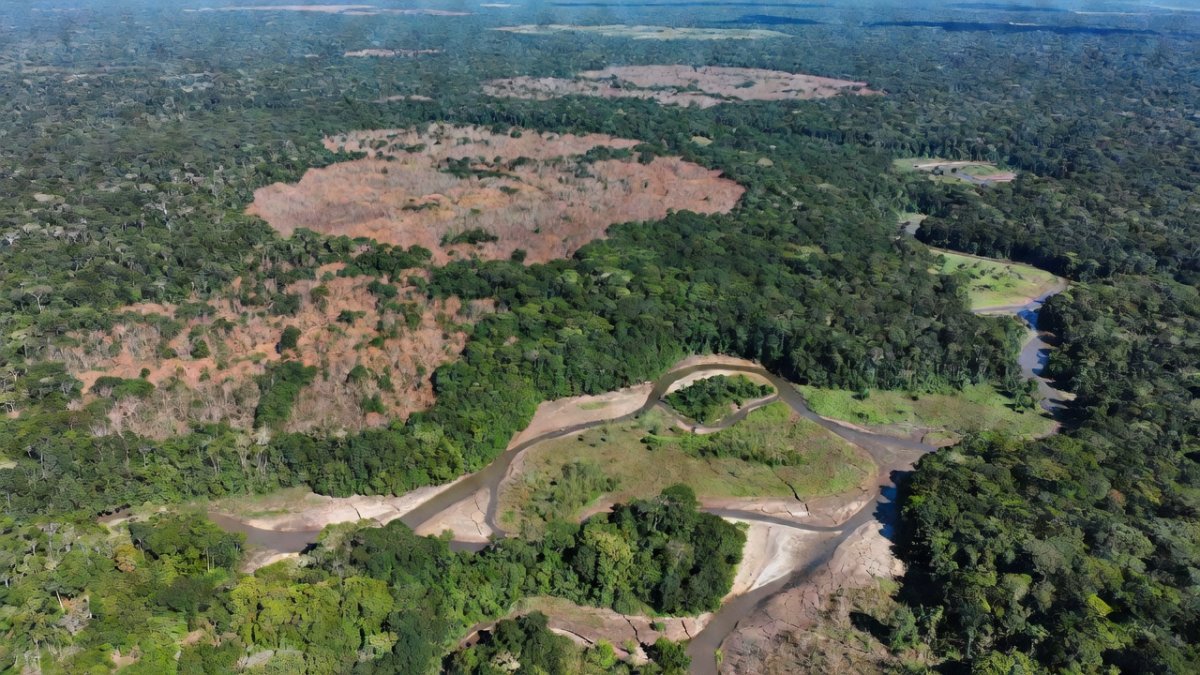
Manaus, Amazonas – Brazil, July 2026 — Deep in the heart of the Amazon basin, Indigenous monitors and scientists have begun documenting an alarming transformation: the forest itself is crying out through invisible chemical emissions that have never appeared in its atmosphere before. As rivers shrink to trickles and canopies brown under relentless sun, a landmark 2026 study captures how the world's largest rainforest is sending distress signals that could alter cloud formation and rainfall patterns for millions across Latin America. This crisis, unfolding amid record deforestation legacies and an approaching super El Niño, threatens not only biodiversity but the very moisture recycling system that sustains agriculture from the Andes to the La Plata Basin.
The Forest's Chemical Cry for Help
The 2026 study published in Communications Earth & Environment by Byron and colleagues documents a dramatic 122% increase in sesquiterpene emissions during the 2023-2024 El Niño drought, the most severe on record in the Amazon basin. Researchers identified entirely new compounds — beta-eudesmol, alpha-eudesmol, and gamma-eudesmol — never previously recorded in Amazonian air samples. These novel emissions persisted for weeks into the subsequent wet season, indicating prolonged physiological stress on the trees. The compounds contribute to secondary organic aerosol formation, which can influence cloud development and regional precipitation cycles critical for agriculture throughout Brazil, Peru, and Bolivia. Scientists interpret these emissions as a biochemical response to extreme heat and water deficit, where trees alter their volatile organic compound profiles to cope with conditions outside historical norms. Data from multiple monitoring towers across the basin confirm the scale of this shift, with aerosol precursors rising sharply in areas experiencing the longest dry spells. This chemical transformation carries direct implications for atmospheric chemistry, potentially reducing rainfall efficiency and accelerating further drying in a dangerous feedback loop. The persistence of these emissions beyond the drought period suggests lasting impacts on forest-atmosphere interactions that could affect moisture transport to distant regions of South America. Continued monitoring will be essential to determine whether these changes represent a temporary stress response or a permanent alteration in the Amazon's atmospheric signature.
Hot Droughts and Hypertropical Skies
A complementary Nature study highlights how "hot droughts" are driving the Amazon into "hypertropical" atmospheric conditions never observed in the modern era. Extreme temperatures accelerate moisture loss from vegetation and soils faster than trees can replenish through their root systems, pushing the biome beyond its adaptive capacity. The 2023-2024 drought exemplified this phenomenon, combining record-low rainfall with unprecedented heat that intensified evapotranspiration rates across vast stretches of the basin. Researchers note that these compound events exceed the tolerance thresholds of many tree species, leading to widespread canopy dieback and increased vulnerability to fire. The study emphasizes that climate change is amplifying drought severity by raising baseline temperatures, which in turn reduces the forest's ability to maintain internal water balance during prolonged dry periods. In parts of the central Amazon, daytime temperatures during the drought exceeded historical averages by more than 3 degrees Celsius, creating conditions that stress even the most resilient species. This shift toward hypertropical states threatens to reduce the forest's cooling effect on regional climates, further destabilizing weather patterns that support food production in neighboring countries. The findings align with observations from ground stations showing accelerated leaf shedding and reduced photosynthetic activity during peak stress periods. Without rapid global emissions reductions, such hot droughts are projected to become more frequent, locking the Amazon into a trajectory of progressive degradation that could release stored carbon and disrupt moisture flows essential for the continent's water security.
Deforestation Hits Record Lows — But the Forest Still Burns
INPE DETER data show Amazon deforestation alerts in May 2026 fell 61.4% compared with May 2025, dropping from approximately 960 km² to 370 km² — the largest May decline since records began in 2016. Accumulated reductions from August 2025 through May 2026 reached 37.5%, reflecting strengthened enforcement under Brazil's Ministry of Environment. Despite these gains, more than 736,000 hectares were still cleared in 2025, including incursions inside protected areas and Indigenous territories. Approximately 95% of remaining deforestation remains tied to agricultural expansion, primarily cattle ranching and soy cultivation. Since 1985, over 52 million hectares have been lost, an area exceeding 520,000 km² and larger than Spain, representing roughly 13% of the original vegetation cover. These legacy losses have already compromised moisture recycling, with more than 40% of Amazon rainfall generated internally through evapotranspiration and up to 75% of recent rainfall declines directly attributable to forest removal. At roughly 17% cumulative deforestation in key sub-basins, the system approaches a critical threshold where large-scale ecological breakdown becomes probable. Enforcement progress through expanded monitoring and fines has delivered measurable results, yet structural drivers linked to commodity markets continue to exert pressure on remaining forest frontiers. Sustained reductions will require addressing both illegal clearing and the economic incentives that fuel agricultural conversion across the basin.
The Super El Niño Looming Over the Basin
Forecasts indicate a super El Niño developing through late 2026 into early 2027, with sea surface temperature anomalies in the Niño 3.4 region potentially peaking between +2.5°C and +3.1°C — among the strongest signals since the 1870s. El Niño events typically suppress wet-season rainfall across the Amazon, extend dry seasons, and elevate fire risk throughout the basin. The Rio Negro is already projected to approach historic low levels in 2026 according to Serviço Geológico do Brasil monitoring. Brazilian authorities have responded by convening interagency "war room" meetings and expanding operational capacity ahead of the anticipated crisis. The Ministry of Environment and IBAMA have hired a record 4,385 brigadistas, representing a 26% increase over previous years, while adding new helicopters to aerial firefighting fleets. Integrated fire management programs achieved a 32% reduction in burned area during 2025 relative to the ten-year average. The Amazon Fund has extended support for fire response operations into the Cerrado and Pantanal regions, recognizing the interconnected nature of these biomes under drought stress. These preparations build on lessons from the 2023-2024 event, yet the forecasted intensity of the coming El Niño raises concerns that existing resources may prove insufficient if multiple extreme weather patterns converge simultaneously. Coordinated regional efforts across Brazil, Peru, and Colombia will be necessary to mitigate the heightened fire danger expected in the coming dry season.
Indigenous Communities on the Frontline
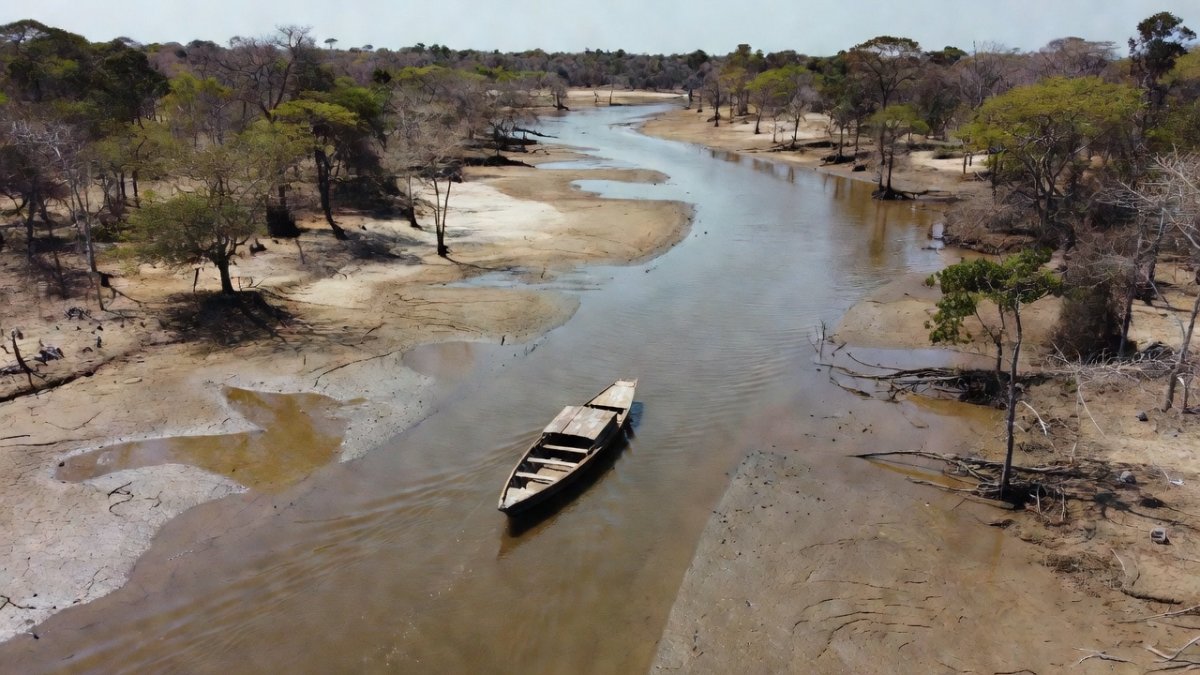
Indigenous territories absorbed significant portions of the 736,000 hectares deforested in 2025, compounding the direct impacts of drought on communities that rely on rivers for transport, fishing, drinking water, and food security. Severely reduced river levels have severed access to healthcare facilities and markets, isolating remote villages for weeks at a time during peak dry periods. Fish stocks, a dietary staple for many Amazonian peoples, have declined sharply as oxygen levels drop and spawning grounds dry out. Illegal deforestation and land encroachment within protected areas have intensified conflicts, with outsiders exploiting weakened state presence during the crisis. These pressures intersect with broader ecological changes, as declining moisture recycling threatens the long-term viability of traditional livelihoods tied to forest and river systems. Community leaders report increased respiratory illnesses linked to smoke from distant fires and greater difficulty maintaining cultural practices dependent on seasonal river cycles. The human cost extends beyond immediate survival challenges to include loss of ancestral knowledge as ecosystems shift irreversibly. Despite these hardships, Indigenous monitoring networks have played a vital role in documenting both deforestation incursions and the novel chemical emissions now emerging from stressed forests. Their territorial stewardship remains essential to any viable strategy for preserving the Amazon's remaining ecological functions amid accelerating climate pressures.
The Tipping Point Is Now
Carlos Nobre has warned that the Amazon tipping point is effectively upon us at approximately 1.5°C of global warming. Potsdam Institute research by Wunderling and colleagues indicates that at 22-28% deforestation combined with 1.5-1.9°C warming, up to two-thirds of the Amazon could transition into degraded states with profound ecological breakdown. The forest has already shifted from a net carbon sink to a potential net emitter, with the 2023 drought alone converting parts of the basin into temporary carbon sources releasing hundreds of millions of tonnes of CO₂. Moisture recycling, which generates more than 40% of the Amazon's own rainfall, is breaking down in deforested zones, with consequences extending as far as the Andes and La Plata Basin. These changes threaten agricultural productivity across multiple South American countries that depend on Amazon-derived moisture for their growing seasons. The combination of legacy deforestation, ongoing clearing, and intensifying climate extremes has compressed the timeline for crossing irreversible thresholds. Without immediate and sustained action on both deforestation and global emissions, the Amazon risks becoming a sustained net carbon source that accelerates warming worldwide. The stakes extend far beyond the basin itself, influencing weather patterns, biodiversity reservoirs, and carbon budgets that affect every continent.
The Bottom Line — What Comes Next
The approaching super El Niño will serve as a critical stress test for Brazil's enforcement gains and the Amazon's remaining resilience. Record reductions in deforestation alerts demonstrate that targeted policies can deliver rapid results, yet the structural threats from agricultural expansion and global warming persist. Sustained progress requires maintaining high levels of brigadista deployment, expanding Indigenous territorial protections, and securing deeper global emissions cuts to limit further temperature rise. The Amazon's fate directly influences rainfall reliability for millions of people across Latin America and shapes the trajectory of atmospheric carbon concentrations worldwide. International support through mechanisms such as the Amazon Fund must be paired with domestic commitment to address both immediate fire risks and long-term drivers of forest loss. If current trajectories continue, the chemical distress signals now emerging from stressed canopies may mark the onset of irreversible change rather than a temporary warning. Coordinated action across governments, Indigenous nations, and the international community offers the only viable path to preserving the Amazon's role as a climate regulator and biodiversity stronghold for future generations.
By Elena Vasquez, Staff Writer
This article was produced with AI-assisted research and editorial support. Reporting is based on sources cited in the article.
What's Your Reaction?
 Like
0
Like
0
 Dislike
0
Dislike
0
 Love
0
Love
0
 Funny
0
Funny
0
 Wow
0
Wow
0
 Sad
0
Sad
0
 Angry
0
Angry
0

Latin America Correspondent at Global1.News. Based in Mexico City, covering politics, economics, energy, and culture across the region. Brings an on-the-ground perspective to stories spanning from the Rio Grande to Patagonia.














Comments (0)