
Carney's Davos Speech Implemented at UN, Ambassador Says
Canada's approach to international diplomacy is evolving under Prime Minister Mark Carney, with middle-power coalitions emerging as a practical response to shifting global dynamics. Ambassador David Lametti has indicated that elements of this strategy are already visible in United Nations processes, where Canada is building flexible partnerships on specific issues rather than r
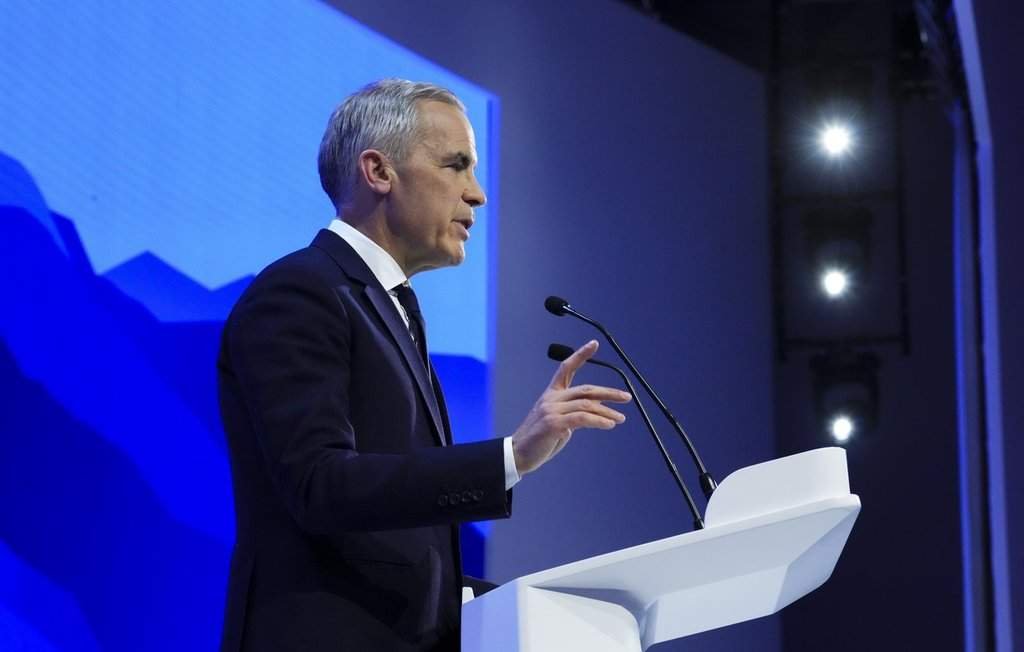
Canada's approach to international diplomacy is evolving under Prime Minister Mark Carney, with middle-power coalitions emerging as a practical response to shifting global dynamics. Ambassador David Lametti has indicated that elements of this strategy are already visible in United Nations processes, where Canada is building flexible partnerships on specific issues rather than relying solely on longstanding institutional frameworks.
Prime Minister Carney's Davos Address Sets New Course
Prime Minister Mark Carney delivered remarks at the World Economic Forum in Davos this January that drew international notice. He called on middle powers to collaborate more closely in order to protect their interests and reduce vulnerability to decisions made by larger states. The speech framed a departure from traditional alliance structures toward what Carney has termed variable geometry.
This concept, outlined by the prime minister last November, envisions dynamic and overlapping coalitions formed around shared interests rather than fixed institutions. Carney cited examples such as climate measures advanced through European Union trade rules, technology standards influenced by China and India, and nature-based approaches drawn from Brazil. Canadian foreign policy has historically emphasised a rules-based international order that benefits smaller and medium-sized nations in trade and security matters.
Variable Geometry in Action at the United Nations
Ambassador David Lametti, Canada's permanent representative to the United Nations, stated that the country has long operated in this manner at the UN. He described multiple issue-specific relationships that align with the prime minister's vision for areas both inside and outside the organisation. Lametti noted that Canada routinely works with nations from different regions to build consensus on pressing matters.
The ambassador highlighted a coordinating group on Haiti's gang-related crisis that is co-led by Ottawa and Washington and includes Central American states concerned about migration and smuggling. Such arrangements allow Canada to address immediate security and humanitarian concerns while drawing on regional expertise. Lametti emphasised that these efforts support issues the current government views as priorities, including the responsible development of artificial intelligence and the protection of civilians during armed conflicts.
The Mountains Group Champions Human Rights
One established example is the Mountains Group, a bloc of nations that includes Canada, Australia, Iceland, Liechtenstein, New Zealand, Norway and Switzerland. All members possess significant mountain ranges, yet the grouping focuses on advancing human rights at the United Nations. Lametti observed that the group's profile has increased as the United States has reduced its traditional role in promoting these issues within UN forums.
Canadian diplomats have collaborated with counterparts from Australia and New Zealand on topics such as the participation of women in conflict resolution and peacekeeping operations, as well as developments related to the Israel-Palestine situation. These partnerships enable like-minded countries to combine resources and expertise, producing more efficient advocacy. The approach reflects Canada's broader commitment to multilateral engagement while adapting to changes in the positions of larger powers.
JUSCANZ Facilitates Coordination Among Developed Nations
Canada also participates in the JUSCANZ grouping, which brings together Japan, the United States, Australia, New Zealand, Turkey, South Korea and other developed countries outside the European Union. The group shares information on policy matters affecting its members and helps coordinate positions on economic and social questions. Lametti described this as a practical mechanism for exchanging views without duplicating the work of EU-focused bodies.
Through such networks, Canada seeks to advance regulatory and ethical frameworks for emerging technologies and to strengthen norms around civilian protection in conflict zones. These coalitions operate alongside traditional alliances, adding layers of engagement rather than replacing existing relationships. The ambassador stressed that the strategy builds upon previous partnerships while responding to contemporary pressures on the international system.
Engaging China and India Amid Shifting Alliances
During a virtual panel organised by the NATO Association of Canada, Lametti identified the restoration of constructive ties with China and India as an important Canadian objective. He indicated that the country is not withdrawing from established alliances but is instead expanding its range of partnerships. This includes efforts to maintain open channels on trade, security and global governance questions.
The approach aligns with Carney's emphasis on pragmatic coalitions that can address specific challenges even when broader consensus proves difficult. Canadian officials continue to navigate economic coercion from both the United States and China, seeking stable commercial relationships that support domestic prosperity. Re-engagement with major Asian economies is presented as a necessary complement to North Atlantic and Pacific alliances.
Linking Trade Blocs to Preserve Rules-Based Order
Outside the United Nations, Carney has worked to connect the Comprehensive and Progressive Agreement for Trans-Pacific Partnership with the European Union. This initiative aims to reinforce predictable trade rules at a time when unilateral measures by larger economies threaten established norms. Lametti noted that such linkages help middle powers maintain leverage in global commerce and investment flows.
Canadian analysis of these developments underscores the value of diversified partnerships for a trading nation heavily reliant on stable international markets. The variable-geometry model allows Ottawa to pursue climate, technology and security objectives through multiple channels simultaneously. Observers in Ottawa suggest this flexibility may become a defining feature of Canadian diplomacy in the coming years.
Tags: Mark Carney, David Lametti, variable geometry, United Nations, middle powers, foreign policy, JUSCANZ, Mountains Group, CPTPP, Canada-China relations
By Alex Thompson, Staff Writer
This article was produced with AI-assisted research and editorial support. Reporting is based on sources cited in the article.
What's Your Reaction?
 Like
0
Like
0
 Dislike
0
Dislike
0
 Love
0
Love
0
 Funny
0
Funny
0
 Wow
0
Wow
0
 Sad
0
Sad
0
 Angry
0
Angry
0

Canada Correspondent at Global1.News. Based in Toronto, covering Canadian politics, energy, trade, and US-Canada relations. Provides the Canadian perspective on North American and global affairs.















Comments (0)