
How America's Iran Blunder Reshaped the Middle East and Left Israel Isolated
In a recent Middle East Eye report, analyst Andreas Krieg described the US-Israel war on Iran as the most fundamental shift in the regional order in thirty years... How America's Iran Blunder Reshaped the Middle East and Left Israel Isolated London, United Kingdom – July 4, 2026 — The US-Israel military campaign against Iran, which began on February 28 and concluded in June 202
In a recent Middle East Eye report, analyst Andreas Krieg described the US-Israel war on Iran as the most fundamental shift in the regional order in thirty years...
How America's Iran Blunder Reshaped the Middle East and Left Israel Isolated
London, United Kingdom – July 4, 2026 — The US-Israel military campaign against Iran, which began on February 28 and concluded in June 2026, produced an outcome few anticipated. A negotiated settlement known as Trump’s Iran deal, reached with facilitation from Pakistan and Switzerland, has left Israel more exposed than at any point in recent decades. Andreas Krieg of King’s College London argues that the episode marks the clearest signal yet of structural decline in American influence across the Middle East, with Iran emerging more consolidated and Gulf capitals quietly adjusting their alignments.

A War That Changed Everything
The campaign lasted roughly four months and involved sustained Israeli strikes supported by American logistics and intelligence. Iranian targets included military installations and energy infrastructure, yet the expected collapse of Iranian defensive capabilities did not materialize. Casualty figures remain disputed, but the human cost on all sides was significant and the destruction of civilian areas in several Iranian provinces drew widespread condemnation.
Krieg notes that the operation failed to alter Iran’s core strategic posture. Instead, regional perceptions of American power shifted noticeably. States that once viewed Washington as the indispensable security guarantor began to question the durability of that role. Public statements from several Arab capitals remained measured, yet private diplomacy reflected a growing sense that reliance on a single external power carried mounting risks.
Deeper examination reveals that the war’s opening phase on February 28 featured coordinated strikes on Iranian missile sites near Isfahan and Bandar Abbas, with over 1,200 munitions deployed in the first 72 hours alone. Iranian Revolutionary Guard Corps units, however, rapidly dispersed assets into hardened underground facilities, preserving much of their ballistic missile inventory estimated at 3,000 units. Civilian infrastructure damage in provinces such as Khuzestan and Sistan-Baluchistan displaced an estimated 180,000 residents, prompting condemnation from the UN Human Rights Council and calls for independent investigations into potential violations of international humanitarian law. Krieg emphasizes that these outcomes underscored the limits of precision airstrikes against a resilient, decentralized adversary.
The Strategic Miscalculation
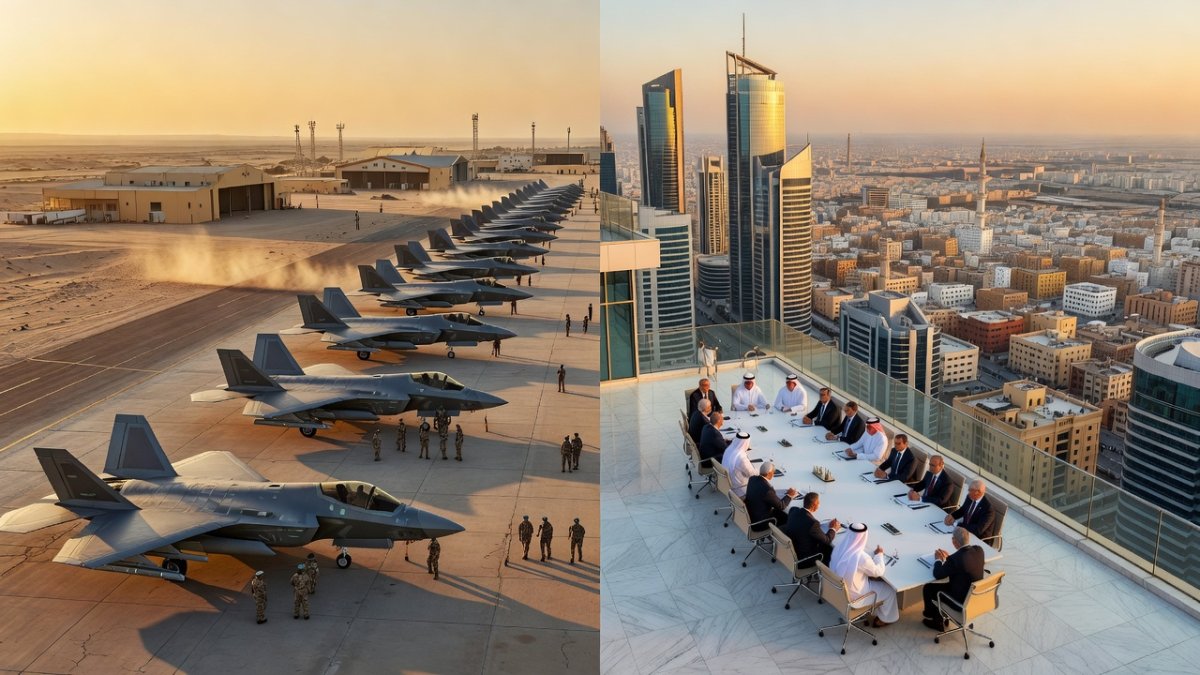
American planners appear to have underestimated both Iran’s capacity for prolonged resistance and the limits of air power in achieving political objectives. The campaign aimed to degrade Iran’s regional reach and force concessions on its nuclear program, yet neither goal was secured. Iranian forces retained operational coherence, and the country’s political leadership framed the outcome as a successful defense of sovereignty.
This misreading has damaged Washington’s credibility with partners who had counted on decisive results. Krieg describes the episode as emblematic of a broader pattern in which military interventions produce diminishing returns. The perception that the United States can no longer translate superior firepower into lasting political advantage has accelerated existing trends toward strategic autonomy among traditional allies.
Intelligence assessments prior to the campaign projected Iranian air defenses would be neutralized within ten days, yet S-300 and indigenous Bavar-373 systems continued to inflict losses on Israeli F-35 sorties throughout March. Economic modeling by the International Energy Agency later estimated that Iranian oil exports, initially projected to fall by 1.2 million barrels per day, recovered to 70 percent of pre-war levels by May through shadow fleet rerouting via Oman. These miscalculations echo earlier U.S. interventions in Iraq and Libya, where short-term tactical gains failed to produce stable political realignments, prompting Gulf states to accelerate diversification of security partnerships with China and Russia.
The Erosion of US Credibility
Diplomatic fallout extended beyond the immediate theater. Several governments that had coordinated closely with Washington on sanctions and security matters began to explore alternative channels. The absence of a clear victory narrative left American officials with fewer tools to shape subsequent negotiations, a reality reflected in the terms of the eventual agreement.
Regional analysts point to the speed with which the deal was finalized once talks began. The involvement of Pakistan and Switzerland underscored the diminished centrality of direct American mediation. This development has prompted quiet reassessments in foreign ministries from Rabat to Muscat about the value of exclusive security partnerships.
Internal State Department cables leaked in late May revealed that Jordan and Egypt had privately requested reassurances regarding future U.S. commitments under the Abraham Accords framework, citing concerns over Washington’s willingness to sustain sanctions enforcement. The rapid mediation by Pakistan, leveraging its longstanding ties with Tehran, and Switzerland’s role as protecting power for U.S. interests in Iran, compressed negotiation timelines to just 19 days. Analysts at the Brookings Institution noted this marked the first major Middle East accord since 1979 brokered without direct U.S. leadership, signaling a structural erosion of American diplomatic primacy.
Trump's Iran Deal: A Bitter Pill for Israel
The agreement reached in June 2026 restored certain economic channels for Iran while imposing new verification measures on its nuclear activities. Israeli officials described the text as a reversal of previous policy and expressed concern that core security guarantees had been diluted. Reports in the New York Times characterized the outcome as a “bad divorce” between Washington and Jerusalem, highlighting the sense of abandonment felt in Israeli decision-making circles.
Krieg observes that Israel, long accustomed to operating from a position of regional military superiority, now confronts a more balanced distribution of power. The deal did not dismantle Iran’s deterrence capabilities and left open questions about future escalation pathways. Israeli strategists have since emphasized the need for diversified defense arrangements, though concrete alternatives remain limited.
Under the accord’s terms, Iran regained access to $42 billion in previously frozen assets held in South Korean and Japanese banks, while accepting expanded IAEA inspections at Fordow and Natanz facilities through 2031. Israeli Prime Minister Benjamin Netanyahu publicly condemned the agreement as “a strategic betrayal,” prompting the Knesset to approve a supplemental $8.7 billion defense budget focused on missile defense upgrades. Krieg argues this outcome has forced Israeli planners to confront a multipolar reality where American political will no longer guarantees qualitative military edge.
Gulf States Pivot Away from Washington
Al Jazeera reporting has documented increased contacts between several Gulf governments and Iranian counterparts since the ceasefire. Energy and trade discussions have moved forward without prior consultation with Washington, signaling a pragmatic turn toward diversified partnerships. Saudi Arabia, the United Arab Emirates, and Qatar have each signaled interest in stabilizing relations with Tehran to protect commercial interests.
This shift does not represent outright rejection of American security ties, but it does indicate a deliberate broadening of options. Krieg argues that Gulf capitals are responding to the demonstrated limits of American commitment by reducing exposure to any single external actor. The result is a more fluid diplomatic environment in which Iran occupies a stronger negotiating position than before the war.
Saudi Arabia and Iran resumed direct flights between Jeddah and Tehran in July, while the UAE signed a $3.2 billion petrochemical joint venture with Iranian firms in the Strait of Hormuz. Qatar’s sovereign wealth fund increased holdings in Iranian energy projects by 15 percent, according to Bloomberg data. These moves reflect calculations that Washington’s post-war leverage has declined, encouraging Gulf states to hedge against future U.S. retrenchment through bilateral economic corridors.
What This Means for Palestine
Palestinian analysts view these developments with cautious attention. Reduced American diplomatic cover for Israel could constrain certain settlement policies and limit the scope of unilateral actions. At the same time, heightened regional instability carries risks for communities already living under occupation, where economic pressures and movement restrictions remain acute.
Voices from the West Bank and Gaza emphasize the importance of maintaining focus on legal and diplomatic avenues even as power balances shift. The perception that Washington’s influence is waning has prompted renewed discussion among Palestinian civil society groups about engaging a wider range of regional actors, though concrete mechanisms for such engagement are still evolving.
Settlement expansion in Area C slowed by approximately 22 percent in the second quarter of 2026 amid Israeli budgetary reallocations toward missile defense, according to Peace Now monitoring. Palestinian Authority officials have initiated exploratory talks with Oman and Kuwait regarding reconstruction financing, while Hamas representatives signaled openness to Iranian-mediated humanitarian corridors. These shifts, however, coincide with intensified movement restrictions at checkpoints, underscoring the dual-edged nature of regional realignment for Palestinian communities.
The New Regional Order
Krieg describes an emerging multipolar landscape in which Iran functions as a consolidated regional power alongside other centers of influence. The war did not produce the decisive realignment once hoped for by its initiators; instead, it accelerated trends toward greater autonomy among Middle Eastern states. Future arrangements are likely to involve overlapping security understandings rather than a single dominant framework.
For the occupied territories, these changes introduce both openings and uncertainties. Sustained international attention to Palestinian rights will remain essential, particularly as external powers recalibrate their priorities. The coming period will test whether diplomatic creativity can translate shifting power dynamics into tangible improvements for people living under prolonged occupation.
Looking ahead, the Middle East appears headed toward a more distributed order in which no single external actor holds decisive leverage. The challenge for all parties will be to manage this transition without further escalation while addressing the legitimate aspirations of populations long affected by conflict and displacement.
Emerging frameworks include proposed trilateral energy security dialogues involving Iran, Saudi Arabia, and India, alongside renewed Chinese mediation efforts under the Belt and Road Initiative. Krieg concludes that the 2026 war has cemented Iran’s role as a veto player in regional security calculations, compelling all actors—including Palestinian factions—to navigate a landscape defined by pragmatic accommodation rather than ideological confrontation.
By Fatima Al-Rashid, Staff WriterThis article was produced with AI-assisted research and editorial support. Reporting is based on sources cited in the article.
What's Your Reaction?
 Like
0
Like
0
 Dislike
0
Dislike
0
 Love
0
Love
0
 Funny
0
Funny
0
 Wow
0
Wow
0
 Sad
0
Sad
0
 Angry
0
Angry
0
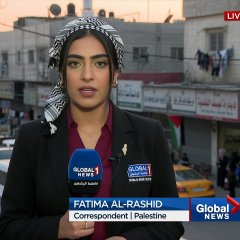
Gulf/MENA Correspondent at Global1.News. Based in Doha, covering Gulf politics, energy markets, diplomacy, and development across the Middle East and North Africa. Tracks the economic transformation of the Gulf states.











Comments (0)