
Türkiye-Saudi Arabia Axis: Hejaz Railway Rewires Eurasian Connectivity
Türkiye-Saudi Arabia Axis: Hejaz Railway Rewires Eurasian Connectivity The June 9 agreements signed in Riyadh mark a concrete step in long-term Turkish planning rather than an isolated infrastructure deal. Two memoranda of understanding—one on railway cooperation and one on logistics—were concluded alongside plans for a terrestrial fiber-optic route. A joint feasibility study i
The Riyadh Memoranda and Their Immediate Scope
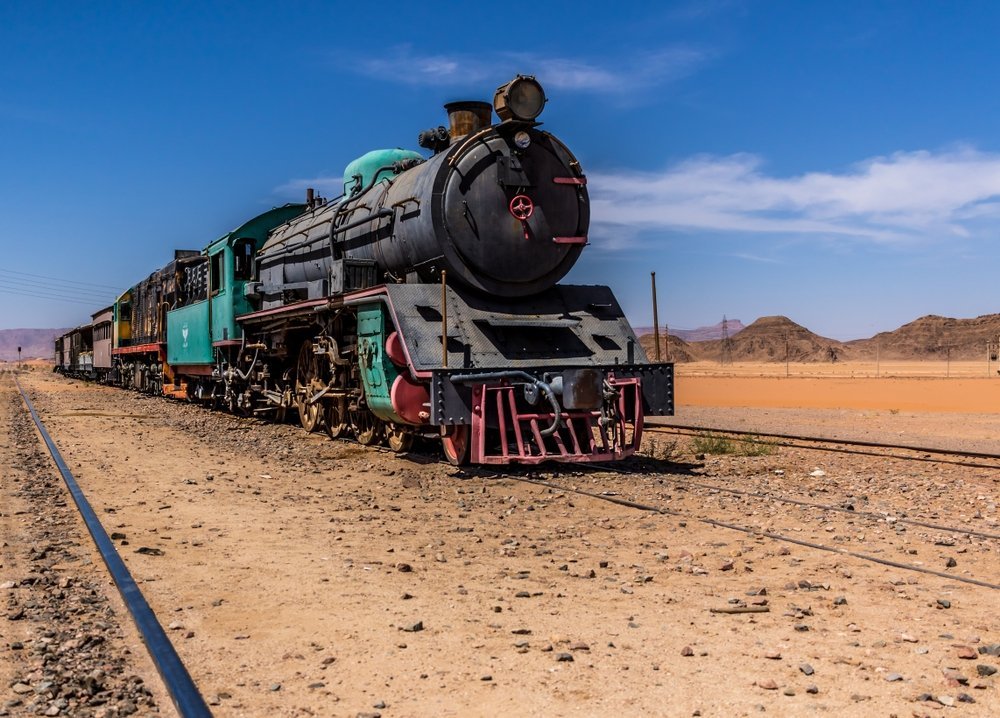
On June 9, Türkiye and Saudi Arabia signed two memoranda of understanding in Riyadh: one on railway cooperation reviving the historic Hejaz Railway through Syria and Jordan, and the other on logistics, accompanied by plans for a terrestrial fiber-optic route along the same geography. A joint feasibility study is due before the end of the year, with a long-term vision extending the line toward Oman and the Indian Ocean.
Turkish Transport and Infrastructure Minister announcements framed the accords as practical steps. Saudi Arabia’s Vision 2030 economic diversification drive, led by Crown Prince Mohammed bin Salman, seeks to position the Kingdom as a global logistics hub connecting three continents.
Historical Resonance of the Hejaz Line
The Hejaz Railway originally built by the Ottoman Empire between 1900 and 1908 connected Damascus to Medina. It was a strategic and religious artery carrying pilgrims and military traffic. The line was largely destroyed during World War I by T.E. Lawrence and Arab forces in a campaign that became legendary. Its revival under a Turkish-Saudi partnership represents a powerful historical restoration.
That restoration now occurs within a changed regional environment. The agreements were signed as Turkish President Recep Tayyip Erdoğan and Saudi Crown Prince Mohammed bin Salman have overseen a sustained rapprochement since 2023, following years of tensions over the 2018 Jamal Khashoggi killing and regional rivalries during the Arab Spring.
Ankara’s Geometric Design Across Two Axes
Read as a news item, this is a railway agreement. Read correctly, it is the latest piece of a design Ankara has been assembling for over a decade. The Development Road through Iraq, the Middle Corridor across the Caspian, the energy transit architecture, and now the revival of the Hejaz Railway and a digital backbone are not a portfolio of separate projects, but components of a single strategic geometry.
The design operates along two perpendicular axes. The vertical axis lifts Gulf and Red Sea flows northward overland. Its backbone is the Development Road, a $17 billion multimodal corridor running from Iraq’s Grand Faw Port to the Turkish border, developed with Iraq, the UAE and Qatar. The revived Hejaz Railway adds a second arm: restoring the Türkiye-Aleppo link, joining the existing line through Damascus and Jordan, and integrating with the Saudi network toward Riyadh and ultimately Oman. The two arms are deliberately redundant—a disruption on either leaves the axis intact.
The horizontal axis is the Middle Corridor, carrying East-West trade from China through Central Asia and the Caucasus into Türkiye, with the Zangezur connection now under construction.
Removing the Bosporus Bottleneck
Where the axes intersect, Türkiye is removing its own bottleneck: the $8.1 billion Istanbul Northern Railway Corridor Project (INRAIL), backed by $2 billion in World Bank financing, will raise Bosporus rail freight capacity from roughly 3 million to 50 million tons annually.
Türkiye’s wager is geometric. World trade flows predominantly from East Asia westward, and until the Arctic’s Northern Sea Route matures, that flow is captive to the southern maritime system and its narrow gates. Any land-based alternative into Europe converges by physical necessity on a single landmass: Anatolia. Ankara’s strategy is to convert that geographic inevitability into an infrastructural strategy.
IMEC’s Structural Constraints
IMEC is the design’s mirror image. Announced in 2023 with formidable backers, it remains structurally locked. Its rail spine terminates at Haifa, making Saudi-Israeli normalization a load-bearing precondition that has been frozen since October 2023. Nearly three years on, no member state has made formal financial commitments.
The Türkiye-centered design inverts each weakness. It requires no diplomatic breakthrough not already underway, advancing along the axis of an active Turkish-Saudi rapprochement. It offers a continuous land bridge rather than a chain of ports. It is moving from memoranda to feasibility studies to tenders on a visible timeline.
Data Redundancy and Red Sea Vulnerabilities
Alongside goods and energy, the new arteries are engineered to carry data. Roughly 17 submarine cables traverse the Red Sea, carrying about 90% of data traffic between Asia and Europe. The 2024 cable cuts off Yemen degraded a quarter of that traffic in a single incident. The hyperscale data centers Amazon, Microsoft and Google have built across the Gulf are the physical substrate of its artificial intelligence ambitions—and they require terrestrial redundancy.
A century ago, Halford Mackinder taught strategists to see power as a contest between those who command the land and those who command the sea. That dichotomy has quietly expired. Power now accrues to the nodes where flows of goods, energy and data converge and can be assured. States are competing to mint this new currency: China through the Belt and Road (BRI), India and its partners through the India-Middle East-Europe Economic Corridor (IMEC), the Gulf monarchies through ports, rail and cables.
By Malik Hassan, Staff WriterThis article was produced with AI-assisted research and editorial support. Reporting is based on sources cited in the article.
What's Your Reaction?
 Like
0
Like
0
 Dislike
0
Dislike
0
 Love
0
Love
0
 Funny
0
Funny
0
 Wow
0
Wow
0
 Sad
0
Sad
0
 Angry
0
Angry
0

Middle East Correspondent at Global1.News. Based in Beirut, covering politics, conflict, energy, and society across the Middle East. Brings context and depth to a region often reduced to headlines.











Comments (0)