
US-Iran Peace Deal Announced — Pakistan Brokers End to Months of War as Trump Declares 'Let the Oil Flow!'
In a recent BBC News report, Pakistan's Prime Minister Shehbaz Sharif announced that a landmark peace deal between the United States and Iran has been reached, bringing an end to months of devastating military conflict that has reshaped the Middle East and disrupted global energy markets. US-Iran Peace Deal Announced — Pakistan Brokers End to Months of War as Trump Declares 'Le
In a recent BBC News report, Pakistan's Prime Minister Shehbaz Sharif announced that a landmark peace deal between the United States and Iran has been reached, bringing an end to months of devastating military conflict that has reshaped the Middle East and disrupted global energy markets.
US-Iran Peace Deal Announced — Pakistan Brokers End to Months of War as Trump Declares 'Let the Oil Flow!'
Geneva, Switzerland – Monday, 15 June 2026 — The signing ceremony, scheduled for Friday in Switzerland, represents the culmination of intensive Pakistani mediation that saw 15 hours of talks produce a memorandum of understanding between two powers that have been locked in direct military conflict since February.
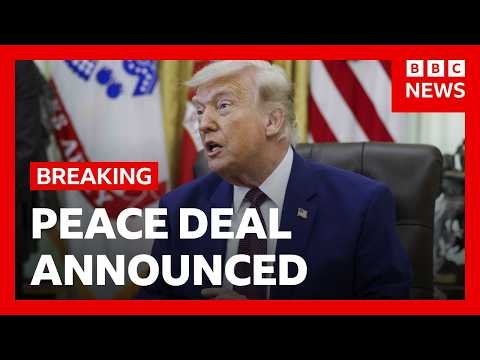
The Announcement — A Breakthrough After Months of War
On Saturday, Pakistan's Prime Minister Shehbaz Sharif broke the news on social media that the United States and Iran had finally reached a peace deal. Shehbaz Sharif posted on X that the agreement ends military operations on all fronts, including in Lebanon. Iran's Deputy Foreign Minister Kazem Gharibabadi confirmed the development on state television, stating that the memorandum of understanding had been finalized after prolonged negotiations. Donald Trump posted on Truth Social with the messages "Let the oil flow!" and "The Deal with the Islamic Republic of Iran is now complete." Trump also authorized the toll-free opening of the Strait of Hormuz and the removal of the US naval blockade. This represents a dramatic turning point after months of conflict, verified through direct statements from the officials involved.
The planned signing ceremony is scheduled for Friday in Switzerland. Fifteen hours of intensive talks produced the memorandum of understanding, with Pakistan serving as the key diplomatic broker. Exact terms remain limited in public detail, which aligns with energy analyst Vandana Hari's observation that incomplete information is likely to inject unease and uncertainty into markets. The mediation role of Pakistan highlights its emergence as an unexpected facilitator in high-stakes diplomacy between Washington DC and Tehran.
Structurally, the memorandum functions as a phased instrument rather than a single comprehensive treaty. The initial text prioritizes cessation of hostilities and maritime access, deliberately deferring more intractable issues to subsequent rounds. This sequencing mirrors earlier diplomatic templates in which confidence-building measures precede substantive concessions, allowing each side to demonstrate compliance before tackling core disputes. Pakistan's brokerage role itself signals a recalibration of influence, as traditional mediators such as Oman or Switzerland recede in favor of actors with direct channels to both Tehran and Washington.
Interpretively, the announcement underscores how prolonged economic pain can compel even entrenched adversaries toward accommodation. The reopening of the Strait of Hormuz is framed not merely as a logistical step but as a symbolic restoration of global commons, with immediate effects on inflation forecasts and supply-chain planning across continents. Yet the absence of detailed enforcement mechanisms leaves open the possibility that the current text serves primarily as a political breathing space rather than a durable architecture.
The War That Preceded the Deal
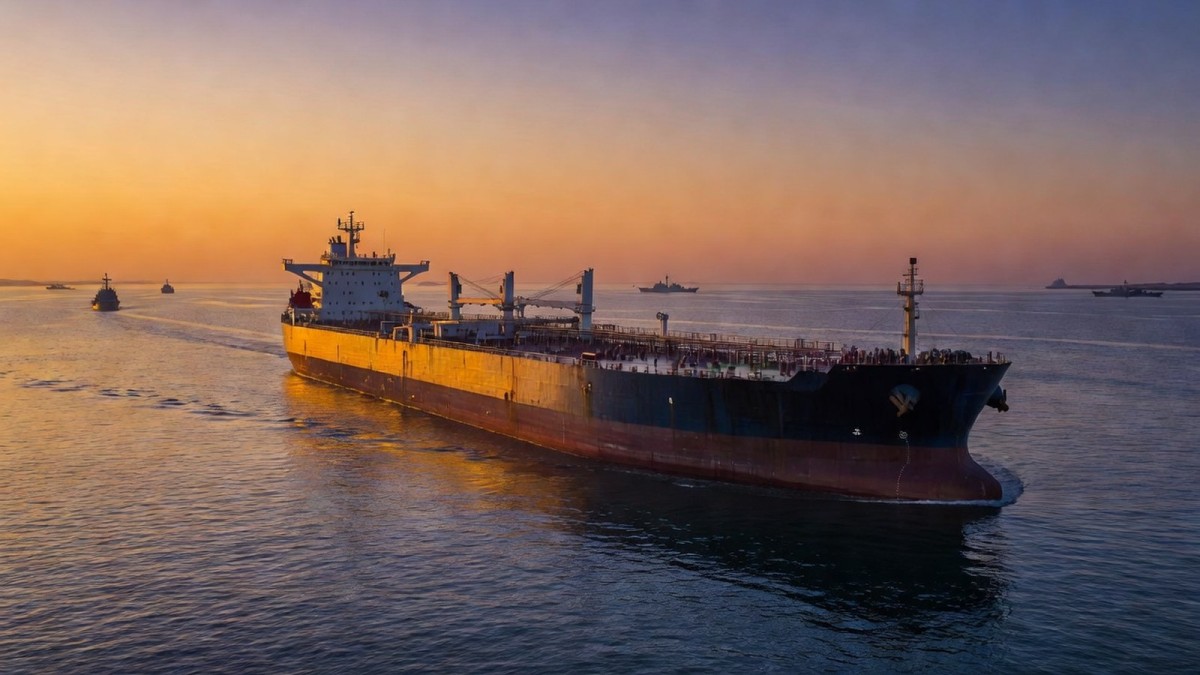
The conflict began with United States and Israeli strikes on Iran on February 28, 2026. Iran responded by attacking Israel and US-allied Gulf states. The Strait of Hormuz was effectively closed since February, blocking the passage of 20 percent of the world's oil and LNG. Pre-war Brent crude prices stood near 70 dollars per barrel and peaked near 120 dollars during the fighting. Southeast Asian economies dependent on Gulf supplies faced severe disruptions, while broader global supply chains absorbed higher costs across transportation and manufacturing sectors.
The global energy market impact proved severe as prices more than doubled at their height. Asian economies reliant on Gulf oil suffered the most direct consequences from elevated energy expenses. The United Kingdom economy contracted under sustained pressure from higher costs. The Strait of Hormuz maintains its structural importance for global energy security, serving as the critical chokepoint whose closure amplified worldwide volatility in energy supplies and pricing.
Diplomatic history provides essential context for understanding why the conflict escalated so rapidly. Decades of mutual suspicion, punctuated by the collapse of the Joint Comprehensive Plan of Action and successive rounds of sanctions, created a narrow band of trust in which miscalculation could quickly produce open confrontation. The February strikes therefore represented not an isolated event but the culmination of accumulated grievances that had resisted earlier de-escalation attempts.
Energy-market implications extend beyond headline price spikes. Refineries in South Korea, Japan, and India were forced into costly spot-market purchases and temporary production cuts, while European utilities faced parallel pressure on LNG cargoes that would otherwise have transited the strait. These disruptions illustrate how a single chokepoint can transmit shocks through interconnected commodity networks, magnifying the original military confrontation into a global economic event.
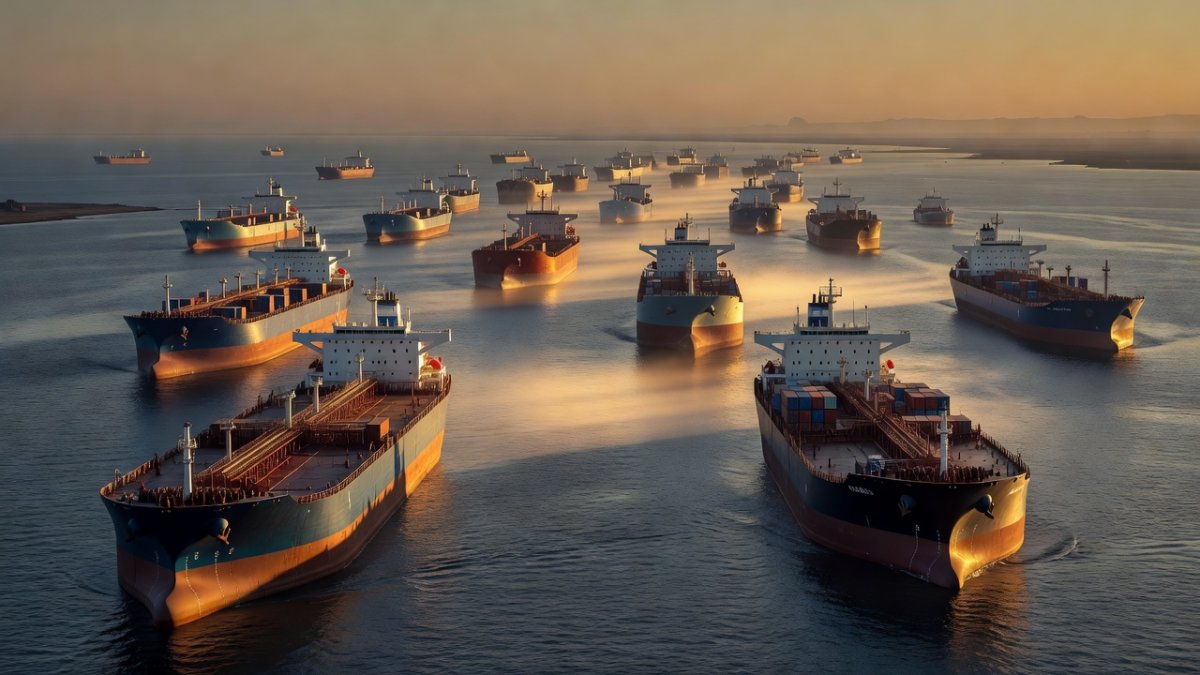
Market Reaction — Oil Slides, Asian Markets Surge
Brent crude fell 4.8 percent to 83.18 dollars per barrel, while US oil declined 5.6 percent to 80.13 dollars per barrel. Markets had already begun pricing in a potential agreement following weeks of diplomatic signals. Asian markets responded most strongly, with the Nikkei rising 5.4 percent and the Kospi advancing 5.5 percent. The region had been particularly exposed to energy cost inflation throughout the conflict period. Vandana Hari of Vanda Insights cautioned that the lack of detailed terms could produce a week of uncertainty and volatility as traders assess the durability of the reopening.
Andrew Lipow of Lipow Oil Associates warned that full reopening requires time for mine clearance operations, which could span weeks to six months, alongside clearance of a large backlog of waiting tankers. Restarting oil production and loading processes will require additional weeks. Oil reserves will not replenish quickly. Asian economies will continue to experience residual effects even as benchmark prices ease in the immediate term.
From an interpretive standpoint, the market reaction reveals how heavily participants had already discounted a negotiated outcome. The sharp equity gains in export-oriented Asian indices reflect relief that energy-cost headwinds may ease, yet the same relief is tempered by recognition that physical supply restoration will lag price movements. Traders are therefore likely to oscillate between optimism over the memorandum and caution over operational timelines.
Broader energy-market implications include potential shifts in hedging strategies and inventory policies. Companies that built precautionary stocks during the closure may now unwind those positions, adding further downward pressure on spot prices even before physical flows normalize. This dynamic could compress margins for producers while offering temporary relief to consumers, illustrating the asymmetric distributional effects of any Hormuz reopening.
Diplomatic Reactions — World Leaders Weigh In
US Vice President JD Vance stated that the deal could fundamentally transform the Middle East for the next 50 years. The leaders of the United Kingdom, France, Germany, and Italy welcomed the agreement. Iran's top military command portrayed the outcome as a victory for Tehran. Pakistan emerged as an unexpected diplomatic success story through its mediation efforts. The Lebanon dimension remains contested, with Pakistan and Iran claiming inclusion in the deal while Israel and the United States have not confirmed this element.
Donald Trump's 80th birthday coincided with the day of the announcement. He hinted at a more comprehensive peace agreement with Iran in subsequent posts. Trump's earlier suggestion of serving as guardian of the Middle East in exchange for 20 percent of regional revenues appeared in a New York Times interview, though its precise timing relative to the current memorandum remains unclear. European powers emphasized the importance of sustained dialogue to consolidate the initial ceasefire.
Interpretively, the spectrum of reactions highlights divergent strategic interests. European capitals view the memorandum chiefly as an opportunity to stabilize energy prices and reduce migration pressures stemming from regional instability, whereas Iranian military statements frame the outcome as validation of deterrence capabilities. Pakistan's elevated profile, meanwhile, demonstrates how middle powers can convert geographic proximity and quiet channels into diplomatic capital when larger actors reach impasse.
Diplomatic history further contextualizes these responses. Previous attempts at US-Iran engagement, from the 2015 nuclear accord to informal Oman-mediated talks, repeatedly foundered on verification disputes and domestic political constraints. The current text's emphasis on phased implementation may therefore be read as an effort to avoid repeating those earlier failures by sequencing issues according to relative tractability.
The Nuclear Question — What Remains Unresolved
The most contentious issue centers on Iran's nuclear programme. The draft memorandum includes commitments from Iran to never pursue nuclear weapons and to negotiate over suspension of uranium enrichment along with removal of enriched uranium stockpiles. These aspects have not been finalized. The announced deal focuses primarily on ending military operations and reopening the Strait of Hormuz, positioning the nuclear dimension as a distinct Phase Two process requiring further rounds of talks in Geneva and other venues.
International inspectors will require access to Iranian facilities for verification. The framework for compliance monitoring has not yet been detailed publicly. Analysts suggest this phase could prove the most difficult, given Iran's sovereign red lines on enrichment activities. Lasting peace will depend on successful resolution of these nuclear questions through continued diplomatic engagement involving multiple capitals.
Structurally, separating the ceasefire from nuclear negotiations creates both opportunity and risk. Opportunity arises from the possibility of incremental confidence-building that could eventually support more ambitious limits; risk stems from the danger that momentum dissipates once immediate military and energy pressures subside. The memorandum's language on enrichment suspension therefore functions more as an agenda item than a binding obligation at this stage.
Interpretively, the unresolved nuclear file underscores how technical verification questions remain inseparable from broader questions of sovereignty and regional security architecture. Any future agreement will need to reconcile Iran's insistence on an indigenous fuel cycle with external demands for transparency, a tension that has persisted across multiple diplomatic cycles and is unlikely to be resolved in a single follow-on round.
Analysis — What the Deal Means for Global Order
This agreement signals a notable shift in Middle Eastern geopolitics. Pakistan's mediation role reflects evolving patterns in regional diplomacy where non-traditional actors gain influence. Reopening the Strait of Hormuz will produce immediate effects on global energy prices and inflation expectations worldwide. The absence of finalized nuclear provisions and clarity on Lebanon indicates that critical questions persist. The current text functions more as a ceasefire framework than a permanent settlement, establishing an initial step rather than a conclusive endpoint.
For Russia, the conclusion of active conflict removes a major source of global instability while simultaneously easing energy price pressures that previously supported Russian oil export revenues. China, as the largest consumer of Gulf oil routed through the Strait of Hormuz, stands to benefit substantially from restored flows. Long-term outcomes hinge on whether this memorandum evolves into a comprehensive settlement addressing nuclear, regional security, and economic dimensions. The involvement of European powers alongside the United States and Iran suggests a multipolar diplomatic process that could reshape power balances extending beyond the immediate region.
From a structural perspective, the memorandum illustrates how energy interdependence can serve as both catalyst and constraint in conflict resolution. The rapid market response to reopening signals demonstrates that commercial actors retain significant leverage over political timelines, yet the persistence of verification gaps shows that economic relief alone cannot substitute for sustained political engagement on core security issues.
Russia and China perspectives further illuminate the deal's wider ramifications. Moscow gains breathing room to manage its own energy exports without the distorting effect of extreme price volatility, while Beijing secures more predictable feedstock for its refining sector. Both capitals are therefore positioned to support the memorandum's implementation provided it does not entrench exclusive US or European influence over Gulf energy routes. In this sense the agreement may mark an early instance of multipolar coordination on a shared interest in maritime stability, even as underlying geopolitical rivalries remain unresolved.
By Irina Volkov, Staff Writer
This article was produced with AI-assisted research and editorial support. Reporting is based on sources cited in the article.
What's Your Reaction?
 Like
0
Like
0
 Dislike
0
Dislike
0
 Love
0
Love
0
 Funny
0
Funny
0
 Wow
0
Wow
0
 Sad
0
Sad
0
 Angry
0
Angry
0
Russia/Eastern Europe Correspondent at Global1.News. Covering Russian politics, energy, security, and the shifting dynamics of the post-Soviet space. Provides clear-eyed analysis on one of the world's most opaque regions.










Comments (0)