
Gurugram IVF Mix-Up: DNA Confirms Twins Not Biologically Related to Parents
The Rathore family from Gurugram now faces an unprecedented crisis after DNA tests confirmed that the twin girls born to them in January 2026 share no genetic link with either parent. Rahul Rathore, a builder originally from Delhi, and his wife had approached SCI IVF clinic in Delhi in February 2025 after already raising two daughters. Their case exposes critical weaknesses in
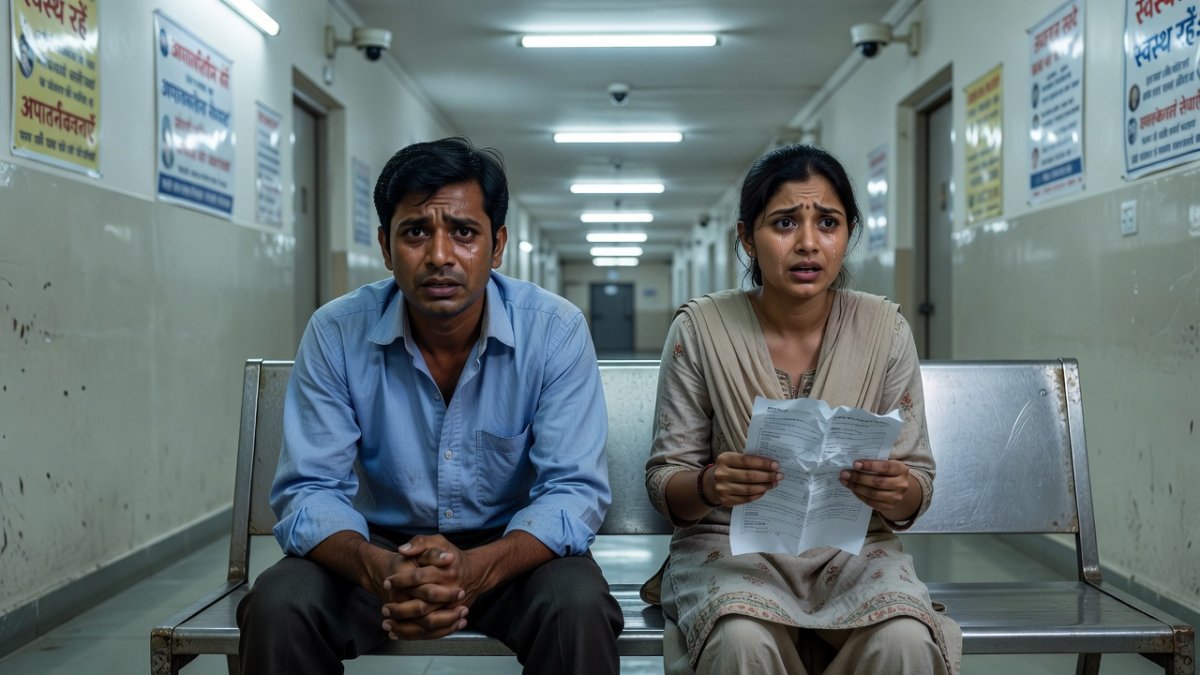
The Rathore family from Gurugram now faces an unprecedented crisis after DNA tests confirmed that the twin girls born to them in January 2026 share no genetic link with either parent. Rahul Rathore, a builder originally from Delhi, and his wife had approached SCI IVF clinic in Delhi in February 2025 after already raising two daughters. Their case exposes critical weaknesses in India's assisted reproductive technology oversight under the ART and Surrogacy (Regulation) Act, 2021.
Gurugram IVF Mix-Up: Twins Not Theirs, DNA Confirms
Gurugram, Haryana — June 13, 2026 — A harrowing medical discrepancy has brought India's assisted reproductive technology framework under scrutiny after DNA testing revealed that the twin girls delivered to a Gurugram couple through IVF share no biological relationship with either parent.
The Sequence of Medical Procedures
In February 2025 the couple visited SCI IVF clinic in Delhi on their gynaecologist's recommendation. By May 2025 clinic staff informed them that three embryos had been transferred. On 5 January 2026 the wife delivered twin girls at Max Hospital in Delhi. Immediate visual differences in one infant prompted the family to seek DNA testing.
DNA Evidence and Immediate Aftermath
The first DNA test conducted on 8 January 2026 established that neither twin was biologically related to Rahul Rathore or his wife. A second independent test on 16 January 2026 produced identical results confirming complete genetic mismatch — a 0% probability of biological relation. The couple filed a formal complaint the following day.
Police and Regulatory Response
An FIR was registered on 31 March 2026 at Greater Kailash police station. On 10 June 2026 the Appropriate Authority under the ART and Surrogacy (Regulation) Act, 2021 issued notice for a hearing. The hearing took place on 12 June 2026 at Delhi Secretariat. The next proceeding is scheduled three months later.
Regulatory Gaps in the ART Framework
India currently lacks a centralised IVF registry that would track embryo handling across clinics. The ART and Surrogacy (Regulation) Act, 2021 mandates licensing and record-keeping yet enforcement remains fragmented between state authorities and individual clinics. Delhi's Appropriate Authority has initiated proceedings, but the absence of mandatory electronic embryo logging allows potential mix-ups to go undetected until after birth.
Implications for Indian Families and Taxpayers
Patients in cities such as Gurugram and Delhi who rely on private IVF centres bear both emotional and financial costs when regulatory safeguards fail. With IVF treatment costs in India ranging between Rs 1.5 to 3 lakhs per cycle, families already navigating high expenses now confront prolonged legal processes and uncertainty about the whereabouts of their biological children. The case underscores how weak central oversight shifts the burden onto individual citizens rather than systemic accountability mechanisms.
Demands for Transparency and Next Steps
The Rathores have requested examination of CCTV footage, electronic records, IVF documentation and embryo logs from SCI IVF clinic. They seek answers on whether an embryo mix-up occurred during the May 2025 transfer or a baby swap took place after delivery at Max Hospital. Their case will test whether the ART Act can deliver timely resolution and whether India will move toward a unified national database for assisted reproduction.
— By Dr. Raj Patel, Staff WriterThis article was produced with AI-assisted research and editorial support. Reporting is based on sources cited in the article.
What's Your Reaction?
 Like
0
Like
0
 Dislike
0
Dislike
0
 Love
0
Love
0
 Funny
0
Funny
0
 Wow
0
Wow
0
 Sad
0
Sad
0
 Angry
0
Angry
0

India/South Asia Correspondent at Global1.News. Analytical voice with a background in science and health journalism. Based in New Delhi, covering Indian politics, education, healthcare, technology, and policy. Breaks down complex data into clear, actionable reporting.














Comments (0)