
US hits Philippine exports with 12.5% tariff
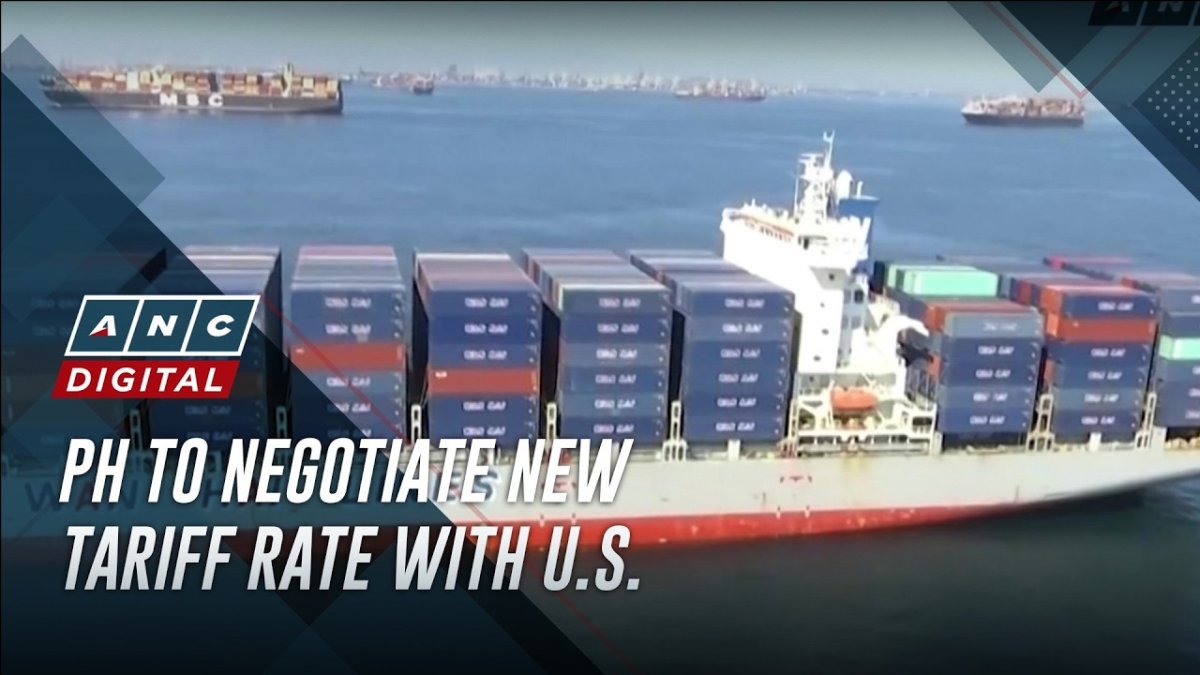
In a recent ANC 24/7 report by The World Tonight, the United States imposed a 12.5 percent tariff on Philippine exports effective this week. The new rate replaces the flat 10 percent tariff that had applied since February. US Trade Representative Jamieson Greer announced the measure under Section 301 of the Trade Act of 1974, targeting 60 economies that the office determined failed to impose and effectively enforce prohibitions on forced-labor imports.
In a recent ANC 24/7 report by The World Tonight, the United States imposed a 12.5 percent tariff on Philippine exports effective this week. The new rate replaces the flat 10 percent tariff that had applied since February. US Trade Representative Jamieson Greer announced the measure under Section 301 of the Trade Act of 1974, targeting 60 economies that the office determined failed to impose and effectively enforce prohibitions on forced-labor imports.
Scope of the Section 301 Action
Jamieson Greer stated that the action begins to correct both a human rights abuse and a distortive trade practice. The Philippines joins 53 other economies facing the higher rate. Seventeen countries, including Cambodia, Indonesia, and Malaysia, received only the original 10 percent tariff because they already maintain bans on forced-labor imports.
The Department of Trade and Industry in Manila confirmed that electronics and semiconductors remain exempt from the increase. These products constitute the Philippines top export category to the United States and support thousands of workers in industrial zones around Metro Manila and Cebu.
Section 301 of the Trade Act of 1974 grants the US Trade Representative broad authority to investigate and respond to foreign practices that violate trade agreements or burden US commerce, including inadequate enforcement of labor standards. In this instance, the statute has been invoked against 60 economies worldwide, spanning Asia, Latin America, and parts of Africa, marking one of the widest applications since the law's major revisions in 1988. The legal framework requires the USTR to publish findings in the Federal Register and allows affected nations 30 days to request consultations before tariffs take effect.
During his announcement, Greer emphasized that the tariff adjustment addresses both human rights concerns and competitive imbalances, noting that countries failing to curb forced-labor inputs gain an unfair edge in global supply chains. He highlighted data from US Customs showing a 22 percent rise in suspected forced-labor shipments from flagged economies over the past two years. The Philippines, as one of the 53 nations now subject to the 12.5 percent rate, must demonstrate verifiable improvements in supply-chain monitoring to qualify for relief.
Products Under Heightened Scrutiny
US authorities flagged several Philippine agricultural exports for additional review. The list includes bananas, coconut oil, coconuts, fish, rice, and sugarcane. Shipments of these goods now face the 12.5 percent tariff at US ports of entry.
Farmers in Davao del Norte who supply bananas to American markets and coconut growers in Quezon province will feel the immediate cost increase. Sari-sari store owners in rural barangays who rely on steady demand for coconut-based products may also see reduced orders from exporters.
Philippine Government Response
President Ferdinand Marcos Jr. trade chief denied that the country patronizes products made from forced labor. The official emphasized that Philippine law already prohibits such practices. A delegation led by the Philippine Trade Secretary will travel to Washington to negotiate a lower tariff rate.
The delegation plans to present documentation showing current enforcement mechanisms at the Bureau of Customs and the Department of Labor and Employment. Officials hope to demonstrate that the Philippines meets the standards applied to the 17 countries that retained the 10 percent rate.
The delegation comprises senior officials from the Department of Trade and Industry, the Department of Labor and Employment, the Bureau of Customs, and the Department of Agriculture, alongside technical experts from the Philippine Institute for Development Studies. Their arguments will center on recent amendments to Republic Act 11313 and strengthened inter-agency task forces that have conducted over 1,800 inspections in agricultural zones since 2022. Past trade negotiations with the United States, including the 2019 review of Generalized System of Preferences eligibility, provide a template for presenting compliance data and securing phased tariff relief.
Philippine negotiators intend to reference bilateral labor dialogues held in 2021 and 2023, where US officials acknowledged progress in reducing child labor in sugarcane and fishing sectors. They will also cite export data showing that 68 percent of Philippine shipments to the US already undergo third-party audits aligned with ILO conventions. Success hinges on securing a side agreement similar to those granted to Malaysia in prior Section 301 cases.
Child Labor Findings and International Reports
A 2024 US Department of Labor report listed the Philippines among countries with products made using inputs produced with child labor. The finding contributed to the US Trade Representative decision to apply the higher tariff. Philippine officials have pledged to strengthen monitoring in agricultural supply chains.
Workers in sugarcane plantations in Negros Occidental and fishing communities in General Santos City now face uncertainty over future contracts. Families dependent on these seasonal jobs worry about reduced income during the coming harvest months.
The US Department of Labor's 2024 Findings on the Worst Forms of Child Labor report documented an estimated 1.2 million children engaged in hazardous work in the Philippines, with 34 percent concentrated in agriculture. Specific commodities flagged include sugarcane harvested in Negros Occidental and tuna caught off General Santos, where children as young as 12 perform dangerous tasks. The report notes that while Republic Act 9231 sets the minimum working age at 15, enforcement gaps persist in remote barangays.
The Department of Labor and Employment has deployed 280 labor inspectors nationwide and launched the Child Labor-Free Barangay program, which has certified 1,450 communities since 2020. DOLE data indicate a 19 percent decline in verified child-labor cases in monitored agricultural areas between 2021 and 2023. Philippine officials argue these metrics demonstrate sufficient progress to warrant parity with the 17 countries that retained the lower tariff.
Economic Ripple Effects on Communities
The tariff increase arrives as many households in export-oriented provinces recover from recent typhoons. Coconut farmers in Bicol who sell to processing plants supplying US buyers may see thinner margins after the added duty. Rice millers in Nueva Ecija who ship premium varieties abroad also anticipate tighter cash flow.
Jeepney drivers in Manila and Cebu who transport workers to and from factories producing exempt electronics may experience steadier ridership, while those serving agricultural areas could see fewer passengers if export volumes drop. The contrast highlights how the tariff affects different sectors unevenly across the archipelago.
Congressional and Industry Reactions
Senators and House members weighed in on the tariff decision this week. Some lawmakers called for a thorough review of Philippine trade policy while others urged the executive branch to prioritize the Washington negotiations.
The Philippine Chamber of Commerce and Industry offered technical support for the talks. Business groups in Makati stressed that maintaining access to the US market remains vital for the 1.2 million workers employed in export manufacturing and agriculture nationwide.
Senate President Juan Miguel Zubiri called for an immediate inter-agency audit of agricultural supply chains, while Representative Joey Salceda of Albay urged the Marcos administration to leverage the Philippines' strategic partnership with the US in the Indo-Pacific. The Makati Business Club warned that a prolonged 2.5-percentage-point tariff differential could reduce sector revenues by $180 million annually.
The Trade Union Congress of the Philippines expressed support for stronger labor enforcement but cautioned against measures that could lead to job losses in export zones. Meanwhile, the Philippine Exporters Confederation projected that banana and coconut shipments, which account for 14 percent of total exports to the US, may decline 8 to 12 percent if the higher rate persists beyond the third quarter.
Negotiations and Future Outlook
The Philippine delegation will meet US Trade Representative Jamieson Greer staff in the coming weeks. The team intends to propose joint verification mechanisms that could lead to a tariff reduction. Success would depend on demonstrating effective enforcement against forced-labor inputs in the flagged supply chains.
Business groups in Makati and the Philippine Chamber of Commerce and Industry have offered technical support for the talks. They stress that maintaining access to the US market remains vital for the 1.2 million workers employed in export manufacturing and agriculture nationwide.
The first round of talks is scheduled for late March, with a target of concluding a memorandum of understanding by June that would restore the 10 percent rate contingent on quarterly compliance reports. A successful outcome would require the Philippines to expand its labor-inspectorate coverage to 90 percent of flagged farms and fisheries within 12 months.
Should negotiations stall, fallback options include seeking arbitration through the US-Philippines Trade and Investment Framework Agreement or pursuing duty-free access under the Generalized System of Preferences by addressing the remaining US Department of Labor recommendations. Philippine officials estimate that full restoration of the lower tariff could preserve up to $420 million in annual export earnings.
By Bella Reyes, Staff WriterThis article was produced with AI-assisted research and editorial support. Reporting is based on sources cited in the article.
What's Your Reaction?
 Like
0
Like
0
 Dislike
0
Dislike
0
 Love
0
Love
0
 Funny
0
Funny
0
 Wow
0
Wow
0
 Sad
0
Sad
0
 Angry
0
Angry
0

Philippines/Southeast Asia Correspondent at Global1.News. Manila-based journalist covering Philippine politics, environment, maritime security, and social issues. Passionate about marine conservation and the communities protecting the Philippines' natural heritage.














Comments (0)