
G7 Summit: Trump Shifts on Ukraine, Secures Iran Peace Deal
Meta Description: Analysis of the 2026 G7 summit in Evian-les-Bains, where President Trump backed Ukraine efforts while advancing a preliminary peace agreement with Iran, with implications for Gulf energy security and regional power balances. Keywords: G7 summit 2026, Trump Iran deal, Ukraine Russia peace talks, Strait of Hormuz, critical minerals China, Gulf states reaction, M
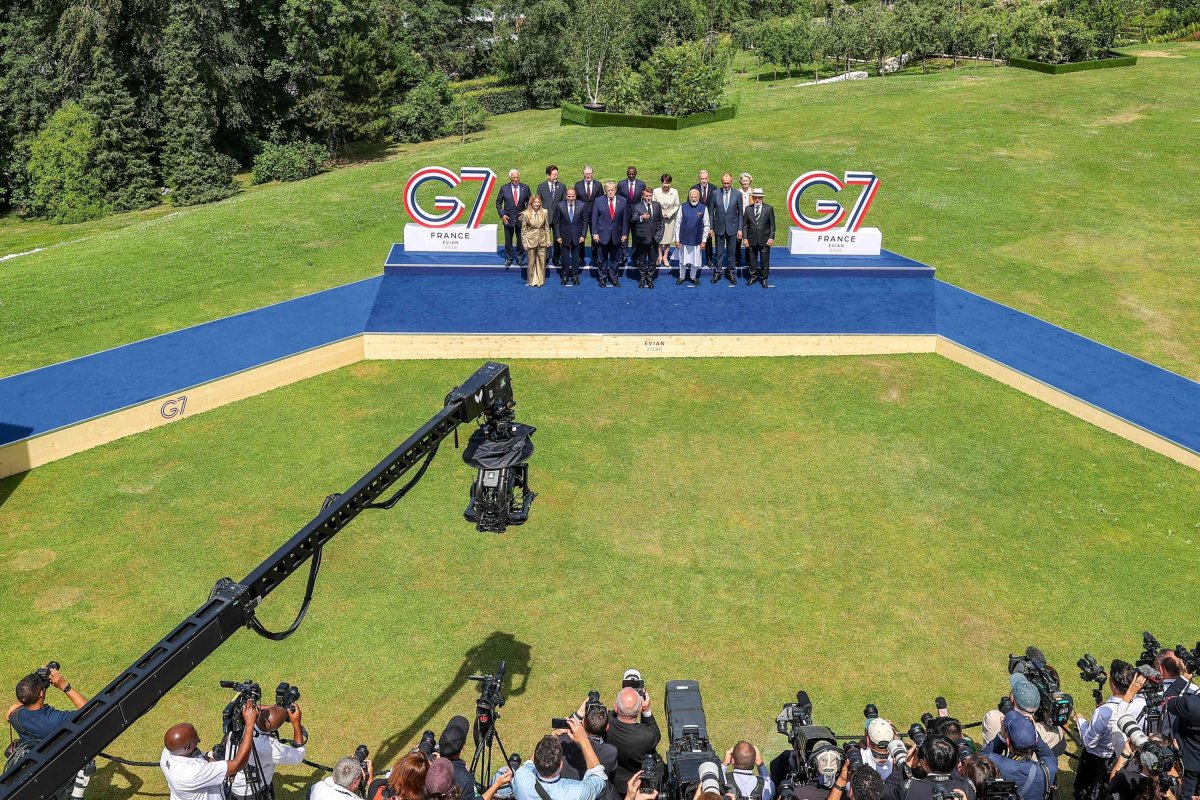
G7 Context and Trump's Leadership Assertion
The Group of Seven summit convened in Evian-les-Bains, France, from June 15 to 17, 2026, against a backdrop of shifting transatlantic priorities. President Donald Trump arrived emphasizing his central role, telling fellow leaders and assembled reporters that he was "the boss" during discussions on global economic security. This remark underscored the weight of American positions on both the Ukraine conflict and the recently concluded preliminary agreement with Iran.
Canadian Prime Minister Mark Carney publicly noted a discernible evolution in Washington's approach. He observed that the United States under Trump had adopted a stance "harder toward Russia and more realistic" regarding battlefield realities. Such comments from a key G7 partner highlighted how allied capitals were interpreting recent American signals as more aligned with sustained pressure on Moscow.
Leaders also addressed supply-chain vulnerabilities and macroeconomic imbalances during the sessions. France pushed for coordinated language on critical minerals, seeking mechanisms to diversify away from single-source dependencies. These economic threads intersected with security debates, illustrating the summit's effort to link trade resilience with geopolitical stability.
Joint statements emerging from the gathering praised elements of recent U.S. diplomacy while stopping short of binding new commitments. The tone suggested cautious coordination rather than unqualified endorsement, consistent with the G7's tradition of balancing collective messaging with individual national interests.
Washington's Realignment Toward Ukraine
Ukrainian President Volodymyr Zelenskyy attended the summit seeking to demonstrate that Kyiv's defensive operations had improved its negotiating position. The resulting joint leaders' statement indicated that Washington had grown more receptive to arguments favoring continued Ukrainian leverage in any future talks with Moscow. This marked a departure from earlier periods of pronounced U.S. skepticism.
Allied capitals welcomed indications that sanctions enforcement and military assistance could remain robust. Discussions touched on bolstering Ukrainian air defenses and maintaining restrictions on Russian energy exports. Yet participants recognized that any escalation of pressure ultimately hinged on sustained American follow-through.
Trump's earlier meeting with Zelenskyy was described by the U.S. president as "very good," though details of potential bilateral follow-ups remained unclear at the summit's close. European officials appeared to interpret the shift as tactical rather than doctrinal, leaving open questions about long-term consistency.
The recalibration carries implications for how Russia calculates its own room for maneuver. If Washington sustains a firmer line, Moscow may face greater incentives to explore negotiated outcomes, though the durability of that incentive structure depends on enforcement patterns that have historically fluctuated.
The Preliminary US-Iran Agreement
On the eve of the summit, President Trump signed a preliminary peace deal with Iran that G7 partners formally welcomed. The agreement's contours remain limited in public detail, yet participating governments expressed readiness to support implementation steps. European and Asian allies signaled willingness to explore complementary measures on energy diversification.
The timing of the accord allowed Trump to present it as a diplomatic breakthrough during G7 proceedings. Leaders acknowledged the development without committing to specific timelines for broader regional de-escalation. This measured response reflected awareness that preliminary understandings often require extensive follow-on negotiations.
Questions lingered about how the deal might intersect with existing sanctions regimes. Some participants wondered whether waivers on Russian oil exports could be affected once U.S. attention turned toward stabilizing the new Iran arrangement. Such linkages illustrate the interconnected nature of multiple sanctions portfolios.
Implementation will likely test the agreement's resilience amid domestic political pressures in both Washington and Tehran. Observers noted that early verification milestones would determine whether momentum could be sustained beyond the initial announcement phase.
Gulf State Recalibrations
Gulf Arab capitals monitored the U.S.-Iran preliminary agreement with measured interest, weighing potential shifts in regional threat perceptions. Saudi Arabia and the United Arab Emirates have pursued economic diversification under Vision 2030 frameworks, yet both remain attentive to any easing of tensions that could alter proxy dynamics across Yemen, Iraq, and Syria.
Officials in Riyadh and Abu Dhabi have historically balanced engagement with Iran against security cooperation with Washington. The new deal introduces uncertainty about whether reduced friction might translate into fewer Iranian-supported activities in neighboring arenas. Early reactions suggested a preference for verifiable steps rather than declaratory progress.
OPEC+ coordination adds another layer, as Gulf producers assess how any reopening of Iranian export capacity might influence quota negotiations. While the preliminary accord does not directly address oil volumes, markets registered modest movements reflecting anticipation of possible future adjustments.
These states continue to cultivate ties with both Western and Asian powers, seeking leverage that insulates them from abrupt policy reversals. Their cautious posture underscores a broader regional pattern of hedging amid great-power competition involving the United States, China, and Russia.
Energy Security and Strait of Hormuz
Discussions at Evian-les-Bains touched on efforts to reduce dependence on the Strait of Hormuz following periods when Iran restricted transit during its conflict with the United States. G7 participants expressed interest in alternative supply routes and strategic stockpiling, though timelines for meaningful diversification remain subject to substantial investment lead times.
European leaders appeared less convinced than U.S. officials that rapid reopening could be assumed. Infrastructure projects capable of bypassing the strait require years of construction and complex financing arrangements. Short-term vulnerabilities therefore persist even as diplomatic channels reopen.
Gulf producers have already begun expanding pipeline capacity toward the Red Sea and Indian Ocean, yet full redundancy is not yet in place. Any sustained improvement in Hormuz access would ease immediate pressures while simultaneously raising questions about long-term market share distribution among OPEC+ members.
Energy security considerations intersect with broader nonproliferation objectives. Stable transit conditions could support gradual confidence-building measures, provided verification regimes demonstrate durability against periodic escalatory risks.
Critical Minerals and the China Dimension
France advanced proposals for a joint statement on critical minerals aimed at diminishing reliance on Chinese processing capacity. European concerns have intensified following Beijing's 2025 export restrictions on rare-earth magnets, which disrupted several industrial sectors. The proposed measures include price supports, offtake guarantees, and standards designed to accelerate non-Chinese supply chains.
The United States had earlier floated ideas for a dedicated trading bloc in early 2026, reflecting parallel efforts to secure upstream mining and midstream refining outside China. G7 partners acknowledged that scaling private investment would require coordinated public incentives to offset cost disadvantages.
China's trade surplus with the European Union, reported at 360 billion euros, has added urgency to these deliberations. European officials signaled openness to strengthened trade-defense instruments should import surges continue. Such steps carry risks of retaliatory measures that could further complicate global supply dynamics.
Successful diversification would strengthen Western economic sovereignty while potentially easing pressure on energy transition timelines. However, the technical and financial hurdles remain considerable, suggesting that meaningful shifts will unfold over multiple years rather than immediate policy cycles.
Proxy Dynamics and Regional Security
Iran's network of regional partners continues to shape calculations in multiple theaters even as the preliminary U.S. agreement takes shape. Any reduction in direct confrontation between Washington and Tehran could influence the operating space available to these networks, though entrenched local conflicts limit rapid change.
Lebanon, Syria, and Iraq remain arenas where Iranian influence intersects with competing external actors. Gulf states have sought to contain spillover effects while advancing their own reconstruction and investment agendas. The durability of the new diplomatic opening will partly be judged by whether proxy frictions diminish or merely relocate.
Israeli security assessments will also factor into regional responses. Tel Aviv has historically viewed Iranian conventional and unconventional capabilities through a narrow lens, and any perceived relaxation of constraints could prompt independent precautionary measures.
These dynamics illustrate the limits of bilateral accords in reshaping multilayered regional competitions. Sustained de-escalation would require parallel understandings involving multiple state and non-state actors whose incentives do not automatically align with the U.S.-Iran framework.
Outlook and Strategic Implications
The Evian-les-Bains gathering revealed a G7 attempting to synchronize positions across several interconnected files. Trump's assertion of leadership coincided with modest movement on Ukraine support and a preliminary Iran understanding, yet the absence of detailed implementation roadmaps leaves considerable scope for subsequent adjustments.
Gulf actors will continue monitoring verification milestones and sanctions behavior for signals of lasting intent. Energy markets, critical-mineral supply chains, and proxy balances each introduce second-order effects that could either reinforce or undermine the diplomatic momentum generated in France.
European and Asian partners appear prepared to contribute where interests converge, particularly on diversification away from concentrated dependencies. Their engagement will likely remain calibrated to observable progress rather than rhetorical commitments alone.
Over the medium term, the interplay between these developments will test whether tactical alignments at the G7 level can translate into durable shifts in Middle East security architecture. Outcomes will hinge on consistent enforcement patterns and the willingness of regional stakeholders to adjust long-standing hedging strategies.
By Malik Hassan, Staff WriterThis article was produced with AI-assisted research and editorial support. Reporting is based on sources cited in the article.
What's Your Reaction?
 Like
0
Like
0
 Dislike
0
Dislike
0
 Love
0
Love
0
 Funny
0
Funny
0
 Wow
0
Wow
0
 Sad
0
Sad
0
 Angry
0
Angry
0
Middle East Correspondent at Global1.News. Based in Beirut, covering politics, conflict, energy, and society across the Middle East. Brings context and depth to a region often reduced to headlines.









Comments (0)