
Allahabad HC Issues Notice to Centre, ASI on Tejo Mahalaya Petition
The Allahabad High Court’s decision on July 6, 2026, to issue notices to the Union of India and the Archaeological Survey of India marks another chapter in a long-running legal challenge over the Taj Mahal’s identity. Justice Rohit Ranjan Agarwal directed the respondents to file counter-affidavits within the stipulated period after Advocate Hari Shankar Jain filed the writ peti
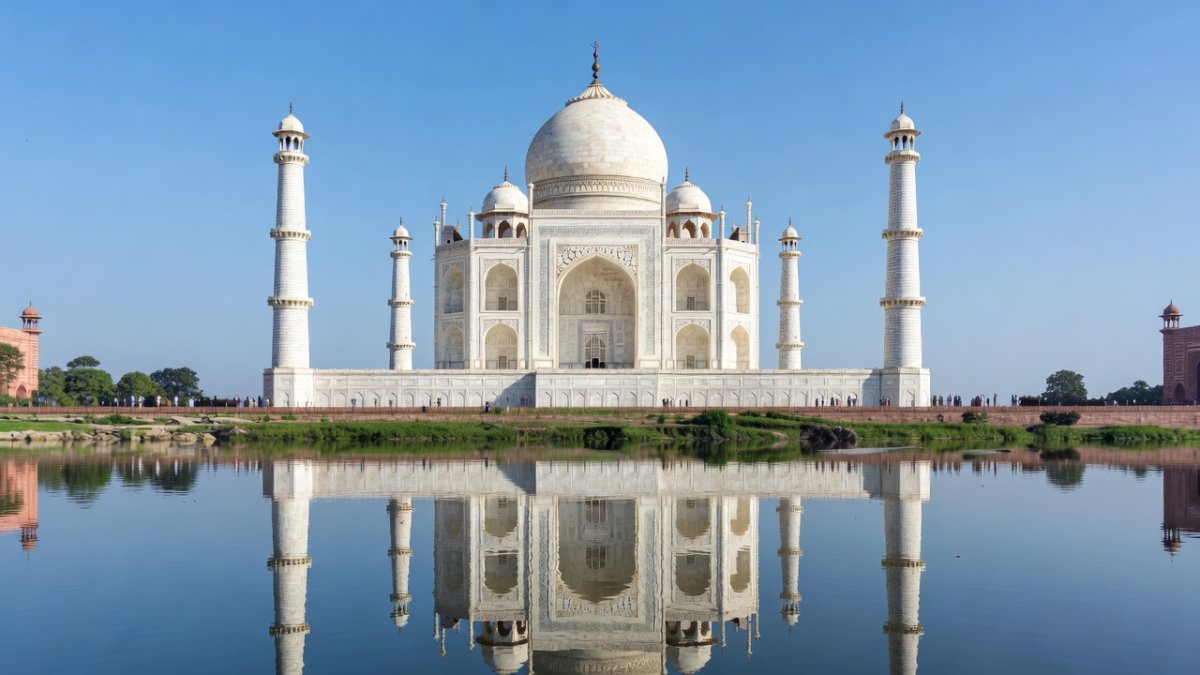
Taj Mahal, Agra —” at the centre of the Tejo Mahalaya legal dispute before the Allahabad High Court (Global 1 News)
Details of the Writ Petition and Lower Court Rejections
The underlying civil suit dates back to 2015 before the Civil Judge (Senior Division), Agra, seeking a declaration that a Shiva temple exists within the Taj Mahal complex. Lower courts rejected the application for an Advocate Commissioner primarily because the petitioners did not produce revenue records such as Khasra or Khatauni documents to establish the precise Gata number of the property. The High Court’s notice also extended to respondent Pankaj Kumar Verma, ensuring all parties receive an opportunity to respond before further hearings.
This procedural focus on land records reflects standard requirements under Indian revenue law in Uttar Pradesh, where property disputes must anchor claims in official documentation maintained by district administrations. Failure to meet this threshold has repeatedly stalled similar applications in Agra district courts.
Historical Record of the Taj Mahal and ASI Protections
The Taj Mahal was constructed by Mughal emperor Shah Jahan between 1632 and 1653 as a mausoleum for Mumtaz Mahal. Designated a UNESCO World Heritage Site in 1983, the monument falls under the direct protection of the Archaeological Survey of India, which operates under the Ministry of Culture. ASI maintains that no credible evidence supports claims of an earlier temple structure at the site. The “Tejo Mahalaya” theory, first advanced by historian P.N. Oak in the 1960s, was rejected by the Supreme Court in 2000, with the bench observing that the petitioner appeared to have “a bee in his bonnet” about the monument.
These established facts form the baseline for any policy discussion on heritage conservation in India. Successive governments have allocated substantial funds through the Ministry of Culture for Taj Mahal preservation, including pollution control measures around Agra and structural monitoring by ASI teams.
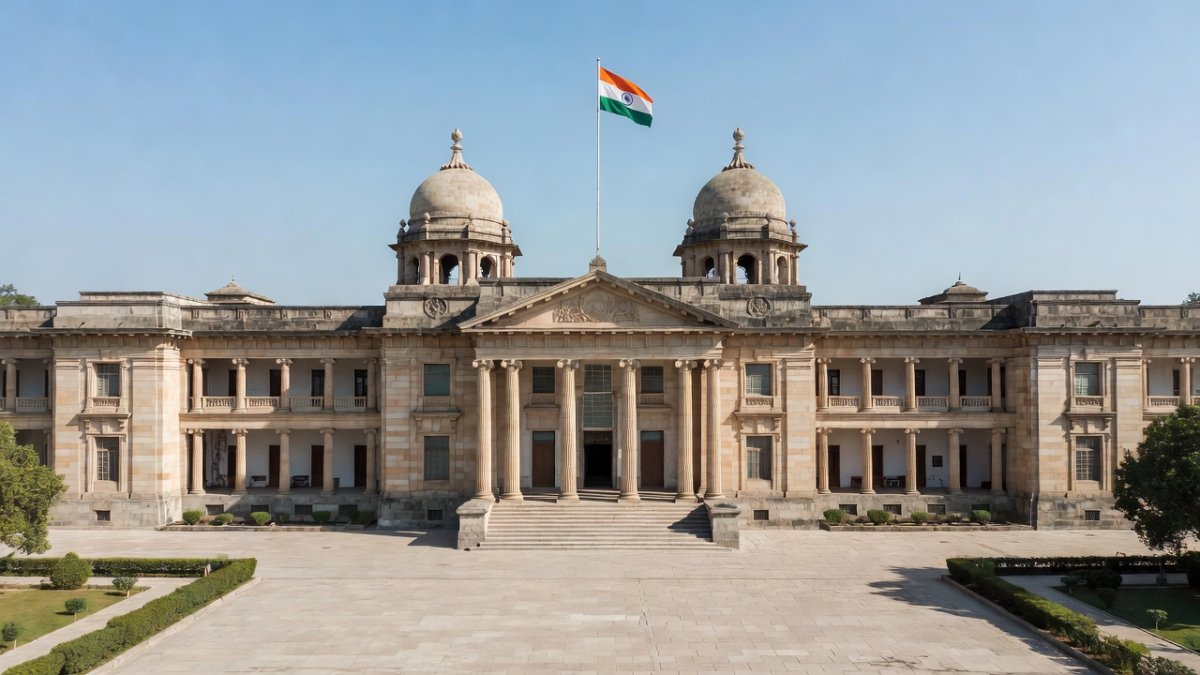
Allahabad High Court in Prayagraj, where Justice Rohit Ranjan Agarwal issued notices to the Centre and ASI on July 6, 2026 (Global 1 News)
Legal Framework and Judicial Precedents in Heritage Cases
Indian courts have consistently required petitioners in monument-related suits to meet evidentiary standards before ordering invasive surveys. The Allahabad High Court’s approach aligns with precedents that balance religious sentiments against the need to protect nationally important sites governed by the Ancient Monuments and Archaeological Sites and Remains Act. By issuing notices rather than granting immediate relief, the court has preserved the opportunity for the Centre and ASI to present scientific and documentary evidence accumulated over decades.
Such cases also intersect with the broader framework of Article 49 of the Constitution, which directs the state to protect monuments of national importance. The involvement of the deity as a petitioner raises questions about standing in property disputes involving protected heritage, an area where higher courts have previously emphasised the primacy of ASI records over unverified claims.
Implications for Agra’s Heritage Management and Local Economy
Agra district in Uttar Pradesh hosts one of India’s highest concentrations of protected monuments, directly supporting tourism revenue and employment for thousands of residents. Prolonged litigation over the Taj Mahal’s character can affect visitor footfall, conservation planning, and international perceptions of India’s commitment to evidence-based heritage policy. The Ministry of Tourism and state authorities have invested in infrastructure around the site, including the Taj Trapezium Zone regulations that limit industrial activity to preserve the structure.
Taxpayers fund ASI’s annual maintenance budgets and legal defences in such matters. Repeated petitions without new documentary evidence place additional strain on public resources that could otherwise support excavation, documentation, or public education programmes at ASI museums across Uttar Pradesh and beyond.
Policy Context and National Discourse on Historical Claims
India’s education system and cultural institutions emphasise the Mughal-era architectural record alongside earlier temple-building traditions. The current petition arrives against a backdrop of ongoing debates about history curricula and the role of the judiciary in adjudicating historical narratives. While citizens retain the right to approach courts, the requirement for concrete revenue and archaeological data remains central to maintaining institutional credibility.
The Allahabad High Court’s order ensures that the Union government and ASI will have a formal platform to reiterate their positions based on existing surveys and archival material. This process reinforces the principle that heritage policy in India rests on documented evidence rather than assertions alone, a standard applied uniformly across states from Rajasthan to Tamil Nadu.
Future Trajectory and Institutional Responsibilities
Once counter-affidavits are filed, the High Court is expected to examine whether the petitioners have overcome the evidentiary gaps identified by the Agra courts. Any subsequent orders will likely reference the Supreme Court’s earlier dismissal and ASI’s technical assessments. For Indian citizens and students of law, the case illustrates the intersection of civil procedure, revenue law, and heritage legislation within the federal structure.
Authorities in Lucknow and New Delhi continue to prioritise scientific conservation of the Taj Mahal while upholding citizens’ access to judicial remedies. The outcome will influence how similar claims are handled in other protected sites, underscoring the need for petitioners to ground arguments in verifiable records rather than historical speculation.
— By Dr. Raj Patel, Staff WriterThis article was produced with AI-assisted research and editorial support. Reporting is based on sources cited in the article.
What's Your Reaction?
 Like
0
Like
0
 Dislike
0
Dislike
0
 Love
0
Love
0
 Funny
0
Funny
0
 Wow
0
Wow
0
 Sad
0
Sad
0
 Angry
0
Angry
0

Caribbean Correspondent at Global1.News. Based in Port of Spain, Trinidad, covering Caribbean politics, economy, energy, climate, and culture. Amplifying the voices and stories of the Caribbean region.













Comments (0)