
Death Sentence in Changzhou Court Exposes Decades of Corruption in Nanjing Development
Death Sentence in Changzhou Court Exposes Decades of Corruption in Nanjing Development The Sentencing and Scale of Corruption A court in eastern China has sentenced a former city official to death for taking more than 2.2bn yuan in bribes over 30 years. This outcome underscores the gravity of the offences committed by Yang Youlin, who served in various positions in Nanjing city
The Sentencing and Scale of Corruption
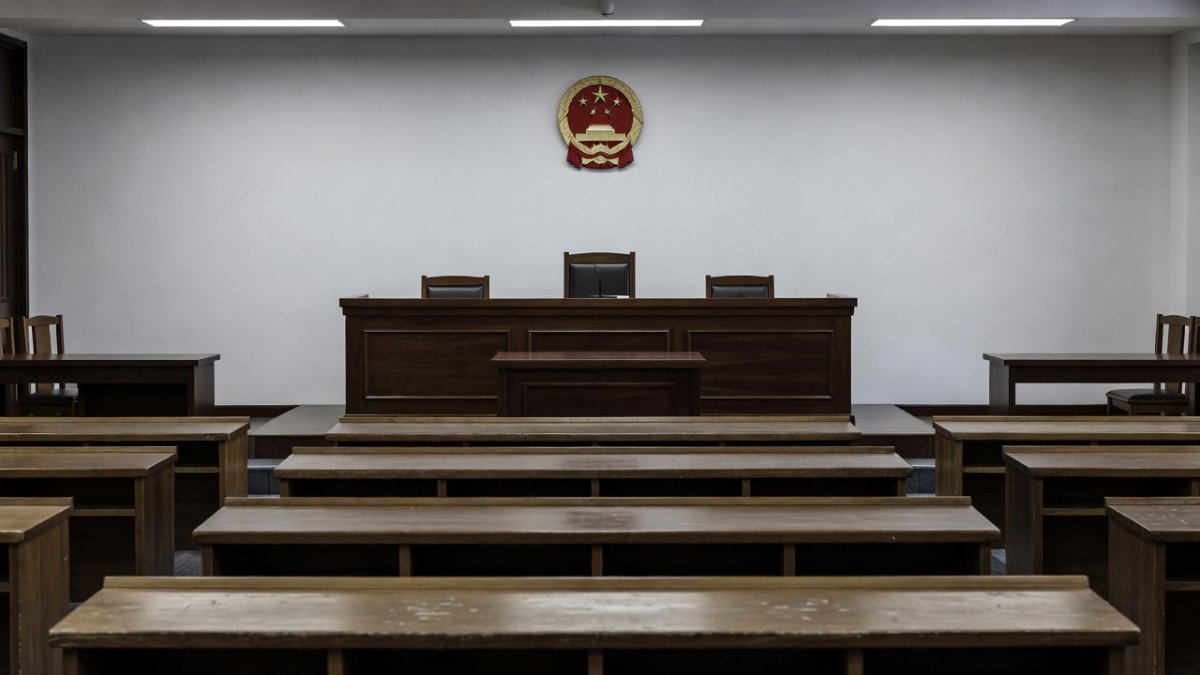
A court in eastern China has sentenced a former city official to death for taking more than 2.2bn yuan in bribes over 30 years. This outcome underscores the gravity of the offences committed by Yang Youlin, who served in various positions in Nanjing city from 1993 to 2023. The court in Changzhou city detailed how Yang Youlin exploited his roles to help others secure engineering contracts and financing, leading to convictions for embezzlement, abuse of power and money laundering. The ill-gotten gains amounted to one of the highest in recent years, with the court stating that the offences were of an extremely serious nature and caused exceptionally heavy losses to the interests of the state and the people. Yang Youlin, aged 69, received this penalty after the court weighed the full extent of his actions spanning three decades of public service in economic and technological development roles.
The decision reflects a judicial assessment that prioritized the magnitude of financial misconduct over other factors. State media reported that Yang Youlin had committed offences involving substantial sums, which placed the case among the most significant recent instances of economic crime. The court emphasized that these activities resulted in direct harm through improper land transfers and contract awards facilitated in exchange for money and valuables. This sentencing marks a clear application of legal standards to cases where the accumulated bribes exceeded 2.2bn yuan, highlighting the court's view that such conduct warranted the ultimate penalty despite the defendant's guilty plea and expression of remorse in his final statement.
Further examination of the ruling reveals that the Changzhou court considered the prolonged duration of the misconduct from 1993 onward as a key aggravating element. Over this period, Yang Youlin's positions enabled repeated instances of abuse that compounded the losses to state interests. The total value of bribes, combined with additional convictions for embezzlement and money laundering, formed the basis for rejecting any reduction in punishment. This approach ensures that the sentence aligns with the documented scale of the crimes, serving as a record of accountability for high-level economic violations within municipal governance structures.
Yang Youlin's Career and Methods of Corruption
Yang Youlin spent much of his career working on economic and technological development in Nanjing, holding positions from 1993 to 2023 that provided opportunities for misconduct. The court heard that he exploited these roles to assist others in obtaining engineering contracts, land transfers and financing in return for money and valuables. Such methods involved systematic abuse of authority across multiple sectors tied to urban growth and investment projects. The convictions encompassed not only bribery but also embezzlement, abuse of power and money laundering, illustrating a pattern of conduct that integrated various forms of financial irregularity over the full span of his service.
The details presented in court outlined how Yang Youlin leveraged his influence in development planning to facilitate improper transactions. These actions allowed recipients to gain advantages in contract awards and resource allocations, with the official receiving substantial returns that accumulated to more than 2.2bn yuan. The Changzhou court noted that these practices extended across decades, affecting the integrity of economic initiatives in the region. By focusing on the mechanisms of exchange, the ruling highlighted the direct link between Yang Youlin's official duties and the resulting state losses, without mitigation from his later cooperation with authorities.
Analysis of the case shows that the methods employed by Yang Youlin centered on reciprocal arrangements that prioritized personal gain. The court documented instances where financing and land-related approvals were granted improperly, contributing to the overall assessment of exceptionally heavy losses. This career-long involvement in Nanjing's development apparatus enabled the scale of the offences, as each position built upon prior access to decision-making processes. The final judgment accounted for the full record of these activities, determining that the cumulative impact justified the imposed sentence despite the defendant's remorse.
Context within Xi Jinping's Anti-Corruption Campaign
Yang Youlin was investigated as part of President Xi Jinping's anti-corruption crackdown which has cut through military ranks and high-level banking, among other sectors. Since coming to power, President Xi has launched waves of anti-corruption drives, which critics say have also been used as a tool to purge political rivals. The case against Yang Youlin fits within this broader effort, targeting misconduct in municipal economic roles that intersect with national priorities for development integrity. The Changzhou court proceedings occurred amid ongoing initiatives that address corruption across varied institutional levels, including those involving substantial financial stakes.
The investigation into Yang Youlin demonstrates the reach of these drives into city-level administration focused on technological and economic projects. Over the 30-year period of his offences, the accumulated bribes and related crimes aligned with patterns addressed in the campaign, where large-scale economic violations receive heightened scrutiny. State media coverage emphasized the connection to President Xi's efforts, noting how such cases illustrate the campaign's focus on sectors prone to contract and financing irregularities. The outcome in this instance reflects the consistent application of legal processes within the framework of these drives, even as debates persist regarding their dual purposes.
Further review indicates that the anti-corruption measures have encompassed both high-profile military and banking cases alongside municipal examples like that of Yang Youlin. The court in Changzhou integrated this context by evaluating the offences against the standards set during the waves of enforcement. This positioning underscores how individual cases contribute to the overall narrative of accountability promoted since President Xi assumed leadership, with emphasis on the serious nature of the documented losses to state and public interests.
Rarity of Death Sentences for Economic Crimes
Death sentences for white collar crimes however remain rare, though they are meted out occasionally, typically if the cases involve large sums exceeding 1bn yuan. In many other cases, the courts handed out jail terms or suspended death sentences, which get commuted to life imprisonment after a specified duration. The ruling for Yang Youlin illustrates an instance where the threshold of over 2.2bn yuan in bribes, combined with additional convictions, led to the death penalty rather than alternative outcomes. The Changzhou court distinguished this matter by noting the exceptionally grave character of the conduct despite the provision of assistance to authorities.
The infrequency of capital punishment in such matters stems from judicial preferences for suspended sentences or imprisonment when mitigating elements exist. Courts have also reduced sentences in some cases where the convicted individuals reported on other offenders. For Yang Youlin, however, the court determined that his assistance was insufficient to warrant a more lenient punishment given the scale of the offences and the heavy losses incurred. This decision aligns with the pattern where sums substantially above 1bn yuan occasionally trigger stricter penalties, as seen in the application of law to prolonged misconduct spanning 30 years.
Examination of sentencing trends reveals that the rarity arises from the balance between punishment severity and factors like remorse or cooperation. Yang Youlin pleaded guilty and expressed remorse in his final statement, yet these elements did not alter the outcome due to the nature of the crimes involving engineering contracts, land transfers and financing. The Changzhou court's approach thus reinforces the exceptional circumstances required for death sentences in economic cases, focusing solely on the documented facts of the violations and their impact on state interests.
Comparison with Other High-Profile Cases
For instance, former finance chief Lai Xiaomin was executed in 2021 for taking 1.8bn yuan in bribes over a 10-year period. Li Jianping, a former Inner Mongolia official, was executed in 2024 for embezzling and taking bribes totaling more than 3bn yuan. These examples provide context for the Yang Youlin case, where the bribe amount exceeded 2.2bn yuan across a longer timeframe of 30 years, accompanied by convictions for embezzlement, abuse of power and money laundering. The Changzhou court applied similar standards in assessing the gravity, resulting in a death sentence rather than commutation options available in less severe matters.
The comparisons highlight variations in outcomes based on the total sums and duration involved. While suspended sentences often apply in other instances, the combination of factors in Yang Youlin's record, including the exploitation of Nanjing positions for contract and financing advantages, led to a distinct resolution. The court explicitly stated that the offences caused exceptionally heavy losses, paralleling the rationale in the Lai Xiaomin and Li Jianping matters where execution followed large-scale economic misconduct. This consistency in handling cases above the 1bn yuan mark underscores the judicial threshold for capital penalties in white collar contexts.
Additional analysis shows that the Yang Youlin sentencing fits the occasional pattern of death penalties for sums far exceeding typical thresholds. Unlike cases where reporting other offenders yielded reductions, the assistance provided here proved inadequate for leniency. The court's focus on the full scope of activities from 1993 to 2023, including money laundering elements, differentiated the matter and justified the penalty in line with precedents involving comparable or greater financial totals.
Judicial Considerations and Final Outcome
The Changzhou court concluded that Yang Youlin's offences were of an extremely serious nature, leading to the death sentence after full consideration of all evidence. Although Yang provided similar assistance to authorities as in other matters, and pleaded guilty while expressing remorse, these aspects were deemed insufficient to warrant a more lenient punishment. The ruling integrated the convictions for bribery, embezzlement, abuse of power and money laundering into a comprehensive judgment that accounted for the one of the highest ill-gotten gains in recent years.
Judicial deliberations emphasized the heavy losses to state and public interests resulting from the methods used to secure engineering contracts and related benefits. Over the 30-year period, the systematic nature of the conduct in Nanjing's development roles formed the core basis for rejecting alternatives such as suspended sentences. State media noted the court's assessment that the overall impact necessitated the imposed penalty, aligning with the framework of anti-corruption enforcement that addresses such extensive violations.
The final outcome reflects a deliberate weighing of aggravating factors against any potential mitigations. The court in Changzhou maintained that the exceptionally grave character of the case, involving more than 2.2bn yuan and multiple crime types, precluded reductions despite the defendant's cooperation and remorse. This determination ensures the sentence stands as a direct response to the documented facts of the misconduct and its consequences for national interests.
By Prof. Marcus Chen, Staff WriterThis article was produced with AI-assisted research and editorial support. Reporting is based on sources cited in the article.
What's Your Reaction?
 Like
0
Like
0
 Dislike
0
Dislike
0
 Love
0
Love
0
 Funny
0
Funny
0
 Wow
0
Wow
0
 Sad
0
Sad
0
 Angry
0
Angry
0

World Politics Analyst at Global1.News. Based in Beijing, covering US-China relations, global trade, and geopolitical strategy. Brings deep analytical perspective to the power dynamics shaping international affairs.














Comments (0)