
Cuba's Health System at Breaking Point: Fuel Blockade Pushes 11 Million to the Brink
In the dimly lit wards of Havana’s pediatric hospitals, mothers clutch feverish children while anesthesiologists battle failing generators, a scene now repeating across Latin America as external pressures and energy shortages collide with fragile health systems from Caracas to Port-au-Prince. Cuba's Health System at Breaking Point: Fuel Blockade Pushes 11 Million to the Brink H
In the dimly lit wards of Havana’s pediatric hospitals, mothers clutch feverish children while anesthesiologists battle failing generators, a scene now repeating across Latin America as external pressures and energy shortages collide with fragile health systems from Caracas to Port-au-Prince.
Cuba's Health System at Breaking Point: Fuel Blockade Pushes 11 Million to the Brink
Havana, Cuba — July 7, 2026 — Cuba’s public health network, once a regional model, is collapsing under a five-month fuel drought that has left only one oil tanker reaching its shores, forcing 20- to 24-hour blackouts that kill patients on operating tables and double infant mortality in affected provinces. Energy Minister warnings of zero diesel reserves in multiple regions have turned routine care into life-or-death gambles for 11 million citizens already reeling from three nationwide grid collapses by May and another in early July that hit 10 million people.
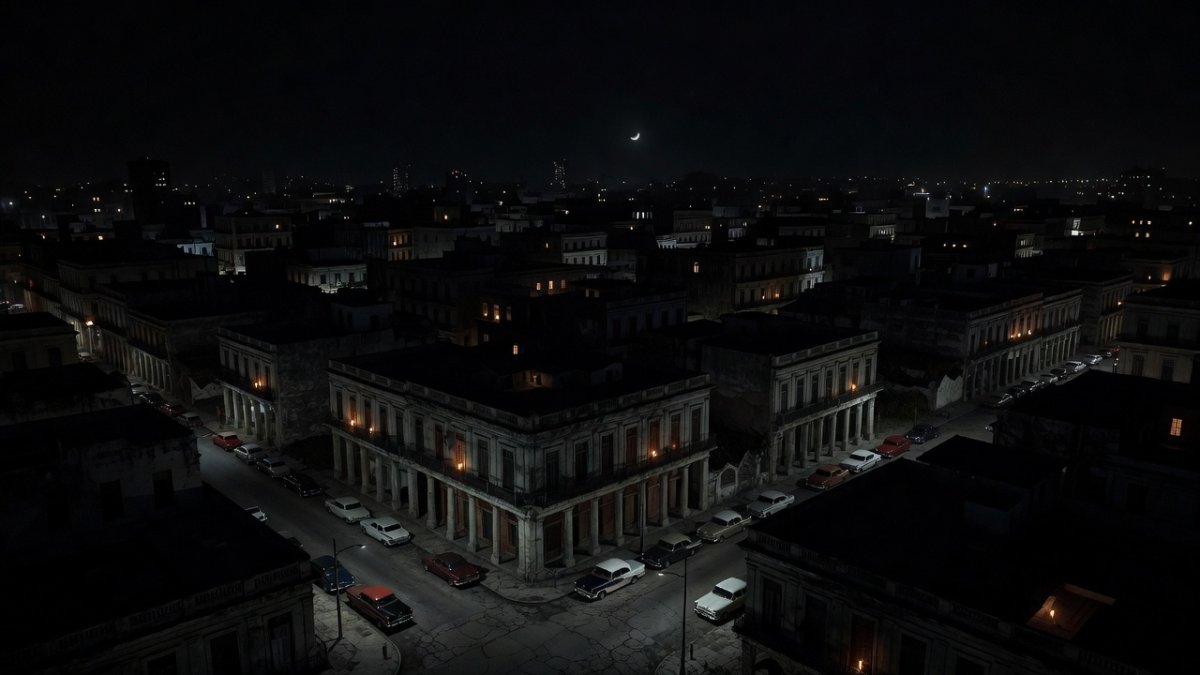
Blackout Reality — Life Without Power in Havana
Residents of Havana’s Centro Habana neighborhood now measure time by the length of darkness rather than daylight. Journalist Ed Augustin, reporting from the capital, describes streets plunged into 20-hour blackouts where families cook over wood fires and water pumps sit idle, turning daily survival into an endurance test. Cuba produces only about 40 percent of its fuel domestically, leaving the island dependent on imports that have been throttled to a single tanker arrival in five months. The March 2026 Russian oil shipment, meant to bridge the gap, was exhausted by the end of April, confirming the minister’s mid-May admission that diesel and fuel oil reserves had hit zero in several provinces. Protests have erupted in the capital as residents demand relief, their voices echoing the frustration of millions who once relied on steady electricity for refrigeration, communication, and basic dignity. These outages are not temporary inconveniences but structural failures that erode the social fabric, with garbage collection halted and sanitation systems failing, allowing epidemics to spread through stagnant water and uncollected waste. The human cost mounts daily as elderly patients gasp without oxygen concentrators and students study by candlelight, their futures dimming alongside the grid.
Hospitals in the Dark — Surgery, Dialysis, and the Fight to Save Lives
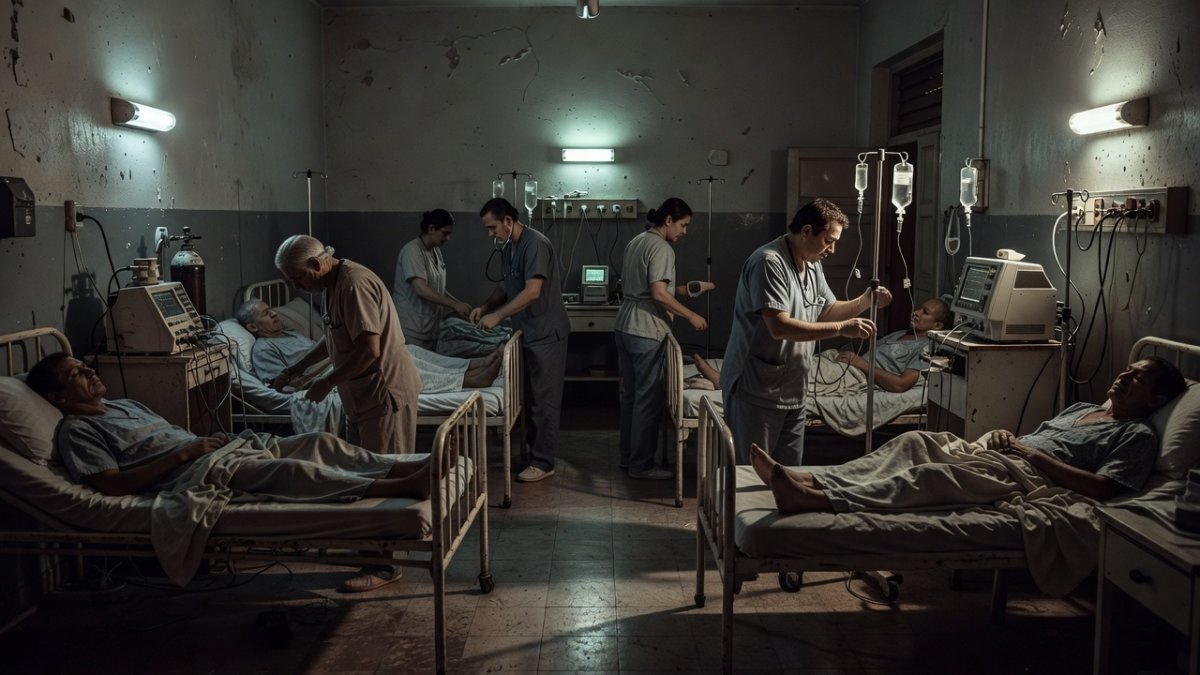
Inside pediatric operating rooms, anesthesiologists report patient deaths directly linked to sudden power losses during infant surgeries, a nightmare repeated across provinces where dialysis sessions are cut short or canceled entirely. Cuban President Miguel Díaz-Canel has stated plainly that hospitals “do not have the energy they need,” leaving MINSAP facilities to improvise with dwindling generator fuel. National Nurses United members protested outside the White House in June 2026, highlighting how water pumps and hospital equipment fail without electricity, endangering both staff and patients. In multiple provinces, dialysis patients wait hours or days for treatment that once occurred on schedule, their kidneys failing faster under the strain. Refrigeration breakdowns have already spoiled batches of blood supplies and temperature-sensitive medicines, forcing doctors to ration what remains. These conditions transform once-reliable care into a lottery where survival depends on whether the lights stay on long enough to complete a procedure. Families travel between darkened hospitals seeking any available generator, their stories revealing a system pushed beyond its limits by the fuel blockade’s relentless pressure.
The Thousand-Day Wait — Cuba's 100,000-Patient Surgical Backlog
By June 2026, Cuba’s surgical waiting list exceeded 100,000 patients, according to President Díaz-Canel and MINSAP officials, with elective and even urgent procedures postponed indefinitely as operating theaters sit idle during blackouts. The early July nationwide outage affecting 10 million people added thousands more to the queue, turning months-long waits into potential years. Chinese solar systems installed in Havana hospitals in May 2026 have provided partial relief, powering some lights and monitors, yet remain insufficient to clear the backlog or support full surgical schedules. Patients with treatable conditions now endure prolonged pain and complications, their conditions worsening while surgeons watch helplessly. This backlog represents more than statistics; it embodies canceled childhoods for young patients needing corrective procedures and lost mobility for adults awaiting joint replacements. The fuel shortage has converted a manageable healthcare challenge into a cascading crisis where each delayed operation multiplies suffering across families already stretched thin by economic hardship. Even with solar additions, the scale of postponed care demands sustained energy that the current blockade continues to deny.
Vaccines Spoiled, Children at Risk — The Public Health Toll
Refrigeration failures have spoiled vaccines, medicines, and blood supplies on a scale that threatens decades of public health gains, with infant mortality reportedly doubling in some contexts amid the chaos. Rising child malnutrition is reversing prior improvements as power shortages disrupt food storage and distribution networks. Spreading epidemics fueled by disrupted garbage collection and sanitation now move through neighborhoods where standing water breeds mosquitoes and uncollected waste attracts disease vectors. MINSAP workers struggle to maintain cold chains for remaining vaccines, knowing that each spoiled dose leaves another child vulnerable to preventable illnesses. The human stories are stark: parents who once trusted routine immunizations now face outbreaks of diseases long controlled, while malnourished infants enter hospitals already weakened by inconsistent electricity. These public health reversals extend beyond immediate mortality, embedding long-term developmental deficits in a generation of Cuban children. The blockade’s impact on fuel thus translates directly into eroded immunity and heightened disease risk across the island.
Why the Fuel Dried Up — Blockade, Russian Oil, and the Energy Trap
Cuba’s energy minister confirmed in mid-May 2026 that reserves had reached zero in key regions after the Russian oil shipment from March was fully consumed by late April, exposing the island’s 60 percent import dependence. The Trump administration’s January 2026 measures threatening tariffs on countries supplying fuel to Cuba further constricted arrivals, leaving only one tanker in a five-month period. While debates persist over the relative weight of the US blockade versus domestic mismanagement, the immediate result is a stranglehold on diesel and fuel oil that powers hospitals, water systems, and transport. Multiple nationwide grid collapses—three by May and additional events through June and July—have demonstrated the fragility of an energy matrix unable to withstand prolonged external pressure. This trap leaves Cuba producing just 40 percent of its needs domestically while external suppliers face secondary sanctions, turning routine maintenance into impossible tasks. The policy choices behind these shortages carry direct consequences for every darkened hospital ward and every family without running water.
Solar Lifelines — China's Donation and the Limits of Patchwork Relief
China’s May 2026 donation of thousands of solar power systems to Havana hospitals brought critical daylight to some wards, allowing limited continuation of monitoring and basic procedures where generators had failed. Yet these installations, while welcome, fall far short of addressing the 100,000-patient surgical backlog or restoring full refrigeration for vaccines and medicines. Hospitals equipped with the new panels still face nighttime shortfalls and cannot support energy-intensive dialysis or operating theaters at previous volumes. The patchwork nature of this relief underscores how solar serves as a stopgap rather than a systemic solution when fuel imports remain blocked. Staff report improved morale in solar-lit areas, yet the broader grid collapses continue to interrupt care across provinces without similar donations. This limited progress highlights both the potential of renewable transitions and the urgent need for stable baseload energy that current sanctions prevent. Cuban health workers express gratitude for the panels while emphasizing that thousands more are required to meaningfully shift outcomes for patients waiting in darkness.
What This Means for Latin America — A Warning for the Region
Cuba’s crisis offers a stark warning to neighboring countries where similar energy vulnerabilities and external pressures threaten health infrastructure already strained by climate events and economic inequality. From Central American nations facing diesel price spikes to Caribbean islands dependent on imported fuel, the blockade’s effects demonstrate how political decisions in Washington ripple through regional public health. National Nurses United’s June 2026 protests in Washington DC connected these dots, urging policy shifts that protect water pumps and hospitals across borders. The doubling of infant mortality and spread of epidemics in Cuba preview potential outcomes elsewhere if fuel access continues to be weaponized. Regional leaders watching the 10-million-person blackout and 100,000-patient backlog recognize that health systems require reliable energy as a foundation, not an afterthought. This moment calls for renewed hemispheric cooperation on energy security that prioritizes people over geopolitical leverage, lest more nations repeat Cuba’s descent into darkness and preventable suffering.
The Bottom Line — A Health System Fighting for Survival
Cuba’s public health system now fights for survival against a fuel blockade that has eliminated reserves, triggered repeated grid collapses, and produced a 100,000-patient surgical backlog while spoiling vaccines and doubling infant mortality in places. With only 40 percent domestic production and a single tanker arrival in five months, hospitals operate under conditions that claim lives during routine procedures and allow epidemics to flourish through failed sanitation. Solar donations provide narrow relief but cannot substitute for sustained fuel access or clear the backlog that grows with each blackout. President Díaz-Canel’s acknowledgment that hospitals lack needed energy captures the daily reality for doctors, nurses, and families across the island. The protests in Havana and Washington DC signal that this humanitarian crisis demands attention beyond partisan debates. For 11 million Cubans and the broader Latin American region, the bottom line is clear: health cannot endure without energy, and energy cannot flow while blockades persist. The cost of inaction is measured in lost lives and reversed progress that will take generations to restore.
By Elena Vasquez, Staff Writer
This article was produced with AI-assisted research and editorial support. Reporting is based on sources cited in the article.
What's Your Reaction?
 Like
0
Like
0
 Dislike
0
Dislike
0
 Love
0
Love
0
 Funny
0
Funny
0
 Wow
0
Wow
0
 Sad
0
Sad
0
 Angry
0
Angry
0

Latin America Correspondent at Global1.News. Based in Mexico City, covering politics, economics, energy, and culture across the region. Brings an on-the-ground perspective to stories spanning from the Rio Grande to Patagonia.













Comments (0)