
FIFA forces Haiti to remove revolutionary history from World Cup jersey
FIFA forces Haiti to remove revolutionary history from World Cup jersey THE DESIGN AND FIFA'S RULING The Haitian football federation unveiled its debut kit for the 2026 World Cup with the help of a Colombian manufacturer. The design featured silhouettes of figures raising a flag, directly referencing the 1803 Battle of Vertières. This imagery celebrated the decisive victory of
THE DESIGN AND FIFA'S RULING
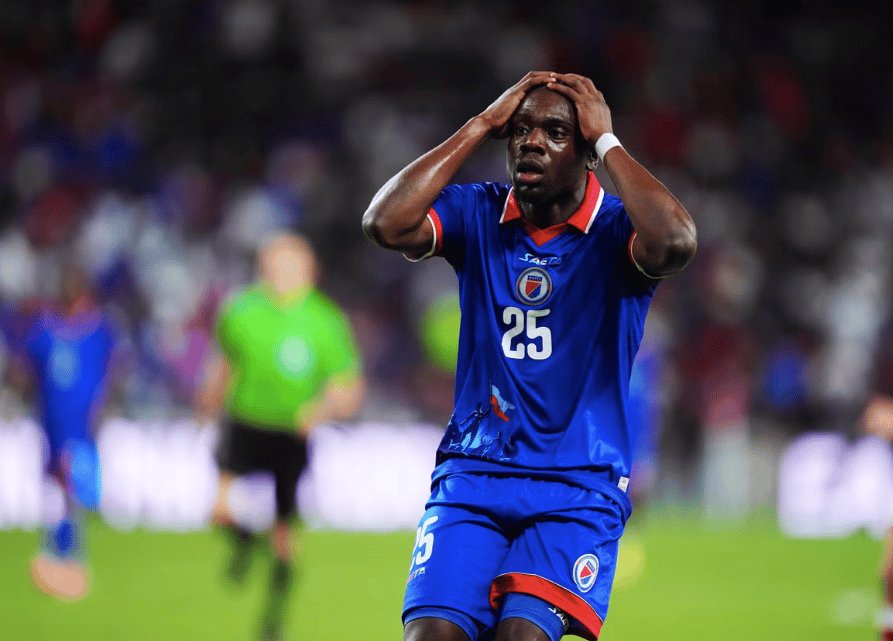
The Haitian football federation unveiled its debut kit for the 2026 World Cup with the help of a Colombian manufacturer. The design featured silhouettes of figures raising a flag, directly referencing the 1803 Battle of Vertières. This imagery celebrated the decisive victory of Haitian forces over Napoleon's army during the revolution. FIFA reviewed the kit and determined that the elements violated regulations against political or personal messages on official attire.
Officials from the world governing body contacted the federation and required modifications before the team could wear the kit in competition. The changes removed the silhouettes while preserving other national symbols such as the coat of arms and traditional colours. The process unfolded in the months leading up to the tournament, with final approval needed well before the opening fixture.
Haiti had prepared the original design as a statement of cultural identity for its first appearance at the World Cup. The ruling arrived after samples were submitted for inspection under standard kit approval procedures. Federation representatives worked to adjust the artwork without losing the overall aesthetic that honoured national heritage.
Throughout the review, FIFA maintained that the prohibition applies uniformly to all member associations. The Colombian manufacturer adjusted the graphics according to the directives received. The revised kit was then cleared for use in the group stage matches.
Observers noted that the timeline left limited room for further negotiation once the objection was raised. The federation accepted the modifications to ensure participation remained possible. This sequence highlighted the strict oversight that governs even debut appearances on the global stage.
THE BATTLE OF VERTIÈRES
The Battle of Vertières took place on 18 November 1803 near Cap-Haïtien and marked the final major engagement of the Haitian Revolution. Haitian troops under Jean-Jacques Dessalines defeated the remaining French forces commanded by Donatien-Marie-Joseph de Vimeur, vicomte de Rochambeau. The victory ended more than a decade of conflict that began with the 1791 slave uprising in the colony of Saint-Domingue.
This battle carried profound significance for Haiti as it paved the way for the declaration of independence on 1 January 1804. It represented the first successful slave revolt that established a sovereign Black republic in the Americas. The event reshaped the political landscape of the Caribbean by demonstrating that colonial powers could be overturned through organised resistance.
Across the wider region, the outcome inspired enslaved populations in neighbouring territories and contributed to growing abolitionist movements. Figures in Jamaica and other British colonies drew lessons from the Haitian example when organising their own struggles for freedom. The battle symbolised resilience against overwhelming odds and the assertion of human dignity.
Historians continue to analyse how the revolution influenced independence movements in Latin America during the early nineteenth century. The imagery of soldiers raising the flag at Vertières captures a moment of collective triumph that remains central to Haitian national identity. For many in the Caribbean, it stands as a reminder of shared histories of resistance against European domination.
The choice to feature this scene on the World Cup kit reflected an intention to bring that legacy into contemporary sporting celebration. It connected present-day athletes with ancestors who secured freedom through extraordinary sacrifice. Such symbols carry emotional weight that extends far beyond the football pitch.
FIFA'S RULES ON KIT POLITICS
FIFA maintains regulations that prohibit any political, religious or personal messages on player kits and equipment during official matches. These rules appear in the organisation's Laws of the Game and kit approval guidelines, which require all designs to undergo pre-tournament inspection. The stated aim is to keep the focus on sport rather than external causes or statements.
Similar restrictions have been applied in earlier cases involving other national teams. Armenia faced scrutiny over certain flag-related elements in past competitions, while Kosovo encountered objections tied to national symbols during qualification campaigns. These precedents illustrate how the governing body enforces uniformity across diverse member associations.
The power imbalance becomes evident when smaller federations must comply quickly with directives from an organisation headquartered in Europe. Larger associations often possess greater resources to navigate appeals or redesign processes. For nations with limited administrative capacity, the requirement to modify kits can create immediate logistical challenges.
Critics argue that the rules sometimes overlook the cultural context in which symbols originate. What one federation views as heritage another may classify as political expression. The application process therefore depends heavily on interpretation by FIFA's technical committees.
Despite these tensions, most associations accept the framework to maintain eligibility for international tournaments. The regulations have evolved over decades to address an expanding range of potential messages. Yet the core principle of separating sport from politics remains firmly in place.
WHAT THIS MEANS FOR HAITI
Haiti's qualification for the 2026 World Cup represented a historic milestone after decades of striving to reach the finals. The team viewed the original kit design as an opportunity to express national pride on the global stage. Players and supporters alike saw the silhouettes as a tribute to ancestors rather than a political statement.
Reactions from the squad emphasised the emotional connection to revolutionary history. Several athletes described the imagery as a source of motivation during preparations. Fans inside Haiti and across the diaspora expressed disappointment that the design required alteration before the opening match.
The Haitian community in the United States, Canada and France followed developments closely through social media and community gatherings. Many interpreted the ruling as an unnecessary erasure of cultural memory. Discussions in Port-au-Prince highlighted how the kit had been intended to unite supporters around shared heritage.
Despite the modification, the federation confirmed that the team would still participate with full commitment. The revised kit retained the national colours and emblem, preserving a sense of identity even without the specific battle reference. Supporters prepared to travel or watch from afar, focusing on the achievement of reaching the tournament.
The episode underscored the challenges smaller nations face when balancing cultural expression with international sporting requirements. For a country recovering from economic pressures and natural disasters, the World Cup appearance carried additional symbolic importance. The modified design allowed participation while prompting ongoing conversations about representation.
CARIBBEAN REACTION
Football associations and supporters across the Caribbean expressed solidarity with Haiti following the kit ruling. In Trinidad and Tobago, commentators linked the decision to broader questions of how regional histories are acknowledged in international forums. Many recalled the shared legacy of resistance against colonial rule that connects islands throughout the region.
Jamaican voices highlighted parallels with their own narratives of emancipation and independence struggles. Barbados officials noted that symbols of Caribbean resilience deserve recognition rather than removal. CARICOM discussions touched on the need for greater coordination among member states when dealing with global sporting bodies.
The ruling resonated in communities where Carnival celebrations and cultural festivals routinely honour revolutionary figures and moments of defiance. Trinidadian fans drew connections between the Haitian experience and local efforts to preserve cultural traditions amid external pressures. The episode reinforced a sense of regional unity in defending heritage.
Diaspora networks spanning the Caribbean basin organised online forums to discuss the implications. Participants emphasised that the Battle of Vertières holds meaning not only for Haiti but for all who trace ancestry to the era of plantation slavery. These conversations often referenced the economic challenges facing the region, including rising costs of living that affect support for national teams.
Regional media outlets framed the story as another instance where Caribbean perspectives encounter resistance within global institutions. The response remained measured yet firm in advocating for greater sensitivity to historical context. Such reactions strengthened ties among CARICOM nations through a common appreciation of shared pasts.
SMALL NATIONS UNDER GLOBAL SPOTLIGHT
Caribbean countries with modest football infrastructures frequently navigate complex international regulations with limited staff and budgets. Trinidad and Tobago, for example, has balanced participation in CONCACAF competitions alongside domestic priorities such as energy sector development and climate resilience projects. These constraints become more pronounced when kit approvals require rapid redesigns.
The experience of Haiti illustrates how smaller associations must allocate scarce resources to meet compliance standards set by larger organisations. Travel costs for technical meetings, legal consultations and manufacturing adjustments add further strain. Many federations operate with volunteer committees that handle multiple responsibilities simultaneously.
Climate-related challenges compound these difficulties, as rising sea levels and extreme weather affect training facilities and community programmes across the islands. Energy costs in Trinidad and other nations influence everything from stadium operations to fan travel. Against this backdrop, qualifying for a World Cup represents a significant achievement that deserves full celebration.
International sports governance often assumes equal capacity among all members, yet disparities in funding and expertise persist. Caribbean nations have advocated for more inclusive decision-making processes within CONCACAF and FIFA. The kit episode added momentum to those calls for reform.
Despite obstacles, regional teams continue to produce talented players who enrich global tournaments. The determination shown by Haiti and similar nations reflects a broader commitment to sporting excellence amid everyday realities. Resource limitations do not diminish the cultural value these teams bring to the pitch.
THE ROAD AHEAD
Haiti will face Scotland on 13 June 2026 in its opening World Cup match wearing the revised kit. The team has focused preparations on tactical readiness and team cohesion rather than the earlier design controversy. Supporters anticipate that the occasion will still serve as a moment of national celebration.
The debate over heritage versus regulatory compliance is likely to continue in football circles. Some analysts suggest that FIFA could review its guidelines to accommodate cultural symbols that carry historical rather than partisan weight. Others maintain that clear boundaries remain necessary to preserve the sport's neutrality.
Looking further ahead, Haitian football development programmes aim to build on the qualification success. Investment in youth academies and infrastructure could help sustain progress toward future tournaments. Regional partners within CARICOM have expressed willingness to share expertise in these areas.
The modified kit will carry the team into the group stage, yet the original vision remains part of the conversation around representation. Fans and officials alike recognise that symbols of resistance hold enduring power even when adapted for official use. The journey from qualification to the finals has already inspired younger generations across the Caribbean.
As the tournament approaches, attention will centre on the players' performances and the stories they create on the field. The episode with the kit design serves as a reminder of the ongoing dialogue between national identity and international sporting frameworks. Haiti enters this new chapter with the resilience that has long defined its people.
By Sharon Sahatoo, Staff WriterThis article was produced with AI-assisted research and editorial support. Reporting is based on sources cited in the article.
What's Your Reaction?
 Like
0
Like
0
 Dislike
0
Dislike
0
 Love
0
Love
0
 Funny
0
Funny
0
 Wow
0
Wow
0
 Sad
0
Sad
0
 Angry
0
Angry
0

Caribbean Correspondent at Global1.News. Based in Port of Spain, Trinidad, covering Caribbean politics, economy, energy, climate, and culture. Amplifying the voices and stories of the Caribbean region.













Comments (0)