
WHO's Unprecedented PHEIC Declaration Exposes Global Preparedness Gaps as Bundibugyo Ebola Spreads — Lessons for India
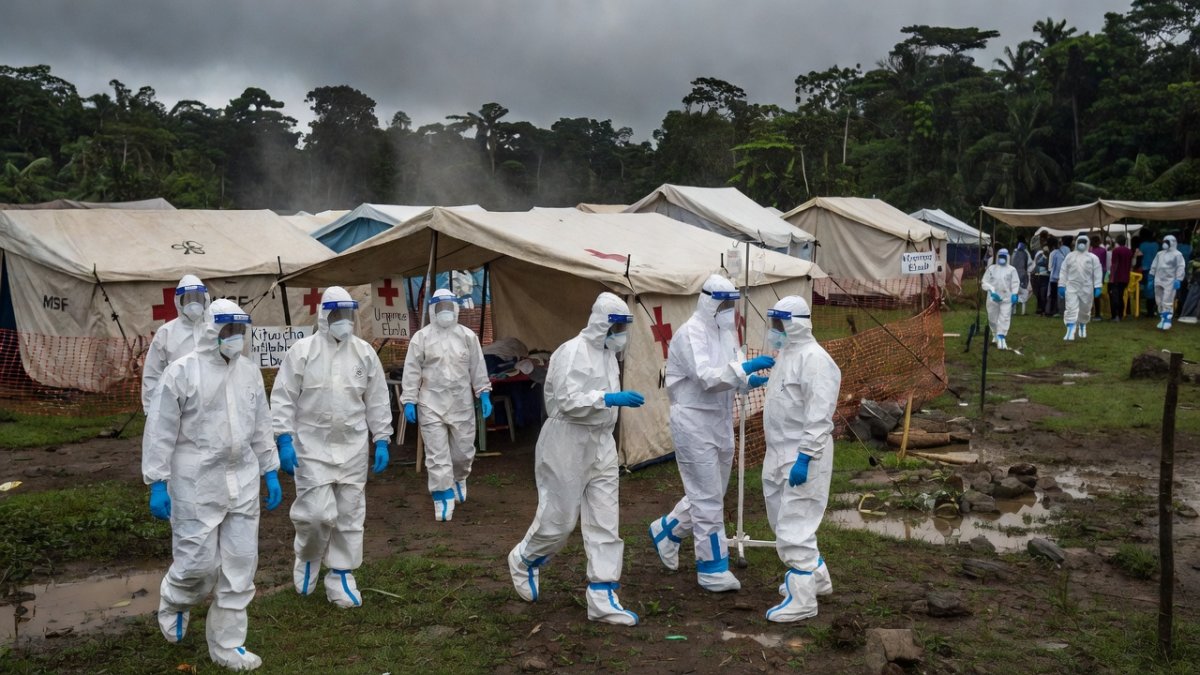
The Unfolding Crisis: Bundibugyo Virus Spreads Across Central Africa As of June 8, 2026, the Bundibugyo virus outbreak has produced 515 confirmed cases and 91 deaths across the Democratic Republic of Congo, yielding a case fatality ratio of 17.7 percent. Ninety-five percent of infections cluster in Ituri province, with additional transmission in North Kivu and South Kivu. Sixte
The Unfolding Crisis: Bundibugyo Virus Spreads Across Central Africa
As of June 8, 2026, the Bundibugyo virus outbreak has produced 515 confirmed cases and 91 deaths across the Democratic Republic of Congo, yielding a case fatality ratio of 17.7 percent. Ninety-five percent of infections cluster in Ituri province, with additional transmission in North Kivu and South Kivu. Sixteen health workers have contracted the virus, underscoring occupational exposure risks in under-resourced facilities. On May 16-17, 2026, the World Health Organization declared a Public Health Emergency of International Concern without first convening its Emergency Committee, an unprecedented procedural step analyzed by The Lancet on June 6, 2026. Congo Health Minister Samuel Roger Kamba separately reported 513 suspected cases and at least 131 deaths, indicating possible under-ascertainment. The virus has entered displacement camps, amplifying transmission potential. For Indian policymakers, these figures demand immediate calibration of national early-warning thresholds. The Union Health Ministry’s existing Integrated Disease Surveillance Programme must incorporate real-time cross-border alerts modeled on this event. Hospitals in major metros should audit personal protective equipment stockpiles and isolation capacity using the exact metrics emerging from Ituri. This outbreak demonstrates that delayed detection anywhere creates downstream pressure on every nation’s health system, including India’s federal network of state surveillance units.
Why the Rare Bundibugyo Strain Is Different
Unlike the Zaire ebolavirus, which benefits from the approved Ervebo vaccine, no licensed vaccine or specific antiviral exists for Bundibugyo virus. Supportive care remains the sole clinical option, elevating the importance of infection prevention. The recorded 17.7 percent case fatality ratio likely underestimates true mortality because many community deaths go unreported. In May 2026, groups of young men stormed a treatment center, destroying supplies and forcing temporary closure. These attacks compound operational challenges already worsened by limited laboratory infrastructure. Indian health authorities must recognize that similar social resistance could emerge during any high-consequence pathogen response. The ICMR hospital preparedness guidelines issued in response to this outbreak explicitly require states to train rapid-response teams in community engagement protocols refined during Kerala’s Nipah outbreaks. Bharat Biotech and the Serum Institute possess the manufacturing platforms to accelerate candidate vaccine development if genomic sequences are shared promptly. Policymakers should therefore allocate dedicated funds for Bundibugyo-specific diagnostic reagents and negative-pressure isolation units in at least six designated national hospitals. Without these targeted investments, India’s otherwise robust vaccine ecosystem cannot compensate for the absence of pre-positioned medical countermeasures.
How the Dismantling of USAID Accelerated the Crisis
Dr. Ashish Jha has directly linked the muted international response to the 56.9 percent reduction in United States foreign assistance spending and the termination of 83 percent of USAID-supported projects. Laboratory networks, personal protective equipment reserves, and field epidemiology teams in eastern Congo collapsed after USAID funding ceased. The agency itself is scheduled for closure by September 2026. These cuts removed critical surge capacity precisely when the Bundibugyo outbreak required intensified contact tracing and safe burial teams. Indian officials must treat this contraction as a cautionary signal. New Delhi’s development assistance programs through the Ministry of External Affairs now carry greater weight in regional health security. The ICMR should expand its bilateral laboratory twinning arrangements with African nations to offset the loss of former USAID-supported sentinel sites. Furthermore, India’s domestic production of PPE and rapid diagnostic tests can be positioned as reliable alternatives when traditional donor pipelines fracture. Hospitals and state health departments must therefore model supply-chain contingencies that assume sudden withdrawal of external technical support, ensuring uninterrupted surveillance even if global assistance mechanisms contract further.
Uganda's Border Closure and Regional Economic Impact
Uganda recorded seven cases and one death before closing its border with the Democratic Republic of Congo on May 27, 2026. The World Health Organization subsequently assessed the risk of further cross-border spread as high. Trade corridors carrying medicines, laboratory reagents, and food supplies have been disrupted, raising costs for essential commodities throughout the Great Lakes region. For India, these developments illustrate the economic consequences of health emergencies that extend beyond direct mortality. Pharmaceutical exports from Indian manufacturers to East Africa face potential delays at closed or heavily scrutinized borders. The Directorate General of Civil Aviation and the Central Drugs Standard Control Organisation must therefore maintain updated lists of priority medical products that can be rerouted through alternative ports if similar closures occur near Indian interests. State governments in Karnataka and Gujarat, already directed to heighten surveillance, should also monitor supply-chain vulnerabilities for active pharmaceutical ingredients sourced from the same region. Coordinated federal-state drills can test these contingencies, ensuring that India’s medicine export commitments remain stable even when neighboring countries impose health-related border restrictions.
What This Means for India: Preparedness and Surveillance
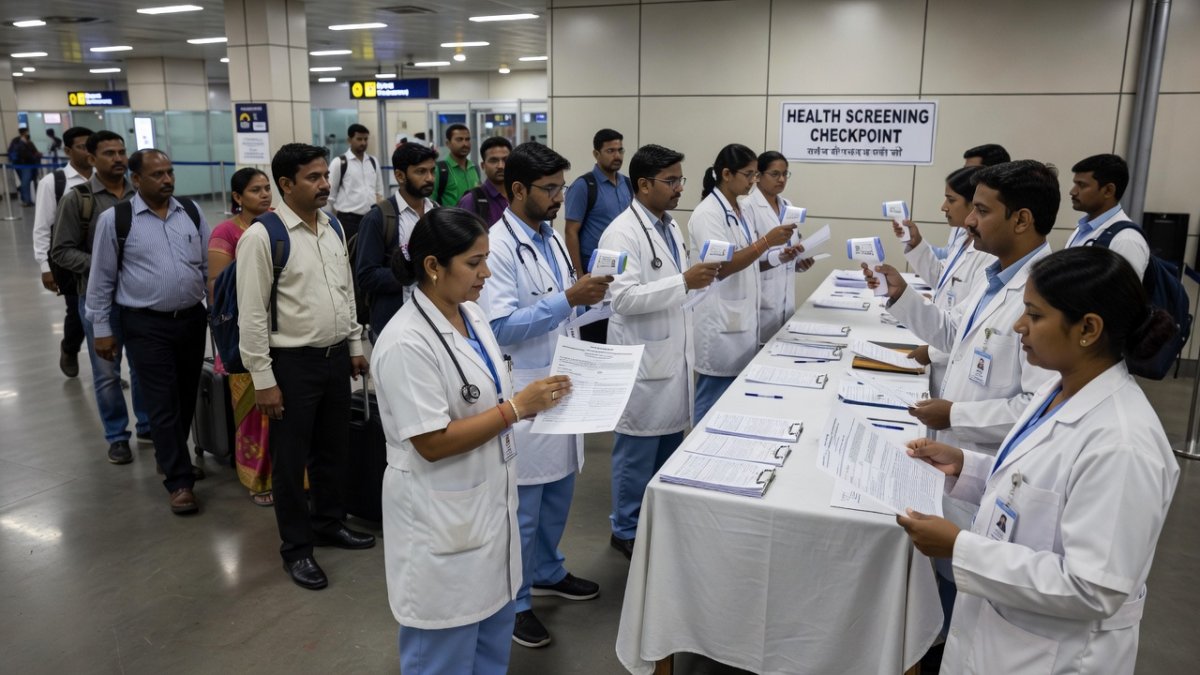
The Union Health Ministry has directed Karnataka, Kerala, and Gujarat to activate enhanced surveillance for viral hemorrhagic fevers. The ICMR has circulated hospital preparedness guidelines that mirror protocols proven during Kerala’s Nipah outbreaks of 2018, 2019, 2021, and 2023. India’s INSACOG genomic sequencing network, expanded after COVID-19, now includes protocols for filovirus detection. Airport screening at major international hubs has been reinforced with thermal scanners and health declaration forms for passengers arriving from Central Africa. The Hindu editorial correctly framed the required posture as “alert, not alarmed.” Indian citizens benefit from these layered defenses, yet gaps remain in district-level isolation facilities and trained critical-care staff. State governments must translate the ICMR guidelines into budgeted action plans within 90 days. Private hospital networks should be integrated into the national referral system so that any imported case receives immediate high-level care without overwhelming public infrastructure. These measures protect both domestic populations and India’s reputation as a reliable partner in global health security.
Lessons for India's Pandemic Preparedness Framework
India’s federal-state coordination mechanisms, tested during COVID-19, provide a template for managing imported high-consequence pathogens. Vaccine manufacturing capacity at the Serum Institute of India and Bharat Biotech can be mobilized rapidly once candidate constructs are available, yet diagnostics and isolation infrastructure require parallel investment. The current outbreak reveals that global response gaps originate from underfunded surveillance and supply chains. Indian policymakers must therefore increase domestic allocations for negative-pressure isolation beds, point-of-care molecular diagnostics, and border health units at all major airports. Lessons from the USAID contraction indicate that reliance on external funding for overseas laboratory capacity is risky; India should instead finance its own regional training programs through the Ministry of Health and Family Welfare. Sustained investment in these areas will allow Indian hospitals to absorb and contain any future imported case while contributing surplus capacity to international partners. Without such forward planning, the country remains vulnerable to the same systemic weaknesses now visible in Central Africa.
The Bottom Line
The Bundibugyo PHEIC declaration and the documented 515 cases with 91 deaths expose critical shortfalls in global surveillance and medical countermeasure availability. For India, the immediate requirements are clear: full operationalization of ICMR hospital guidelines in Karnataka, Kerala, and Gujarat; accelerated procurement of filovirus diagnostics; and expansion of INSACOG sequencing to cover all international points of entry. Policymakers must also safeguard domestic PPE and laboratory supply chains against sudden donor withdrawal. The precedent of successful Nipah containment demonstrates that India possesses the institutional memory to respond effectively when resources are pre-positioned. Sustained budgetary commitment to these capabilities will protect citizens, preserve export continuity, and position India as a net contributor to regional health security rather than a passive recipient of external assistance. — By Dr. Raj Patel, Staff Writer
This article was produced with AI-assisted research and editorial support. Reporting is based on sources cited in the article.
What's Your Reaction?
 Like
0
Like
0
 Dislike
0
Dislike
0
 Love
0
Love
0
 Funny
0
Funny
0
 Wow
0
Wow
0
 Sad
0
Sad
0
 Angry
0
Angry
0

Caribbean Correspondent at Global1.News. Based in Port of Spain, Trinidad, covering Caribbean politics, economy, energy, climate, and culture. Amplifying the voices and stories of the Caribbean region.













Comments (0)