
Police Blame Pub Hours for World Cup Domestic Abuse Spike
World Cup Violence: Police Chief Blames Extended Pub Hours for Record Domestic Abuse Britain's top football policing officer has blamed extended pub opening hours during this year's World Cup for a record surge in violent incidents, as new figures reveal a 78 per cent increase in football-related offences compared to the previous tournament.
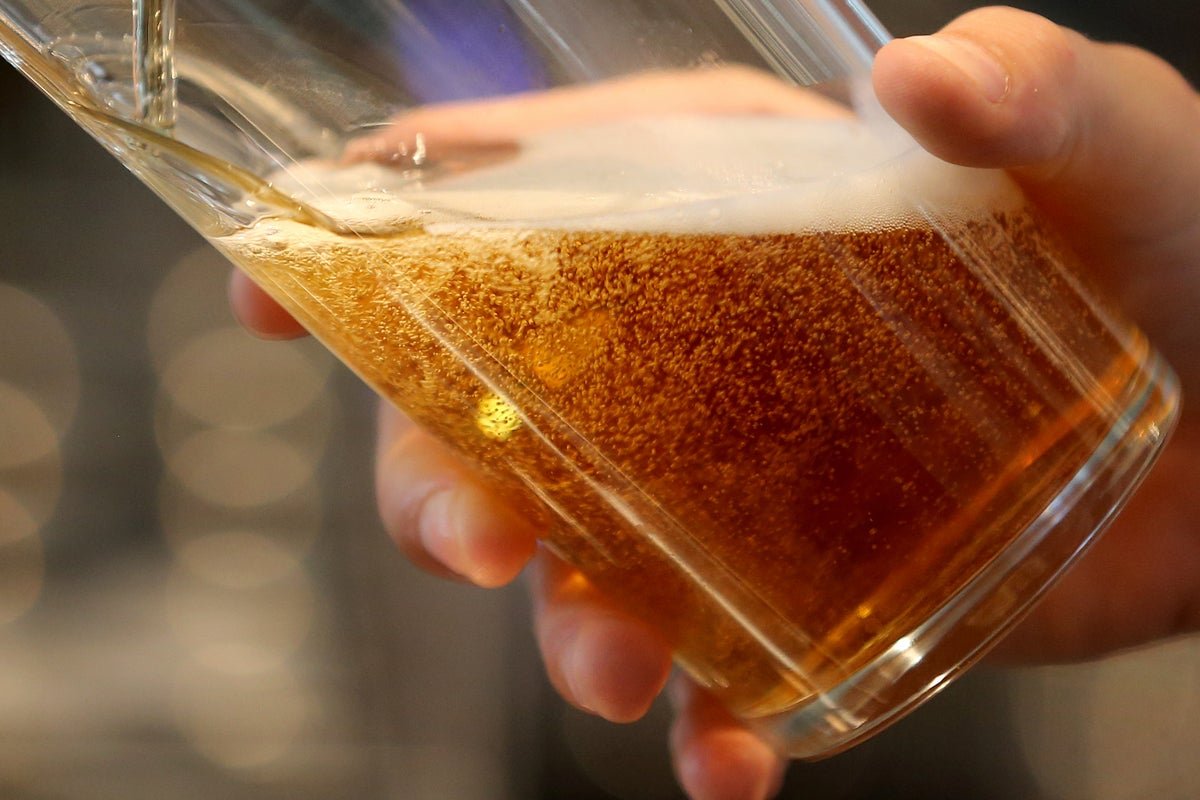
World Cup Violence: Police Chief Blames Extended Pub Hours for Record Domestic Abuse
Britain's top football policing officer has blamed extended pub opening hours during this year's World Cup for a record surge in violent incidents, as new figures reveal a 78 per cent increase in football-related offences compared to the previous tournament.
The Scale of the Problem
Some 2,322 football-related incidents were recorded by police forces across England and Wales during the competition, according to data released by the UK Football Policing Unit (UKFPU). This marks a substantial 78 per cent increase from the 1,302 incidents logged during Euro 2024, and is second only to Euro 2020 which saw 2,345 incidents.
Chief Constable Mark Roberts, who leads on football for the National Police Chiefs' Council (NPCC), described the figures as revealing a "depressing picture" of alcohol-fuelled violence that places an extraordinary burden on policing resources.
The UKFPU data covers the entire tournament period, encompassing both domestic matches and those played abroad. The 2,322 figure represents a broad spectrum of offences, from public disorder and criminal damage to more serious violent crimes, with the majority concentrated around England's knockout-stage fixtures.
Officers described being stretched to breaking point during the peak weeks of the competition, with one senior source describing the tournament as "the most challenging policing operation in a generation" outside of a major terror incident or state visit.
Pub Hours Under Scrutiny
The extension of licensing hours has emerged as a central flashpoint in the debate over football-related violence. Former Prime Minister Sir Keir Starmer granted permission for pubs to remain open until 5am just 48 hours before England's match against Mexico on 6 July, a decision Mr Roberts said "did lead to more issues".
Incidents occurring at licensed premises accounted for 43 per cent of all recorded disturbances during the World Cup. Mr Roberts argued that the late notice left police forces with no time to re-roster teams or take appropriate measures.
"The draw was made on 5 December 2025. The decision to change licensing laws for that fixture, which was eminently foreseeable, was 48 hours before the game itself," he said.
The timing of the decision has drawn criticism from policing bodies across the country, who argue that the Home Office should have consulted forces before approving the extension. The late notice meant officers who had already been rostered for the Mexico match found themselves dealing with a significantly extended operational period without adequate preparation.
This is not the first time extended licensing hours during major football tournaments have proved contentious. Similar debates followed the 2018 World Cup and Euro 2020, though in both cases the extensions were announced with considerably more notice. Critics argue that the Westminster government has failed to learn from past experience, prioritising political expediency and hospitality industry interests over public safety planning.
Domestic Abuse Crisis
Perhaps the most troubling statistic to emerge from the data is the record number of domestic abuse incidents linked to the tournament. Some 384 incidents of football-related domestic abuse were reported to police forces during the competition — up 9 per cent from the 351 logged during Euro 2024, and a staggering 223 per cent increase on the 119 recorded during the 2022 World Cup.
Mr Roberts told the Press Association the data paints a deeply concerning picture. He noted that football-related domestic incidents were counted as those that occurred before, during or after World Cup matches and were "clearly" related to the event.
Domestic abuse charities have reported a corresponding surge in calls to helplines during the tournament period. Refuge, the national charity supporting victims of domestic abuse, confirmed that its helpline experienced elevated demand on match days, particularly following England fixtures. The pattern mirrors research conducted after previous tournaments, which found a direct correlation between major football matches and increased domestic violence.
Dr Kate Walker, a criminologist at the University of Manchester who has studied football-related domestic abuse, said the figures reflect a deeply ingrained cultural problem. "The combination of alcohol, heightened emotion, and pre-existing relationship tensions creates a dangerous cocktail," she said. "These are not random acts of violence — they are predictable and preventable."
Alcohol, Spiking and Rape Concerns
Mr Roberts identified alcohol consumption as the principal driver of the violence, rejecting the notion that football hooliganism is a sport-specific issue. "This is driven largely by alcohol consumption. The football becomes the catalyst for people to go and have excessive alcohol," he said.
"We see it in night-time economies every week. Police get very used to dealing with it, and alcohol is the principal driver."
The chief constable also raised "a massive concern" over rape incidents and spiking allegations at licensed premises during the tournament, which he confirmed the NPCC plans to investigate further.
Online Hate and Rising Youth Involvement
Beyond physical violence, the figures reveal a troubling pattern of online hate crime. Some 293 online hate crime incidents were recorded by police forces across England and Wales during the World Cup, with the majority — 161 — logged during England's match against Ghana on 23 June.
Separate UKFPU statistics for the 2025/26 football season show 1,644 incidents reported to police forces throughout the year, up 4 per cent year-on-year. More concerning still is the rise in young supporter involvement: 516 incidents involving young supporters were recorded, a 120 per cent increase from the 235 logged in 2024/25. Mr Roberts expressed "real concern" about the trend.
A Tale of Two Sets of Fans
Yet the picture is not uniformly bleak. Mr Roberts noted that the behaviour of England fans who travelled to the United States and Mexico, where the tournament was jointly hosted, was "exemplary". Just 22 arrests of travelling England supporters were made by local police during the competition.
This stands in stark contrast to the domestic picture, where 391 arrests were made during the World Cup — the highest figure when compared to previous tournaments excluding the pandemic-disrupted Euro 2020.
The Cost of Policing the Beautiful Game
The financial burden of policing the World Cup has also come under scrutiny. Police forces across England and Wales committed thousands of officers to match-day operations, with mutual aid arrangements drawing resources from as far afield as Scotland and Northern Ireland. The cost of policing the tournament is expected to run into tens of millions of pounds, much of which will be absorbed by local forces already struggling with budget constraints.
The Home Office has not confirmed whether it will provide additional funding to cover the extraordinary policing costs. The NPCC has indicated it will submit a formal request for reimbursement, though whether the Treasury will approve it remains uncertain given the wider fiscal climate.
The debate comes at a time when police officer numbers remain below pre-austerity levels, despite government pledges to recruit 20,000 additional officers. Critics argue that the tournament has exposed the fragility of British policing capacity when confronted with sustained, high-tempo operational demands.
What Next for Licensing Policy?
Mr Roberts called for a more considered approach to licensing policy ahead of future tournaments. "The extension of licensing laws needs to be done with some thought, and it needs to take a broad-based view of the consequences as well as the benefits," he said.
His comments raise searching questions about the balance between supporting the hospitality trade and protecting public safety — a balance that, by his own account, was not struck correctly this summer. With the domestic abuse helpline reporting increased demand during the tournament and police forces stretched thin, the call for earlier planning and broader consultation appears difficult to ignore.
The national domestic abuse helpline offers support on 0808 2000 247. The men's advice line is 0808 8010 327.
By Erica Thornton, Staff Writer
This article was produced with AI-assisted research and editorial support. Reporting is based on sources cited in the article.
What's Your Reaction?
 Like
0
Like
0
 Dislike
0
Dislike
0
 Love
0
Love
0
 Funny
0
Funny
0
 Wow
0
Wow
0
 Sad
0
Sad
0
 Angry
0
Angry
0

US Politics and Policy Correspondent at Global1.News. Based in Washington DC, covering American politics, policy, elections, and the courts. Knows how the system works and tells you what it actually means.










Comments (0)