
Erasing Palestine: British Museum Caught in False Claims Over Removal of Palestinian History
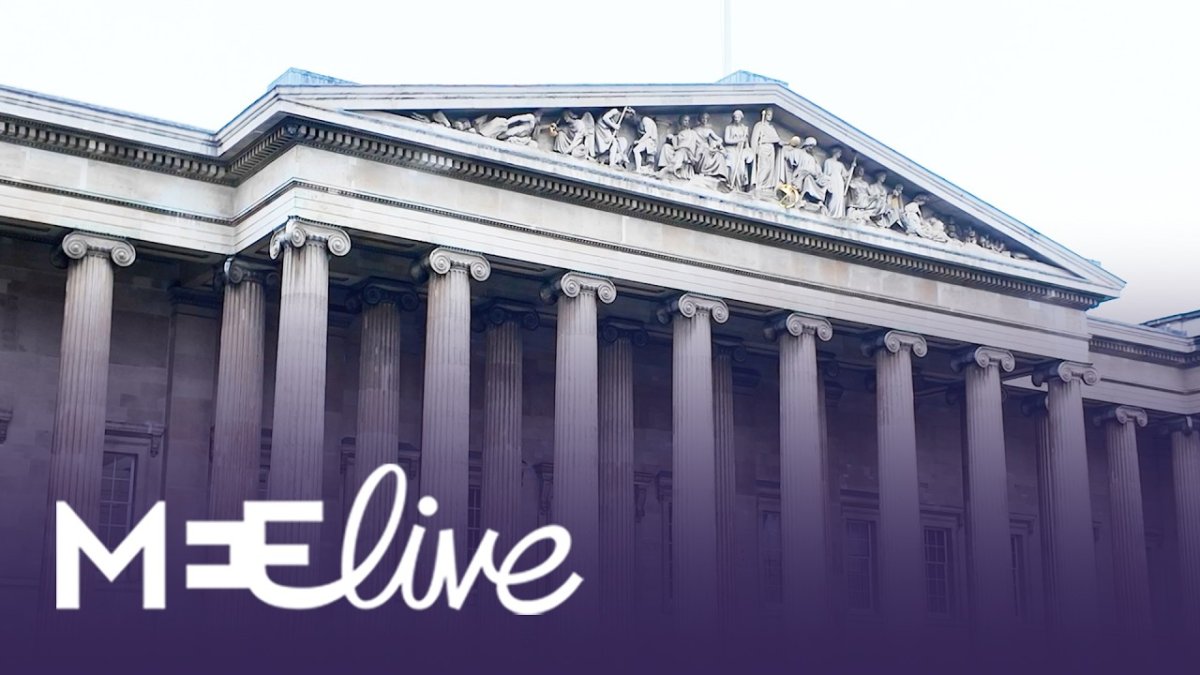
Hook into the exclusive MEE investigation The Middle East Eye video investigation lays bare how the British Museum systematically removed references to Palestine and Palestinian history from its ancient Middle East galleries. Viewers see side-by-side comparisons of display labels before and after changes, revealing the deletion of terms such as “Palestine,” “Palestinian,” and “
Hook into the exclusive MEE investigation
The Middle East Eye video investigation lays bare how the British Museum systematically removed references to Palestine and Palestinian history from its ancient Middle East galleries. Viewers see side-by-side comparisons of display labels before and after changes, revealing the deletion of terms such as “Palestine,” “Palestinian,” and “Israelite occupation.” The footage draws on internal documents obtained through freedom of information requests, showing that these alterations occurred between October and December 2024.
Staff members were instructed to remain “uber-conscious” of the approaching anniversary of 7 October, creating an atmosphere in which Palestinian historical presence was treated as sensitive or problematic. The video highlights how the Hyksos display was altered from describing people “of Palestinian descent” to “Canaanite origin,” while the Phoenician section lost the phrase “Israelites occupied most of Palestine.” These edits were presented as routine updates yet directly followed external pressure.
Palestinian voices featured in the investigation describe the removals as part of a wider pattern of cultural erasure. The museum’s refusal to answer detailed questions, instead stating that claims of removal were “simply not true,” is shown alongside evidence from the emails themselves. The investigation places these actions within the daily reality of Palestinians whose heritage continues to face denial both in the region and in Western institutions.
By connecting the gallery changes to broader questions of representation, the video demonstrates how decisions made in London affect the visibility of an entire people. It sets the stage for understanding why Palestinian communities view such institutional shifts as more than curatorial adjustments.
Internal emails and the five-hour turnaround
Internal emails released through freedom of information requests show that the Board of Deputies of British Jews lodged a complaint and received a resolution within five hours. The correspondence reveals museum staff treating the complaint as an urgent priority, with changes implemented rapidly in the ancient Middle East displays. No similar speed was applied to any Palestinian community input during the same period.
The emails further indicate that senior management directed curators to review all labels mentioning Palestine or related terms. Staff were told to exercise heightened caution around the 7 October anniversary, framing Palestinian references as potential sources of controversy. This directive came without any documented audience testing or public consultation, despite later public statements claiming otherwise.
One exchange shows the complaint moving from receipt to implemented label changes in a single working day. The museum’s director later described the process as driven by “audience testing,” yet the released documents contain no record of such testing having taken place. The speed of response stands in contrast to the museum’s slower engagement with other stakeholder groups.
These communications demonstrate how internal priorities shifted decisively following the lobbying intervention. The five-hour resolution time underscores the institutional weight given to one set of concerns over others.
The complainants: who lobbied and why
The Board of Deputies of British Jews submitted the complaint that triggered the label changes. The organization’s intervention focused on specific wording in the ancient Middle East galleries, particularly phrases linking ancient populations to Palestinian heritage. The museum treated the submission as authoritative and acted without broader consultation.
Additional correspondence references UK Lawyers for Israel (UKLFI) as another actor whose concerns reached the director’s attention. Although Nick Cullinan later told historian William Dalrymple that he knew “nothing” of UKLFI, the emails suggest prior awareness of the group’s positions. Pro-Israel lobbying networks coordinated their approaches during the final months of 2024.
Peter Leary of the Palestine Solidarity Campaign has stated that such groups aim to “eliminate all mention of Palestine’s past” from public institutions. The pattern observed at the British Museum aligns with similar efforts elsewhere, where historical terminology is contested to shape contemporary narratives. The museum’s subsequent partnership with the Board of Deputies for Jewish Culture Month further illustrates the institutional relationship that developed.
These lobbying dynamics reveal how external organizations can influence curatorial decisions when granted rapid access. The absence of equivalent Palestinian representation in the process left one perspective dominant.
Director's contradictory claims unravel
Director Nick Cullinan publicly attributed the label revisions to “audience testing,” yet freedom of information documents contain no evidence that any such testing occurred. The released emails show the changes resulted directly from the October–December 2024 complaints. This discrepancy has drawn scrutiny from researchers and journalists examining the museum’s transparency.
When questioned by William Dalrymple, Cullinan claimed ignorance of UKLFI’s involvement. Internal records, however, indicate that concerns associated with the group reached senior levels. The director’s statements therefore sit at odds with the documented timeline of decision-making.
The museum’s initial response to media inquiries was to declare that claims of removing Palestine were “simply not true.” This position was maintained even after the emails detailing the label alterations became public. The contradiction between public messaging and internal records has eroded confidence in the institution’s account.
Staff who spoke on condition of anonymity described an environment in which curatorial judgment yielded to external pressure. The director’s explanations have not addressed why Palestinian perspectives received no comparable consideration during the same period.
'Absolutely existential': Palestinian response
Palestinian ambassador Husam Zomlot described the removals as “absolutely existential for us.” He emphasized that the erasure of historical terminology in a major international museum compounds the physical and cultural pressures faced by Palestinians. The ambassador’s statement reflects widespread concern that institutional silence reinforces political marginalization.
Community members and historians interviewed for the investigation stressed that references to ancient Palestine form part of living cultural memory. Removing these terms from displays severs connections between contemporary Palestinians and their documented heritage. The changes occurred without any outreach to Palestinian representatives or scholars.
Activists noted that the museum hosted an Israeli embassy event in May 2025 while Palestinian perspectives remained absent from decision-making processes. Protests outside the museum highlighted the disconnect between institutional partnerships and community concerns. The lack of regard shown for Palestinian cultural annihilation was cited repeatedly as a source of deep hurt.
These responses underscore that the issue extends beyond individual labels. For Palestinians, accurate representation in global institutions carries implications for recognition and continuity amid ongoing displacement and denial.
Beyond the galleries: a pattern of institutional bias
The British Museum’s actions fit within a wider pattern of institutions adjusting content under pro-Israel pressure. Similar efforts have targeted terminology in universities, media outlets, and other museums. The rapid five-hour resolution in this case illustrates how effectively organized lobbying can shape public narratives.
Peter Leary of the Palestine Solidarity Campaign has documented multiple instances where references to Palestine’s past were challenged or removed. The museum’s new partnership with the Board of Deputies for Jewish Culture Month suggests an ongoing institutional alignment that excludes parallel Palestinian engagement. This asymmetry affects how history is presented to millions of visitors annually.
Staff directives to remain “uber-conscious” of specific anniversaries reveal how political calendars influence curatorial choices. No equivalent sensitivity protocols were established for Palestinian historical commemorations. The resulting imbalance shapes the stories told in one of the world’s most visited cultural institutions.
These developments extend the impact of the label changes far beyond the galleries themselves. They contribute to an environment in which Palestinian history is selectively visible or invisible depending on external political considerations.
Analysis: cultural erasure as political strategy
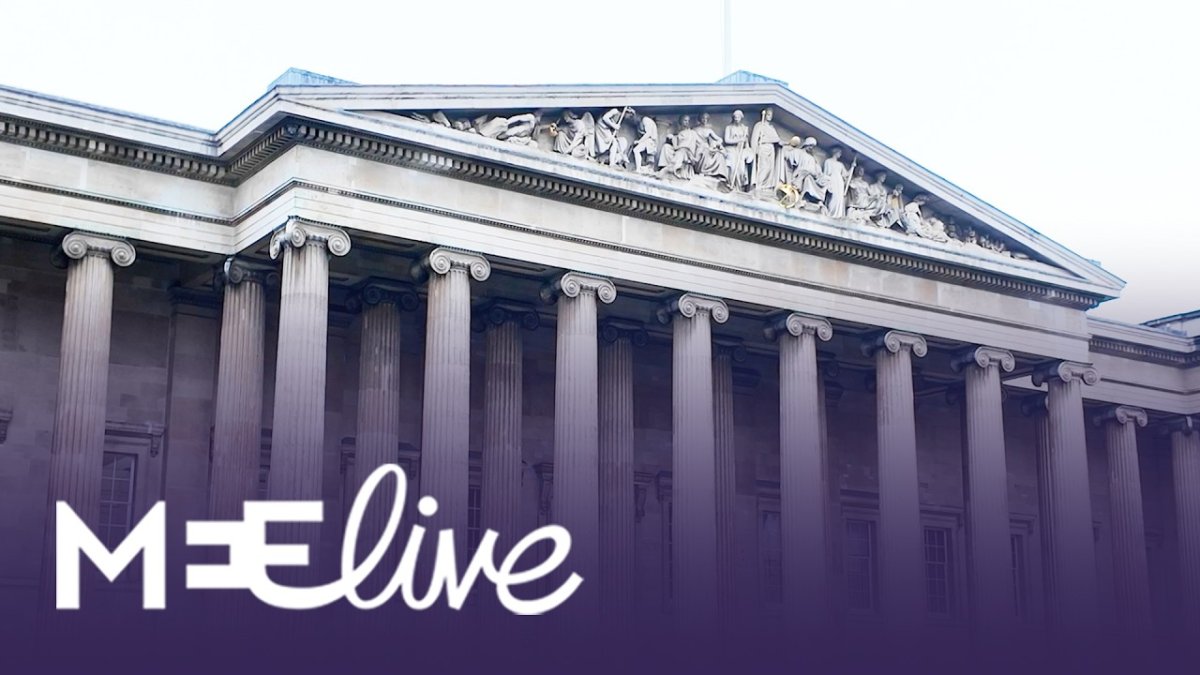
The removal of “Palestine” and “Palestinian” from ancient displays functions as a form of narrative control. By altering descriptions of the Hyksos and Phoenician periods, the museum severs documented links between ancient populations and later Palestinian identity. This approach treats historical terminology as negotiable rather than factual.
Internal instructions to monitor the 7 October anniversary demonstrate how contemporary events are used to justify the marginalization of Palestinian heritage. The absence of audience testing further indicates that the changes were driven by lobbying rather than public demand. Such decisions carry consequences for how future generations understand the region’s history.
Palestinian ambassador Husam Zomlot’s characterization of the issue as “existential” captures the stakes involved. When major institutions participate in erasing references to a people’s past, they reinforce political efforts to deny contemporary presence and rights. The British Museum’s actions therefore intersect with wider geopolitical struggles over recognition.
The pattern of rapid compliance with one set of complaints and dismissal of others reveals structural imbalances in institutional access. Cultural erasure in this context operates as a quiet but effective political strategy.
What must happen next
Accountability requires the British Museum to release all correspondence related to the label changes and to conduct transparent consultations with Palestinian scholars and communities. Restoring accurate historical terminology would signal a commitment to factual representation over external pressure. The current partnership arrangements should be reviewed for balance and inclusivity.
Freedom of information processes must remain robust so that internal decision-making can be examined. The discrepancy between the director’s public statements and the documented emails needs formal clarification. Without such steps, public trust in the institution’s independence will continue to decline.
Palestinian voices, including those of Ambassador Husam Zomlot and community organizations, must be given equivalent weight in future curatorial decisions. The museum’s role as a public institution carries responsibility to present history without selective omission. Addressing the documented removals would constitute a necessary first step.
Broader scrutiny of how pro-Israel lobbying influences cultural institutions across the United Kingdom is also warranted. Ensuring that Palestinian history remains visible protects the integrity of public knowledge and supports the principle that no people’s past should be erased by institutional fiat.
By Fatima Al-Rashid, Staff WriterThis article was produced with AI-assisted research and editorial support. Reporting is based on sources cited in the article.
What's Your Reaction?
 Like
0
Like
0
 Dislike
0
Dislike
0
 Love
0
Love
0
 Funny
0
Funny
0
 Wow
0
Wow
0
 Sad
0
Sad
0
 Angry
0
Angry
0
Gulf/MENA Correspondent at Global1.News. Based in Doha, covering Gulf politics, energy markets, diplomacy, and development across the Middle East and North Africa. Tracks the economic transformation of the Gulf states.









Comments (0)