
Japan Names Kazuya Hara to Lead New National...
Japan appoints Kazuya Hara to lead its first centralized intelligence agency since WWII as the National Intelligence Bureau launches July 31 under PM Takaichi's reform agenda. Kazuya Hara, National Intelligence Bureau, Japan intelligence reform, Sanae Takaichi, CIRO, National Intelligence Council, Japan security, intelligence reform, Kabinet intelligence, Japan spy agency, Diet legislation, Japan China counterintelligence Japan Names Kazuya Hara to Lead New National Intelligence Bureau TOKYO — T
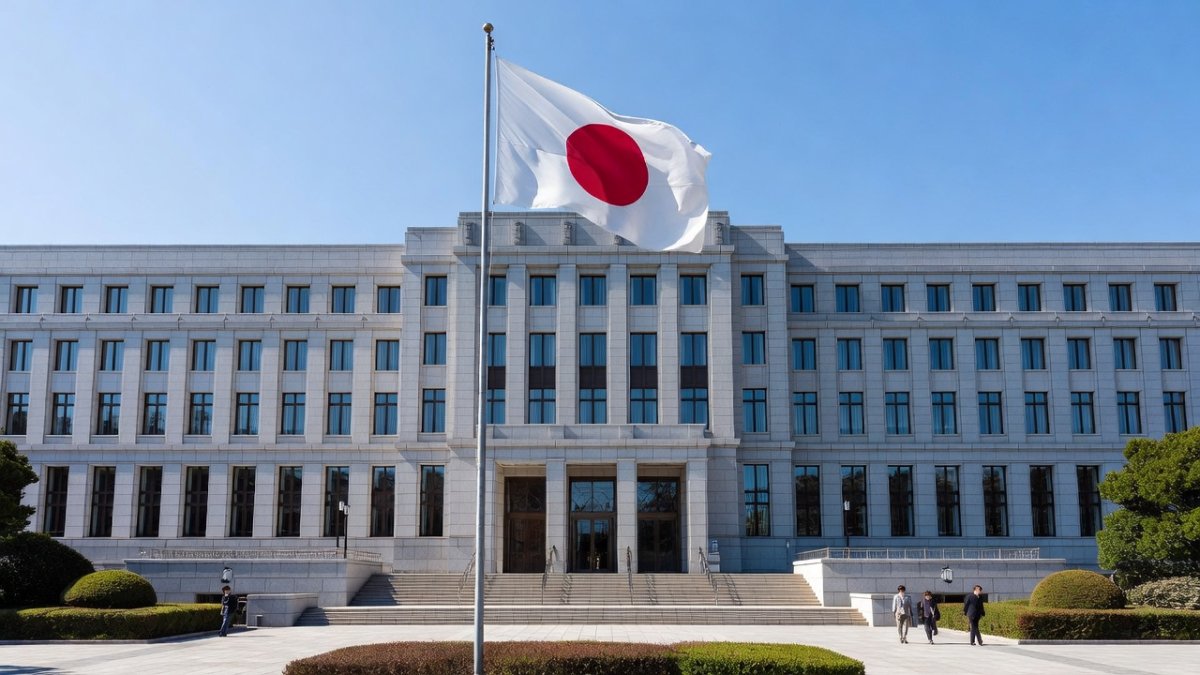
Japan Names Kazuya Hara to Lead New National Intelligence Bureau
TOKYO — The Japanese government on Friday named Kazuya Hara, the current director of Cabinet intelligence, as the first head of the newly established National Intelligence Bureau (NIB), marking the most significant restructuring of Japan's intelligence apparatus since the end of World War II. Hara, 58, will assume his new post on July 31, the same day the bureau officially launches operations under the direct oversight of Prime Minister Sanae Takaichi's office.
Tags: Kazuya Hara, National Intelligence Bureau, Japan intelligence reform, Sanae Takaichi, CIRO, National Intelligence Council
The Appointment: A Career Intelligence Professional Takes the Helm
The Cabinet formally approved Hara's appointment on Friday, elevating the career law enforcement and intelligence official who has served as director of the Cabinet Intelligence and Research Office (CIRO) since June 2023. Hara brings extensive experience from the National Police Agency (NPA), where he held senior positions including head of the Security Bureau, one of the NPA's most sensitive divisions responsible for counterterrorism, counterintelligence, and domestic security coordination.
Hara's appointment reflects Takaichi's preference for operational experience over diplomatic background in the intelligence field. His law enforcement pedigree, rather than a Ministry of Foreign Affairs or Ministry of Defense career, signals that the new bureau will prioritize actionable intelligence collection and analysis over traditional diplomatic information-gathering. The transition from CIRO director to NIB chief also ensures institutional continuity during the bureau's critical first months of operation.
The New Bureau: Japan's First Centralized Intelligence Agency Since 1945
The National Intelligence Bureau represents a historic departure from Japan's post-war intelligence structure. Since 1945, Japan has operated under a decentralized intelligence system anchored by CIRO, which coordinated information across ministries but lacked independent collection authority and direct operational control. The NIB consolidates intelligence functions that were previously dispersed across the National Police Agency, the Ministry of Foreign Affairs, the Ministry of Defense, and other government bodies into a single centralized agency.
Under the new structure, the NIB will serve as the secretariat for the newly created National Intelligence Council (NIC), which is chaired personally by Prime Minister Takaichi. The NIC sets strategic intelligence priorities and coordinates the government's response to security threats. The council's first meeting is also scheduled for July 31, according to the Cabinet Office. Intelligence Online reported in February 2026 that Takaichi had personally tasked Hara with establishing this new coordinating body soon after she took office.
Legislative Path: From Diet Passage to Operational Reality
The legal foundation for the NIB was laid in the spring of 2026. The National Intelligence Council Establishment Bill passed the House of Representatives on April 23, cleared the House of Councillors in May, and was promulgated into law shortly thereafter. The rapid legislative timeline — less than three months from cabinet proposal to operational launch — underscored the urgency Takaichi's administration assigned to intelligence reform.
The legislation establishes the NIB as an independent agency under the Cabinet Office, separate from the existing CIRO structure. Notably, the new bureau has been granted broader authority for interministerial intelligence coordination than its predecessor. The bill also mandates enhanced information-sharing protocols between the NIB and Japan's key intelligence partners, including the United States, Australia, and members of the Five Eyes intelligence alliance, with which Japan has deepened cooperation in recent years.
Drivers of Reform: Why Takaichi Pushed for Intelligence Centralization
Japan's intelligence overhaul is driven by several converging factors. First, the accelerating strategic competition with China has exposed gaps in Japan's ability to collect and analyze intelligence across multiple domains simultaneously, from military movements in the East China Sea to economic espionage targeting Japanese semiconductor and advanced manufacturing sectors. The Times of India quoted officials describing the NIB as Japan's response to "systematic intelligence failures" in assessing China's military buildup.
Second, North Korea's advancing missile and nuclear programs continue to demand real-time, cross-domain intelligence fusion that Japan's decentralized CIRO system was not designed to provide. Third, Russia's war in Ukraine and its implications for Northeast Asian security have reinforced the need for independent Japanese intelligence assessments, rather than reliance on allied reporting.
A fourth driver is economic security. The NIB's mandate explicitly includes monitoring and countering foreign influence operations, technology theft, and supply chain vulnerabilities — areas that extend well beyond traditional military intelligence and into the domain of industrial competitiveness. Japan's recent export control reforms, targeting semiconductor equipment and advanced materials, require parallel intelligence capabilities that the NIB is designed to provide.
Hara's Washington Connection: FBI Engagement Signals Integration
In a sign of the international dimension of Japan's intelligence reform, Hara visited FBI headquarters in Washington in early May 2026 for talks with FBI Director Kash Patel. Patel publicly welcomed Japan's planned intelligence bureau on his X account, posting photographs of the meeting and describing the initiative as a significant step in U.S.-Japan security cooperation.
The Washington visit was more than a courtesy call. Sources familiar with the meeting indicated that discussions covered intelligence-sharing protocols, counterintelligence coordination against Chinese espionage, and technical cooperation in cybersecurity. The FBI's endorsement carries particular weight given the bureau's role as a model for the NIB's operational structure. The meeting also signaled to Beijing that Japan's intelligence modernization enjoys active U.S. support.
Concerns and Criticisms: Privacy, Oversight, and Democratic Accountability
Not all reactions to the NIB's creation have been positive. Opposition lawmakers and civil liberties advocates have raised concerns about the expanded powers of the new bureau, particularly regarding domestic surveillance capabilities and the potential for government overreach. The Free Malaysia Today news service reported in May that critics "have voiced concerns that the upgraded intelligence apparatus might lead to the government's overreach and infringe upon individual freedom and privacy."
Specific concerns center on the NIB's authority to coordinate intelligence collection across domestic agencies, including the National Police Agency's public security functions. The revision of the drone regulation law in June 2026, which this week was used for the first time to designate restricted airspace over the Hiroshima peace ceremony, has been cited by some critics as evidence of a broader pattern of security expansion that should be subject to more rigorous legislative oversight. The government has countered that the NIB will operate under the NIC's direction and within existing legal frameworks, with intelligence activities subject to review by a newly established oversight commission within the Cabinet Office.
What This Means for Japan's Security Posture
The launch of the NIB fundamentally alters Japan's intelligence architecture. For decades, Japan's lack of a centralized intelligence agency was seen as both a constitutional constraint and a practical limitation — a legacy of post-war pacifism that left the country dependent on allied intelligence for strategic assessments. The NIB changes that calculus by creating an independent Japanese capability for all-source intelligence collection and analysis.
For Japanese businesses operating internationally, the NIB's economic security mandate has particular relevance. The bureau's focus on countering foreign influence operations, technology theft, and supply chain vulnerabilities directly affects companies in the semiconductor, advanced materials, and critical infrastructure sectors. Japanese firms have been among the most affected by technology transfer restrictions and industrial espionage in recent years, and the NIB represents the government's most systematic response to date.
For Japan's neighbors, the NIB sends a clear message about Tokyo's strategic trajectory. The establishment of a centralized intelligence agency is the latest in a series of security policy shifts under Takaichi, following the relaxation of weapons export restrictions, increased defense spending, and deeper integration with AUKUS partner nations. Whether the NIB will function primarily as a defensive intelligence coordinator or evolve into a more assertive operational agency will depend on how Takaichi and her successors interpret its mandate in the years ahead.
What to Watch For
The first test of the NIB's effectiveness will be its ability to produce actionable intelligence that the NIC can use for policy decisions. The July 31 inaugural council meeting will set the initial intelligence priorities. Analysts will be watching for early signs of the NIB's operational independence from the ministries that previously controlled Japan's fragmented intelligence functions.
International engagement will also be a key indicator. The NIB's relationship with the U.S. intelligence community, particularly through the FBI channel Hara has already established, will shape its early operational capabilities. Additionally, Japan's pursuit of closer ties with Five Eyes nations — already a priority under Takaichi — is expected to accelerate now that a centralized intelligence counterpart exists in Tokyo.
The appointment of Kazuya Hara marks the beginning of a new chapter in Japan's intelligence history. Whether the NIB evolves into Japan's equivalent of the CIA or remains a coordinating body with limited operational authority, its creation represents the most significant structural change to Japanese intelligence in over eight decades. For a nation that has long been cautious about centralizing security powers, the launch of the National Intelligence Bureau is a watershed moment in Japan's post-war evolution.
By Kenji Tanaka, Staff Writer
This article was produced with AI-assisted research and editorial support. Reporting is based on sources cited in the article.
What's Your Reaction?
 Like
0
Like
0
 Dislike
0
Dislike
0
 Love
0
Love
0
 Funny
0
Funny
0
 Wow
0
Wow
0
 Sad
0
Sad
0
 Angry
0
Angry
0

Japan Correspondent at Global1.News. Tokyo-based voice covering Japanese politics, technology, economy, and culture. Tracks the intersection of tradition and innovation in one of the world's most dynamic societies.















Comments (0)