
E20 Petrol: India Government Rebuts Misinformation with Data
India's E20 ethanol-blended petrol programme, which achieved 20 per cent blending in December 2025 — five years ahead of the original target — is facing an aggressive wave of misinformation on social media. The Ministry of Petroleum and Natural Gas, backed by extensive testing data from the Automotive Research Association of India (ARAI) and major automobile manufacturers, has
India's E20 ethanol-blended petrol programme, which achieved 20 per cent blending in December 2025 — five years ahead of the original target — is facing an aggressive wave of misinformation on social media. The Ministry of Petroleum and Natural Gas, backed by extensive testing data from the Automotive Research Association of India (ARAI) and major automobile manufacturers, has issued a detailed ten-point rebuttal rejecting claims that the fuel damages engines, wastes water, attracts insects, or invalidates vehicle insurance. With installed ethanol production capacity now at 2,000 crore litres and savings exceeding ₹1.9 lakh crore in foreign exchange since 2014-15, the stakes for India's energy security and agricultural economy could not be higher.
E20 Petrol in India: Government and Industry Rebut Misinformation with Scientific Data, Economic Numbers
New Delhi, July 5, 2026 — The Ministry of Petroleum and Natural Gas on 3-4 July 2026 launched a comprehensive "Facts vs Misinformation" campaign, directly addressing viral social media claims about India's ethanol blending programme. The ten-point clarification, issued amid a heated public debate over the nationwide rollout of E20 petrol, rejects assertions that ethanol-blended fuel causes engine failures, leads to excessive water consumption, invalidates vehicle insurance, attracts insects, or poses fire risks. The rebuttal is supported by data from ARAI, Indian Oil Corporation, the Indian Institute of Petroleum, and the Society of Indian Automobile Manufacturers (SIAM).
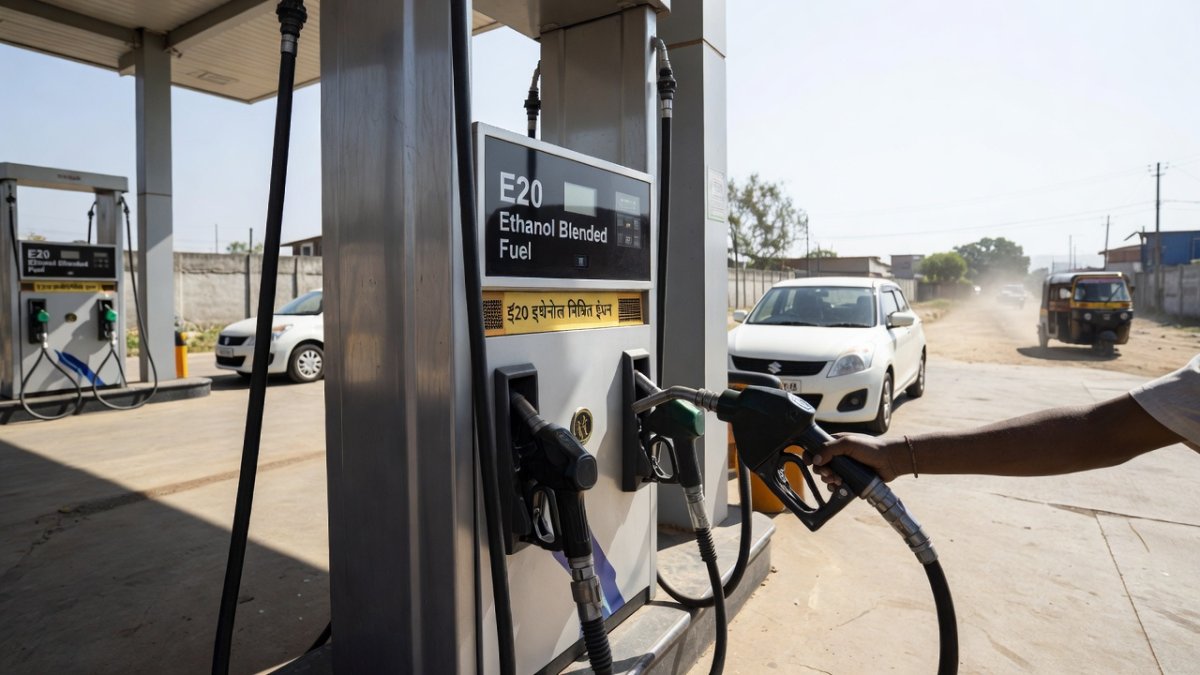
India Achieves E20 Target Five Years Ahead of Schedule
India reached 20 per cent ethanol blending in petrol in December 2025, well ahead of the original 2030 target. Blending rose from just 1.5 per cent in 2013-14 to the current E20 level, which became the nationwide base fuel approximately ten months ago. Installed ethanol production capacity now stands at 2,000 crore litres, with procurement expected to exceed 1,200 crore litres in the 2025-26 supply year. The government has already notified standards for blends beyond E20, effective from May 15, 2026, signalling a continued expansion of the programme.
ARAI Trials Confirm No Engine Damage Across 40,000 Kilometres
ARAI conducted durability tests covering 40,000 km in passenger vehicles and 20,000 km in two-wheelers. The trials found no significant adverse effects on drivability or fuel efficiency. While ethanol contains less energy per litre than conventional petrol, resulting in a marginal mileage reduction, Petroleum Minister Hardeep Singh Puri described the drop as "minor" and dismissed claims of severe performance loss as baseless. Vehicles calibrated for E20 benefit from ethanol's higher octane rating, which improves combustion efficiency. All vehicles manufactured from 2023 onwards are factory-approved for E20, and no engine-failure cases have been reported in the ten months since E20 became standard fuel.
Manufacturers Confirm No Compatibility Issues for Pre-2023 Vehicles
Maruti Suzuki India tested E10-calibrated vehicles on E20 across all parameters and found nothing of concern. Rahul Bharti, Senior Executive Officer at Maruti Suzuki, stated that the company built sufficient safety margins into vehicle design and testing to ensure no issues with wear, corrosion, or component life — even when pre-2023 vehicles use E20. Vikram Gulati, Country Head at Toyota Kirloskar Motor, described ethanol as a high-performance, zero-carbon fuel derived from plants. Hero MotoCorp's Chief Business Officer Ashutosh Verma said the company analysed service data from millions of two-wheelers and recorded no increase in component damage or corrosion. Only certain rubber parts in older vehicles may need earlier replacement, a predictable and low-cost adjustment.
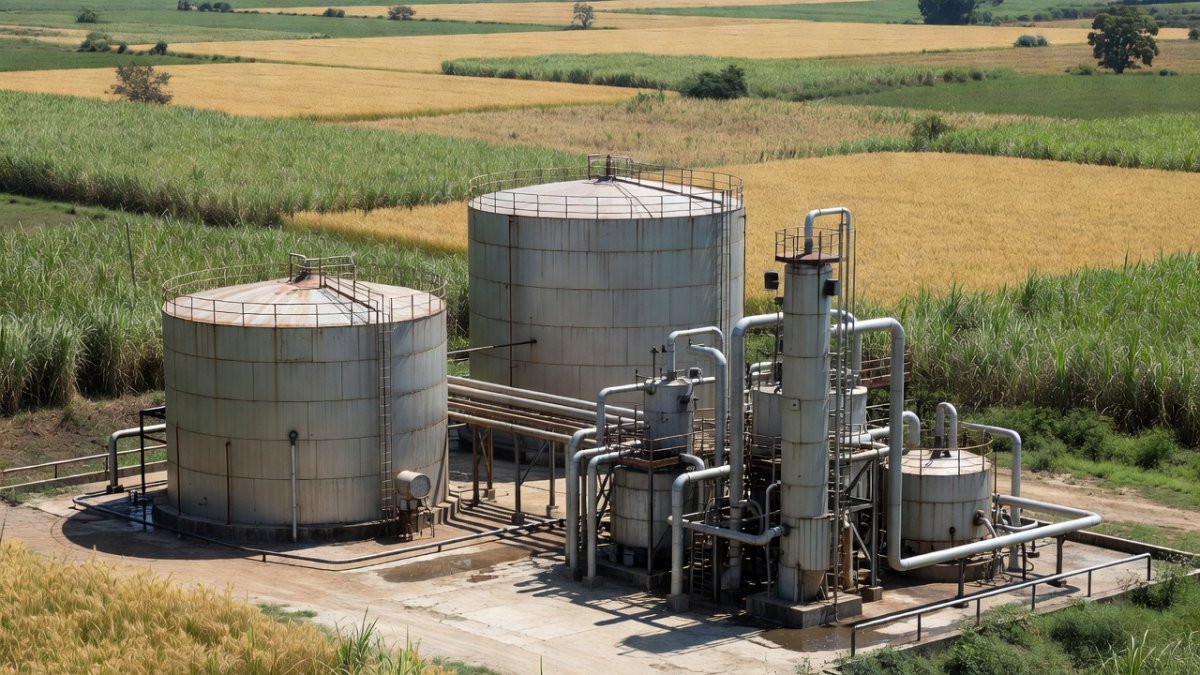
Water-Use and Insect Claims Proven False by Ministry Data
One of the most persistent viral claims — that producing one litre of ethanol requires 10,000 litres of water — has been definitively rebutted. Distilleries consume between 3 and 5 litres of processed water per litre of ethanol, and many plants now operate under Zero Liquid Discharge norms that recycle water. Maize contributes over 40 per cent of ethanol feedstock and requires far less irrigation than paddy. Only surplus rice cleared after meeting national food security requirements is diverted for ethanol production. On the insect claim, fuel-grade ethanol is distilled to remove residual sugars, and denaturants used in the blend repel insects. The hydrocarbon odour of petrol remains dominant in the blended fuel.
Insurance Coverage and Vehicle Warranties Remain Fully Valid
The Ministry clarified that no vehicle insurance policy is invalidated by the use of E20 petrol. Automobile manufacturers and insurers have confirmed that vehicles designed and approved for E20 remain fully covered under applicable terms. No policy exclusions have been introduced because of the blend change, putting to rest another category of viral misinformation.
Quantified National Benefits Since 2014-15: ₹1.9 Lakh Crore Saved
The ethanol blending programme has delivered measurable economic and environmental returns since its inception. According to Ministry data, it has saved ₹1.9 lakh crore in foreign exchange, transferred ₹1.6 lakh crore directly to farmers, reduced CO₂ emissions by 930 lakh metric tonnes, and displaced 310 lakh metric tonnes of crude oil imports. At current international crude prices, under-recoveries stand at approximately ₹26 per litre on petrol and ₹81.90 per litre on diesel — underscoring the value of domestic ethanol substitution. Countries including the United States, Brazil, Canada, Thailand, Japan, and Germany have similarly adopted ethanol blending programmes.
Industry Experts Emphasise Science-Based, Phased Implementation
Vartika Shukla, former Chairperson and Managing Director of Engineers India Limited, stated that ethanol blending followed a "measured, scientifically driven step-by-step process" — not an overnight policy decision. Vikram Gulati of Toyota Kirloskar stressed that vehicles available to Indian consumers are "extremely well engineered" with safety margins exceeding regulatory requirements. Rahul Bharti of Maruti Suzuki confirmed built-in design tolerances that protect component life across vehicle generations. The consensus across the automotive industry is clear: E20 is safe, tested, and beneficial for India's energy independence.
Minister Puri Rejects Vested-Interest Narratives, Points to Brazil Model
Petroleum Minister Hardeep Singh Puri strongly defended the E20 programme, stating that Brazil has run E27 blends for years without systemic problems. He dismissed severe claims as misinformation spread by "lobbies with vested interests" actively attempting to create confusion and derail India's clean energy transition. Puri reiterated that not a single engine failure has been reported since the E20 rollout began. With standards for blends beyond E20 already notified, the programme's continued, data-driven expansion remains on track — backed by scientific evidence, global best practices, and a decade of proven results.
The Bottom Line
India's E20 ethanol blending programme represents one of the largest coordinated energy transitions in the country's history, touching every vehicle owner, farmer, and taxpayer. The government's detailed rebuttal, supported by 40,000 km of ARAI trials, manufacturer compatibility data from Maruti Suzuki, Toyota Kirloskar, and Hero MotoCorp, and quantified economic benefits of ₹1.9 lakh crore in forex savings, leaves little room for doubt about the fuel's safety or strategic importance. For Indian vehicle owners, the message is straightforward: E20 petrol is scientifically validated, globally accepted, and backed by a decade of domestic testing — and the misinformation circulating on social media does not hold up to scrutiny.
— By Dr. Raj Patel, Staff Writer
This article was produced with AI-assisted research and editorial support. Reporting is based on sources cited in the article.
What's Your Reaction?
 Like
0
Like
0
 Dislike
0
Dislike
0
 Love
0
Love
0
 Funny
0
Funny
0
 Wow
0
Wow
0
 Sad
0
Sad
0
 Angry
0
Angry
0

India/South Asia Correspondent at Global1.News. Analytical voice with a background in science and health journalism. Based in New Delhi, covering Indian politics, education, healthcare, technology, and policy. Breaks down complex data into clear, actionable reporting.















Comments (0)