
Colombia's Failed Coca Substitution Leaves Farmers Trapped
Colombia's coca substitution program, created under the 2016 peace accord, has failed to help farmers transition to legal crops. With only 6% of households completing the program, growers in Meta and beyond face armed group coercion, overwhelming economic incentives for coca over coffee or cacao, and new EU anti-deforestation rules that add barriers to legal exports. The failure drives Amazon deforestation and sustains Colombia's role as the world's top cocaine producer.
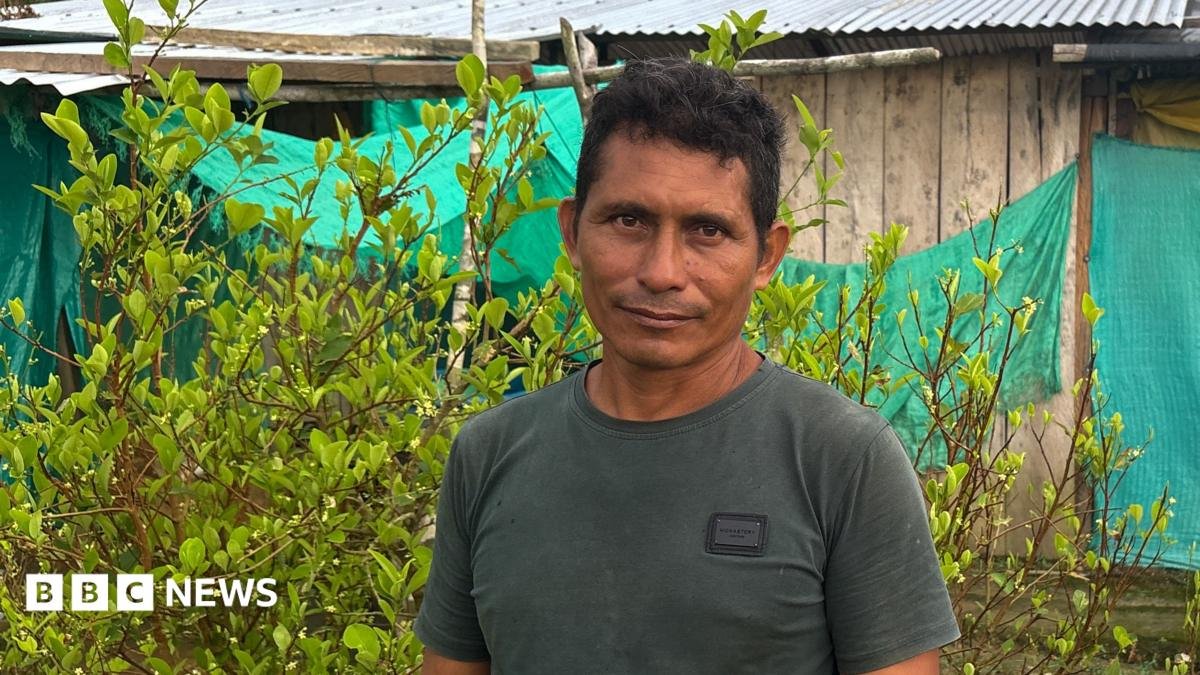
Colombian coca farmers desperately want to abandon illicit cultivation for legal alternatives, yet government substitution programs launched under the 2016 peace accord have collapsed under funding shortfalls, bureaucratic delays, and shifting policy priorities. Across Meta and other departments, households that voluntarily eradicated coca plots now face ruined livelihoods, returning to the only crop that offers reliable buyers and immediate cash. The result is a deepening crisis that sustains Colombia's position as the world's top cocaine producer while accelerating Amazon deforestation and complicating international trade rules.
Colombia's Coca Farmers Trapped by Failed Substitution
Bogota, Colombia — Article continues...
The Unfulfilled Promise of the 2016 Peace Agreement
Colombia's coca substitution program emerged directly from the 2016 peace treaty between the government and the FARC. The initiative aimed to provide rural households with support to abandon coca leaf cultivation in favor of legal crops. After six years of implementation, official figures show that only about 6 percent of enrolled households completed the full program. Farmers in Meta department report that promised technical assistance, land titling, and market access never materialized at scale, leaving families without viable alternatives to the coca economy that has sustained them for generations.
The 2016 peace accord's crop substitution chapter, known as the Programa Nacional Integral de Sustitución de Cultivos Ilícitos, committed the Colombian state to voluntary eradication in exchange for comprehensive rural development. Signatories pledged technical assistance, land titling within two years, and market linkages for legal crops, with an initial target of 50,000 families across 170 municipalities. Yet by 2023, only 22 percent of the 99,000 enrolled households had received full packages, according to government audits, as funding shortfalls and bureaucratic delays left most without seedlings, credit, or secure titles.
Failure accelerated after 2018 when the Duque administration shifted emphasis toward forced eradication, slashing PNIS budgets by nearly 40 percent. Families in Meta and Caquetá who uprooted coca plots waited three to five years for promised infrastructure, only to see armed groups reoccupy the vacuum. The absence of follow-through transformed what was framed as a historic opportunity into a cautionary tale of state absence, pushing disillusioned growers back toward illicit economies.
Economic Realities Facing Growers in Meta and Beyond
In Meta department and other coca-growing regions, farmers describe a stark calculation: legal crops such as coffee, cacao, and palm oil cannot match the immediate income and established buyer networks provided by coca leaf. The program offered no reliable replacement that could sustain household livelihoods at comparable levels. This gap persists even as Colombia remains the world's largest cocaine producer, with cultivation concentrated in departments where state presence has historically been weak. Rural communities continue to weigh the risks of continued coca production against the absence of functioning legal markets.
Coca leaf cultivation in Meta yields roughly 8.5 million Colombian pesos per hectare annually after costs, compared with 2.8 million for coffee and 3.1 million for cacao under current market prices. These differentials widen when factoring in the absence of reliable buyers for legal crops and the predatory pricing imposed by middlemen. Smallholders report that switching requires at least four years of negative cash flow before cacao or coffee reaches maturity, a gap few can bridge without subsidized credit.
Dissident FARC factions, ELN units, and Clan del Golfo operatives dominate purchasing networks, offering immediate cash for coca while threatening violence against those who attempt substitution. In veredas across Meta, growers describe armed collectors arriving weekly to weigh harvests and dictate terms. Compounding this coercion is the near-total lack of rural infrastructure: unpaved roads that become impassable during rains, nonexistent cold-storage facilities, and credit access limited to informal lenders charging 15 percent monthly interest.
Continued Forced Eradication Alongside Voluntary Programs
Voluntary substitution efforts operate alongside ongoing forced eradication campaigns that include both manual removal and aerial glyphosate spraying. These operations target coca fields in sensitive ecosystems without addressing the underlying economic drivers that push farmers back into cultivation. In Meta and neighboring areas, households that attempted to transition report returning to coca after legal crops failed to generate sufficient revenue. The dual approach has produced limited net reduction in planted area while generating friction between communities and eradication teams.
Deforestation Pressures in the Amazon Biome
Coca cultivation contributes directly to forest loss across Colombia's Amazon region and other sensitive ecosystems. Land clearing for new plots accelerates annual forest cover reduction, undermining biodiversity and watershed protection in departments that form part of the broader Amazon basin. The environmental damage extends beyond Colombia's borders, affecting regional climate stability and the livelihoods of communities dependent on intact forests for non-timber products and ecotourism potential.
Colombian Amazon monitoring data show coca-related clearing averaged 22,000 hectares annually between 2016 and 2022, with Meta and Guaviare accounting for over half. The typical sequence begins with selective felling for coca nurseries, followed by conversion to pasture once soil nutrients decline after three to four cycles. Abandoned plots rarely regenerate; instead, they become entry points for larger-scale cattle ranching, accelerating fragmentation of the forest matrix.
These losses directly affect the transboundary Amazon system shared with Brazil, Peru, and Ecuador, where hydrological cycles and biodiversity corridors extend across national borders. Each hectare cleared releases an estimated 120 tons of carbon, contributing to regional drying trends already documented by climate scientists. The resulting feedback loop threatens both legal agriculture and the remaining forest cover that once buffered illicit expansion.
European Union Anti-Deforestation Rules Add New Barriers
The European Union's anti-deforestation regulation creates additional obstacles for Colombian producers seeking to export legal crops such as coffee and cacao. Compliance requirements for traceability and land-use verification raise costs for smallholders already struggling with limited infrastructure. Farmers in Meta and similar regions note that these international standards, while aimed at protecting forests, further disadvantage legal alternatives relative to the established coca trade that bypasses formal export channels.
The EU Deforestation Regulation imposes geolocation mapping and deforestation-free certification on all coffee, cacao, and palm oil entering the bloc, requirements that demand satellite verification and supply-chain audits costing smallholders an estimated 180 to 250 euros per hectare. Colombian and Peruvian diplomats have argued in Brussels that these standards penalize precisely the farmers the peace accord sought to support, noting that many lack smartphones, internet connectivity, or formal land titles needed for compliance.
The resulting irony is stark: environmental rules designed to protect forests inadvertently raise the cost of exiting coca cultivation. Without transitional financing or simplified verification for PNIS participants, growers face a choice between remaining in the illicit economy or abandoning legal alternatives altogether. Peruvian negotiators have warned that the regulation risks reversing years of crop-substitution gains unless accompanied by targeted technical support.
Regional Drug Policy and Environmental Linkages Across Latin America
Colombia's experience reflects wider patterns in Latin American drug policy where crop substitution programs have repeatedly fallen short of stated goals. Similar challenges appear in other Andean nations where coca remains culturally embedded and economically dominant in remote areas. The combination of weak state support for legal agriculture, persistent forced eradication, and emerging trade regulations tied to environmental criteria places rural populations at the center of competing international priorities. Without coordinated investment in roads, processing facilities, and stable markets, the structural incentives favoring coca persist across the region.
By Elena Vasquez, Staff WriterThis article was produced with AI-assisted research and editorial support. Reporting is based on sources cited in the article.
What's Your Reaction?
 Like
0
Like
0
 Dislike
0
Dislike
0
 Love
0
Love
0
 Funny
0
Funny
0
 Wow
0
Wow
0
 Sad
0
Sad
0
 Angry
0
Angry
0

Latin America Correspondent at Global1.News. Based in Mexico City, covering politics, economics, energy, and culture across the region. Brings an on-the-ground perspective to stories spanning from the Rio Grande to Patagonia.













Comments (0)