
Syrian President Sharaa Seeks Security Agreement with Israel
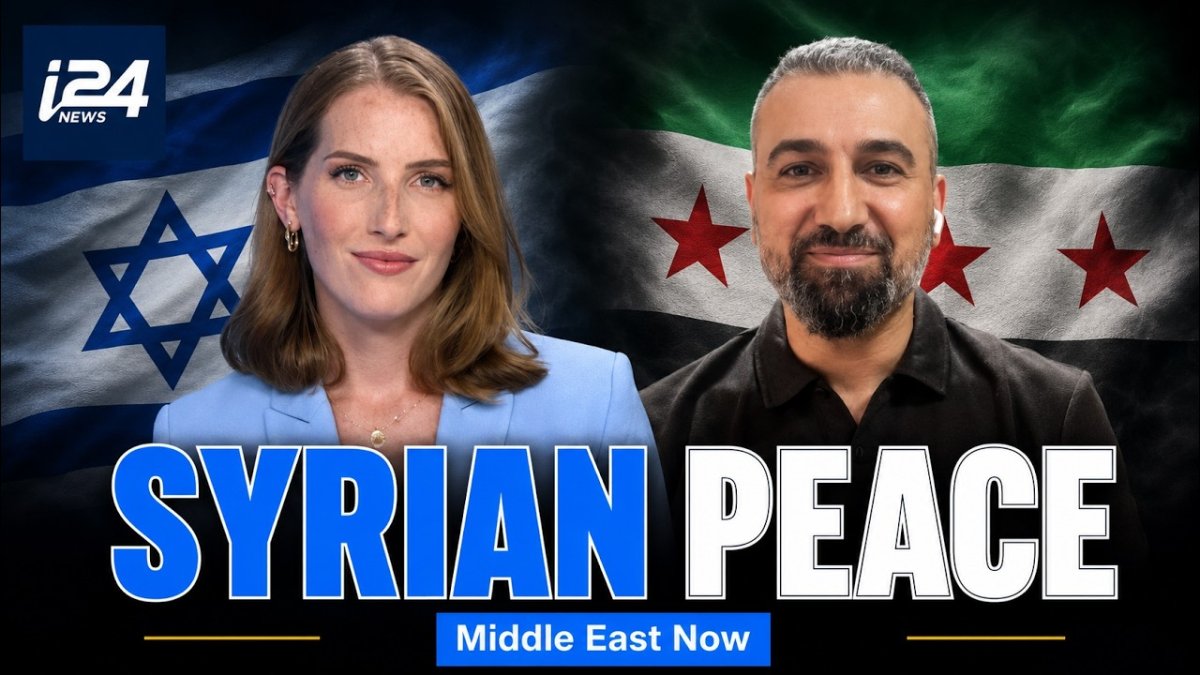
Syrian President Ahmed al-Sharaa tells Al Jazeera Damascus is working to reach a security agreement with Israel with the participation of several countries, while ruling out military intervention in Lebanon.
In a recent i24NEWS report covering the exclusive interview Syrian President Ahmed al-Sharaa gave to Al Jazeera's "Al Muqabala" program on July 26, 2026, the leader outlined Damascus's push for a formal security agreement with Israel involving multiple countries. The comments arrive as Israeli security officials in Jerusalem monitor developments along the Golan Heights frontier following the December 2024 collapse of the Assad regime.
Syrian Leader's Overture in Al Jazeera Interview
Ahmed al-Sharaa, who assumed power after rebel forces captured Damascus in December 2024 and ended the Assad family's 54-year rule, used the July 26, 2026 broadcast to state that Syria is actively working toward a security agreement with Israel. He specified that several unnamed countries would participate in the talks and expressed hope the arrangement could open a path to comprehensive peace between the two states.
Israeli Prime Minister's Office sources in Jerusalem confirmed they received no formal proposal through diplomatic channels as of this week. The interview marks the first public confirmation from al-Sharaa that Damascus seeks structured security coordination rather than ad-hoc deconfliction.
From an Israeli security perspective, this public declaration signals a potential shift in how Jerusalem might approach future border management, though officials remain cautious given the absence of any official channel communication. The lack of a formal proposal means the IDF must continue relying on existing monitoring protocols along the Golan Heights to assess whether Damascus can deliver on stated intentions.
Israeli analysts note that any such overture carries implications for domestic politics, as coalition partners in the Knesset have historically viewed Syrian statements with skepticism until backed by verifiable actions. This dynamic places pressure on the Prime Minister's Office to balance diplomatic openness with the need to maintain robust defense postures.
Regional diplomatic dynamics could evolve if third-party involvement materializes, yet Jerusalem's defense establishment emphasizes that historical patterns of Syrian leadership transitions require sustained vigilance rather than immediate concessions.
Security Pact Ambitions and Regional Peace Hopes
Al-Sharaa described the proposed security agreement as a potential gateway to broader normalization. He stressed that Syria would avoid any military confrontations with Israel while negotiations proceed. Israeli Defense Forces Southern Command units positioned near the Golan Heights have recorded reduced cross-border incidents since the interview aired.
Foreign Ministry officials in Tel Aviv noted that any agreement would require verification mechanisms similar to those used in the 1974 Israel-Syria Disengagement Agreement. The participation of third countries could include Jordan or Egypt, both of which maintain formal peace treaties with Israel.
Israeli security officials interpret the reported drop in incidents as a tactical pause rather than a strategic guarantee, prompting the IDF to maintain heightened readiness in Southern Command sectors. This measured response reflects the defense establishment's view that peace overtures must be tested against concrete behavioral changes on the ground.
For Israeli politics, the prospect of third-country involvement raises questions about how such an arrangement might affect existing peace treaties with Jordan and Egypt, potentially influencing Knesset debates on resource allocation for border security. The Golan settlements stand to benefit from any sustained reduction in tensions, yet ministers continue to stress that sovereignty remains non-negotiable.
From the perspective of Israel's defense establishment, verification mechanisms modeled on past disengagement accords would need to incorporate real-time intelligence sharing to prevent any re-emergence of hostile activity near the frontier.
Golan Heights Claims Amid Israeli Annexation
Al-Sharaa explicitly stated that any security deal would not compromise Syria's claim to the Golan Heights, which Israel captured in 1967 and annexed in 1981. He reiterated this position despite the ongoing presence of Israeli settlements and IDF outposts across the plateau.
Israeli cabinet ministers have repeatedly declared that the Golan Heights will remain under Israeli sovereignty regardless of any future agreement. The Knesset passed legislation in 2019 affirming this stance, and Prime Minister's Office spokespeople have maintained the same line in recent briefings.
Israeli security perspectives highlight that maintaining control over the Golan Heights serves as a critical buffer zone, directly influencing IDF deployment strategies and settlement security protocols. Any Syrian claim, even if sidelined in negotiations, underscores the need for continued military presence to deter potential future challenges.
Politically, the 2019 Knesset legislation provides a stable foundation for successive governments to reject territorial concessions, allowing focus instead on economic development within the settlements. This stance aligns with the defense establishment's assessment that the plateau's strategic value outweighs diplomatic trade-offs.
Regional dynamics suggest that third-party mediators would face significant hurdles in reconciling Syrian positions with Israel's firm annexation policy, potentially limiting the scope of any security pact to non-territorial issues.
Israeli Military Actions in Post-Assad Syria
The interview followed repeated Israeli Air Force strikes and ground incursions into southern Syria since December 2024. IDF Northern Command has conducted operations targeting weapons depots near Daraa and Quneitra to prevent advanced arms from reaching Hezbollah or Iranian proxies.
Shin Bet assessments presented to the Knesset Foreign Affairs and Defense Committee this month indicated that al-Sharaa's forces have not yet consolidated full control over southern Syria, creating a security vacuum that Israel continues to address through targeted actions.
Israeli defense officials view these operations as essential to preserving the security vacuum's containment, ensuring that weapons proliferation does not undermine any emerging diplomatic signals from Damascus. The Northern Command's focus on Daraa and Quneitra reflects a proactive strategy to safeguard the Golan Heights from spillover threats.
For Israeli politics, ongoing military actions reinforce the narrative that security must precede normalization, influencing public support for sustained IDF budgets in the north. The Golan settlements benefit from this approach through reduced risk of infiltration or rocket fire.
The defense establishment sees the security vacuum as both an opportunity and a risk, requiring calibrated responses that avoid escalation while preventing hostile actors from filling the void.
Non-Intervention Policy Toward Lebanon
Al-Sharaa confirmed Syria has no intention of military intervention in Lebanon. He stated that weapons and decisions of war and peace must remain exclusively under the authority of the Lebanese state. Israeli officials in the Northern Command have welcomed this declaration given Hezbollah's continued presence along the Israel-Lebanon border.
The Syrian president warned that any descent into chaos in Lebanon would produce direct repercussions inside Syria, particularly in border regions near the Bekaa Valley. Mossad assessments shared with the Prime Minister's Office have long highlighted the risk of spillover from Lebanese instability into the Golan area.
From Israel's security viewpoint, this non-intervention stance could ease pressure on the northern border by limiting Hezbollah's logistical options, allowing the IDF to prioritize other threats. Northern Command welcomes the clarity as it aligns with efforts to stabilize the broader frontier region.
Israeli political circles see potential for this position to support diplomatic initiatives that isolate Hezbollah further, though officials caution that Syrian statements require monitoring for consistency with actions. The Golan settlements gain indirect protection from reduced cross-border risks tied to Lebanese instability.
The defense establishment regards Mossad assessments as central to planning, emphasizing that any Lebanese chaos could still affect Golan security regardless of Syrian declarations.
Concerns Over Broader Iran Conflict Spillover
Al-Sharaa cautioned that expansion of the US-Israel campaign against Iran could trigger severe regional fallout affecting Syria. Israeli Air Force operations against Iranian targets in Syria have continued into 2026, with strikes reported near Damascus International Airport in recent weeks.
Foreign Ministry diplomats in Jerusalem have emphasized that any security agreement with Syria would need to include explicit clauses preventing Iranian forces or their proxies from re-entering Syrian territory. The IDF continues to enforce a red line against such deployments near the Golan Heights.
Israeli security perspectives frame these ongoing strikes as a necessary extension of the red line policy, ensuring that Iranian influence does not exploit any post-Assad vacuum. This approach directly supports the protection of Golan Heights outposts and settlements from potential proxy attacks.
Politically, the emphasis on anti-Iran clauses in future agreements strengthens the government's position in Knesset discussions on regional strategy. The defense establishment views such provisions as non-negotiable for any pact to gain approval.
Regional diplomatic dynamics indicate that third-country participants would need to align with Israel's insistence on excluding Iranian elements, shaping the parameters of possible normalization talks.
Domestic Priorities: Sanctions and Terrorism List
On internal matters, al-Sharaa said that lifting sanctions alone would not suffice for Syria's recovery. He called for Syria's removal from the US list of state sponsors of terrorism, a designation maintained by the State Department since 1979. Israeli officials have stated that any sanctions relief must be conditioned on verifiable steps against Iranian and Hezbollah networks inside Syria.
The Syrian president acknowledged delays in implementing an agreement with the Syrian Democratic Forces but reaffirmed his commitment to the process. US Central Command continues to coordinate with SDF units in northeastern Syria near the Turkish border.
Israeli officials link sanctions relief directly to security outcomes, arguing that premature easing could empower networks threatening the Golan Heights. This stance reflects the defense establishment's priority of conditioning economic incentives on concrete anti-proxy measures.
For Israeli politics, such conditions provide leverage in coalition negotiations, ensuring that any diplomatic progress does not compromise counterterrorism objectives. The IDF benefits from sustained pressure that limits Iranian and Hezbollah footholds near the frontier.
Regional dynamics suggest that third-party involvement in security talks could serve as a mechanism to verify compliance with these conditions before any broader normalization advances.
Handling Missing Persons and SDF Integration
Al-Sharaa announced the formation of a new special committee to address missing persons from Syria's 2011-2024 war. UN estimates place the number of forcibly disappeared at approximately 100,000, while Syria's own commission has cited figures up to 300,000. The committee will operate according to international standards, according to the July 26 interview.
Israeli humanitarian organizations operating near the Golan Heights have documented cases of Israeli citizens and Druze residents missing since the civil war period. Any future security agreement could include provisions for information exchange on these cases through third-party mediators.
Israeli security perspectives see the committee as a potential avenue for humanitarian confidence-building measures that could complement security talks, provided it delivers tangible results on Golan-related cases. This could ease domestic political pressures by addressing long-standing family concerns.
The defense establishment views information exchange mechanisms as low-risk additions to any pact, enhancing trust without altering core territorial or military positions. Settlements in the Golan stand to gain from reduced uncertainty surrounding missing persons.
Regional diplomatic dynamics indicate that third countries could facilitate such exchanges, aligning humanitarian gestures with the broader goal of stabilizing the frontier area.
 By Hannah Berg, Staff Writer
This article was produced with AI-assisted research and editorial support. Reporting is based on sources cited in the article.
What's Your Reaction?
 Like
0
Like
0
 Dislike
0
Dislike
0
 Love
0
Love
0
 Funny
0
Funny
0
 Wow
0
Wow
0
 Sad
0
Sad
0
 Angry
0
Angry
0
Israel Correspondent at Global1.News. Based in Tel Aviv, covering Israeli politics, security, technology, and society. Provides balanced, deeply-sourced reporting on one of the most closely-watched regions in the world.










Comments (0)