
Cambodian Migrant Arrested in Rayong Meth Bust
A 28-year-old Cambodian migrant worker was arrested in Rayong province on 27 July 2026 after police observed him discarding crystal methamphetamine during a routine patrol on Road 3648 in Klaeng district. The arrest, which also involved his juvenile brother, highlights the intersecting challenges of drug enforcement, migrant labor, and regional cooperation in Thailand's Eastern Economic Corridor.
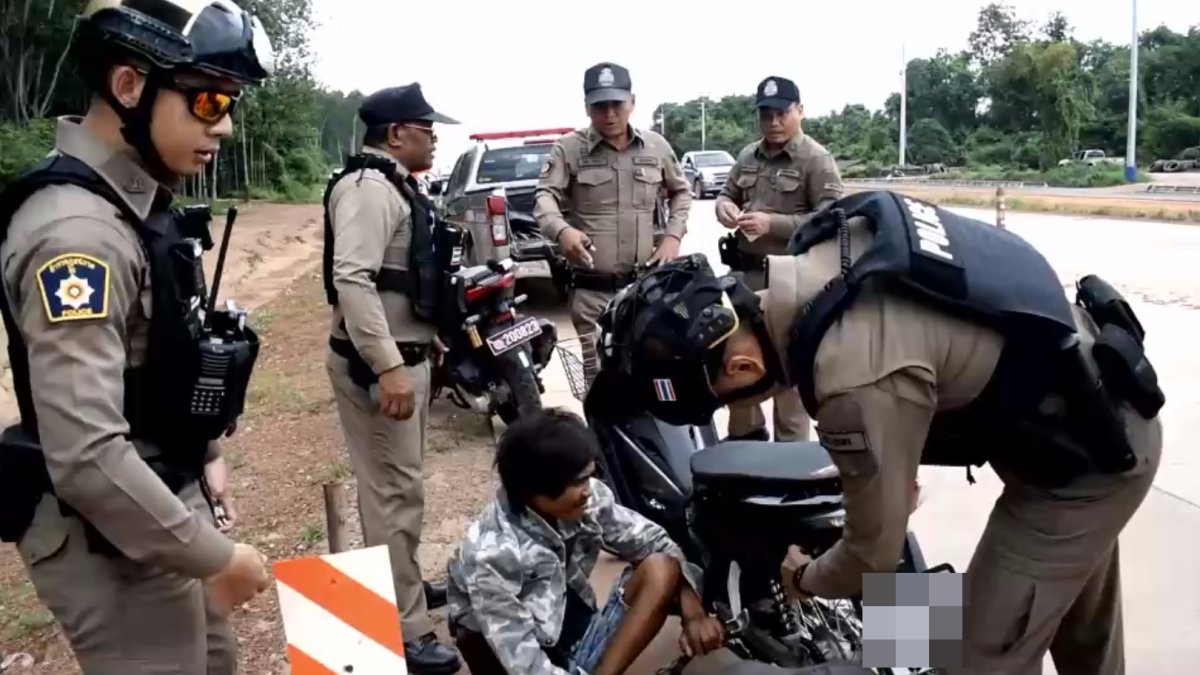
A 28-year-old Cambodian migrant worker was arrested in Rayong province on 27 July 2026 after police observed him discarding crystal methamphetamine during a routine patrol on Road 3648 in Klaeng district. The arrest, which also involved his juvenile brother, highlights the intersecting challenges of drug enforcement, migrant labor, and regional cooperation in Thailand's Eastern Economic Corridor.
Cambodia Migrant Arrested in Rayong Drug Bust
Rayong, Thailand — A routine police patrol on the evening of 27 July 2026 led to the arrest of a Cambodian worker and the seizure of crystal methamphetamine, exposing the complex realities facing migrant communities in eastern Thailand.
The Incident Unfolds in Klaeng District
Royal Thai Police officers on patrol along Road 3648 in Tha Kwian subdistrict, Klaeng district, Rayong province, spotted a motorcycle carrying two men on 27 July 2026 and initiated a stop after the driver tossed an object from his trouser pocket. The 28-year-old Cambodian national, riding with his younger brother, accelerated away but was halted a short distance later near the same road.
Officers recovered crystal methamphetamine from the suspect's right trouser pocket and collected the discarded package from the roadside, which also contained illegal drugs. The pair was transported to Klaeng Police Station for processing, where the 28-year-old admitted using the substance earlier that morning before heading back to their workplace in Wang Chan district.
The juvenile passenger will be handled according to Thai juvenile procedures, while the adult faces formal drug possession charges under current Royal Thai Police protocols in the eastern seaboard region.
Klaeng district sits along Rayong’s eastern coastline, roughly 250 kilometers southeast of the Aranyaprathet-Poipet border crossing. Highway 3648 runs through Tha Kwian subdistrict as a two-lane provincial road linking fishing villages to the Wang Chan industrial zone. Royal Thai Police units from Klaeng station conduct daily vehicle checks here, often while responding to traffic incidents or monitoring routes used by factory shift workers.
Under the Narcotics Act B.E. 2522, possession of crystal methamphetamine carries penalties ranging from one to ten years imprisonment and fines up to 100,000 baht for quantities under five grams; larger amounts can trigger life sentences. The 28-year-old Cambodian suspect faces these charges after officers recovered the substance from his pocket and the roadside package. The juvenile passenger, under 18, is referred to Rayong’s juvenile and family court for assessment rather than adult detention.
Standard procedure at Klaeng Police Station includes immediate urine testing, inventory of seized items, and notification of the Cambodian consulate in Bangkok within 24 hours. Both individuals were processed the same morning, with the adult remanded for formal indictment while the minor receives counseling through the Ministry of Social Development and Human Security.
Understanding the Lives of Cambodian Migrant Workers
Cambodian nationals like the 28-year-old arrested on 27 July 2026 often travel from border provinces to industrial zones in Rayong and Chonburi to work in factories and construction sites that support Thailand's eastern economic corridor. Many send remittances home to families in Siem Reap or Battambang, sustaining rural households during planting seasons.
These workers frequently participate in local Buddhist merit-making activities at temples such as Wat Pa Pradu in Rayong, joining Thai colleagues during Songkran water festivals or Loy Krathong lantern releases to build community ties. Such cultural exchanges help ease the isolation felt by migrants far from their own wats.
Thai labor regulations require employers in Wang Chan district to register foreign staff through the Ministry of Labour, yet enforcement gaps sometimes leave workers vulnerable during routine police checks on provincial roads like 3648.
Official estimates from Thailand’s Ministry of Labour place the number of registered Cambodian workers at approximately 1.2 million nationwide, with another 300,000 estimated to work without full documentation. In Rayong and Chonburi alone, more than 180,000 Cambodians hold pink cards or MoU permits, primarily in construction, seafood processing, and automotive parts manufacturing that feed the Eastern Economic Corridor.
Annual remittances from these workers to Cambodia exceed 2.8 billion US dollars, according to the National Bank of Cambodia, supporting households in Siem Reap, Battambang, and Prey Veng during rice-planting and harvest seasons. Many families rely on monthly transfers sent through agents in Aranyaprathet or Ban Laem-Daung border markets.
The 2015 Memorandum of Understanding between Thailand and Cambodia governs recruitment through licensed agencies and requires employers in Wang Chan district to register staff with the Department of Employment. Language barriers persist at public hospitals such as Rayong Hospital, where Cambodian workers often seek treatment for workplace injuries without interpreters. Safety concerns on construction sites and fishing boats remain common, prompting occasional joint inspections by Thai and Cambodian labor officials.
Thailand's Firm Stance on Drug Enforcement
The Royal Thai Police maintain active patrols across Rayong's industrial corridors to curb crystal methamphetamine distribution, a priority aligned with national campaigns led by the Office of the Narcotics Control Board. The arrest on 27 July reflects standard procedure when officers observe suspicious behavior during unrelated calls, such as the traffic accident response that brought them to Tha Kwian subdistrict.
Thai authorities process such cases swiftly at district stations like Klaeng, applying penalties that include mandatory rehabilitation programs alongside criminal charges. The approach aims to protect both Thai citizens and the migrant communities who contribute to local economies in provinces bordering the Gulf of Thailand.
Community leaders in nearby Klaeng often collaborate with police on awareness programs at Buddhist temples, emphasizing the health risks of "ice" to families that include Cambodian workers and their Thai neighbors.
The Office of the Narcotics Control Board reported seizing over 12 tons of crystal methamphetamine in fiscal year 2025, with Rayong province accounting for 1.4 tons along EEC transport corridors. These figures reflect intensified patrols on roads like Highway 3648 that serve both industrial parks and cross-border worker routes.
Thai policy combines criminal penalties with mandatory rehabilitation at centers operated by the Ministry of Public Health. First-time users, including migrants, may enter six-month treatment programs instead of immediate imprisonment if assessed as dependent rather than traffickers. Community networks in Klaeng coordinate with local temples such as Wat Pa Pradu to run monthly awareness sessions on the health effects of “ice.”
Authorities emphasize that enforcement protects both Thai residents and the migrant workforce sustaining eastern seaboard factories. Police and village health volunteers jointly distribute information in Khmer and Thai at markets near Tha Kwian, aiming to reduce demand while maintaining steady labor flows into the Eastern Economic Corridor.
Strengthening Ties Between Thailand and Cambodia
Diplomatic channels through the Thai Ministry of Foreign Affairs and Cambodian embassy officials in Bangkok facilitate the handling of cross-border cases like this one, ensuring juveniles receive appropriate consular support. Such cooperation builds on existing agreements that govern labor migration and legal assistance between the two nations.
Regular meetings between Thai and Cambodian authorities address issues affecting workers in Rayong and Trat provinces, where seasonal employment draws thousands from across the border each year. These discussions also cover cultural exchanges that promote mutual understanding during festivals shared across the Mekong region.
Thailand's role as a host for Cambodian labor strengthens bilateral trade ties, with both governments working to streamline documentation processes that reduce panic-driven incidents during police encounters on rural roads.
Regional Implications for ASEAN Labor Mobility
Thailand's handling of migrant cases in Rayong reflects broader challenges under the ASEAN Consensus on the Protection and Promotion of the Rights of Migrant Workers, which governs labor flows sustaining manufacturing hubs from Bangkok to Ho Chi Minh City. The ASEAN Forum on Migrant Labour, held annually since 2008, provides a platform for Thailand, Cambodia, Malaysia, and Singapore to align enforcement practices with fair recruitment and access to justice standards.
Malaysia and Singapore maintain stricter points-based systems for low-skilled migrants, but Thailand's MoU framework with Cambodia — covering 1.2 million registered workers — offers a more flexible model that the Mekong Subregion program aims to replicate across Laos and Myanmar. Thai officials continue coordinating with ASEAN counterparts to refine documentation processes, reducing the risk that routine police stops disrupt labor flows essential to regional supply chains.
By Ann Srisawat, Staff WriterThis article was produced with AI-assisted research and editorial support. Reporting is based on sources cited in the article.
What's Your Reaction?
 Like
0
Like
0
 Dislike
0
Dislike
0
 Love
0
Love
0
 Funny
0
Funny
0
 Wow
0
Wow
0
 Sad
0
Sad
0
 Angry
0
Angry
0

Southeast Asia Correspondent at Global1.News. Based in Bangkok, covering Thai and Southeast Asian politics, economy, technology, and culture. Deep regional perspective on one of the world's most dynamic regions.












Comments (0)