
UN Chief 'Deeply Concerned' by Israeli Plans to Legalize West Bank Outposts
The United Nations voiced deep alarm on Monday over Israeli plans to speed up the legalization of settlement outposts and create new ones in the occupied West Bank. Deputy spokesperson Farhan Haq conveyed Secretary-General Antonio Guterres' position during a regular briefing in New York, highlighting how these moves threaten any prospect of a viable two-state solution.
The United Nations voiced deep alarm on Monday over Israeli plans to speed up the legalization of settlement outposts and create new ones in the occupied West Bank. Deputy spokesperson Farhan Haq conveyed Secretary-General Antonio Guterres' position during a regular briefing in New York, highlighting how these moves threaten any prospect of a viable two-state solution.
UN Announcement Details
Farhan Haq stated that Guterres remains deeply concerned by the recent Israeli announcement regarding accelerated legalization of farm outposts and the establishment of additional ones. The Secretary-General has consistently held that all settlements, including outposts, lack legal validity under international law and constitute a flagrant violation. Haq emphasized that such activities continue to serve as a major obstacle to achieving lasting peace between Israelis and Palestinians.
Settlement Legalization Plans
Israeli authorities have outlined steps to formalize existing farm outposts and approve new construction across the occupied West Bank, including East Jerusalem. These plans build on a pattern of expansion that has placed approximately 750,000 Israeli settlers in 156 settlements and 360 outposts. The UN views every one of these structures as illegal, regardless of any domestic legalization process Israel may pursue.
The mechanism of legalization under Israeli law typically involves retroactive approval through military orders or planning committees that reclassify unauthorized outposts as legal settlements after the fact. This process often relies on the "market value" doctrine or claims of state land, allowing structures built on privately owned Palestinian property to gain formal status despite initial violations of even Israeli regulations. Such maneuvers have been employed by successive governments since the 1990s, with notable surges under Netanyahu's coalitions that prioritize expansion over international objections. These schemes not only entrench facts on the ground but also signal to settlers that unauthorized construction carries minimal risk of removal.
Historically, previous Israeli administrations have deployed similar legalization frameworks following periods of rapid outpost growth, such as after the 2005 Gaza disengagement when focus shifted to the West Bank. These efforts consistently frame settlements as security or demographic necessities while ignoring the underlying dispossession. The International Court of Justice's 2004 advisory opinion declared the barrier and associated settlements illegal under international law, a stance echoed by the UN Security Council and numerous states including EU members that refuse to recognize any changes to pre-1967 borders. This creates a widening gap between Israeli domestic policy and global consensus.
Land confiscation implications extend far beyond immediate construction, as designations for settlement expansion often involve declaring Palestinian agricultural or grazing areas as "state land" through opaque surveys that exclude owners from hearings. Families in areas like the Jordan Valley face eviction threats that sever generational ties to olive groves and fields, accelerating economic marginalization. Forward-looking perspectives suggest these plans could preempt any viable two-state solution by fragmenting territory into isolated enclaves, prompting renewed calls for accountability mechanisms at the ICC.
Surge in Violence Against Palestinians
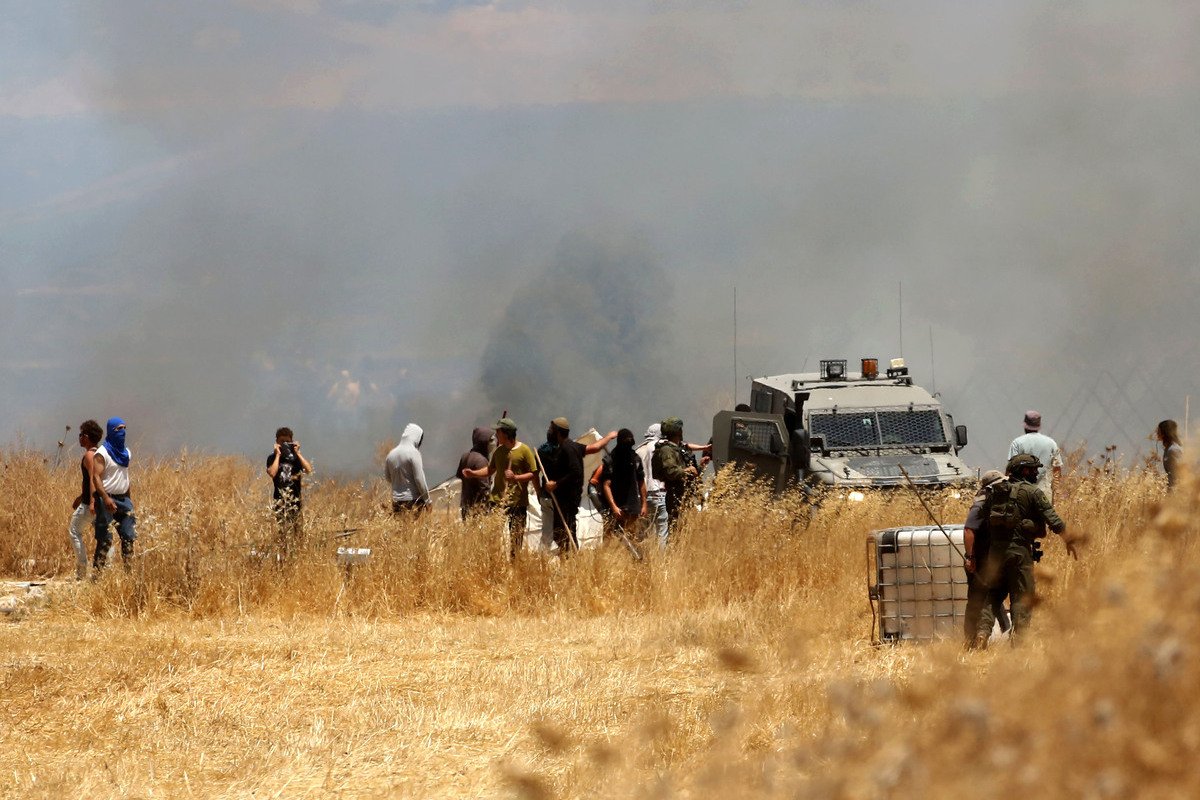
Alongside the settlement announcements, a sharp increase in attacks by Israeli settlers against Palestinian residents and their property has been recorded in recent weeks. Homes, mosques, and agricultural lands have been vandalized or set ablaze. Since Thursday, July 23, eight Palestinians and two Israelis have been killed amid the escalating confrontations, underscoring the immediate human cost of heightened tensions on the ground.
Israeli military forces frequently stand by during settler attacks or actively restrict Palestinian movement through checkpoints and curfews while permitting settlers freer access, a pattern documented by human rights monitors as enabling impunity. Soldiers have been observed in videos escorting attackers or delaying intervention until after damage occurs, reflecting a broader policy of prioritizing settler security over Palestinian protection under occupation law. This dynamic intensifies during escalation periods, turning routine farming or travel into high-risk activities.
The Beit Furik attack near Nablus on July 23 exemplifies this surge, where settlers assaulted farmers and torched olive groves amid clashes that left multiple casualties. Similar incidents have proliferated in recent weeks, targeting homes, mosques, and vehicles across the West Bank. These events mirror previous waves, such as the 2015-2016 uptick following the Duma arson, where settler violence spiked in response to perceived policy shifts yet faced limited prosecutions.
The psychological toll on Palestinian communities manifests in pervasive fear that disrupts daily life, with families reporting anxiety over children's safety and pressure toward displacement as livelihoods erode. Villages experience collective trauma from repeated arson and vandalism, fostering a sense of abandonment by international actors. Looking ahead, sustained violence risks broader radicalization or renewed intifada-like resistance unless de-escalation includes accountability for both settlers and complicit forces.
Human Toll with Specific Numbers
Since the start of 2026, the UN Office for the Coordination of Humanitarian Affairs has documented more than 1,330 incidents involving Israeli settlers that resulted in casualties or property damage. In that period, 77 Palestinians have been killed, including 18 children. Broader figures since October 2023 show 1,182 Palestinians killed in the West Bank, with around 24,000 Palestinians detained during the same timeframe. These numbers reflect daily disruptions to families, schools, and livelihoods across Palestinian communities.
Broader Context of Occupation Since October 2023
The current wave of settlement activity and settler violence occurs against the backdrop of intensified occupation measures that began after October 2023. Palestinian families in the West Bank have faced repeated restrictions on movement, loss of access to farmland, and destruction of water infrastructure. These developments compound long-standing pressures that limit economic opportunities and separate communities from essential services in cities such as Hebron, Nablus, and Bethlehem.
International Law Implications
Under international law, the West Bank, including East Jerusalem, remains occupied Palestinian territory. The UN has repeatedly affirmed that settlement construction violates the Fourth Geneva Convention and undermines the possibility of a contiguous Palestinian state. Guterres' statement reinforces that no unilateral Israeli measures can alter this legal status or erase the rights of the occupied population.
Impact on Palestinian Communities
For Palestinian farmers and families, the expansion of outposts often means direct loss of grazing land and olive groves that have sustained generations. Children in affected villages travel longer routes to school to avoid settler roads, while mosque congregations repair damage from repeated arson attempts. These daily realities illustrate how policy decisions announced in Jerusalem translate into immediate hardship for residents whose voices the UN statement seeks to center in the pursuit of accountability and protection.
Economic impacts from settlement expansion include substantial agricultural losses as grazing lands and olive groves are seized or rendered inaccessible, slashing harvests by up to 30 percent in affected areas and blocking market routes through settler-only roads. Restricted access compounds poverty, forcing reliance on aid while traditional farming economies contract under the weight of repeated destruction and theft of equipment.
The olive harvest serves as both cultural cornerstone and economic lifeline for Palestinian villages, yet settler expansion threatens it through arson and land grabs that coincide with peak seasons. Families in places like Turmus Ayya have seen groves burned repeatedly, eroding not only income but also communal rituals tied to the harvest. This cultural assault deepens the sense of existential threat.
Community resilience shines through organized nonviolent resistance, including legal challenges in Israeli courts, international advocacy via solidarity networks, and protective presence initiatives by activists. Villages coordinate with groups like UN OCHA to document incidents for reports that pressure global bodies. Forward-looking, these efforts could bolster calls for sanctions or boycotts if expansion continues unchecked, highlighting Palestinian agency amid systemic dispossession.
By Fatima Al-Rashid, Staff WriterThis article was produced with AI-assisted research and editorial support. Reporting is based on sources cited in the article.
What's Your Reaction?
 Like
0
Like
0
 Dislike
0
Dislike
0
 Love
0
Love
0
 Funny
0
Funny
0
 Wow
0
Wow
0
 Sad
0
Sad
0
 Angry
0
Angry
0

Gulf/MENA Correspondent at Global1.News. Based in Doha, covering Gulf politics, energy markets, diplomacy, and development across the Middle East and North Africa. Tracks the economic transformation of the Gulf states.












Comments (0)