
Dr Devi Shetty's Nurse-Led Hospital in Bengaluru: Nurses as Future CEOs
Bengaluru is set to witness a groundbreaking transformation in Indian healthcare. Narayana Health, founded by renowned cardiac surgeon Dr Devi Shetty, is preparing to launch India's first nurse-led smart hospital in Banashankari — a paperless, digitally integrated facility where nurses will not just deliver care but run the entire operation. This bold experiment, backed by a ma
Bengaluru is set to witness a groundbreaking transformation in Indian healthcare. Narayana Health, founded by renowned cardiac surgeon Dr Devi Shetty, is preparing to launch India's first nurse-led smart hospital in Banashankari — a paperless, digitally integrated facility where nurses will not just deliver care but run the entire operation. This bold experiment, backed by a management training programme at the Indian Institute of Management Bangalore (IIM-B), promises to reshape how India values its nursing workforce and could offer a scalable template for hospitals across the country.
Narayana Health Launches India’s First Nurse-Led Digital Hospital in Banashankari
Narayana Health will open a paperless, digitally integrated smart hospital in Banashankari, Bengaluru, where nurses will run day-to-day operations. The model recruits 25 nurses for management training and a sponsored executive hospital administration programme at IIM Bangalore. Cardiac surgeon Dr Devi Shetty positions this as the start of a national shift that moves nurses from bedside roles into hospital leadership.
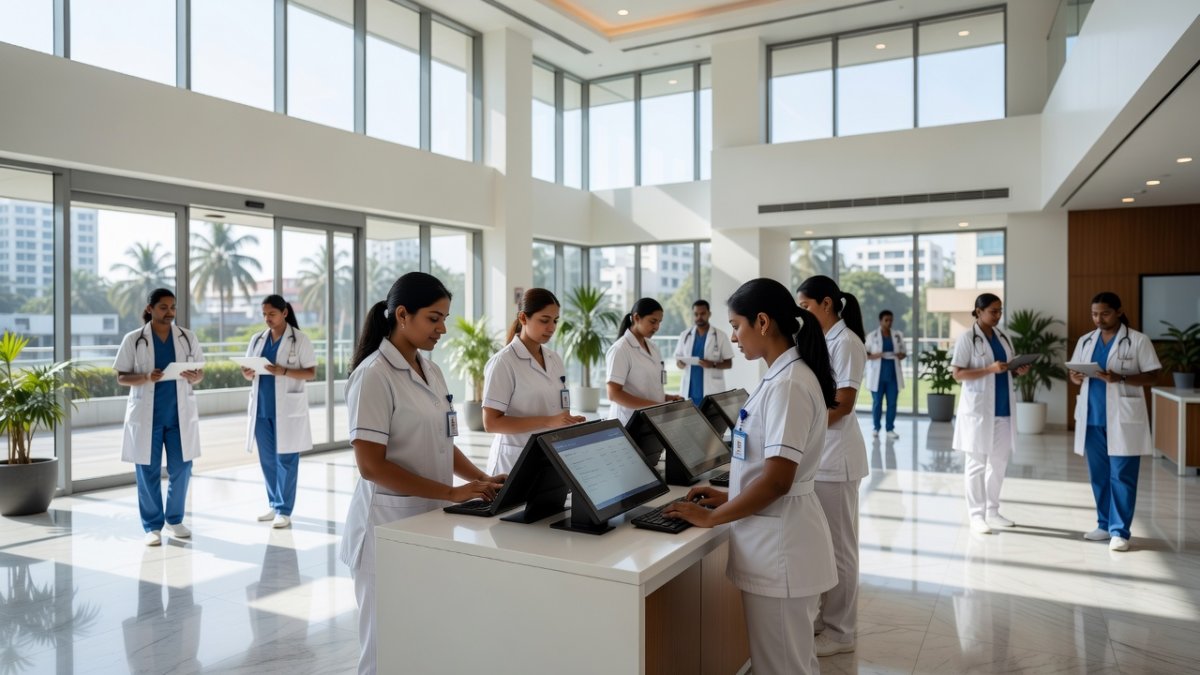
Patients Remember Nurses, Not Doctors: The 2 Percent Reality
Dr Shetty states that doctors spend no more than 2 percent of a patient’s hospital time with them. The remaining 98 percent of care, comfort and communication falls to nurses. He recalls his training in England nearly 40 years ago, where nurses taught post-surgical management. This experience convinced him that patient satisfaction tracks directly with nursing quality rather than surgical skill alone.
In Banashankari, the hospital design removes traditional administrators from the premises. Finance, human resources and back-office functions run through a digital platform Narayana Health has built over 22 years. Nurses become the sole visible staff guiding patients from admission to discharge.
Breaking the Florence Nightingale Image in Indian Nursing Education
India still frames nursing through a 19th-century lens that limits the profession to compassion and bedside tasks. Dr Shetty argues this outdated view blocks career growth and depresses salaries. In contrast, nurse anaesthetists in the United States deliver anaesthesia for major operations, and nurses in several countries prescribe basic medicines in primary care. Narayana Health’s Banashankari project tests whether Indian nurses can assume similar expanded responsibilities when given structured management training at IIM Bangalore.

Low Pay and Limited Roles Fuel India’s Nursing Shortage
India faces a persistent nursing shortage because salaries remain extremely low and advancement paths are narrow. Dr Shetty links poor compensation directly to the confinement of nurses to bedside duties. Once nurses take on reception, cash counter, operations and leadership roles, hospitals will recognise their full value and raise pay. The 25 nurses selected for the IIM Bangalore programme will test this theory inside a live digital hospital.
For young women entering the profession, the message matters. Nursing must appear as a career with clear routes to senior management and even CEO positions, not a dead-end job. The Banashankari model creates that visible ladder within India’s largest cardiac-care network.
Implications for Bengaluru Patients, Taxpayers and the National Healthcare Framework
Bengaluru’s patients will encounter a hospital where every clinical and administrative interaction routes through nurses trained in both empathy and systems thinking. This reduces layers of bureaucracy and shortens decision times. Taxpayers who fund medical education through state universities and the Nursing Council of India gain a higher return when trained nurses remain in India instead of migrating for better pay abroad.
The experiment also pressures other corporate hospital chains and government institutions such as AIIMS to reconsider rigid doctor-administrator hierarchies. If Narayana Health demonstrates measurable improvements in patient experience and operational efficiency, state health departments may replicate the nurse-led digital model in district hospitals across Karnataka and beyond.
From Bedside to Boardroom: A Scalable Template for Indian Healthcare
Dr Shetty’s vision extends past one Bengaluru facility. By embedding nurses in every patient-facing and revenue-critical function, the hospital converts clinical insight into organisational leadership. The 22-year digital backbone already handles remote administration, freeing nurses to focus on outcomes rather than paperwork. Success here would validate a national pathway where nursing graduates progress through IIM-style executive education into hospital CEO roles.
Indian healthcare policy has long treated nurses as cost centres rather than strategic assets. The Banashankari project supplies concrete evidence that elevating nurses improves both care quality and institutional performance. Other states watching Narayana Health’s results will have a data-driven case to reform salary structures and leadership pipelines across public and private systems.
— By Dr. Raj Patel, Staff WriterThis article was produced with AI-assisted research and editorial support. Reporting is based on sources cited in the article.
What's Your Reaction?
 Like
0
Like
0
 Dislike
0
Dislike
0
 Love
0
Love
0
 Funny
0
Funny
0
 Wow
0
Wow
0
 Sad
0
Sad
0
 Angry
0
Angry
0

India/South Asia Correspondent at Global1.News. Analytical voice with a background in science and health journalism. Based in New Delhi, covering Indian politics, education, healthcare, technology, and policy. Breaks down complex data into clear, actionable reporting.













Comments (0)