
Cornwall Housing Crisis Forces Young Workers into Van Life
Tom's Awakening in a Newquay Lay-by Tom stirs at first light in a lay-by just outside Newquay, the hum of passing traffic already building on the A3059. At 27 he earns £29,000 in hospitality yet wakes each morning inside a converted transit van that has become his only shelter. The interior is neat, with a small gas stove and a mattress wedged between storage boxes, but the rea
Tom's Awakening in a Newquay Lay-by
Tom stirs at first light in a lay-by just outside Newquay, the hum of passing traffic already building on the A3059. At 27 he earns £29,000 in hospitality yet wakes each morning inside a converted transit van that has become his only shelter. The interior is neat, with a small gas stove and a mattress wedged between storage boxes, but the reality is stark. “It’s really expensive homelessness,” he says, rubbing sleep from his eyes before another shift serving tourists who pay more for a week’s holiday than he earns in a month.
Cornwall’s roads now carry a visible signature of the housing emergency. Lay-bys from the north coast to the Lizard are dotted with vans, camper conversions and the occasional caravan. Locals have grown used to the sight of young workers boiling kettles by the roadside or charging phones from public sockets. Tom moves every few nights to avoid enforcement, yet the pattern is the same across dozens of similar vehicles. The county’s celebrated beauty masks a quiet displacement that has accelerated since the pandemic, leaving hospitality, care and fishing staff unable to secure even a modest flat.
The Channel 4 News report filmed by Joe Johnson and uploaded on 3 July 2026 under the JoeFish 2K channel captured this scene with 196,000 views within days. Drone footage showed lines of vans parked against hedgerows while estate agents advertised coastal cottages at prices far beyond local wages. Tom appears briefly in the piece, his matter-of-fact tone underscoring how normalised the arrangement has become for an entire generation priced out of bricks and mortar.
Numbers That Reveal a Structural Divide
Official figures published by the Office for National Statistics in April 2026 laid bare the scale of the mismatch. The average house price in Cornwall stood at £277,000, a 2.4 per cent rise on the previous year. Against median local salaries ranging from £28,210 to £33,000, the price-to-earnings ratio has reached ten times, the worst in the United Kingdom. For context, the national average salary is £37,856, yet even that figure would require an income of £53,600 to secure a 90 per cent mortgage on a typical property.
Across England and Wales there are now 25.6 million dwellings, yet the distribution tells its own story. In Cornwall the combination of high demand from outside buyers and limited new supply has produced ratios that would have been unthinkable a generation ago. Young workers who grew up in the county find themselves competing not only with retirees but with cash purchasers seeking holiday homes or short-term lets. The data shows no sign of the gap narrowing; instead, the figures compound year on year, turning what was once a regional pressure into a permanent barrier.
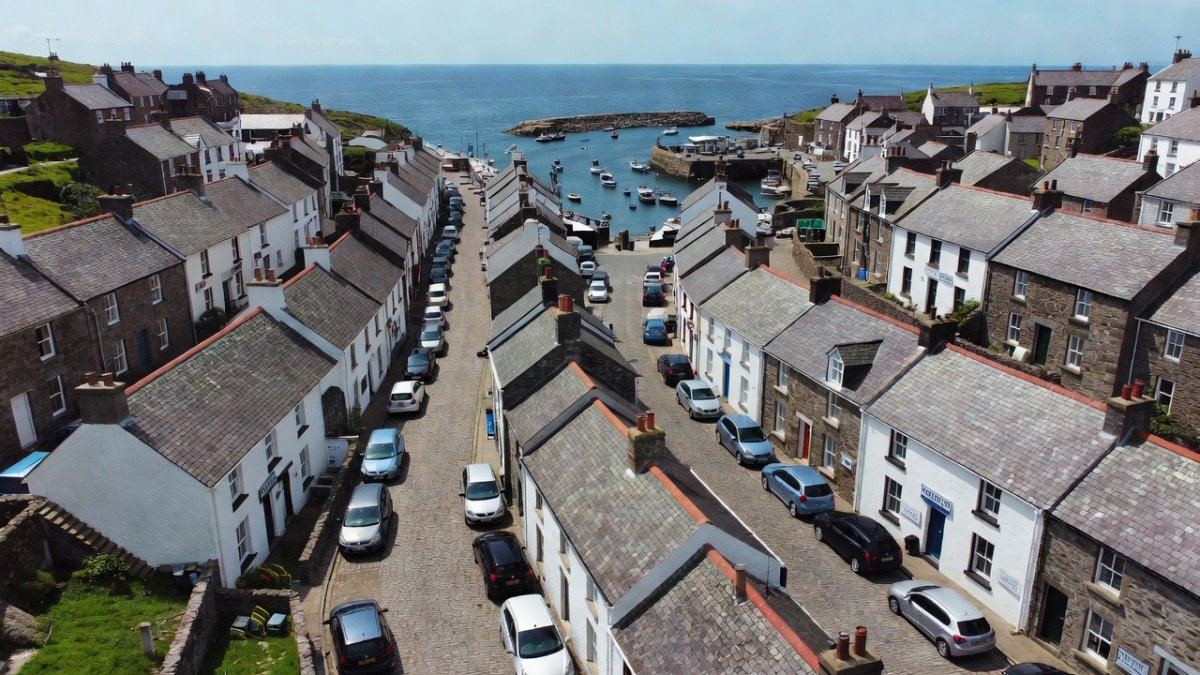
Second Homes and the Hollowing of Communities
Council tax records from 2023 counted 13,140 second homes in Cornwall, representing 15 per cent of the total housing stock and an increase of 7.5 per cent in a single year. The Bishop of Truro has put the true figure closer to 20,000 when informal arrangements are included. Meanwhile 21,120 households sit on the Cornwall Homechoice register awaiting social housing, while 2,652 properties stand empty. The arithmetic is unforgiving: holiday lets and second homes are absorbing supply faster than new homes can be built.
The effect on village life is immediate. From St Ives to Newquay, year-round shops and post offices have closed as seasonal trade replaces permanent residents. Butchers and greengrocers that once served local families now cater almost exclusively to visitors between Easter and October. The tourism economy, long celebrated as Cornwall’s saviour, is consuming the very communities that make the destination attractive. Without year-round residents there is little incentive for services to remain open outside peak months, accelerating a cycle that further deters young families from staying.
The Daily Realities of Van Dwelling
Van life in Cornwall carries none of the romantic gloss promoted on social media. Without a permanent address residents struggle to register with GPs, open bank accounts or qualify for credit. Showers are limited to leisure centres or the occasional campsite, while constant relocation between lay-bys disrupts sleep and erodes mental health. Local doctors report rising presentations of stress and anxiety among young adults who work full-time yet cannot secure housing.
Those employed in tourism, fishing and care sectors are hit hardest. Seasonal contracts offer no route to a mortgage, and even modest rents exceed half of take-home pay. The result is a treadmill of summer work followed by winter uncertainty, with the van serving as both home and storage. Many describe the arrangement as unsustainable yet unavoidable, a temporary measure that has stretched into years. The human cost is measured not only in discomfort but in delayed life milestones: partnerships postponed, children not yet conceived, and a growing sense that the county they grew up in no longer has room for them.
Andy Burnham’s Post-War Scale Ambition
Labour MP Andy Burnham, elected for Makerfield in the 19 June by-election and now widely tipped as a future prime minister following Sir Keir Starmer’s resignation, has placed housing at the centre of his platform. He has pledged the largest council-house building programme since the post-war period, promising 10,000 affordable homes in Greater Manchester by 2028 through a dedicated Housing First unit. The language is deliberate: “homes people can afford,” not merely units that meet planning targets.
Industry analysts question how such ambitions will be funded at a time when council housing represents just 6 per cent of national stock, down sharply from its post-war peak. Burnham’s approach emphasises direct public investment over reliance on private developers, yet the fiscal constraints facing any incoming government remain formidable. For Cornwall the contrast is stark: while one region debates large-scale construction, another watches its young workforce improvise shelter on the roadside. The gap between rhetoric and delivery will determine whether van dwelling remains a fringe phenomenon or becomes an entrenched feature of British life.

The Pattern Repeats Beyond Cornwall
The same pressures are visible across other high-demand regions. Devon recorded a 9 per cent rise in second homes between 2022 and 2025. In the Lake District more than 4,000 holiday lets compete for space in a resident population of just 50,000. The Scottish Highlands have seen comparable displacement in towns such as Portree and Fort William, prompting Highland Council to introduce a licensing scheme in 2024 aimed at curbing short-term lets. What began as a Cornish story is now a national one, with young people locked out of the housing market wherever tourism and remote working converge.
The underlying driver is consistent: wages that have not kept pace with asset inflation, combined with planning systems slow to deliver genuinely affordable supply. Whether in coastal villages or national parks, the result is the same gradual emptying of communities as permanent residents are replaced by intermittent visitors. Without coordinated intervention the pattern threatens to replicate in every desirable postcode, turning isolated van-dwelling into a widespread response to structural failure.
Policy Levers and the Time Horizon for Change
Existing tools include council-tax premiums on second homes and levies on long-term empty properties, yet enforcement varies and yields remain modest. Wales and Scotland have introduced registration schemes for short-term lets, offering a model that England has yet to match at scale. Andy Burnham’s proposals for accelerated council building sit alongside these measures, but experts warn that even the most ambitious programme will take five to ten years to shift supply meaningfully. In the interim, van dwelling risks becoming a permanent adaptation rather than a temporary expedient.
The timeline matters because each year of inaction entrenches the problem. Young workers who might once have saved for a deposit now spend that income on fuel, storage and campsite fees. Communities lose the next generation of shopkeepers, nurses and teachers. Reversing the trend requires not only new construction but also measures that rebalance the existing stock toward local occupancy. Without both, the visible signature of vans in lay-bys will simply spread.
A Warning That Extends Far Beyond the Tamar
Tom’s story is the canary in the coal mine. What began in Cornwall now echoes across the United Kingdom wherever wages and house prices have diverged so sharply. The human cost is measured in postponed futures and fraying community ties, costs that do not appear in quarterly GDP figures yet shape the lived experience of an entire cohort. The window for meaningful government intervention is narrowing; each season that passes without decisive action normalises arrangements that would once have been unthinkable. Cornwall’s roads lined with vans offer a clear signal that the housing crisis has moved from abstract statistic to daily reality, and that reality is no longer confined to one county.
By Erica Thornton, Staff WriterThis article was produced with AI-assisted research and editorial support. Reporting is based on sources cited in the article.
What's Your Reaction?
 Like
0
Like
0
 Dislike
0
Dislike
0
 Love
0
Love
0
 Funny
0
Funny
0
 Wow
0
Wow
0
 Sad
0
Sad
0
 Angry
0
Angry
0

US Politics and Policy Correspondent at Global1.News. Based in Washington DC, covering American politics, policy, elections, and the courts. Knows how the system works and tells you what it actually means.















Comments (0)