
Thailand Launches People's Solar Project — Householders Can Now Sell Excess Rooftop Solar Power
Thailand's government opened online registration this week for the People's Solar project, allowing householders across the country to sell excess rooftop solar power to state-run electricity authorities at a fixed rate of 2.20 baht per unit for 10 years. Government Spokesperson Rathsada Thanadirek confirmed the launch marks a major step toward energy independence for Thai fami
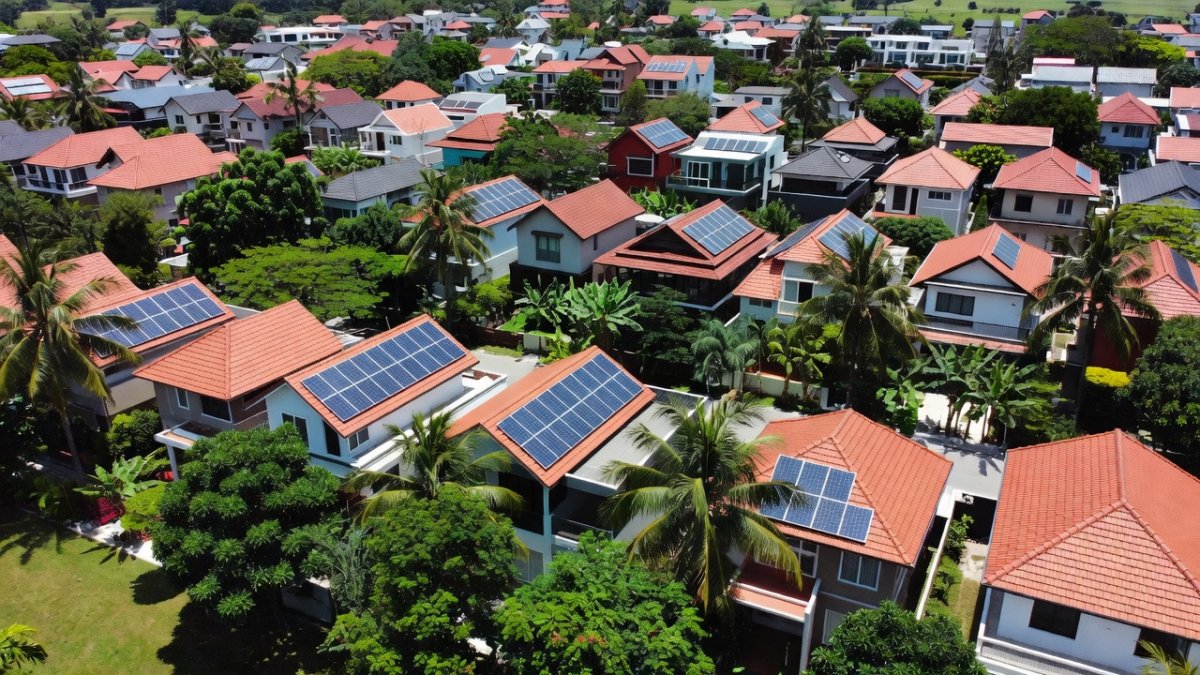
Thailand's government opened online registration this week for the People's Solar project, allowing householders across the country to sell excess rooftop solar power to state-run electricity authorities at a fixed rate of 2.20 baht per unit for 10 years. Government Spokesperson Rathsada Thanadirek confirmed the launch marks a major step toward energy independence for Thai families.
Thailand Launches People's Solar Project — Householders Can Now Sell Excess Rooftop Solar Power
Bangkok, Thailand — On July 5, 2026, the Thai government opened online registration for the People's Solar project, also known as Solar Phak Prachachon, allowing householders across the country to sell excess rooftop solar power to state-run electricity authorities. Government Spokesperson Rathsada Thanadirek announced the launch following approval by the National Energy Policy Council on April 29 2026. The initiative targets residential installations only and forms part of Thailand's broader effort to increase renewable energy use and achieve greater energy independence.
Households in Bangkok Nonthaburi and Samut Prakan will register through the Metropolitan Electricity Authority while those in other provinces will work with the Provincial Electricity Authority. This division ensures that local electricity providers handle connections and buyback arrangements directly in their service areas. The project opens opportunities for families in urban centers like Bangkok as well as rural communities in provinces such as Chiang Mai and Nakhon Ratchasima to participate in solar generation.
The timing of the announcement reflects Thailand's ongoing commitment to sustainable practices rooted in the sufficiency economy philosophy promoted by the late King Bhumibol Adulyadej. Communities from temple grounds in Ayutthaya to village homes in Isan can now consider rooftop systems that align with values of self-reliance and harmony with nature. Registration marks the first practical step for thousands of households to join this national effort.
Buyback Rates Set at 2.20 Baht per Unit with Clear Capacity Limits
The buyback rate stands at 2.20 baht per kilowatt-hour for a fixed period of ten years under the People's Solar project. Each approved household can sell up to five kilowatts of excess power generated from rooftop panels. This rate applies uniformly whether households connect through the Metropolitan Electricity Authority in Bangkok Nonthaburi and Samut Prakan or the Provincial Electricity Authority elsewhere in Thailand.
The total scheme capacity reaches 500 megawatts providing a defined ceiling for overall participation. This limit ensures the program remains manageable while allowing widespread household involvement without overwhelming the national grid. Families in Samut Prakan for example can calculate expected returns based on their roof space and sunlight exposure in the coastal area.
These specific terms give households predictable income from solar generation over the decade-long contract. The five-kilowatt cap per meter focuses the program on typical residential needs rather than large-scale production. Such details help communities in places like Nonthaburi plan installations that fit their homes and contribute to local energy supply.
Tax Incentives Support Installations Through December 2027
Households that install rooftop solar systems between March 3 2026 and December 31 2027 qualify for a personal income tax deduction of up to 200000 baht. This incentive applies exclusively to residential properties and excludes factories or commercial buildings. The deduction provides direct financial relief for families investing in solar panels during the eligible window.
Online registration opened on July 5 2026 through the respective electricity authorities allowing applicants to begin the process immediately after the National Energy Policy Council approval in April. Households must meet technical standards set by the Metropolitan Electricity Authority or Provincial Electricity Authority before approval. The application requires proof of residential status and system specifications to ensure compliance.
These measures lower the upfront cost barrier for families in provinces served by the Provincial Electricity Authority such as those in the northeast. The tax benefit connects directly to government efforts to encourage clean energy adoption at the household level. Residents can combine the deduction with long-term buyback revenue to make solar installations more accessible across diverse Thai communities.
Thailand Advances Energy Goals Amid Growing Regional Demand
Thailand continues to expand renewable sources as electricity demand rises with population growth and economic activity in industrial zones around Bangkok and the Eastern Economic Corridor. The People's Solar project adds household-level generation to existing large-scale solar farms in provinces like Lopburi. This approach supports national targets for cleaner energy while reducing reliance on imported fuels.
The April 29 2026 approval by the National Energy Policy Council positioned the program as a timely response to global energy shifts. Families in Samut Prakan near manufacturing hubs can now contribute power back to the grid managed by the Metropolitan Electricity Authority. Such participation strengthens local resilience against fluctuating international energy prices.
For Thai readers the project connects everyday household decisions to national energy security. Communities benefit when rooftops in Nonthaburi generate power that stays within the regional network. This distributed model aligns with Thailand's geography and supports steady progress toward independence from external energy sources.
Community Self-Sufficiency Reflects Deep Thai Cultural Values
The People's Solar project encourages self-sufficiency in villages and urban neighborhoods by allowing families to produce and sell their own electricity. This mirrors traditional Thai practices of communal resource sharing seen in temple-led initiatives across Ayutthaya and rural areas of the central plains. Households gain practical tools to manage energy needs while supporting neighbors through grid contributions.
Buddhist principles of mindful living and care for the environment find expression in rooftop solar adoption. Families in Chiang Mai can view panel installation as an extension of merit-making activities that benefit the wider community. The ten-year buyback commitment provides stable support that fits the long-term outlook valued in Thai society.
Local electricity authorities such as the Provincial Electricity Authority play a central role in guiding residents through the process in their provinces. This localized support strengthens trust and participation in places far from Bangkok. The program thus builds on existing community networks rather than imposing external solutions.
Environmental Gains and Household Economic Benefits Emerge Together
Each installed system under the 500-megawatt cap reduces carbon emissions by displacing fossil fuel generation at the national level. Households in Bangkok benefit from lower electricity bills alongside the 2.20 baht buyback revenue over ten years. The tax deduction of up to 200000 baht further improves the financial case for residential solar between March 2026 and December 2027.
Provincial communities served by the Provincial Electricity Authority gain cleaner air and quieter neighborhoods as solar replaces some grid demand. Economic returns flow directly to families rather than large corporations since the program restricts participation to homes. This structure spreads benefits across income levels in both metropolitan and rural settings.
The combined environmental and economic effects support Thailand's climate commitments while improving daily life for participants. Reduced transmission losses occur when power is generated and used locally in areas like Samut Prakan. Over time these changes contribute to a more balanced energy system that values both nature and household welfare.
Regional Comparisons Highlight Thailand's Household-Focused Approach
Neighboring ASEAN countries have introduced solar programs yet Thailand's People's Solar project stands out for its explicit residential focus and fixed ten-year buyback at 2.20 baht per unit. Vietnam expanded rooftop solar rapidly in recent years but without the same tax deduction structure available to Thai households through December 2027. Malaysia offers incentives yet limits household sales more strictly than the five-kilowatt cap here.
The 500-megawatt total capacity provides a clear benchmark for Southeast Asian observers watching Thailand's implementation through the Metropolitan Electricity Authority and Provincial Electricity Authority. Families in border provinces can see their participation as part of wider regional progress toward renewables. This model offers lessons for communities in Cambodia and Laos seeking similar household programs.
Thai readers gain perspective on how national policy compares with developments across ASEAN. The emphasis on personal income tax relief connects the project to local economic realities rather than purely industrial targets. Such details position Thailand as a steady contributor to regional energy transitions.
Next Steps Include Monitoring Registration and Grid Integration
Following the July 5 2026 registration opening authorities will track participation rates across MEA and PEA service areas to assess progress toward the 500-megawatt goal. Households that complete installations by December 31 2027 can still claim the 200000 baht tax deduction. Continued announcements from Government Spokesperson Rathsada Thanadirek will provide updates on uptake in specific provinces.
Technical reviews by the National Energy Policy Council will examine how distributed solar affects grid stability in high-density areas like Bangkok and Nonthaburi. Communities can prepare by consulting local electricity offices about roof assessments and connection requirements. The ten-year buyback period gives families time to evaluate long-term returns.
Observers will note whether additional phases expand the program beyond the current residential scope. Successful integration in pilot provinces will inform future policy adjustments. This measured rollout supports steady adoption that respects both technical limits and community readiness across Thailand.
By Ann Srisawat, Staff WriterThis article was produced with AI-assisted research and editorial support. Reporting is based on sources cited in the article.
What's Your Reaction?
 Like
0
Like
0
 Dislike
0
Dislike
0
 Love
0
Love
0
 Funny
0
Funny
0
 Wow
0
Wow
0
 Sad
0
Sad
0
 Angry
0
Angry
0

Southeast Asia Correspondent at Global1.News. Based in Bangkok, covering Thai and Southeast Asian politics, economy, technology, and culture. Deep regional perspective on one of the world's most dynamic regions.















Comments (0)