
Colombia Runoff: Trump-Backed 'Tiger' vs Leftist Rival
In a recent BBC News report, The Global Story examines whether Colombia is about to elect a far-right, Trump-backed populist as its next president — a vote that could reshape the country's relationship with Washington and mark another milestone in Latin America's rightward political shift. Colombia's Runoff Showdown: Trump-Backed 'Tiger' Faces Leftist Rival as Latin America Til
In a recent BBC News report, The Global Story examines whether Colombia is about to elect a far-right, Trump-backed populist as its next president — a vote that could reshape the country's relationship with Washington and mark another milestone in Latin America's rightward political shift.
Colombia's Runoff Showdown: Trump-Backed 'Tiger' Faces Leftist Rival as Latin America Tilts Right
Bogotá, Colombia – 18 June 2026 — Colombians will head to the polls in three days for a presidential runoff that could reshape the country's relationship with Washington and mark another milestone in Latin America's conservative resurgence. The contest between far-right populist Abelardo de la Espriella and leftist Senator Iván Cepeda reflects the region's sharp ideological divide.
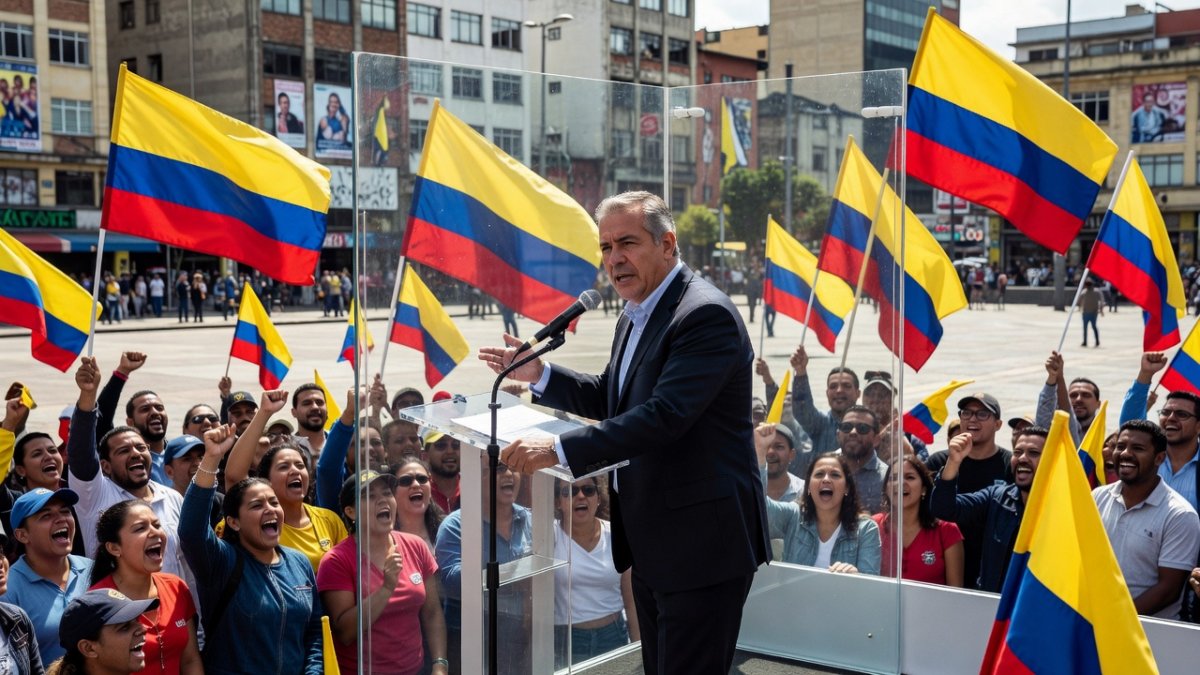
The Race for Casa de Nariño
Just three days from now, Colombians will return to the polls to decide whether their next president will be a far-right populist who campaigns behind bulletproof glass, or a leftist senator promising to continue the outgoing administration's policy of negotiated peace. The runoff election on Sunday, 21 June, pits Abelardo de la Espriella — a Trump-endorsed lawyer and businessman who calls himself "The Tiger" — against Iván Cepeda, the candidate of President Gustavo Petro's Historic Pact coalition. The stakes could scarcely be higher. After the first round on 31 May, de la Espriella emerged with 43.74 percent of the vote against Cepeda's 40.90 percent — a narrow margin that neither candidate could stretch beyond the 50 percent threshold needed for an outright victory. Paloma Valencia, the conservative candidate who inherited the campaign of assassinated hopeful Miguel Uribe, was eliminated after finishing third. The outcome of this runoff will determine not only Colombia's domestic trajectory — particularly its approach to the armed groups that have driven violence to levels not seen in a decade — but also the country's alignment with the United States at a moment when Latin America is tilting decisively to the right.
With 41 million voters eligible and more than 408,000 soldiers and police deployed nationwide, authorities in Bogotá have warned that over 25 percent of municipalities face some risk of violence on election day. The International Committee of the Red Cross has documented that armed conflict affected civilians most severely in a decade during 2025, underscoring the urgency of the choice between de la Espriella's proposed military crackdown and Cepeda's continuation of negotiated settlements. International observers note that the result will also influence Colombia's stance toward Russia, whose energy and diplomatic outreach in Latin America has grown under Petro but could face new constraints if a Trump-aligned leader takes office. This dynamic intersects with deeper historical patterns in Colombia's long-running internal conflict, where decades of guerrilla activity, paramilitary responses, and state efforts have created entrenched cycles of violence that trace back to the mid-twentieth century. The cocaine economy further complicates these calculations, as Colombia remains the world's primary source of the drug, with production networks sustaining both armed groups and global trafficking routes that reach far beyond the hemisphere.
The Tiger's Rise: From Bogotá Courtroom to National Stage
Abelardo Gabriel de la Espriella Otero, born in Bogotá in July 1978, was little known on the national stage until recently. A lawyer trained at Sergio Arboleda University and Del Rosario University, he built a career in business before launching a presidential bid that has since captured the imagination of Colombia's disaffected conservative base. His platform is built around a single, muscular promise: an "iron fist" military crackdown on the narcoterrorist groups that control vast stretches of the country's cocaine-producing hinterlands. He has explicitly modelled himself on El Salvador's Nayib Bukele, whose mass incarceration campaign against gangs dramatically reduced homicide rates in the Central American nation, and on Argentina's libertarian President Javier Milei, whose radical austerity programme has reshaped the Argentine economy. But it is his embrace by Donald Trump that has given de la Espriella's campaign its most distinctive edge. Trump endorsed him publicly, calling him a "Smart, Strong, and Tough Leader" after the first-round result. De la Espriella has returned the admiration, refusing to govern "with the same old crowd" — a pointed rejection of Colombia's pre-Petro political establishment that resonates with the anti-elite sentiment that propelled Trump and Milei to power.
De la Espriella leads the Defensores de la Patria party and secured roughly 90 percent of the South Florida Colombian expat vote. He campaigns behind bulletproof glass because of repeated death threats. His admiration for Trump, Milei and Bukele frames a foreign-policy vision that prioritises close ties with Washington while potentially cooling engagement with Moscow on energy projects and regional diplomacy that Petro had explored. In this context, Russia's broader Latin America strategy emphasises energy partnerships and diplomatic footholds to offset Western sanctions, a pattern visible in longstanding ties with Venezuela and Cuba that could encounter fresh obstacles under a de la Espriella administration more aligned with U.S. priorities. This approach builds on historical Russian outreach to the region dating to the post-Soviet period, where energy exports and political alliances serve as tools to maintain influence amid shifting global alignments.
The Left's Last Stand: Cepeda and the Total Peace Doctrine
Iván Cepeda Castro, a 63-year-old senator and human rights activist who has spent decades documenting the atrocities committed by both left-wing guerrillas and right-wing paramilitaries, represents the opposite pole of Colombia's political spectrum. As the candidate of President Gustavo Petro's Historic Pact coalition, he has pledged to continue the administration's flagship "total peace" policy — a strategy of seeking negotiated settlements with the myriad armed groups that have turned Colombia into the world's largest cocaine producer. The policy has had mixed results. While some smaller factions have demobilised, talks with the larger groups — including segments of the National Liberation Army (ELN) and various dissident factions of the former FARC — have stalled or collapsed entirely.
Outgoing President Gustavo Petro, who cannot seek re-election after his 2022-2026 term as Colombia's first leftist leader, has thrown his full support behind Cepeda. Cepeda argues that only sustained dialogue can reduce violence long-term, contrasting sharply with de la Espriella's security-first approach. Petro's record shows cocaine production reached record highs according to the UN World Drug Report 2025, a point Cepeda attributes partly to external demand factors while promising refinements to the peace strategy. The global implications of this cocaine economy extend well beyond Colombia's borders, feeding transnational criminal networks and contributing to public health and security challenges in consumer markets across North America and Europe, where sustained high output has strained international counternarcotics cooperation.
Security, Cocaine and the Spectre of US Intervention
At the heart of this election is a fundamental question about Colombia's relationship with the United States. Under President Gustavo Petro, the country's first left-wing leader, ties with Washington deteriorated sharply. Trump accused Petro of failing to stem the flow of cocaine into American cities, at one point calling him "a sick man who likes selling cocaine to the United States" and suggesting he "could be next" for US military intervention — a chilling reference to the capture by US forces of Venezuela's former President Nicolás Maduro in January 2026. De la Espriella has welcomed stronger security cooperation with Washington, while Cepeda warns that such rhetoric risks repeating past cycles of militarised intervention.
Russian energy interests in the region add another layer. Kremlin-linked firms have sought footholds in Colombian hydrocarbons and minerals; a de la Espriella victory could align Bogotá more closely with US sanctions policy, limiting those openings and reinforcing post-Soviet dynamics where Moscow uses Latin American partners to counter Western pressure. Geopolitically, a de la Espriella win would likely accelerate Colombia's pivot toward tighter U.S. coordination on security and trade, potentially curtailing space for Russian energy ventures, whereas a Cepeda victory could preserve openings for diversified partnerships that include continued Kremlin outreach on hydrocarbons and minerals.
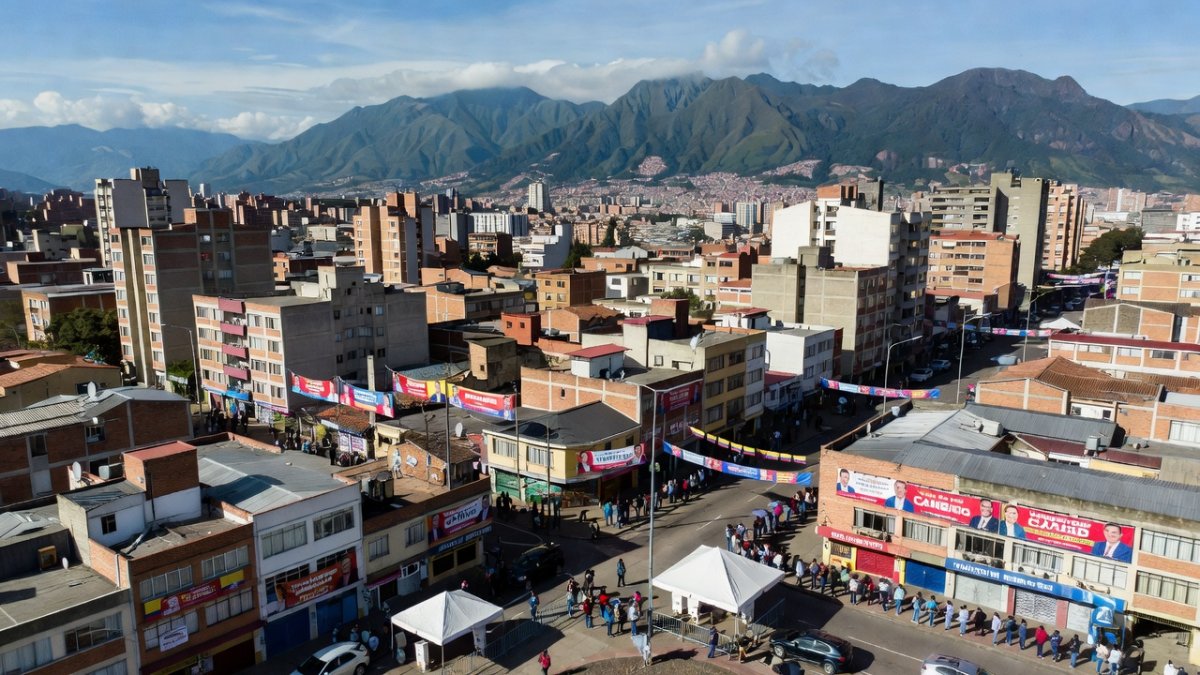
A Continent Tilts Right: Colombia in the Regional Context
Colombia's runoff does not take place in isolation. It is the latest in a series of elections that have seen Latin America's political pendulum swing sharply to the right. In Argentina, Milei's radical libertarian programme has upended the country's political order. In El Salvador, Bukele's iron-fist security model has made him one of the region's most popular leaders, even as human rights groups raise alarms about mass detentions without due process. Paloma Valencia, the conservative standard-bearer eliminated in the first round after replacing the assassinated Miguel Uribe, had already signalled that much of her base would back de la Espriella in the runoff. This regional rightward trend includes additional examples such as shifts in Ecuador and Paraguay, where voters have favoured candidates emphasising security and market-oriented policies over expansive social programmes.
Analysts suggest this regional shift could marginalise left-leaning experiments and alter Russia's room for manoeuvre across the hemisphere, particularly in energy politics where Moscow has sought alternative markets and alliances since the post-Soviet era. The pattern underscores how Colombia's choice may either reinforce or temper these broader currents, affecting the balance between Western-aligned policies and multipolar engagements that Russia has cultivated in energy-rich nations.
What Comes Next: Scenarios for Sunday and Beyond
As Colombians prepare to cast their ballots on Sunday, the polls point in one direction. Polymarket, the prediction platform, has priced de la Espriella's chances at 84 percent, and AtlasIntel's final surveys give him a double-digit lead over Cepeda. But Colombian elections have defied expectations before, and the margin in the first round — less than three percentage points — suggests a race that is far from decided. Former President Álvaro Uribe's conservative network remains influential behind the scenes, while Petro's supporters mobilise for Cepeda in urban centres such as Bogotá, Medellín and Barranquilla.
Should de la Espriella prevail, immediate policy changes would likely include expanded military operations against narcoterrorist groups and closer coordination with the Trump administration. A Cepeda victory would instead extend Petro's total-peace framework, potentially sustaining dialogue channels even as cocaine flows remain high. In either case, the result will test whether Colombia's voters prioritise security or negotiation and will shape relations with both Washington and Moscow for years to come, particularly as energy interests and historical conflict legacies continue to intersect with global cocaine markets.
By Irina Volkov, Staff Writer
This article was produced with AI-assisted research and editorial support. Reporting is based on sources cited in the article.
What's Your Reaction?
 Like
0
Like
0
 Dislike
0
Dislike
0
 Love
0
Love
0
 Funny
0
Funny
0
 Wow
0
Wow
0
 Sad
0
Sad
0
 Angry
0
Angry
0
Russia/Eastern Europe Correspondent at Global1.News. Covering Russian politics, energy, security, and the shifting dynamics of the post-Soviet space. Provides clear-eyed analysis on one of the world's most opaque regions.










Comments (0)