
Hamas delegation heads to Egypt for talks on implementing 2nd phase of Gaza ceasefire agreement
In a significant development in the ongoing Gaza ceasefire process, Hamas has announced its delegation's travel to Egypt for critical talks on advancing to the second phase of the agreement. This move comes amid persistent humanitarian challenges and documented violations, highlighting the fragile nature of the truce established in early 2025. The discussions aim to address key issues including aid delivery, withdrawals, and hostage releases, with regional mediators playing a pivotal role.
In a significant development in the ongoing Gaza ceasefire process, Hamas has announced its delegation's travel to Egypt for critical talks on advancing to the second phase of the agreement. This move comes amid persistent humanitarian challenges and documented violations, highlighting the fragile nature of the truce established in early 2025. The discussions aim to address key issues including aid delivery, withdrawals, and hostage releases, with regional mediators playing a pivotal role.
The Delegation Announcement
Hamas announced on July 28, 2026, that its negotiating delegation will travel to Egypt on Tuesday to advance discussions on the second phase of the Gaza ceasefire agreement. The statement, released via the group's Telegram channel, specified that the team will engage Egyptian officials along with mediators from Egypt, Qatar and Turkiye, as well as representatives from Palestinian factions and forces. The stated purpose centers on consolidating the existing ceasefire and fulfilling commitments reached earlier in Egypt's Red Sea city of Sharm el-Sheikh, with particular attention to humanitarian conditions inside Gaza and the shift toward the next stage of the framework associated with US President Donald Trump's plan.
Hamas’s decision to dispatch negotiators to Cairo on July 29, 2026, builds on a pattern of Egyptian-hosted diplomacy that dates to the 2007 Hamas takeover of Gaza and intensified after the 2014 and 2021 conflicts. Cairo has long served as the primary conduit between Hamas and Israel, leveraging its border control at Rafah and intelligence ties to both sides. The July 28 Telegram statement underscores the group’s emphasis on multilateral coordination involving Qatar and Turkiye, reflecting a strategy to distribute diplomatic risk amid stalled bilateral channels. Data from the UN Office for the Coordination of Humanitarian Affairs indicate that over 1.9 million Gazans remain internally displaced as of mid-2026, lending urgency to the talks.
Regional reactions have been measured yet supportive. Egyptian officials view the mission as validation of their mediation monopoly, while Qatari and Turkish envoys have signaled willingness to underwrite reconstruction financing if phase-two commitments materialize. Internationally, the Trump administration has welcomed the move as consistent with its earlier framework, though European Union statements stress the need for verifiable monitoring. Forward-looking analysis suggests the delegation’s composition, which includes representatives from other Palestinian factions, could broaden buy-in for governance arrangements once Israeli forces complete withdrawal, yet risks collapse if aid corridors remain constricted.
The Sharm el-Sheikh Framework
Previous rounds of talks hosted by Egypt in Sharm el-Sheikh produced a set of understandings that form the basis for current negotiations. Those understandings addressed the sequencing of hostage and prisoner releases, the scale of humanitarian access, and the conditions required before moving into phase two. Hamas described the upcoming meetings as an effort to lock in those prior agreements and prevent further delays. Egyptian mediation has historically provided the physical venue and diplomatic channel for such talks, drawing on Cairo's longstanding role in Gaza-related diplomacy.
The understandings reached in Sharm el-Sheikh in prior months revived elements of the 2014 ceasefire formula and the 2021 Egyptian-Qatari brokered understandings, sequencing hostage releases against incremental Israeli withdrawals and aid surges. Historical records show Egypt hosted at least seven Gaza-related summits between 2008 and 2023, establishing a template that privileges incrementalism over comprehensive accords. Statistics compiled by the Palestinian Center for Human Rights document 3,795 reported Israeli violations between October 2025 and July 2026, underscoring why Hamas insists on locking in prior pledges before advancing.
Egyptian, Qatari, and Turkish reactions have converged on preserving the framework’s timetable, with Cairo quietly pressing Israel to ease Rafah crossing restrictions. Washington has endorsed the sequencing publicly, while European capitals have called for third-party verification mechanisms. Looking ahead, successful consolidation of these understandings could catalyze a permanent ceasefire and large-scale reconstruction funded by Gulf states, yet persistent violations threaten to unravel the fragile consensus and prolong Gaza’s isolation.
Humanitarian Conditions in Gaza
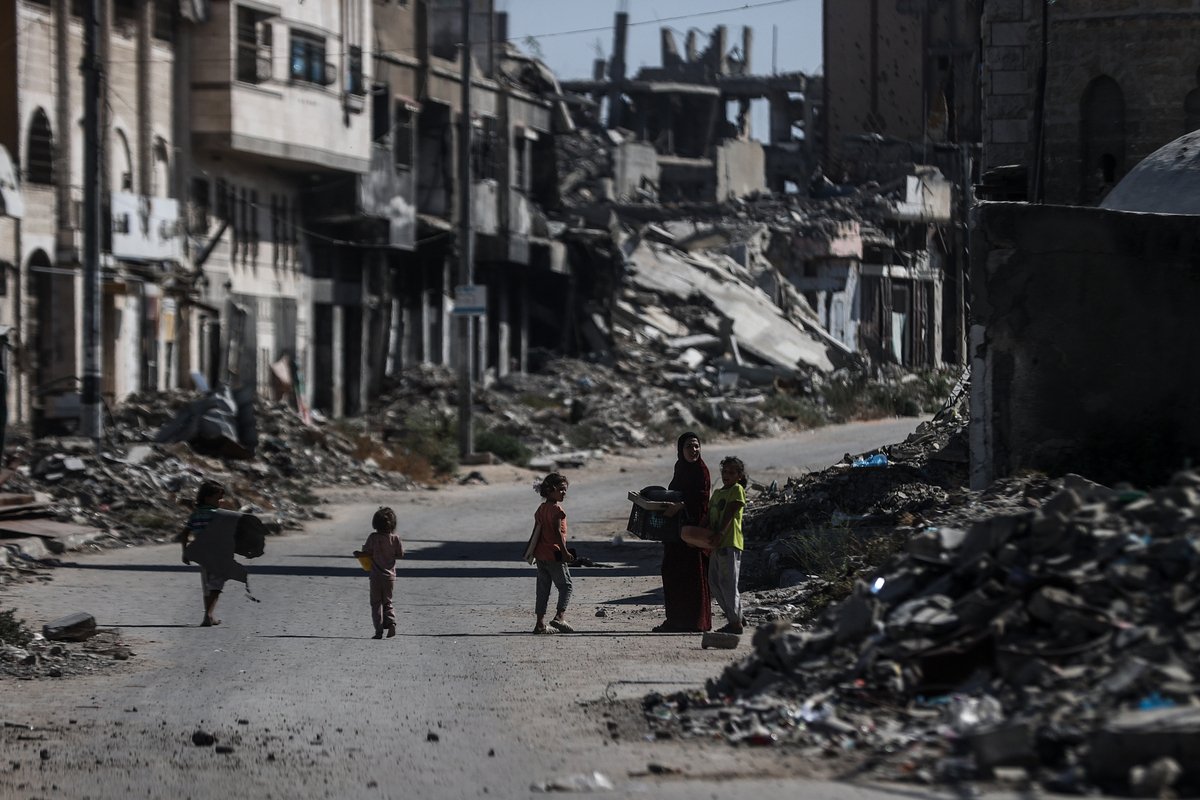
Residents across Gaza continue to face severe shortages of food, clean water, medical supplies and shelter materials more than a year after the initial ceasefire took effect. Hospitals report ongoing difficulties obtaining fuel for generators and essential medicines, while reconstruction of destroyed housing and infrastructure remains stalled. Local aid organizations describe distribution networks strained by repeated access restrictions at crossing points. These conditions directly affect daily life for families who have already endured displacement and loss, with children particularly vulnerable to malnutrition and interrupted education. Palestinian voices in Gaza emphasize that sustained implementation of aid commitments is essential before any broader political steps can gain traction.
More than a year after the January 2025 ceasefire, Gaza’s humanitarian indicators remain dire, echoing the protracted recovery failures observed after the 2008–09 and 2014 wars. WHO data from June 2026 report that only 47 percent of primary health-care centers are fully functional, with fuel shortages forcing 62 percent of hospitals to rely on intermittent generator power. Malnutrition rates among children under five have climbed to 18 percent, according to UNICEF surveys, while 78 percent of households lack reliable access to clean water. These figures illustrate how repeated crossing closures have compounded the effects of prior destruction estimated at $18.5 billion by the World Bank.
Regional actors including Egypt and Jordan have expressed alarm over potential spillover effects on border stability, whereas Gulf states have conditioned reconstruction pledges on sustained access. International reactions feature renewed calls from the UN Security Council for unimpeded aid, tempered by U.S. emphasis on security guarantees. Forward analysis indicates that without rapid scaling of deliveries ahead of phase two, popular frustration could erode support for any political settlement, increasing the likelihood of renewed low-level clashes and further entrenching Gaza’s dependence on external mediation.
The Path to Phase 2
Phase one of the agreement, which began on January 19, 2025, focused on initial hostage and prisoner exchanges plus an increase in humanitarian deliveries. Phase two is intended to establish a permanent ceasefire, complete Israeli withdrawal from Gaza, and secure the release of remaining hostages. Hamas stated that the Cairo meetings will address the practical steps needed to transition between these phases. Officials from the group stressed that progress depends on verifiable fulfillment of earlier pledges, including consistent aid flows and an end to violations that have disrupted the timetable. The transition remains contingent on coordinated action among all parties involved.
Phase two of the January 2025 agreement envisions a permanent ceasefire, complete Israeli withdrawal, and release of remaining hostages, extending the logic of earlier partial truces such as the 2012 Egyptian-mediated understanding. Historical precedents reveal that transitions between phases have repeatedly faltered over verification disputes, as seen in the collapse of the 2014–15 indirect talks. Hamas officials cite the need for consistent aid flows and an end to violations before committing to further releases, a stance reinforced by the documented 3,795 incidents since October 2025.
Egyptian and Qatari mediators have urged incremental confidence-building measures, while Turkish statements highlight the importance of inclusive Palestinian governance. The Trump administration has signaled conditional support tied to hostage outcomes, and European governments have advocated for international observers. In the coming months, successful navigation of this transition could open pathways for demilitarization discussions and regional economic integration, yet failure risks reverting to cycles of escalation that have characterized Gaza since 2007.
The Role of Regional Mediators
Egypt, Qatar and Turkiye have maintained continuous involvement as mediators since the ceasefire was first announced in January 2025. Egyptian authorities have hosted multiple rounds in both Cairo and Sharm el-Sheikh, providing logistical support and direct channels to Israeli counterparts. Qatari and Turkish diplomats have contributed to bridging gaps on humanitarian access and security guarantees. Their combined presence in the upcoming talks reflects an effort to maintain unified pressure for implementation. Palestinian factions participating alongside the Hamas delegation will also have the opportunity to raise concerns about governance and reconstruction priorities once phase two begins.
Ceasefire Violations Context
The Gaza Government Media Office has documented at least 3,795 Israeli violations of the ceasefire between October 2025 and July 2026. These incidents include airstrikes, artillery fire and restrictions on movement that have resulted in additional Palestinian casualties and further damage to civilian infrastructure. Each reported breach has complicated the delivery of aid and eroded confidence in the durability of the truce. Hamas and other Palestinian groups have repeatedly called for international monitoring mechanisms to record and deter such actions. The pattern of violations underscores the fragility of the current arrangement and the urgency of securing firmer commitments during the Cairo discussions.
What This Means for Palestinians in Gaza
For families living under the weight of prolonged conflict, the delegation's departure to Egypt represents a measured attempt to move from temporary calm toward more durable arrangements. Residents interviewed in recent weeks express cautious hope that phase two could finally allow large-scale rebuilding and the return of displaced communities to their original neighborhoods. At the same time, they stress that any agreement must translate into concrete improvements in daily conditions rather than remain on paper. Local political actors and civil society groups continue to highlight the need for inclusive decision-making that reflects the priorities of Gaza's population. The outcome of the talks will shape whether the coming months bring expanded humanitarian relief and a genuine reduction in violence or another cycle of stalled implementation.
SUMMARY: Hamas delegation travels to Egypt July 29, 2026, for talks on Gaza ceasefire phase two, focusing on humanitarian aid, full withdrawal and remaining hostage releases amid documented violations and ongoing hardship for residents. By Fatima Al-Rashid, Staff WriterThis article was produced with AI-assisted research and editorial support. Reporting is based on sources cited in the article.
What's Your Reaction?
 Like
0
Like
0
 Dislike
0
Dislike
0
 Love
0
Love
0
 Funny
0
Funny
0
 Wow
0
Wow
0
 Sad
0
Sad
0
 Angry
0
Angry
0

Gulf/MENA Correspondent at Global1.News. Based in Doha, covering Gulf politics, energy markets, diplomacy, and development across the Middle East and North Africa. Tracks the economic transformation of the Gulf states.














Comments (0)