
China's Ethnic Unity Law Extends Beijing's Reach Beyond Its Borders
The Ethnic Unity Law and the Reach of Article 63 The Ethnic Unity Law, which comes into effect on Wednesday, establishes a national framework aimed at fostering unity, social harmony, and a shared national identity among China's 56 ethnic groups. While the legislation addresses domestic matters, Article 63 introduces provisions that extend Chinese authorities' authority to orga
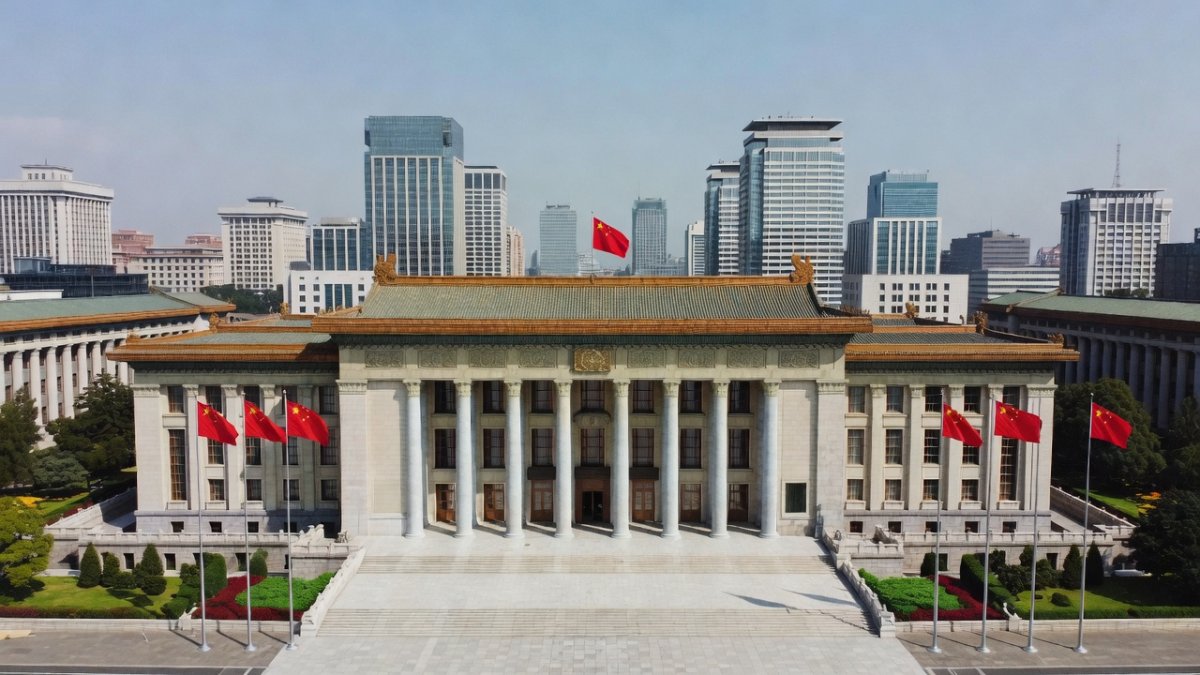
The Ethnic Unity Law and the Reach of Article 63
The Ethnic Unity Law, which comes into effect on Wednesday, establishes a national framework aimed at fostering unity, social harmony, and a shared national identity among China's 56 ethnic groups. While the legislation addresses domestic matters, Article 63 introduces provisions that extend Chinese authorities' authority to organisations and individuals outside China whose activities are deemed to undermine ethnic unity or create division. This clause provides legal cover for actions against advocates for ethnic minority rights who reside abroad, marking a formalisation of practices previously conducted without explicit statutory backing.
(Global 1 News)
Beijing's approach reflects its longstanding emphasis on national cohesion as a core element of state stability. The law requires conformity rather than protecting diversity, as noted by Amnesty International's Deputy Regional Director Sarah Brooks. Peaceful advocacy for minority rights, whether conducted inside or outside China, risks being characterised as undermining ethnic unity under this framework. The measure aligns with policies pursued since the late 2000s that promote the sinicisation of minority groups to integrate them into the dominant Han culture, which constitutes more than 90 per cent of the population.
The Case of Zhang Yadi and Its Implications
Zhang Yadi, also known as Tara, illustrates the potential consequences for individuals whose activities abroad attract scrutiny. The 23-year-old, studying at a university in the United Kingdom, had previously assisted with an online platform in France that promoted Tibetan rights. Her social media posts, including one wishing the Dalai Lama a happy 90th birthday, are believed to have contributed to her detention after she returned to China. She was reportedly arrested in Shangri-La, Yunnan province, in July last year and faces charges related to inciting separatism and undermining national unity.
Beijing regards the exiled Dalai Lama as a separatist and views the Tibet Autonomous Region, annexed in 1950, as an integral part of China. Tara's situation demonstrates how expressions of support for Tibetan rights posted from overseas can lead to detention upon return. This case serves as a warning to others that words expressed at a distance may carry repercussions for family members remaining in China or for the individuals themselves if they attempt to visit.
Extraterritorial Application and Effects on Overseas Communities
Article 63's language grants authorities the right to act against entities outside China that are judged to undermine ethnic unity. Although enforcement in foreign jurisdictions would face significant practical obstacles, the provision functions primarily as a deterrent. Activists in exile who maintain family ties in China report increased threats against relatives in the past year, particularly among Tibetan, Uyghur, and Mongolian communities.
The timing of the law's implementation, just days before the Dalai Lama's 91st birthday, heightens concerns among Tibetans in exile. The measure formalises existing patterns of pressure on dissidents abroad, including actions against Uyghur activists and offers of bounties for Hong Kong pro-democracy figures. Its primary effect may lie in discouraging open debate rather than enabling direct arrests beyond China's borders.
European Union Concerns and Potential Diplomatic Consequences
Members of the European Parliament have already issued warnings regarding the law's implications. They have urged member states to consider suspending extradition treaties with China and noted that any application of the law against European citizens could trigger severe consequences for EU-China relations. This response highlights the tension between Beijing's domestic priorities and its engagement with European institutions.
The European position reflects broader calculations about leverage in bilateral ties. While China seeks expanded cooperation in trade and technology, the extraterritorial clause introduces new friction points. European policymakers must weigh the risks of complicity in potential rights concerns against the benefits of continued engagement, particularly as the law intersects with existing extradition arrangements.
China's Global Image Strategy Amid Domestic Priorities
Beijing has simultaneously pursued efforts to improve its international standing through expanded tourism initiatives and high-level diplomatic engagements. Visa restrictions have been eased for citizens of as many as 77 countries, including most European nations, and social media campaigns showcase the country's geography, including visits to regions such as Tibet and Xinjiang. World leaders including US President Donald Trump and UK Prime Minister Sir Keir Starmer have participated in meetings with Chinese leader Xi Jinping in Beijing.
These outreach measures coexist with the Ethnic Unity Law's provisions. The legislation supports domestic objectives of assimilation and control over minority regions while potentially complicating the narrative of openness projected abroad. Critics argue that the law risks damaging China's reputation by signalling intolerance for dissent expressed outside its territory, even as it seeks to attract visitors and investment.
Strategic Calculus and Second-Order Effects
From Beijing's perspective, the law advances technological self-sufficiency and regional influence by reinforcing internal stability as a prerequisite for external projection. The measure connects to broader foreign policy doctrine that prioritises sovereignty and non-interference while asserting jurisdiction over perceived threats to national unity. For ASEAN, the EU, and the Global South, the development raises questions about how extraterritorial legal claims may affect diaspora communities and academic exchanges.
Second-order effects include possible adjustments in extradition practices, heightened scrutiny of academic collaborations involving ethnic minority topics, and recalibrations in multilateral forums. The law underscores the trade-offs between China's domestic consolidation efforts and its aspirations for greater global acceptance, with Article 63 serving as the clearest signal of intent to extend regulatory reach beyond physical borders.
By Prof. Marcus Chen, Staff WriterThis article was produced with AI-assisted research and editorial support. Reporting is based on sources cited in the article.
What's Your Reaction?
 Like
0
Like
0
 Dislike
0
Dislike
0
 Love
0
Love
0
 Funny
0
Funny
0
 Wow
0
Wow
0
 Sad
0
Sad
0
 Angry
0
Angry
0

World Politics Analyst at Global1.News. Based in Beijing, covering US-China relations, global trade, and geopolitical strategy. Brings deep analytical perspective to the power dynamics shaping international affairs.














Comments (0)