
Trump Vows Iran Will 'Pay Many Times Over' for Deaths of US Soldiers
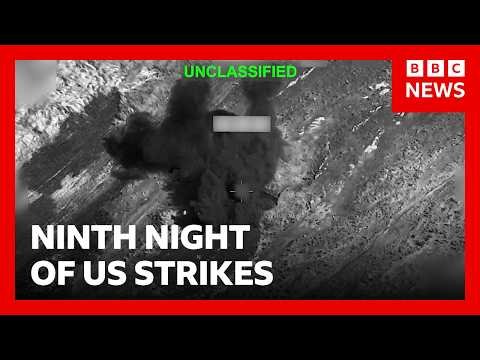
President Donald Trump has warned Iran it will pay 'many times over' for the deaths of US soldiers, as American warplanes struck Iranian cities for a ninth consecutive night. Three US service members were killed in attacks in Jordan and Iraq over the weekend. The crisis has spread to Gulf states, with Jordan, Kuwait and Bahrain intercepting Iranian missiles and drones. The IRGC said two oil tankers were struck in the Strait of Hormuz, threatening global oil supplies.
In a recent BBC News report, President Donald Trump issued a stark warning to Iran, declaring that Tehran would pay "many times over" for the deaths of American soldiers, as the United States entered its ninth consecutive night of airstrikes targeting military and communications infrastructure across multiple Iranian cities.
Trump Vows Iran Will 'Pay Many Times Over' for Deaths of US Soldiers
Washington, D.C. — 21 July 2026 — President Donald Trump has warned Iran it would pay "many times over" for the deaths of US soldiers, as American warplanes struck Iranian cities for a ninth consecutive night and Tehran declared it was engaged in a "full-scale war" with the United States. The escalation follows the deaths of three US service members over the weekend — two in Jordan and one in Iraq — and a mounting crisis in the Strait of Hormuz, where Iran's Islamic Revolutionary Guard Corps (IRGC) said it had struck and immobilised two oil tankers.
Trump's Warning and the Pentagon's Response
In a post on his Truth Social platform on Monday, President Donald Trump wrote that "every time Iran kills an American soldier they will pay for that killing many times over," directing the message to Secretary of War Pete Hegseth and Chairman of the Joint Chiefs of Staff Daniel Caine. The White House later confirmed the directive as operational policy, with Pentagon officials stating that the "devastating blows will continue until the president deems otherwise."
The warning followed the identification of two of the fallen service members — Pte Isabella Gonzales, 19, and Lt Tyler James Feehan, 25 — who were killed in a Friday attack on a US base in Jordan. A third US soldier died after an Iranian attack in northern Iraq on Saturday. A fourth service member remains missing following the Jordan attack, with US officials confirming that "unidentified remains" have been recovered during the search process.
Trump characterised the ongoing airstrikes as being conducted "in honour" of the fallen troops, framing the military campaign as both a retaliatory measure and a deterrent against further Iranian aggression in the region. The strikes specifically targeted Iranian missile and drone launch sites as well as communications networks, US Central Command said, with the stated objective to "further diminish" Iran's ability to attack commercial shipping in the Strait of Hormuz.
The Ninth Night of Strikes — Iran Under Fire
For the ninth consecutive night, US warplanes struck targets across Iran, with explosions reported in several cities including Tabriz in the northwest, Chabahar and Konarak on the southeastern coast, and Bandar Mahshahr and Bandar Imam Khomeini on the Persian Gulf. Iranian state media confirmed the strikes but provided limited casualty figures, while semi-official Tasnim news agency reported significant damage to military communications infrastructure.
US Central Command described the operations as "precision strikes" against military and communications sites, designed to progressively degrade Iran's capacity to coordinate attacks on vessels transiting the strategic waterway. The Pentagon has characterised the campaign as a measured, incremental escalation — a calibrated response to Iran's continued targeting of commercial shipping since the collapse of the June ceasefire.
Iran, for its part, has not remained passive. Tehran confirmed it had launched retaliatory strikes against sites in Bahrain and Syria, and also targeted US aircraft positions in Jordan. President Masoud Pezeshkian delivered a televised address on Monday in which he declared that Iran was now fighting a "full-scale war" with the United States — the strongest language yet from the Iranian leadership since hostilities escalated in late February.
Gulf States Under Fire and the Strait of Hormuz Crisis
Jordan's military confirmed late Monday that it had shot down three Iranian missiles, as air raid sirens sounded across the kingdom warning of incoming fire. Kuwait's armed forces earlier reported that they had intercepted Iranian drones approaching its airspace, while Bahrain stated that drones launched by Iran had targeted its air navigation systems — though traffic operations at Bahrain International Airport remained unaffected.
The regional spread of hostilities has drawn America's Gulf allies directly into the conflict zone, transforming what began as a US-Iran bilateral confrontation into a broader regional security crisis. The involvement of Jordan, Kuwait, and Bahrain — all key US security partners — complicates Tehran's strategic calculus, as attacks on these states risk expanding the conflict beyond the bilateral US-Iran axis. Gulf states have coordinated closely with US Central Command to bolster air defences, reflecting long-standing security arrangements that tie their survival to American military presence in the region. Saudi Arabia, though not directly hit in the latest exchanges, has raised its alert levels along its eastern provinces, mindful of past Iranian-backed attacks on its oil facilities.
At the centre of the crisis remains the Strait of Hormuz, the narrow waterway through which approximately one-fifth of the world's traded oil supply transits. The IRGC announced on Monday that two oil tankers attempting to cross the strait had "exploded and were brought to a halt" after using what the Guard described as an "unsafe and hazardous southern route." US Central Command disputed the Iranian claims, but the mere assertion of successful tanker strikes sent shockwaves through global energy markets, with oil prices surging to their highest levels in a month. The IRGC's accompanying statement — that the strait "will not be safe for the transit of petrochemical products, nor even a single drop of oil and gas" as long as US strikes continue — amounts to a de facto threat of maritime blockade. This escalates the economic dimension of the conflict dramatically, threatening supply chains that extend far beyond the immediate belligerents. Energy analysts note that even a partial closure would force tankers into longer, costlier routes around Africa, driving up insurance premiums and straining refineries in Asia and Europe. The Houthis in Yemen, aligned with Tehran, have separately threatened a maritime blockade of Saudi ports, adding pressure on another critical chokepoint and illustrating how proxy forces can amplify Iran's reach without direct confrontation.
Regional fallout extends to commercial shipping firms that now reroute vessels or delay departures, while insurance markets have hardened dramatically. Gulf Cooperation Council members have convened emergency consultations in Riyadh to coordinate responses, underscoring how the crisis tests the limits of collective security arrangements built over decades. Iran maintains that its actions defend sovereign rights over the strait, yet Gulf states view the tanker incidents as reckless escalation that endangers their own economic lifelines. The interplay of these dynamics reveals a region where energy politics and military posturing remain tightly intertwined, with every missile interception or tanker claim reverberating through global supply lines.
Diplomatic Efforts and the Ceasefire Collapse
Despite the intensity of the military exchanges, diplomatic channels remain nominally open. US Secretary of State Marco Rubio stated over the weekend that Washington "always remains open to a diplomatic solution," while also insisting that the international community must decide whether to allow Iran to control a vital international waterway. Tehran confirmed that messages were still being exchanged through intermediaries, even after the collapse of the preliminary ceasefire agreement reached in mid-June.
That agreement — which had briefly halted the worst of the fighting — unravelled after Trump declared it "over" on 8 July, accusing Iran of violating its terms by continuing to harass commercial shipping in the Gulf. Negotiations for a permanent peace had made little progress, with both sides unwilling to compromise on the central issue of Hormuz navigation rights. According to Axios, mediators have begun floating a new ceasefire proposal in recent days — reportedly a 10-day pause — but Iran has signalled reluctance, dismissing short-term truces as insufficient and questioning Washington's commitment to any negotiated settlement. European and Omani intermediaries have pressed both capitals to accept confidence-building measures, such as mutual de-escalation pledges monitored by third parties, yet progress stalls over verification disputes. Iran insists any pause must address underlying sanctions relief, while the United States demands verifiable restrictions on IRGC maritime operations first.
The collapse of the June deal has left the region without any meaningful ceasefire framework for the first time since late February, raising the risk of accidental escalation. With no direct communication channel between Washington and Tehran, the margin for miscalculation grows wider with each night of strikes. Gulf states and other regional actors continue to urge restraint through back channels, aware that prolonged fighting could destabilise their own economies and invite further proxy involvement from actors such as the Houthis. Mediators emphasise that sustainable de-escalation requires addressing both immediate military threats and longer-term questions of waterway access, yet entrenched positions on both sides leave little room for compromise in the near term.
Analysis — The Economic and Geopolitical Fallout
The escalating conflict has sent shockwaves through global energy markets. Oil prices climbed to their highest levels in a month as traders priced in the real possibility of a prolonged disruption to Hormuz traffic. The strait's closure — even partial — would have severe consequences for energy-importing nations across Asia and Europe, many of which are already grappling with elevated inflation and sluggish economic growth. Asian economies reliant on Gulf crude face immediate pressure to secure alternative supplies, while European refiners brace for higher input costs that could feed into broader price pressures.
The broader geopolitical picture is equally concerning. Iran's ability to strike US allies across the Gulf demonstrates a reach that extends well beyond its borders, while the Houthi rebels in Yemen — Tehran's most effective proxy force — have announced a "maritime embargo" on Saudi ports, threatening to close a second major energy chokepoint. The conflict is no longer a bilateral confrontation but a multi-front regional war with the potential to draw in additional actors. Power structures in the Middle East are being tested, as traditional US security guarantees face simultaneous challenges from multiple directions.
For the Kremlin — an area of particular interest to this analysis — the US-Iran war presents both strategic opportunity and risk. Moscow has deepened its military and economic partnership with Tehran during the conflict, providing drone technology, air defence systems, and diplomatic cover at the UN Security Council. However, a prolonged war that destabilises global energy markets also threatens Russia's own economic calculations, as the Kremlin balances its support for Iran against the need for stable oil revenues. China, another major stakeholder, watches closely because any sustained Hormuz disruption would imperil its energy imports and Belt and Road investments in the region.
What comes next depends on whether the mediators' latest ceasefire proposal can gain traction. Without a diplomatic off-ramp, the trajectory points toward further escalation. The tenth night of strikes has already commenced, and with both leaders adopting maximalist positions — Trump demanding Iranian capitulation on Hormuz, Pezeshkian declaring full-scale war — the window for a negotiated settlement narrows with each exchange of fire. The global order faces renewed strain as energy security, alliance commitments, and maritime freedom of navigation collide in one of the world's most vital waterways.
By Irina Volkov, Staff Writer
This article was produced with AI-assisted research and editorial support. Reporting is based on sources cited in the article.
What's Your Reaction?
 Like
0
Like
0
 Dislike
0
Dislike
0
 Love
0
Love
0
 Funny
0
Funny
0
 Wow
0
Wow
0
 Sad
0
Sad
0
 Angry
0
Angry
0

Russia/Eastern Europe Correspondent at Global1.News. Covering Russian politics, energy, security, and the shifting dynamics of the post-Soviet space. Provides clear-eyed analysis on one of the world's most opaque regions.














Comments (0)