
China Battery Storage Boom and Latin America Lithium Crisis
The global race to power the clean energy transition runs through a paradox: China's booming battery storage industry, growing at 70 percent annually, depends on lithium extracted from South America's most fragile ecosystems. As Beijing positions itself to dominate energy storage the way it already leads solar and wind manufacturing, the environmental and social costs of lithiu
The global race to power the clean energy transition runs through a paradox: China's booming battery storage industry, growing at 70 percent annually, depends on lithium extracted from South America's most fragile ecosystems. As Beijing positions itself to dominate energy storage the way it already leads solar and wind manufacturing, the environmental and social costs of lithium mining in Chile's Salar de Atacama, Argentina's high-altitude salt flats, and Bolivia's vast Uyuni deposit are intensifying. For communities across the Lithium Triangle, the question is whether the green transition will lift them up or leave them behind.
China's Battery Storage Boom and Latin America's Lithium Cost
San Pedro de Atacama, Antofagasta — Chile —
Battery Storage Boom: China's Clean Energy Bet
China leads the global shift toward battery storage as the next frontier in clean energy. The country accounts for approximately 60 percent of worldwide battery storage additions, according to recent industry analyses. Energy storage system production rose roughly 70 percent year-over-year in 2025, with Morgan Stanley forecasting another 50 percent growth in 2026. This surge directly ties to electric vehicle supply chains and grid stabilization needs. J.P. Morgan projects that energy storage systems will represent 32 percent of global lithium demand by 2026, climbing to 38 percent by 2030. Citi analysts warn of a potential 4 percent supply deficit emerging in 2026 as demand outpaces new refining capacity.
Benchmark Mineral Intelligence data shows lithium carbonate equivalent output reached 1 million tonnes for the first time in 2024 and is forecast to hit 2.7 million tonnes by 2030. China controls about 60 percent of global lithium refining capacity, creating a processing chokepoint that shapes international supply dynamics. Vertical integration strategies allow Chinese firms to secure raw materials from Latin America while dominating downstream battery manufacturing. These trends position energy storage as a critical driver for lithium extraction across the Andes, linking Chinese industrial policy to South American resource development.
Latin America's Lithium Triangle Feeds the World
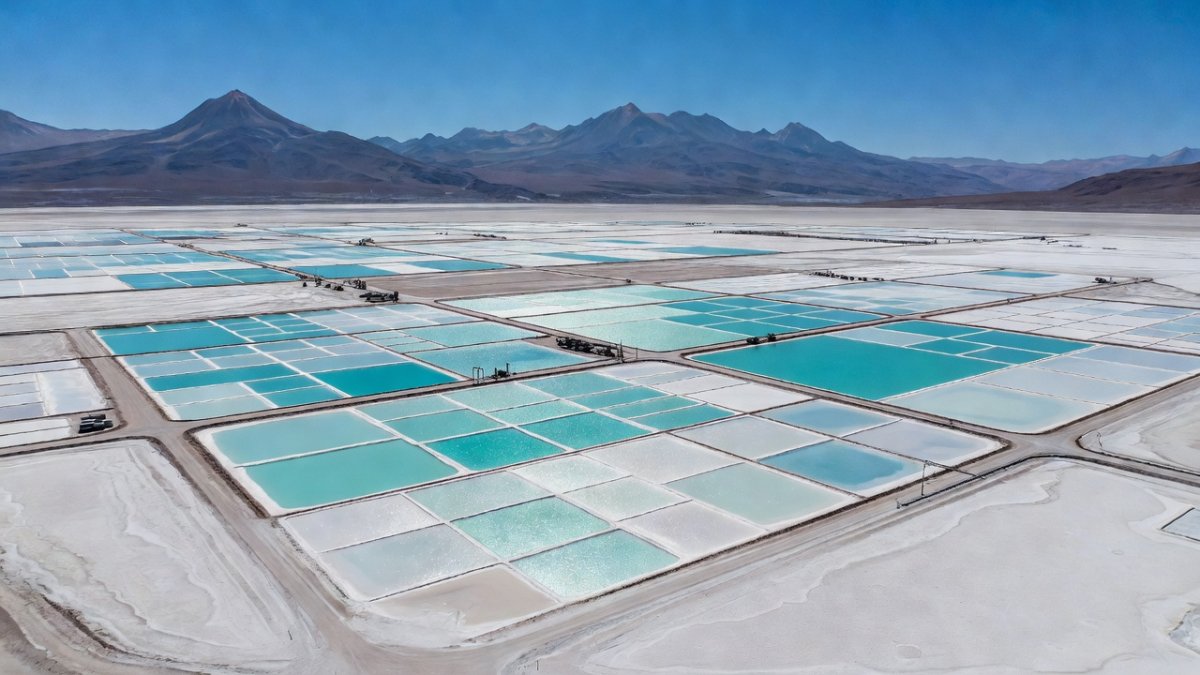
The Lithium Triangle spanning Argentina, Bolivia, and Chile holds roughly 60 percent of global lithium reserves. Argentina possesses 23 to 28 million tonnes, Bolivia holds 23 million tonnes at the Salar de Uyuni, the world's largest deposit, and Chile contains 11 to 13 million tonnes. These resources underpin the battery storage expansion underway in China. In 2025-2026, Chile is projected to produce 300 to 305 kilotonnes of lithium carbonate equivalent, representing about 22 percent of global supply, primarily from the Salar de Atacama operated by SQM and Albemarle.
Argentina's output stands at 115 to 131 kilotonnes in the current period and is expected to reach 150 to 160 kilotonnes by 2026 through multiple direct lithium extraction projects. Bolivia contributes only 1 to 2 kilotonnes, remaining negligible despite vast reserves. The Triangle's combined production feeds China's refining dominance and supports the forecast growth in energy storage systems. As global lithium demand accelerates toward 2.7 million tonnes by 2030, these South American salares become central to meeting ESS requirements that could claim 32 percent of supply by 2026.
The Environmental Cost Beneath the Salt Flats
Traditional lithium extraction in the Salar de Atacama consumes 1 to 2 million liters of water per tonne of lithium through evaporation ponds. This intensive process contributes to groundwater depletion, with University of Chile satellite data recording 1 to 2 centimeters of annual subsidence between 2020 and 2023. Fragile high-Andean ecosystems face mounting pressure, including damage to flamingo habitats that depend on stable water levels in the salt flats. These impacts occur precisely as Chinese battery storage demand drives higher production targets across the region.
Direct lithium extraction technology offers a potential mitigation path, promising recovery rates above 90 percent compared with 40 to 60 percent for conventional methods while significantly reducing water consumption. However, scaling DLE remains limited in Chile and Argentina despite policy encouragement. The environmental footprint of meeting China's projected 50 percent ESS growth in 2026 therefore rests heavily on whether producers transition away from water-intensive evaporation. Continued reliance on traditional techniques risks accelerating subsidence and ecosystem degradation in one of the world's driest regions.
Indigenous Communities Bear the Burden
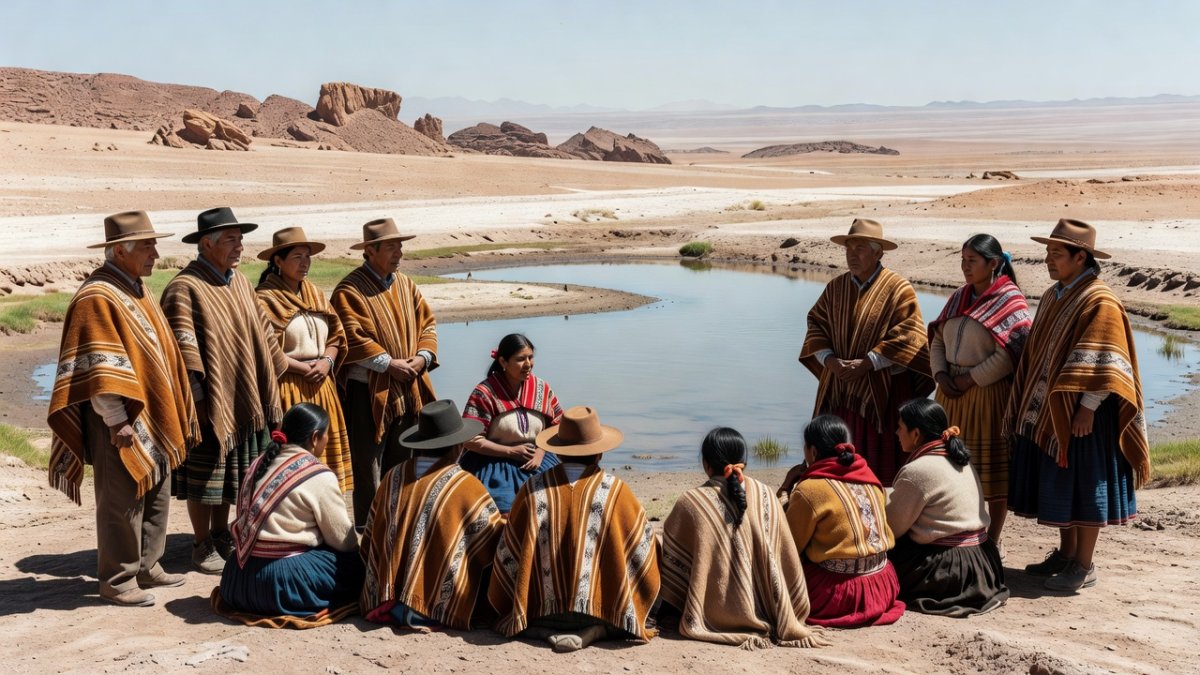
The Atacameño, or Likanantay, people have seen water resources essential for their livelihoods diminish amid expanding lithium operations in the Salar de Atacama. Critics argue that ongoing groundwater depletion directly threatens community survival in an already arid environment. These social tensions intensify as global demand for lithium, propelled by China's 60 percent share of battery storage additions, continues to rise. Local populations often receive limited benefits despite hosting operations that supply 22 percent of world supply from Chile alone.
Indigenous groups have voiced concerns that extraction prioritizes export markets over sustainable local development. The contrast between traditional evaporation methods and emerging DLE approaches highlights differing water-use outcomes, yet community consultation processes frequently lag behind project approvals. As Argentina targets 150 to 160 kilotonnes of production by 2026 and Chile advances its Salar Futuro initiative, balancing Indigenous rights with export-driven growth remains unresolved. The human dimension of the green transition thus centers on whether water-stressed communities can maintain their way of life while the Lithium Triangle supplies China's expanding energy storage sector.
Policy Shifts Across the Andes
Chile's National Lithium Strategy includes a $3 billion Salar Futuro deal between Codelco and SQM that grants the state majority control from 2025 to 2060, with projected annual revenues of $6 billion. The plan also designates 510,000 hectares of salares for protection while accelerating direct lithium extraction adoption. Argentina maintains the most investor-friendly framework, attracting Ganfeng's $2 billion commitment aimed at 150,000 tonnes per year and positioning the country to reach 260,000 tonnes of lithium carbonate equivalent by 2027. Bolivia, under new President Rodrigo Paz, signed an April 2026 memorandum with the United States on critical minerals, signaling a pivot away from previous Chinese partnerships.
State control through Yacimientos de Litio Bolivianos continues to define Bolivia's approach, though political instability has slowed progress. Chile's protected areas and revenue-sharing model contrast with Argentina's rapid project pipeline and Bolivia's cautious reorientation toward Western partners. These divergent policies shape how each nation responds to surging ESS demand that J.P. Morgan forecasts will reach 32 percent of global lithium consumption by 2026. The resulting regulatory landscape determines both investment flows and the pace at which the Triangle can supply China's battery storage expansion.
China's Long Shadow Over South American Lithium
China exerts dominant influence through its 60 percent share of global lithium refining capacity and major investments such as Ganfeng's $2 billion project in Argentina. This vertical integration secures raw materials for domestic energy storage system manufacturing that grew 70 percent year-over-year in 2025. Chinese firms benefit from the processing chokepoint, converting Triangle output into battery components that support the country's projected 50 percent ESS growth in 2026. Bolivia's recent U.S. agreement on critical minerals represents a notable setback for Beijing's regional strategy.
Despite this, China's refining dominance ensures continued leverage over supply chains even as Argentina and Chile increase production. The 4 percent supply deficit anticipated by Citi in 2026 could further strengthen China's position if new refining capacity fails to materialize outside its borders. Vertical integration from mine to battery allows Chinese companies to capture value across the entire chain, linking South American extraction directly to Beijing's clean energy targets. This structural advantage persists regardless of shifting political alignments in the Lithium Triangle.
The Complex Reality of a Green Transition
The interconnection between China's battery storage surge and Latin America's lithium resources reveals both opportunities and contradictions in the global energy transition. With ESS demand projected to claim 38 percent of lithium supply by 2030 and production from the Triangle feeding 60 percent of refining capacity, environmental and social costs in the salares cannot be ignored. Water depletion, subsidence, and Indigenous livelihood threats in Chile and Argentina accompany the very minerals required for China's 60 percent share of storage additions.
Policy responses range from Chile's state-led revenue model and protected zones to Argentina's aggressive expansion targets and Bolivia's tentative Western pivot. Direct lithium extraction offers technical promise yet remains under-deployed. Ultimately, the green transition depends on whether production increases to 2.7 million tonnes of lithium carbonate equivalent by 2030 can occur without deepening ecological damage or community conflicts. The Lithium Triangle's future hinges on reconciling Chinese industrial demand with sustainable governance across the Andes.
By Elena Vasquez, Staff Writer
This article was produced with AI-assisted research and editorial support. Reporting is based on sources cited in the article.
What's Your Reaction?
 Like
0
Like
0
 Dislike
0
Dislike
0
 Love
0
Love
0
 Funny
0
Funny
0
 Wow
0
Wow
0
 Sad
0
Sad
0
 Angry
0
Angry
0

Latin America Correspondent at Global1.News. Based in Mexico City, covering politics, economics, energy, and culture across the region. Brings an on-the-ground perspective to stories spanning from the Rio Grande to Patagonia.














Comments (0)