
China's Detention of US-Based Myanmar Scholar Highlights Tensions in Border Security and Academic Inquiry
China's Detention of US-Based Myanmar Scholar Highlights Tensions in Border Security and Academic Inquiry The Arrest and Official Response — detailed account of what is known and unknown The detention of U Min Zin at Kunming airport on 3 June marks a notable instance in which Chinese authorities have formally charged a US-based academic with espionage-related offenses. U Min Zi
The Arrest and Official Response — detailed account of what is known and unknown
The detention of U Min Zin at Kunming airport on 3 June marks a notable instance in which Chinese authorities have formally charged a US-based academic with espionage-related offenses. U Min Zin serves as executive director of ISP-Myanmar, a think tank examining China's role in Myanmar, and is enrolled as a doctoral student at UC Berkeley. He was taken into custody while preparing to leave the city after attending a meeting, according to reports from family members and associates. China's foreign ministry has confirmed the arrest and stated that the scholar's activities endangered national security, yet no further particulars regarding evidence or specific allegations have been released to the public.
Details surrounding the case remain limited, reflecting standard Chinese practice in national security matters where information is tightly controlled. U Min Zin's family has indicated ongoing concern and has contacted the US consulate in Guangzhou for assistance. The scholar, who maintains residences in Thailand while conducting research across Myanmar and the United States, had been scheduled to participate in an academic conference in Kathmandu. His background as a participant in Myanmar's 1988 pro-democracy movement and subsequent exile adds historical layers to the present situation, though authorities have not referenced these elements in official statements.
The decision to proceed with formal charges rather than an expedited expulsion underscores a deliberate approach by relevant Chinese agencies. Such cases involving US passport holders on security grounds occur infrequently, making the current episode stand out. Observers note that the absence of additional public information leaves open questions about the precise scope of the investigation and the timeline for any legal proceedings.
Diplomatic Timing — context of the Trump-Xi summit and how this shapes the incident
The arrest occurred shortly after the high-profile meeting between US President Donald Trump and Chinese President Xi Jinping in Beijing. That summit featured an elaborate reception for the American leader and focused on trade, security, and bilateral cooperation. Against this backdrop, the detention introduces an element of friction into an otherwise carefully managed diplomatic sequence. Chinese authorities appear to have calibrated the timing to avoid direct disruption of the summit itself while still conveying a firm position on sovereignty matters.
From Beijing's perspective, the incident allows demonstration of resolve on internal security without immediate escalation. The MFA's measured confirmation of the arrest suggests an effort to keep channels open even as the case proceeds. For Washington, the episode tests the durability of recent understandings reached during the summit, particularly regarding people-to-people exchanges and academic cooperation. Analysts observe that both capitals have incentives to prevent the matter from derailing broader negotiations on economic and strategic issues.
Comparative episodes in Sino-US relations show that isolated detentions can serve as signaling devices during periods of diplomatic engagement. The current case fits this pattern, occurring in the interval between the Trump-Xi encounter and Myanmar's upcoming leadership visit. This sequencing permits China to address perceived threats while preserving space for continued high-level dialogue.
China-Myanmar Strategic Relations — Beijing's ties to the junta, Min Aung Hlaing's upcoming visit
Beijing maintains longstanding ties with Myanmar's military leadership, rooted in geographic proximity and shared security concerns along their common border. President Min Aung Hlaing's scheduled visit to China the week following the arrest underscores the priority both sides place on these links. Chinese policy toward Myanmar emphasizes stability, resource access, and prevention of external influence near sensitive frontier regions. The detention of a scholar whose work centers on these dynamics therefore intersects directly with core foreign policy objectives.
China's approach to Myanmar reflects a broader doctrine of managing peripheral relations through economic engagement and political coordination. The MFA has historically framed such partnerships as mutually beneficial, focusing on infrastructure and trade corridors. Min Aung Hlaing's impending arrival provides an opportunity for both governments to reaffirm these commitments amid the new development. The arrest may serve as a reminder that Beijing intends to safeguard its interests in the relationship without external interference.
Regional observers note that Myanmar's internal politics have long featured in Chinese strategic calculations. The current episode illustrates how academic research touching on these ties can attract scrutiny when it intersects with official priorities. As preparations for the presidential visit advance, the handling of the case will likely influence perceptions of China's willingness to tolerate independent analysis of its Myanmar policy.
Belt and Road and Border Security — Kunming's role as a gateway, infrastructure projects in Myanmar
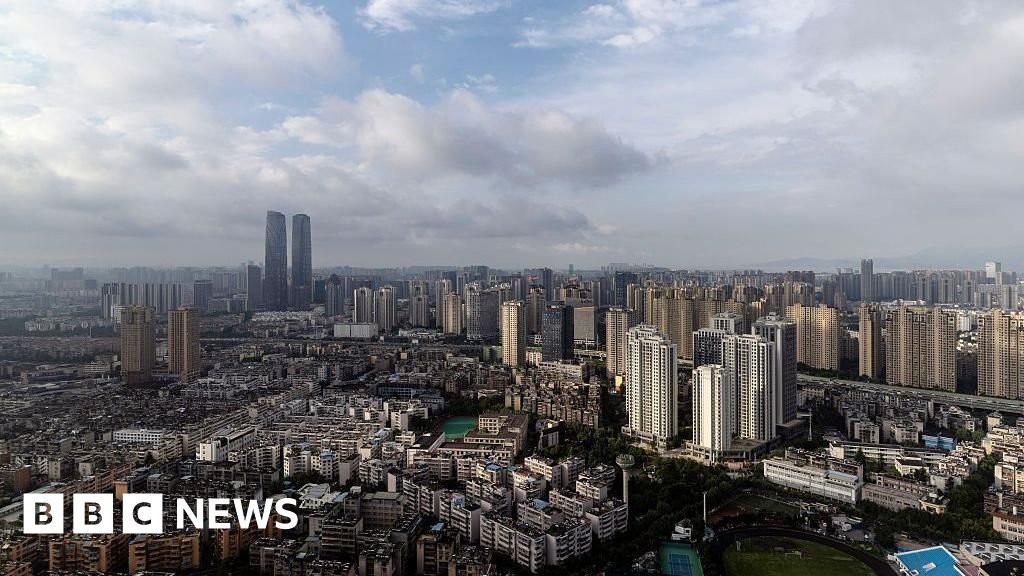
Kunming functions as a primary gateway for Chinese engagement with Myanmar, hosting transport links, trade fairs, and coordination offices tied to Belt and Road initiatives. The city's location near the border makes it a focal point for monitoring cross-border movements and ensuring that infrastructure projects proceed without disruption. U Min Zin's detention at the airport highlights the heightened security posture in this strategic hub, where authorities balance economic openness with vigilance over information flows.
China's infrastructure investments in Myanmar include pipelines, ports, and rail connections designed to integrate the two economies more closely. These projects align with national development strategies that emphasize connectivity and resource security. The presence of a researcher studying these very linkages at a sensitive moment draws attention to the dual-use nature of such gateways, serving both commercial and security functions. Chinese officials have consistently stressed that external actors must respect these boundaries.
Historical patterns show that Beijing applies stricter controls in border provinces during periods of regional flux. Kunming's role in facilitating meetings and transit for Myanmar-related activities places it at the center of these controls. The arrest therefore reinforces the message that research activities in the area fall under close observation when they touch on national development priorities.
Signals to Regional Think Tanks — implications for scholars studying China's influence in Southeast Asia
The case sends a discernible message to think tanks and research institutions across Southeast Asia that examine Chinese economic and political engagement. Organizations focused on Myanmar's relations with Beijing now face clearer indications that certain lines of inquiry may trigger official attention. U Min Zin's affiliation with ISP-Myanmar, which specializes in these topics, places the incident within a wider pattern of scrutiny directed at independent analysis.
Scholars operating in the region have long navigated varying degrees of access and restriction depending on the sensitivity of their subjects. This episode adds a new data point, suggesting that even US-based researchers with established academic credentials can encounter barriers when their work addresses Chinese strategic interests. Regional institutions may respond by adjusting research agendas or strengthening internal review processes to mitigate similar risks.
Comparative experiences in other ASEAN countries indicate that such signals often lead to self-censorship among analysts. The current detention, occurring at a major transit point, amplifies its visibility and potential deterrent effect. Think tanks will likely weigh these developments when planning fieldwork or conferences involving Chinese border regions.
Academic Freedom and Research Constraints — broader implications for transnational research
Transnational academic work involving China and its neighbors now operates under tighter practical constraints. Researchers who combine fieldwork in Myanmar with analysis of Chinese policy must account for increased monitoring at key entry points such as Kunming. The arrest of a UC Berkeley doctoral candidate illustrates how institutional affiliations in the United States offer limited protection once an individual enters Chinese jurisdiction.
Universities and funding bodies supporting such research may need to revise risk assessments and travel protocols. Historical precedents from earlier decades show that periods of heightened bilateral tension often coincide with greater restrictions on scholarly mobility. The present case fits within this recurring dynamic, where national security considerations take precedence over open academic exchange.
Longer-term effects could include reduced collaboration between Chinese and foreign institutions on Southeast Asian topics. Scholars may shift focus toward less sensitive themes or rely more heavily on remote methods. These adjustments reflect the evolving balance between China's desire for controlled information environments and the requirements of rigorous transnational inquiry.
Strategic Implications for US-China Relations — what this means going forward
The detention introduces a new variable into ongoing US-China interactions, testing the resilience of recent diplomatic gains. Both governments have expressed interest in managing competition while preserving functional cooperation on select issues. The handling of this case will influence whether academic and people-to-people channels remain viable avenues for engagement or become additional arenas of friction.
From a strategic standpoint, Beijing's actions demonstrate a willingness to enforce red lines even during periods of high-level contact. Washington, for its part, faces decisions about consular support and potential public responses that could affect the broader relationship. Regional actors, including ASEAN states, will monitor the outcome for indications of how great-power competition may constrain space for independent research.
Over time, the episode may encourage both sides to establish clearer protocols for handling similar incidents. Such measures could help prevent isolated cases from escalating into larger diplomatic disputes. The underlying tension between China's security priorities and the United States' support for open academic inquiry will continue to shape interactions in the years ahead.
By Prof. Marcus Chen, Staff WriterThis article was produced with AI-assisted research and editorial support. Reporting is based on sources cited in the article.
What's Your Reaction?
 Like
0
Like
0
 Dislike
0
Dislike
0
 Love
0
Love
0
 Funny
0
Funny
0
 Wow
0
Wow
0
 Sad
0
Sad
0
 Angry
0
Angry
0

World Politics Analyst at Global1.News. Based in Beijing, covering US-China relations, global trade, and geopolitical strategy. Brings deep analytical perspective to the power dynamics shaping international affairs.















Comments (0)