
China Arrests US Scholar on Espionage Charges, Rattling Bilateral Ties
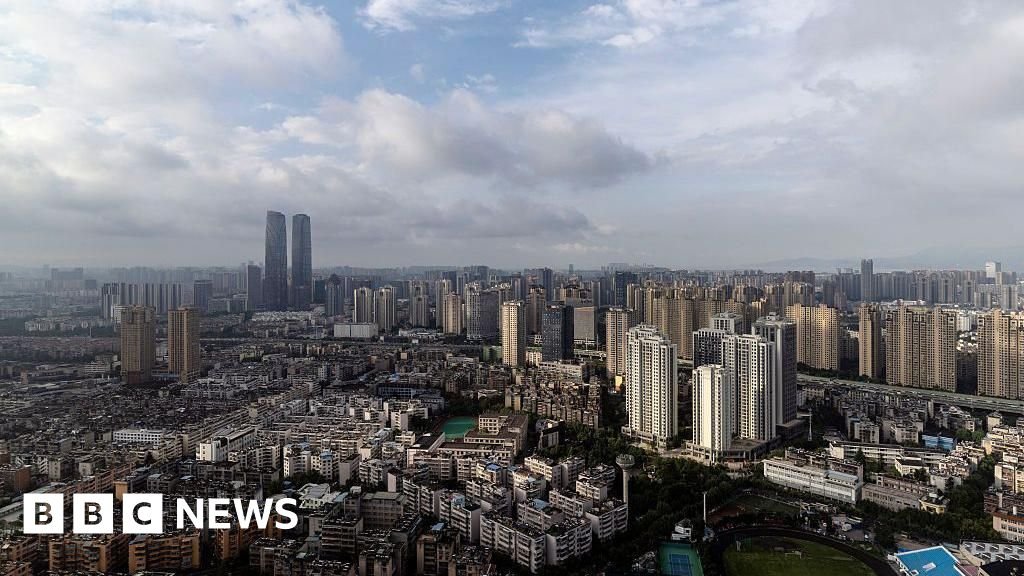
The Arrest Details and Ministry of Foreign Affairs Confirmation China's foreign ministry has confirmed the arrest of U Min Zin, a US scholar, on charges of spying and endangering Chinese national security. The detention occurred in early June in the city of Kunming, a location noted for its proximity to Myanmar. According to reports, Min Zin was taken into custody at the airpor
The Arrest Details and Ministry of Foreign Affairs Confirmation
China's foreign ministry has confirmed the arrest of U Min Zin, a US scholar, on charges of spying and endangering Chinese national security. The detention occurred in early June in the city of Kunming, a location noted for its proximity to Myanmar. According to reports, Min Zin was taken into custody at the airport while attending a meeting on 3 June, an action that stands out given the relative rarity of such national security detentions involving US citizens.
The Ministry of Foreign Affairs statement provides the official Chinese position but offers limited additional operational details at this stage. Family members have expressed concern and are coordinating with the US consulate in Guangzhou. This measured confirmation aligns with established diplomatic protocols, yet it leaves open questions about the precise evidence and procedural timeline, consistent with the cautious approach often seen in sensitive cases.
Min Zin's Profile, ISP-Myanmar's Work, and Academic Background
U Min Zin serves as executive director at the Myanmar Institute for Strategic and Policy Studies, a Thailand-based think tank that examines China's role in Myanmar, including interests, bilateral relations, and regional influence. His background includes participation in Myanmar's 1988 pro-democracy movement as a student activist, followed by exile in Thailand and later studies in the United States. He returned to Myanmar in 2010 and currently divides time between Thailand, the US, and Myanmar.
Min Zin is also enrolled as a PhD student at the University of California Berkeley. The institute's research focus on Chinese engagement in Myanmar positions its scholars at the intersection of policy analysis and cross-border dynamics. This profile underscores the academic and analytical lens through which Min Zin has approached regional questions, without any indication of activities beyond scholarly inquiry in the available information.
Timing Relative to the Trump-Xi Meeting in Beijing
The detention occurred just weeks after US President Donald Trump's visit to Beijing, during which he received a grand welcome from Chinese President Xi Jinping. Such high-level summits typically aim to stabilize channels of communication amid ongoing trade and security frictions. The proximity of the arrest to this engagement raises questions about signaling within the bilateral relationship.
From Beijing's perspective, national security considerations remain paramount even during periods of diplomatic outreach. The case illustrates how domestic enforcement priorities can intersect with external diplomacy, potentially complicating efforts to maintain momentum from the summit. Observers note that such developments may affect the tone of subsequent US-China exchanges without necessarily derailing established dialogue mechanisms.
Implications for the Upcoming Visit by Myanmar's Military Leader
Myanmar's President Min Aung Hlaing is scheduled to visit Beijing the following week. The timing of Min Zin's arrest places the detention in direct sequence with this planned engagement. Beijing maintains a close relationship with Myanmar's military government, which assumed power following the 2021 coup.
This sequence suggests that Chinese authorities are managing multiple regional priorities simultaneously. The junta's visit is expected to address economic cooperation and border stability, areas where Chinese interests are substantial. The arrest may serve as a reminder of Beijing's security red lines even as it hosts a key partner from Myanmar.
China-Myanmar Relations and the Junta Connection
Beijing's ties with Myanmar's military authorities reflect long-standing strategic interests in Southeast Asia. Infrastructure projects, energy corridors, and border management feature prominently in this partnership. The 2021 coup introduced new complexities, yet engagement has continued through established channels.
China's approach emphasizes stability along its southwestern frontier while advancing connectivity initiatives under broader frameworks such as the Belt and Road. The junta benefits from diplomatic and economic support that helps offset international isolation. Min Zin's research on these very dynamics places his work at the center of sensitive bilateral questions.
Securitization of Academia and Think Tanks in China
China has increasingly applied national security frameworks to foreign researchers and institutions operating within its borders. This trend reflects a broader emphasis on safeguarding information and influence in academic settings. The present case, while uncommon for US nationals, fits within an evolving regulatory environment that subjects think tank activities to heightened scrutiny.
Scholars examining China's regional engagements, particularly in neighboring countries, encounter these tightened parameters. The Ministry of Foreign Affairs confirmation signals that such matters are now handled through formal security channels rather than routine administrative processes. This development carries implications for how international academics plan fieldwork and data collection in China.
Historical Context of Foreign Scholar Detentions
Instances of foreign academics facing national security charges in China remain infrequent compared with other categories of cases. When they occur, they typically involve allegations of espionage or unauthorized information gathering. The current matter is described in reporting as unusual precisely because it involves a US citizen focused on Myanmar-related analysis.
Comparative episodes have generally centered on individuals with direct access to sensitive domestic topics. The limited public information available here prevents detailed parallels, yet the pattern indicates that Beijing reserves such measures for perceived threats to core security interests. This restraint in application underscores the exceptional nature of the present detention.
Strategic Implications for Regional Stability, ASEAN, and Academic Freedom
The arrest carries potential second-order effects across ASEAN, where Myanmar's internal situation already strains regional cohesion. China’s management of the case may influence how other member states perceive Beijing's willingness to enforce security boundaries even during high-level diplomacy. ASEAN capitals balancing relations with both China and the United States will watch for signs of spillover into economic or connectivity projects.
For academic freedom, the episode highlights risks associated with research on China's neighborhood influence. Universities and think tanks may adjust fieldwork protocols or collaborative arrangements accordingly. In the wider Global South context, the case reinforces perceptions of China prioritizing sovereignty and security considerations in its external engagements, a stance consistent with its doctrinal emphasis on non-interference paired with robust internal controls.
Overall, the detention illustrates the intersection of domestic security policy and foreign relations at a moment when Beijing seeks to project stability ahead of multiple regional visits. The strategic calculus involves preserving leverage in Myanmar while signaling resolve on espionage matters. Future developments will depend on consular processes and any further statements from the Ministry of Foreign Affairs, both of which remain subject to standard diplomatic pacing.
By Prof. Marcus Chen, Staff WriterThis article was produced with AI-assisted research and editorial support. Reporting is based on sources cited in the article.
What's Your Reaction?
 Like
0
Like
0
 Dislike
0
Dislike
0
 Love
0
Love
0
 Funny
0
Funny
0
 Wow
0
Wow
0
 Sad
0
Sad
0
 Angry
0
Angry
0

World Politics Analyst at Global1.News. Based in Beijing, covering US-China relations, global trade, and geopolitical strategy. Brings deep analytical perspective to the power dynamics shaping international affairs.














Comments (0)