
Israel Approves International Force in Gaza Under Trump Plan
Israel's Cabinet Decision and Internal Political Dynamics Israel's political-security Cabinet approved on Sunday the deployment of the Board of Peace's International Stabilization Force in the Gaza Strip. The decision follows the framework outlined in U.S. President Donald Trump's plan, which received endorsement through U.N. Security Council Resolution 2803 on November 17, 2025, according to the resolution text published by the U.N. Documentation Centre.
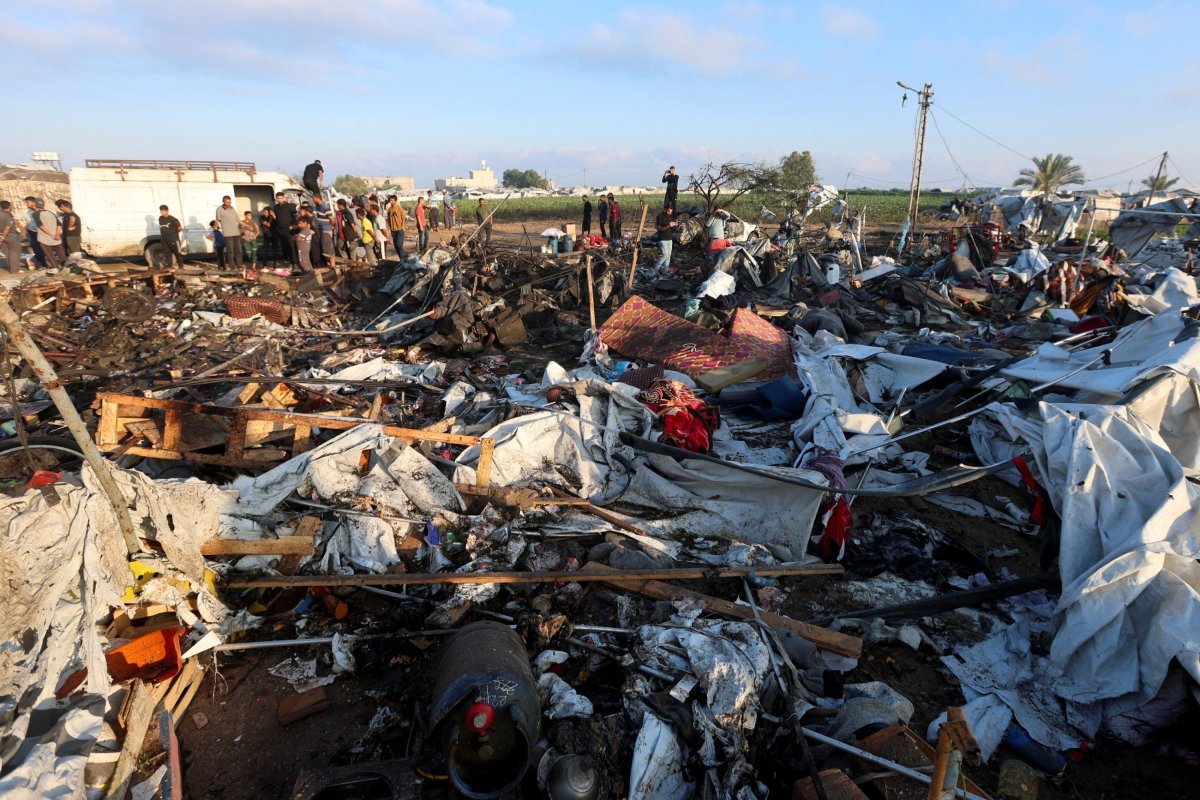
Israel's Cabinet Decision and Internal Political Dynamics
Israel's political-security Cabinet approved on Sunday the deployment of the Board of Peace's International Stabilization Force in the Gaza Strip. The decision follows the framework outlined in U.S. President Donald Trump's plan, which received endorsement through U.N. Security Council Resolution 2803 on November 17, 2025, according to the resolution text published by the U.N. Documentation Centre. Israeli media outlets reported that the move grants initial approval for establishing a headquarters near Rafah in southern Gaza.
Far-right National Security Minister Itamar Ben-Gvir voted against the measure, arguing that Hamas had failed to honor commitments on demilitarization. He advocated instead for policies encouraging migration from the territory. Foreign Minister Gideon Saar countered that the arrangement represents an international plan and that Israel should avoid being seen as the party responsible for its failure.
The vote exposed deep fissures within Prime Minister Netanyahu's coalition, where Ben-Gvir and Finance Minister Bezalel Smotrich have long rejected any role for Palestinian Authority structures in Gaza governance. Their opposition reflects a broader far-right stance that views the stabilization force as a potential Trojan horse for renewed Palestinian political influence.
Washington applied significant pressure to secure the cabinet's narrow approval, framing the force as essential to Trump's broader regional reset. Israeli officials privately acknowledged that rejecting the measure outright risked straining ties with the United States at a moment when military and diplomatic support remains critical.
Framework of the Trump Plan and the Board of Peace
Trump's plan establishes four bodies to administer Gaza, with the International Stabilization Force serving as one key component. The force is tasked with immediate deployment to train and support Palestinian police officers while consulting Egypt and Jordan on operational experience. It is also directed to coordinate with Israel and Egypt on border security measures to prevent weapons inflows and ensure the flow of goods.
The plan positions the force as a temporary mechanism that works alongside Arab and international partners. Israel's approval marks a procedural step toward headquarters setup, though full operational timelines remain subject to further coordination and remain in early phases.
The International Stabilization Force originates from President Trump's January 2025 Gaza framework, which envisioned a multinational body to bridge immediate security gaps until local institutions could assume control. The accompanying Board of Peace draws representatives from the United States, Egypt, Jordan, Saudi Arabia, the UAE, Qatar, and Turkey, according to the plan’s published framework, signaling an attempt to distribute responsibility across key regional stakeholders.
Earlier proposals for international oversight in Gaza, such as those floated after the 2014 and 2021 conflicts, collapsed under disputes over command authority and disarmament sequencing. Trump's model attempts to sidestep these pitfalls by tying deployment explicitly to Arab-led training and border coordination rather than direct UN trusteeship.
Hamas's Stance and the Disarmament Impasse
Hamas has stated that continued demands for its disarmament, while bypassing Israeli obligations from the first phase of the ceasefire agreement, contradict the overall structure of Trump's Gaza plan. The group notes that it released Israeli captives as required in the initial phase, yet it claims Israel has maintained attacks and restricted humanitarian assistance.
The second phase of the agreement envisions broader Israeli military withdrawal, Gaza reconstruction, and the start of disarmament for Palestinian factions. Israel maintains that disarmament must precede other steps, creating a clear sequencing dispute that affects implementation of the stabilization force.
Qatar's longstanding role as mediator between Israel and Hamas has proven instrumental in sustaining even fragile phases of the ceasefire, yet the current impasse highlights how both sides interpret the same text differently. Hamas insists that reconstruction and withdrawal must advance before any weapons handover, while Israel demands verifiable disarmament as a precondition.
Previous ceasefire breakdowns, notably after 2008 and 2014, followed similar patterns where one party accused the other of violating sequencing. Without a mutually accepted timeline, the stabilization force risks operating in a security vacuum where neither side fully commits to its mandate.
Roles of Egypt, Jordan and Arab Partners
Trump's plan explicitly calls for consultation with Egypt and Jordan due to their experience in related security fields. These two countries are positioned to advise on training Palestinian police and managing border areas alongside Israel. Their involvement reflects longstanding regional interests in preventing instability spillover and controlling weapons flows across Gaza's frontiers.
Arab partners more broadly are expected to contribute to the temporary force's deployment. This approach ties into ongoing efforts at Arab-Israeli normalization, though concrete commitments from additional states will depend on progress in the disarmament and reconstruction sequence.
Egypt has repeatedly warned that any forced displacement of Palestinians into Sinai would directly threaten the 1979 peace treaty, making Cairo's participation in border management both a strategic necessity and a red line. Jordan, meanwhile, brings expertise in refugee management and internal security training that could prove vital for the force's policing mandate.
Saudi Arabia continues to condition any normalization breakthrough with Israel on tangible progress toward Palestinian statehood, a stance that limits Riyadh's willingness to fund or staff the stabilization force absent clear political movement. The frozen state of the Abraham Accords since October 7, 2023, further complicates efforts to expand Arab buy-in beyond the core participants already named to the Board of Peace.
Implications for Gaza's Governance and Reconstruction
The Cabinet's approval opens the door for the International Stabilization Force to begin supporting local policing structures while facilitating humanitarian and reconstruction activities. However, the disarmament dispute continues to block movement into the agreement's second phase, which includes wider Israeli withdrawal and large-scale rebuilding efforts.
Without resolution on sequencing, Gaza's path to stable governance remains uncertain. The force's role in securing borders and training police could provide interim stability, yet sustained reconstruction will require addressing the core disagreements between Israel and Hamas on disarmament timing.
Reconstruction estimates now exceed $80 billion, reflecting the catastrophic damage to Gaza's infrastructure across housing, water, electricity, and health systems. The UN has warned that 2.1 million Gazans remain in desperate need of humanitarian assistance, underscoring how delays in the second phase could turn temporary displacement into a prolonged crisis.
Historical precedents suggest that large-scale rebuilding efforts require both security guarantees and predictable funding streams. The stabilization force may create pockets of calm for initial aid delivery, yet without agreement on disarmament sequencing, donors are likely to withhold the sustained commitments needed for full recovery.
Broader Geopolitical Ramifications and US Strategy
The United States under Trump seeks to leverage the plan to reduce direct involvement while encouraging Arab states to share security responsibilities in Gaza. This strategy aligns with efforts to manage Iranian influence through proxy networks and to support Gulf states' economic diversification priorities by promoting regional stability.
Success or failure of the stabilization force will influence wider dynamics, including Sunni-Shia competition and the durability of Abraham Accords-era normalization. Delays could affect energy market perceptions and great-power positioning in the region, as partners weigh commitments against ongoing Israeli-Palestinian tensions.
The U.S. push to shrink its military footprint in the Middle East makes Arab participation in the force not merely desirable but strategically essential. Without credible regional buy-in, the stabilization model cannot serve as a template for reducing America's direct security commitments across the broader region.
Iran's proxy networks across Lebanon, Syria, and Yemen remain poised to exploit any perceived vacuum in Gaza's security architecture. For Riyadh, which has conditioned normalization on Palestinian statehood progress, the force's performance will directly inform whether Saudi Arabia moves forward with broader diplomatic engagement or maintains its current posture of strategic patience.
By Malik Hassan, Staff Writer
This article was produced with AI-assisted research and editorial support. Reporting is based on sources cited in the article.
What's Your Reaction?
 Like
0
Like
0
 Dislike
0
Dislike
0
 Love
0
Love
0
 Funny
0
Funny
0
 Wow
0
Wow
0
 Sad
0
Sad
0
 Angry
0
Angry
0

Middle East Correspondent at Global1.News. Based in Beirut, covering politics, conflict, energy, and society across the Middle East. Brings context and depth to a region often reduced to headlines.











Comments (0)