
US Weighs Most Sophisticated Operation in History to Seize Irans Enriched Uranium
In a recent i24NEWS English report, the most breathtaking military option yet against Iran's nuclear program was laid bare: a full-scale special operations raid deep inside Iranian territory to seize enriched uranium before it can be turned into weapons.
In a recent i24NEWS English report, the most breathtaking military option yet against Iran's nuclear program was laid bare: a full-scale special operations raid deep inside Iranian territory to seize enriched uranium before it can be turned into weapons. The United States is weighing what experts call "the most sophisticated operation in military history" — a ground invasion of Iran's most heavily fortified nuclear facilities to physically extract thousands of pounds of enriched uranium, according to a New York Post exclusive published Saturday that has sent shockwaves through the defense and diplomatic communities.
US Weighs 'Most Sophisticated Operation in History' to Seize Iran's Enriched Uranium
Jerusalem, Israel — July 26, 2026 — American Special Operations forces are "waiting in the wings" to launch an unprecedented ground mission targeting Iran's underground nuclear facilities at Isfahan, Fordo, and Natanz, with plans to extract an estimated 20,000 pounds of enriched uranium that the IAEA reported Iran possessed as of 2025. The operation would involve thousands of ground troops, construction crews to dig through destroyed entrances, and a massive defensive perimeter to hold off Iranian military forces during the extraction.

The Plan: A Ground Invasion of Iran's Nuclear Fortresses
The proposed mission represents a dramatic escalation beyond the extensive airstrikes that the US and Israel have already conducted against Iran's nuclear infrastructure. According to a source familiar with military planning who spoke to the New York Post, the operation would require thousands of ground troops storming Iran's nuclear facilities, navigating boobytraps, utilizing construction crews to clear destroyed entrances, and maintaining a large defensive blocking force surrounding the sites.
"I hate to say it, but I think the most likely way to get rid of Iran's nuclear material, at least what they currently have, is a military operation because the negotiations aren't going anywhere fast," said Joseph Rodgers, deputy director of the Center for Strategic and International Studies, who described the potential operation as "one of the most, if not the most, sophisticated operations in military history."
A small team of special operators would conduct the actual retrieval of the enriched uranium — a process described as "highly dangerous." The group could include SEAL Team 6's Silver Squadron, the 2nd Ranger Battalion, and the Army's 21st Ordnance Company, which would be responsible for handling and transporting the nuclear material out of the facilities.
Three Targets, Three Challenges: Fordo, Isfahan, and Natanz
The operation would target three distinct nuclear facilities, each presenting unique challenges. The Fordo facility near Qom has been "mostly destroyed" by previous airstrikes, while the Isfahan facility has been "severely damaged" — but both still contain enriched uranium that needs to be secured. The Isfahan facility in particular has been outfitted with boobytraps in recent weeks, with Iran placing mines and explosives in its tunnels in anticipation of a potential raid, according to a CNN report from last month.
"We have seen reports of Iran hardening the facility at Isfahan, booby traps being laid, and potentially perimeter forces being stationed," said Richard Goldberg, who served as director for countering Iranian weapons of mass destruction for the White House National Security Council in the first Trump administration. "There is no element of surprise at the moment. The targets are fixed. We know where they are. The Iranians know where they are."
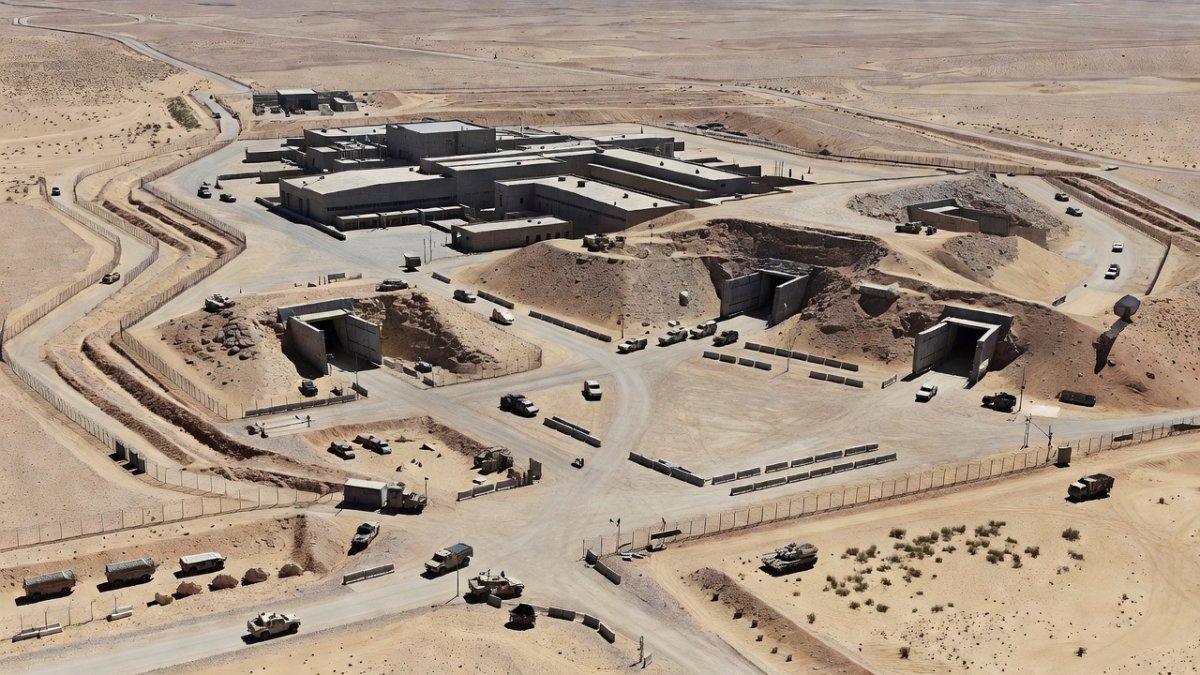
A new target has emerged at Natanz's "Pickaxe Mountain," where Iran reportedly transported hundreds of nuclear centrifuges in the last month. Unlike the fortified underground facilities at Fordo and Isfahan, Pickaxe Mountain may be vulnerable to airstrike-style destruction rather than requiring a ground incursion. "That's a destroy mission," Goldberg explained. "If you were to try to get into the facility, you'd be seeking to collapse the facility." He compared a potential operation at Pickaxe Mountain to the raid that captured Venezuelan former leader Nicolás Maduro.
Israel's Role and Regional Security Calculus
For Israel, the prospect of a US-led ground operation to physically remove Iran's enriched uranium represents a potential strategic game-changer. Israel's military and intelligence establishment has long viewed a nuclear-armed Iran as an existential threat, and the IDF has participated extensively in airstrikes against Iranian nuclear infrastructure in recent months. However, a ground operation of this scale — requiring thousands of troops, secure corridors, and complete air superiority — raises profound questions about regional escalation.
The operation would require complete control of a corridor of airspace allowing the military to fly the extracted material to a secure location. A US military crew would need to dig out destroyed entrances to the sites while holding off attacks from Iranian military forces. "How long can you sustain that and still be able to exfiltrate all of your forces?" Goldberg asked, underscoring the enormous logistical challenge.
Israel's own special operations capabilities, including the IDF's Shayetet 13 naval commandos and Unit 269 (the General Staff Reconnaissance Unit), would likely play a supporting role, though the scale of this mission would be far beyond anything Israel has attempted against Iran's nuclear program.
Iran's Prepared Defenses: Boobytraps, Mines, and Fortified Tunnels
Intelligence assessments indicate that Iran has been preparing for exactly this kind of operation. The Isfahan facility has been outfitted with explosive boobytraps in recent weeks. Mines have been placed in the tunnels. Perimeter forces have been stationed. The Iranians understand that their nuclear facilities are fixed targets, and they have had months to harden their defenses even as US and Israeli airstrikes have degraded much of their above-ground infrastructure.
This defensive preparation means that any ground operation would face not only the challenge of penetrating heavily fortified underground bunkers but also the danger of navigating a facility deliberately rigged to kill or maim anyone who enters. The 21st Ordnance Company would face the additional risk of handling enriched uranium in a damaged, potentially unstable environment — a task that requires specialized training and equipment.
Diplomatic and International Repercussions
The revelation that the US is actively considering a ground invasion to seize Iran's nuclear material comes at a moment of extreme tension in the Middle East. President Donald Trump has publicly emphasized that the central objective of ongoing military pressure against Iran remains the denial of nuclear weaponization pathways. Trump paused major airstrike campaigns earlier this month but warned that "full-scale war" could return if diplomatic efforts fail.
The international community remains deeply divided. European allies through the EU and the UK have consistently urged restraint and a return to the diplomatic track. The UN has warned against any action that could trigger a broader regional conflagration. Russia and China have condemned the escalating military pressure on Iran. Meanwhile, Gulf Arab states including Saudi Arabia and the UAE watch nervously from the sidelines, balancing their concerns about Iranian nuclear ambitions against fears of a wider war that could impact shipping through the Strait of Hormuz and their own oil infrastructure.
The IAEA has reported that Iran possesses upwards of 20,000 pounds of enriched uranium — material that analysts at the Defense Security Asia Center note could be further enriched to weapons grade within weeks, potentially producing enough material for up to eleven nuclear bombs. This assessment underscores the urgency driving US military planning.
Analysis: What This Means for Israel and the Region
The consideration of a special forces ground operation to seize Iran's enriched uranium stockpile marks a fundamental shift in the US-Israel strategic approach to the Iranian nuclear threat. For years, the strategy relied on a combination of airstrikes, cyberattacks including the Stuxnet operation, covert sabotage through the Mossad's targeted elimination of Iranian nuclear scientists, and diplomatic pressure through the P5+1 framework. A ground invasion — even a limited, targeted one — represents a dramatically different level of commitment and risk that Washington has not taken since the 2003 invasion of Iraq.
For Israeli readers, the implications are immediate and profound. If the US proceeds with this operation, Israel would likely be called upon to provide real-time intelligence from Aman and Mossad sources, logistical support including potential use of Israeli airbases for staging, and a secure corridor for the extracted nuclear material to be flown to a safe location. The IDF's Home Front Command has already begun positioning civil defense assets, and cities including Kiryat Gat, Carmiel, Eilat, and Ramat Gan have opened public shelters amid the broader threat of Iranian retaliation strikes.
The operation's success or failure would directly determine whether Iran's nuclear ambitions are permanently derailed or whether the region faces a renewed and potentially more dangerous phase of the conflict. If the uranium stockpile is successfully removed from Iranian territory, Tehran loses its most direct pathway to a nuclear weapon — a pathway that the IAEA has warned could produce enough weapons-grade material for up to eleven bombs within weeks of a decision to enrich to 90 percent.
If the operation fails — or if it triggers a broader Iranian military response targeting Israel, Gulf Arab states, or shipping through the Strait of Hormuz — the Middle East could face a level of instability not seen since the 1973 Yom Kippur War. The Iranians have already demonstrated their willingness to strike at Israeli interests through proxy forces in Syria, Lebanon, and Yemen, and a ground invasion of their sovereign territory would represent an unprecedented provocation.
Either way, the decision to even contemplate such an operation signals that Washington and Jerusalem view the Iranian nuclear threat as an imminent danger requiring the most extreme measures. The question is no longer whether military action will be taken, but what form it will take — and whether the most sophisticated operation in military history can succeed where years of airstrikes, sanctions, and diplomacy have fallen short.
By Hannah Berg, Staff Writer
This article was produced with AI-assisted research and editorial support. Reporting is based on sources cited in the article.
What's Your Reaction?
 Like
0
Like
0
 Dislike
0
Dislike
0
 Love
0
Love
0
 Funny
0
Funny
0
 Wow
0
Wow
0
 Sad
0
Sad
0
 Angry
0
Angry
0

Israel Correspondent at Global1.News. Based in Tel Aviv, covering Israeli politics, security, technology, and society. Provides balanced, deeply-sourced reporting on one of the most closely-watched regions in the world.













Comments (0)