
Cash, Gold & Arrests: Inside Iraq's Anti-Corruption Crackdown
The Launch of Iraq's Largest Anti-Corruption Operation In late June and early July 2026, Iraqi authorities initiated one of the most extensive anti-corruption drives in the country's modern history. Prime Minister Ali al-Zaidi, who assumed office on May 16, 2026, personally directed the effort. The operation targeted entrenched networks of embezzlement within state institutions
The Launch of Iraq's Largest Anti-Corruption Operation
In late June and early July 2026, Iraqi authorities initiated one of the most extensive anti-corruption drives in the country's modern history. Prime Minister Ali al-Zaidi, who assumed office on May 16, 2026, personally directed the effort. The operation targeted entrenched networks of embezzlement within state institutions, particularly the oil sector. Authorities described the action as the first phase of a broader campaign, signaling that additional arrests would follow. The Federal Commission of Integrity confirmed that all steps complied fully with Iraqi law, providing a legal foundation that reduced immediate political pushback.
This crackdown arrives at a critical moment for Iraq's post-election government. Al-Zaidi's administration seeks to demonstrate tangible results on governance reform to both domestic constituencies and international partners. The timing also coincides with renewed attention to Iraq's role in regional energy markets, where transparent management of oil revenues directly affects neighboring Gulf states and global pricing dynamics.
Raids Targeting the Green Zone Elite
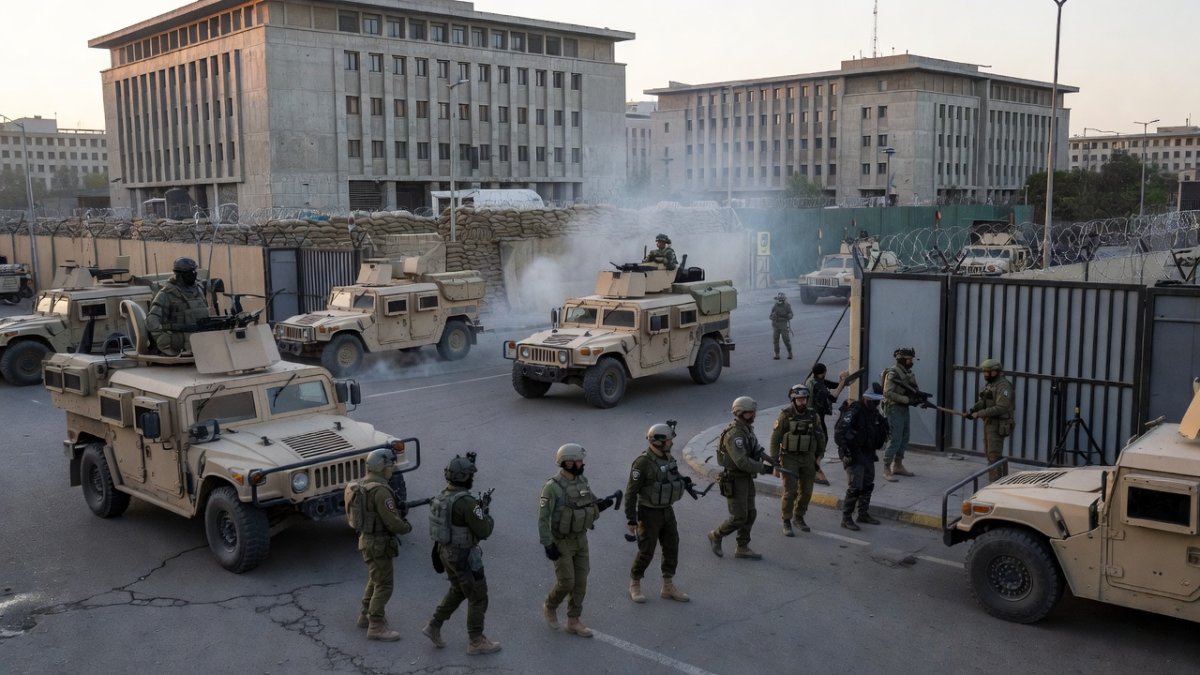
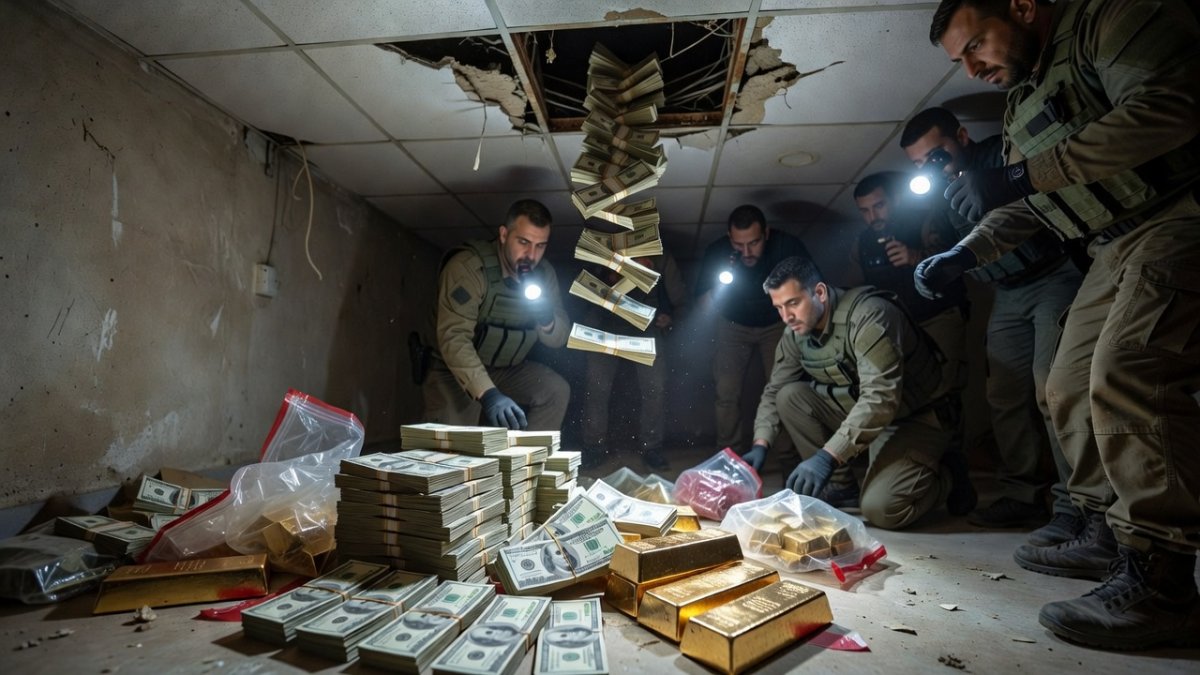
Elite units from the Counter-Terrorism Service conducted coordinated raids on residences inside Baghdad's heavily fortified Green Zone. These operations uncovered cash and gold hidden in ceilings, buried in stables, and concealed within official compounds. The raids produced immediate results, with authorities recovering over $106 million in embezzled funds. One residence alone, belonging to MP Alia Nassif, yielded $15.5 million in cash along with 20 billion Iraqi dinars and quantities of gold. Such discoveries illustrate the scale of illicit wealth accumulation among senior officials who enjoyed parliamentary immunity until recently.
The choice of CTS units for these sensitive operations reflects the government's desire for rapid, high-impact enforcement. By bypassing regular police structures, al-Zaidi minimized opportunities for leaks or interference. The Green Zone's symbolic importance amplified the political message: no one, regardless of location or status, would remain beyond reach.
Key Figures Arrested and Their Networks
Forty-seven officials were detained in the initial wave, including members of parliament, senior politicians, and oil executives. Among those taken into custody were Ali Maarej, deputy oil minister for distribution, and Muthanna al-Samarrai, leader of the Al-Azm Alliance. These arrests followed confessions provided by Adnan al-Jumaili, another deputy oil minister detained in May. Nearly one thousand additional individuals remain on the suspect list, indicating the operation's intended breadth. Parliamentary immunity for several targets was lifted with the explicit approval of Speaker Haybat al-Halbousi, removing a longstanding legal barrier.
The involvement of oil ministry officials points to systemic vulnerabilities in revenue collection and distribution. Iraq's oil sector remains the primary source of state income, making corruption in this domain particularly damaging to public finances and reconstruction efforts.
Evidence Recovery and Investigative Methods
Investigators recovered substantial sums through physical searches rather than solely financial tracing. Cash discovered in stables and ceiling compartments demonstrated deliberate concealment tactics employed by officials. The $106 million figure, while lower than some Kurdish media estimates of $130 million, represents verified recoveries confirmed by multiple outlets including Al Arabiya. These tangible assets provide prosecutors with concrete evidence that is harder to dispute than complex paper trails.
The reliance on al-Jumaili's confessions created a cascading effect, allowing authorities to map wider networks. This approach mirrors successful anti-corruption strategies used elsewhere in the region, where initial high-level admissions unlock further prosecutions.
Domestic Political Support and Legal Backing
Former Prime Minister Nouri al-Maliki publicly endorsed the crackdown on social media platform X, lending cross-factional legitimacy. His statement helped neutralize potential accusations that the operation targeted specific political blocs. The Federal Commission of Integrity emphasized that procedures followed legal protocols, further insulating the government from claims of selective justice. Al-Zaidi has repeatedly stated that the current phase represents only the beginning, preparing the public for continued enforcement.
Such domestic alignment is essential in Iraq's fragmented political landscape, where anti-corruption drives have historically faltered due to elite resistance.
Regional Implications Across the Middle East
Iraq's anti-corruption campaign carries direct consequences for Sunni-Shia competition, Gulf economic diversification, and Iranian influence. Transparent oil revenue management reduces opportunities for external actors to exploit patronage networks. Gulf states watching Iraq's energy sector closely will view improved governance as a stabilizing factor for regional supply reliability. At the same time, the operation tests whether Iraq can assert sovereign control over its institutions without triggering renewed sectarian tensions.
Turkey and Iran, both active in Iraqi affairs, will monitor whether the crackdown extends to their respective allies inside the country. Successful prosecution of oil-related corruption could also accelerate Arab-Israeli normalization discussions by demonstrating Baghdad's reliability as a potential economic partner. Great power competition adds another layer, as Western governments assess whether al-Zaidi's reforms merit increased investment and security cooperation.
Strategic Calculus and Expected Next Steps
Prime Minister al-Zaidi's decision to target the Green Zone first signals a calculated risk to establish credibility early in his tenure. The leverage gained from recovered assets and confessions provides momentum for subsequent phases. Second-order effects may include pressure on remaining officials to disclose assets preemptively and a temporary disruption in oil distribution networks until replacements are vetted. If implemented consistently, the campaign could shift Iraq's position within broader Middle East energy markets and governance reform efforts.
Continued operations will depend on sustaining political cover and avoiding overreach that could fracture the current consensus.
By Malik Hassan, Staff WriterThis article was produced with AI-assisted research and editorial support. Reporting is based on sources cited in the article.
What's Your Reaction?
 Like
0
Like
0
 Dislike
0
Dislike
0
 Love
0
Love
0
 Funny
0
Funny
0
 Wow
0
Wow
0
 Sad
0
Sad
0
 Angry
0
Angry
0
Middle East Correspondent at Global1.News. Based in Beirut, covering politics, conflict, energy, and society across the Middle East. Brings context and depth to a region often reduced to headlines.











Comments (0)