
G7 AI Defense Standards: Katayama on Japan Cyber Risks
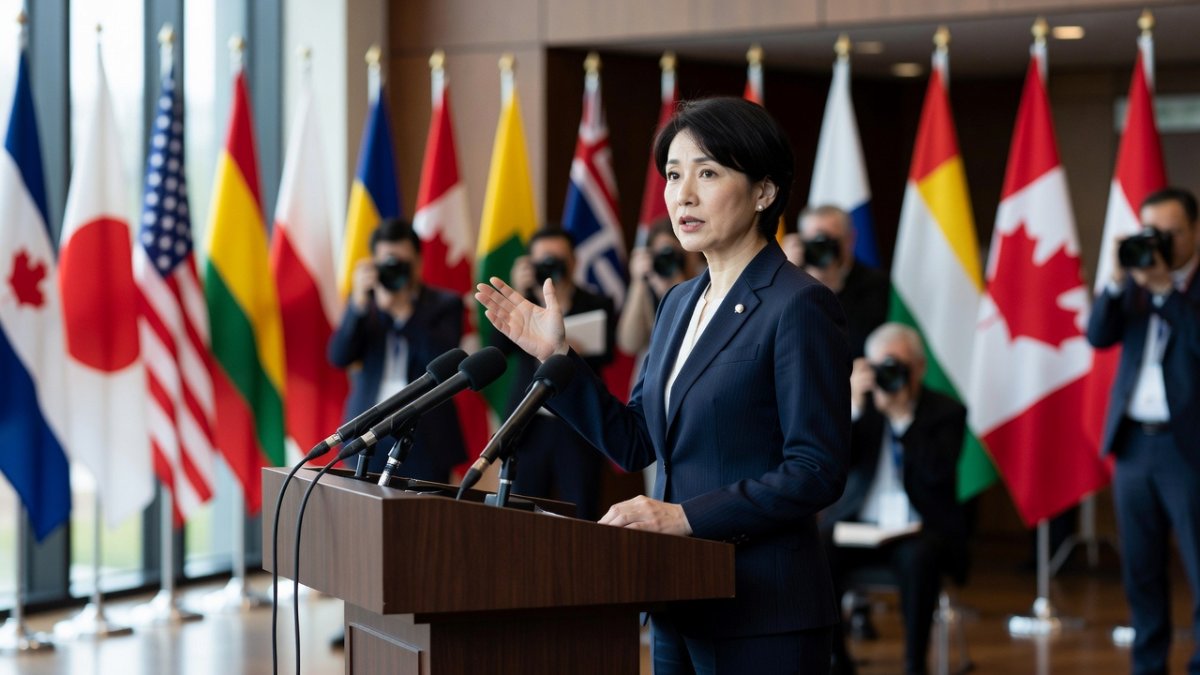
G7 to Address AI Defense Standards, Katayama Says Finance Minister Satsuki Katayama stated in a recent interview that G7 nations will discuss standards on artificial intelligence security and defense. This development positions Japan, as a G7 member, at the center of efforts to shape international responses to AI-related threats in the financial sector. The discussions reflect
G7 to Address AI Defense Standards, Katayama Says
Finance Minister Satsuki Katayama stated in a recent interview that G7 nations will discuss standards on artificial intelligence security and defense. This development positions Japan, as a G7 member, at the center of efforts to shape international responses to AI-related threats in the financial sector.
The discussions reflect growing recognition among G7 finance ministers and central bankers of the dual-use nature of advanced AI models. Japan’s role involves balancing technological innovation with risk mitigation, particularly given the country’s reliance on global financial networks and its corporate sector’s exposure to cyber threats.
Analysts note that such G7 coordination could influence Japan’s domestic regulatory approach, including policies coordinated through the Ministry of Economy, Trade and Industry and the Ministry of Foreign Affairs. The outcome may affect how Japanese institutions integrate AI tools while maintaining resilience against AI-assisted attacks.
FSA and BOJ Issue Frontier AI Safeguards for Financial Sector
On May 22, 2026, the Financial Services Agency, jointly with the Bank of Japan, issued a request to financial institutions regarding “Short-Term Measures for Financial Institutions in Response to Changes in Threat Posed by Frontier AI.” The English translation followed on June 15, 2026.
The FSA is also considering the use of advanced AI models to conduct cyberattack response drills at financial institutions. This measured approach avoids premature claims of full implementation and instead focuses on preparatory steps that allow institutions to test their defenses.
Large Japanese financial institutions, including Mitsubishi UFJ Financial Group and Sumitomo Mitsui Banking Corporation, have already participated in tabletop exercises on AI-related threats. These exercises provide concrete data on institutional readiness and highlight areas where further policy refinement may be needed.
Mythos AI and the Genesis of Japan's Task Force
In April 2026, Japan established a task force to examine cybersecurity risks in the financial sector arising from Anthropic’s Mythos AI model. The creation of this body underscores the speed at which frontier models can prompt regulatory attention.
The task force’s work feeds directly into the short-term measures later requested by the FSA and BOJ. By focusing on a specific model, Japanese authorities demonstrate a targeted rather than blanket regulatory stance, which may preserve room for beneficial AI adoption in banking operations.
Corporate Japan, particularly major banks, must now align internal risk frameworks with the task force’s findings. This alignment carries implications for technology procurement strategies and for how Japanese firms engage with overseas AI developers.
OpenAI's GPT-5.5-Cyber Enters the Picture
On May 29, 2026, Katayama held a press conference at which OpenAI executives explained that GPT-5.5-Cyber would be provided to certain Japanese financial institutions, coordinated with the U.S. government. The announcement illustrates the rapid integration of specialized AI tools into Japan’s financial infrastructure.
Provision of the model occurs under coordinated bilateral oversight, suggesting that access will be accompanied by security protocols developed through Japan-U.S. channels. Japanese institutions receiving the tool will need to demonstrate compliance with the FSA-BOJ short-term measures.
The development raises questions about how Japanese regulators will monitor the performance of GPT-5.5-Cyber in live environments. Clear reporting requirements and periodic reviews will likely form part of the oversight framework.

Japan-U.S. Coordination on Financial Cyber Resilience
Katayama held a Japan-U.S. Finance Ministerial Meeting with U.S. Treasury Secretary Scott Bessent on May 11, 2026. The bilateral engagement preceded the broader G7 agreement reached later that month in Paris to compile measures against AI-assisted cyberattacks.
This sequence of meetings indicates that Japan and the United States are aligning positions ahead of multilateral discussions. Such alignment can accelerate the development of shared technical standards that Japanese financial institutions will eventually need to adopt.
For corporate Japan, the coordination offers a degree of predictability regarding future regulatory expectations. Banks and other institutions can plan technology investments with greater awareness of both domestic and U.S. security requirements.
What to Watch For
Observers should monitor how the FSA incorporates lessons from the Mythos AI task force into ongoing supervisory work. Updates to the short-term measures may emerge as institutions complete additional tabletop exercises.
Further clarity is expected on the scope of GPT-5.5-Cyber deployment and the specific safeguards attached to its use. Japanese authorities are likely to publish additional guidance once initial implementation data becomes available.
At the G7 level, the standards under discussion will influence Japan’s technology policy and the competitive position of its financial sector. Institutions that adapt early to the emerging requirements may gain advantages in both domestic and international markets.
By Kenji Tanaka, Staff Writer
Tags: G7 AI standards, Satsuki Katayama, FSA BOJ frontier AI, Mythos AI task force, GPT-5.5-Cyber, Japan US finance meeting, financial cybersecurity Japan
This article was produced with AI-assisted research and editorial support. Reporting is based on sources cited in the article.
What's Your Reaction?
 Like
0
Like
0
 Dislike
0
Dislike
0
 Love
0
Love
0
 Funny
0
Funny
0
 Wow
0
Wow
0
 Sad
0
Sad
0
 Angry
0
Angry
0

Japan Correspondent at Global1.News. Tokyo-based voice covering Japanese politics, technology, economy, and culture. Tracks the intersection of tradition and innovation in one of the world's most dynamic societies.












Comments (0)