
Trinidad and Tobago Oil Spill Sparks Venezuela Demands
THE INCIDENT The oil spill occurred on 1 May 2026 in the Gulf of Paria, the body of water separating the western coast of Trinidad from the eastern coast of Venezuela. This semi-enclosed basin serves as a critical maritime corridor where currents flow northward toward the Caribbean Sea, carrying any released hydrocarbons across international lines within days. The location plac
THE INCIDENT
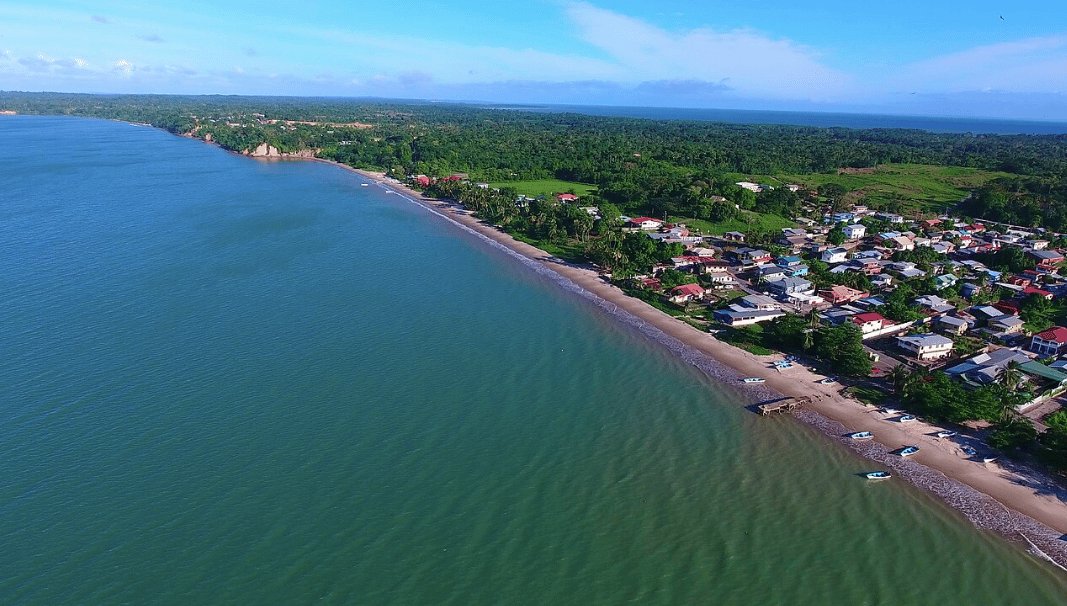
The oil spill occurred on 1 May 2026 in the Gulf of Paria, the body of water separating the western coast of Trinidad from the eastern coast of Venezuela. This semi-enclosed basin serves as a critical maritime corridor where currents flow northward toward the Caribbean Sea, carrying any released hydrocarbons across international lines within days. The location places the incident directly amid active shipping lanes and near several offshore platforms that supply regional energy markets.
Its significance stems from the Gulf's role as a shared ecological and economic zone where even modest releases can affect livelihoods on both sides of the border. Seasonal wind patterns and tidal movements amplify the reach of pollutants, while the proximity of populated coastal settlements heightens the stakes for immediate monitoring. Neighbouring states therefore watch developments closely because unresolved incidents here often set precedents for future cross-border environmental claims.
VENEZUELA'S CASE
On 2 July 2026 a Venezuelan government minister publicly called for Trinidad to supply detailed operational records and to consider financial redress for alleged transboundary harm. The statement framed the spill as having originated inside Trinidadian waters, thereby shifting responsibility for any downstream effects onto Port of Spain. Officials emphasised that the absence of prompt data sharing prevented Caracas from mounting an adequate defensive response along its coastline.
Environmental anxieties centre on the risk that hydrocarbons could reach sensitive estuarine zones and disrupt marine food webs already stressed by upstream industrial activity. Compensation is sought not only for immediate clean-up but also for projected losses in biodiversity that support artisanal fisheries. Venezuelan authorities argue that transparency now would reduce the likelihood of similar disputes arising from future incidents in the same contested waters.
TRINIDAD'S RESPONSE
Port of Spain rejected the Venezuelan assertions outright, maintaining that its own monitoring systems recorded only a contained release of ten barrels that posed no lasting threat. Government spokespersons highlighted rapid deployment of containment booms and absorbent materials, which they say prevented wider dispersion before the slick could cross the median line. They further noted that independent verification teams were invited to inspect the site within hours of detection.
Local regulators pointed to longstanding safety protocols that require daily integrity checks on transfer lines and automatic shut-off valves at every platform. These measures, refined after earlier incidents, include mandatory reporting to a joint regional alert network. Trinidadian officials contend that adherence to such standards demonstrates due diligence and undercuts claims of negligence or inadequate oversight.
ECONOMIC STAKES
Fishing communities along Trinidad's south-western peninsula rely on the Gulf's seasonal migrations of shrimp and finfish that sustain both household consumption and export contracts. Any perceived contamination threatens market access, forcing vessels to travel farther and raising fuel costs that already strain tight margins. Processors downstream face similar uncertainty as buyers demand certificates of origin that may become harder to obtain.
The energy sector, anchored by Atlantic LNG trains and the remaining Petrotrin facilities, contributes the bulk of foreign-exchange earnings and employs thousands in skilled and semi-skilled roles. Prolonged diplomatic friction could delay maintenance schedules or joint-venture approvals, indirectly affecting household electricity tariffs and the broader cost-of-living index. Job security in coastal towns therefore hinges on swift clarification that protects both revenue streams and investor confidence.
DIPLOMATIC CONTEXT
Trinidad and Venezuela have maintained formal diplomatic ties for decades despite periodic tensions over maritime delimitation. The 1990s fisheries agreement and subsequent energy dialogues established mechanisms for notification during incidents, yet these channels have not always operated smoothly during periods of domestic political strain in either capital. Shared cultural and family links across the Gulf continue to facilitate informal exchanges even when official communication slows.
Migration flows add another layer of complexity, with economic migrants from Venezuela arriving by boat in recent years and settling in southern Trinidadian communities. These populations often work in the same fishing and service sectors now potentially affected by the spill narrative. Historical patterns of cooperation on search-and-rescue operations suggest that both governments retain incentives to prevent environmental disagreements from spilling into wider bilateral friction.
ENVIRONMENT FOR SIDS
Small island developing states such as Trinidad face amplified climate pressures that already erode coastal buffers and intensify storm surges during the June-to-November hurricane season. Mangrove forests fringing the Gulf provide natural filtration and nursery habitat, yet rising sea levels and altered salinity threaten their long-term viability. An oil release, however limited, compounds these stressors by coating root systems and reducing oxygen exchange in already warming waters.
Previous minor spills in the region have shown that recovery times vary according to sediment type and current strength, with some benthic communities requiring several seasons to rebound. Regional vulnerability is heightened because many Caribbean territories lack dedicated emergency funds or specialised response vessels, making coordinated assistance through existing multilateral frameworks essential. The current episode therefore tests whether SIDS can convert shared ecological risks into collective policy responses before the next weather system arrives.
WHAT LIES AHEAD
Resolution prospects depend on whether technical working groups can exchange verified data without triggering public recriminations that harden negotiating positions. Early indications suggest both sides may accept third-party verification under CARICOM auspices, which would insulate domestic politics while preserving face. Families dependent on near-shore livelihoods await clarity on any temporary fishing-area closures that could stretch into the peak tourist season.
CARICOM's convening power offers a neutral platform for drafting joint monitoring guidelines that could apply to future incidents across the Caribbean basin. Next steps likely include a bilateral technical meeting followed by a public statement outlining agreed compensation thresholds, if any, and revised notification timelines. Such an outcome would reinforce the principle that environmental stewardship in shared waters requires predictable cooperation rather than reactive diplomacy.
By Sharon Sahatoo, Staff WriterThis article was produced with AI-assisted research and editorial support. Reporting is based on sources cited in the article.
What's Your Reaction?
 Like
0
Like
0
 Dislike
0
Dislike
0
 Love
0
Love
0
 Funny
0
Funny
0
 Wow
0
Wow
0
 Sad
0
Sad
0
 Angry
0
Angry
0

Caribbean Correspondent at Global1.News. Based in Port of Spain, Trinidad, covering Caribbean politics, economy, energy, climate, and culture. Amplifying the voices and stories of the Caribbean region.












Comments (0)