
Cambridge Mayor Stands by Decision to Interrupt Teen's Pride Speech
Footage captured in the CBC News video shows Cambridge Mayor Jan Liggett rising from her seat at Cambridge City Hall on Monday, June 1, 2026, and physically moving the microphone away from 17-year-old Sophie Mills during the city's Pride flag-raising ceremony. The interruption occurred after Mills, who is non-binary and uses they/them pronouns, referenced a January 2025 Faceboo
Footage captured in the CBC News video shows Cambridge Mayor Jan Liggett rising from her seat at Cambridge City Hall on Monday, June 1, 2026, and physically moving the microphone away from 17-year-old Sophie Mills during the city's Pride flag-raising ceremony. The interruption occurred after Mills, who is non-binary and uses they/them pronouns, referenced a January 2025 Facebook post by Ward 6 Coun. Adam Cooper that the city's integrity commissioner later ruled violated council's code of conduct. The moment has drawn national attention as Pride Month unfolds across Canada in June 2026.
The Interruption During the Flag-Raising Ceremony
Mayor Jan Liggett stood up during the June 1, 2026, event at Cambridge City Hall and walked directly to the podium where Sophie Mills was speaking. Liggett then moved the microphone away and stated, "Sophie, I'm not going to allow you to continue. This is disrespect. Can you remove that part from your speech please." The action halted Mills's prepared remarks in front of attendees gathered for the official Pride flag raising.
Mills had been invited by city organisers to address the crowd as part of the ceremony marking the start of Pride Month. The 17-year-old referenced Ward 6 Coun. Adam Cooper's January 2025 Facebook meme that alluded to former U.S. President Donald Trump's executive order on gender issues. The city's integrity commissioner subsequently found that post breached council's code of conduct, leading to a council vote requiring Cooper to complete sensitivity training without any reduction in pay.
Liggett later claimed in a video statement that Mills had inserted the reference to Cooper after city staff vetted the speech. Mills stated that no one had requested to review the full text beforehand. The exchange highlighted differing accounts of preparation for the public event held at the municipal centre.
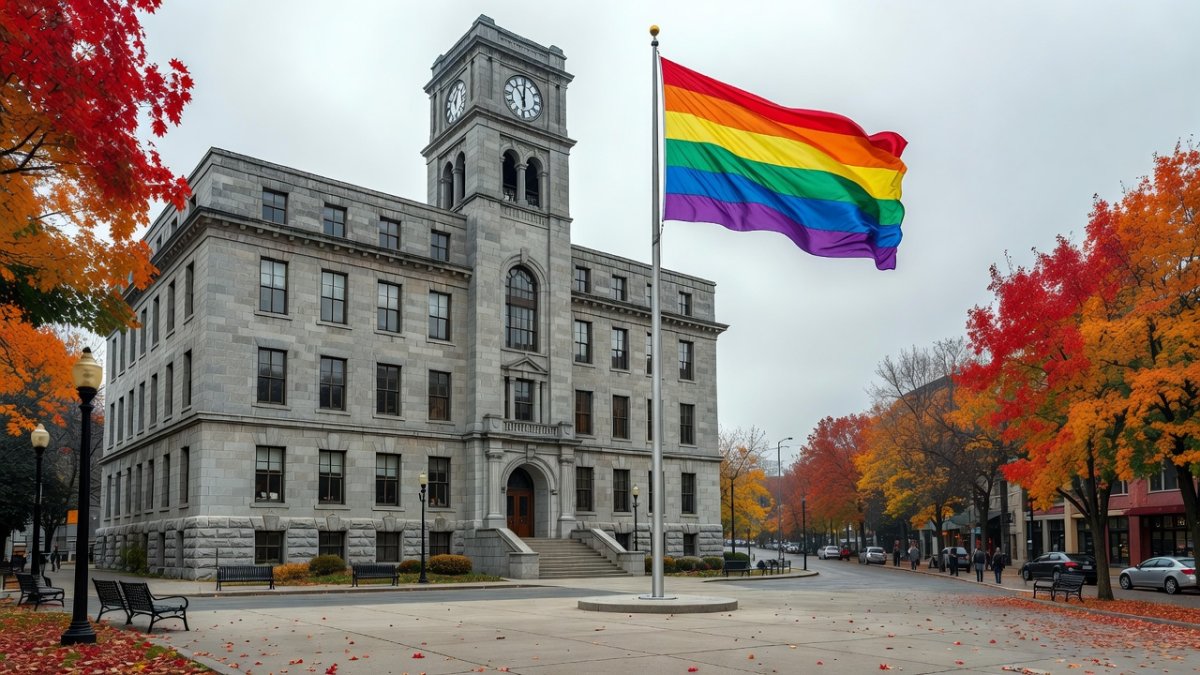
The interruption took place in a city of roughly 140,000 residents located in Ontario's Waterloo Region. Cambridge maintains formal ties with neighbouring Kitchener and Waterloo through shared regional services, making local governance decisions visible to a broader audience across southwestern Ontario.
Dispute Over Speech Preparation and Content
City staff had reviewed an earlier version of Mills's remarks before the June 1 ceremony, according to Liggett's account. The mayor asserted that the section criticising Cooper's social media activity was added without further approval. Mills maintained that organisers never asked to examine the complete speech in advance of the flag-raising.
The reference to Cooper's January 2025 post formed a central element of Mills's comments. That post drew formal complaints, prompting the integrity commissioner investigation that concluded with a finding of code-of-conduct violation. Council then directed Cooper to undergo sensitivity training, a measure that did not affect his compensation.
Local observers noted that the disagreement over vetting procedures reflected wider questions about how municipalities prepare youth speakers for official Pride events. Cambridge's process involved coordination between the mayor's office and community groups, yet the final content still produced an on-stage confrontation.
Similar flag-raising ceremonies occur in dozens of Canadian cities each June, often featuring remarks from local youth and advocacy organisations. The Cambridge episode has prompted other municipalities to review their own speaker guidelines ahead of remaining Pride Month activities scheduled through the end of the month.
Mayor's Subsequent Video Statement and Defence
In a video statement released after the June 1 event, Mayor Liggett said she stands by her decision to interrupt Mills. She described the action as "not about silencing anyone, but of refocusing" the ceremony. Liggett emphasised that her intervention aimed to protect the integrity of an event intended to unite rather than divide the community.
During the original ceremony Liggett also stated that using they/them pronouns was "not part of my everyday vocabulary." This comment occurred while addressing Mills directly at the podium. The mayor later acknowledged receiving death threats and harassing telephone calls directed at her office following the incident.
Liggett framed her conduct as necessary to maintain the ceremonial focus on unity. She pointed to the presence of organised groups that had boycotted the event and claimed those groups support a candidate running against her in the October 2026 municipal election.
The mayor's explanation has circulated widely through local media outlets in the Waterloo Region. Residents have contacted city hall both in support of and in opposition to the decision, illustrating the polarised response within Cambridge itself.
Response from Grand River Pride Organizers
Grand River Pride representatives Eric Bolton and Bryan Causarano-Bolton issued a public call for Mayor Liggett to resign. The organisation stated that the interruption undermined the purpose of the flag-raising and sent an unwelcoming message to LGBTQ2S+ youth in the region.
Bolton and Causarano-Bolton noted that Mills had been selected to speak because of their involvement in local advocacy. The organisers argued that removing the microphone during a live address contradicted the inclusive intent behind Cambridge's participation in Pride Month activities.
The call for resignation has been echoed by several community groups across Waterloo Region. These organisations have scheduled additional meetings in the coming weeks to discuss how municipal events can better accommodate youth perspectives without last-minute interventions.
Grand River Pride continues to coordinate events throughout June 2026, including parades and educational sessions in Cambridge, Kitchener, and Waterloo. The group's leadership has indicated it will monitor city council proceedings leading up to the October municipal vote.

Political Context Ahead of the October 2026 Election
Cambridge's next municipal election is scheduled for October 2026, placing the June controversy within a compressed campaign timeline. Mayor Liggett faces potential challengers, including candidates backed by groups that boycotted the Pride flag-raising. The incident has already surfaced in early campaign discussions about leadership style and community representation.
Ward 6 Coun. Adam Cooper remains on council following the integrity commissioner's ruling and the subsequent sensitivity-training requirement. His January 2025 social media post continues to be referenced in local debates about councillor conduct and the enforcement of council codes.
Ontario municipal elections typically feature low voter turnout, yet issues of inclusivity and free expression have mobilised residents in recent cycles. Cambridge's October 2026 vote will occur alongside contests in neighbouring municipalities, amplifying regional attention on how local leaders handle contentious public events.
Liggett's claim that boycott organisers support an opposing candidate has added a partisan dimension to the discussion. Campaign finance rules in Ontario limit third-party advertising, yet community groups retain the ability organise public forums and petitions in the months before ballots are cast.
Implications for Canadian Municipal Governance
The Cambridge episode illustrates tensions between event organisers' desire for scripted unity and participants' expectations of open expression. Canadian municipalities operate under provincial legislation that grants councils authority over public ceremonies while requiring adherence to human-rights standards and codes of conduct.
Youth participation in Pride events has increased across the country in recent years, with many cities actively recruiting speakers under the age of 18. The interruption of Mills's remarks raises questions about how staff-vetted content interacts with spontaneous additions during live proceedings.
Death threats and harassing calls directed at the mayor's office reflect a broader pattern of online vitriol that Canadian elected officials have reported during divisive local debates. Municipalities in Ontario and other provinces have begun implementing security protocols for council chambers and public events as a result.
The incident also touches on pronoun usage in official settings. Liggett's comment that they/them pronouns fall outside her everyday vocabulary has prompted training discussions within Cambridge city hall and among regional staff who coordinate joint Waterloo Region programmes.
Effects on Local Youth and Community Relations
Sophie Mills's experience has resonated with other young people in Cambridge who participate in school and community advocacy. Local high-school groups have organised letter-writing campaigns to council members, emphasising the importance of respectful address during public events.
Community centres in Cambridge have reported increased inquiries about LGBTQ2S+ support programmes since the June 1 ceremony. Staff at these facilities note that families are seeking reassurance that municipal spaces remain accessible regardless of political disagreements.
The controversy arrives during a period when many Canadian municipalities are expanding mental-health resources for youth. Cambridge participates in regional initiatives that link city services with school boards, and organisers worry that public disputes may discourage young residents from engaging with local government.
Business associations in downtown Cambridge have expressed concern that sustained negative attention could affect tourism during summer festivals. The city promotes itself as a destination for families and outdoor recreation, and leaders are monitoring whether the Pride-related coverage influences visitor patterns.
Next Steps for Council and Public Accountability
Cambridge city council is expected to address the incident at upcoming regular meetings. Agenda items may include revisions to speaker protocols and further clarification of the code-of-conduct process that applied to Cooper's 2025 social media post.
Residents have submitted formal requests for recordings of the June 1 ceremony and any internal correspondence regarding speech vetting. Ontario's municipal freedom-of-information rules allow such access, though processing times vary by request volume.
Mayor Liggett has indicated she will continue to serve through the remainder of her term. Her office has begun tracking correspondence related to the event in preparation for potential council debates and the October 2026 election campaign.
Regional organisations, including those representing Waterloo Region's broader Pride network, plan to release a joint statement in the coming days. The document is expected to outline recommended practices for future municipal flag-raising ceremonies across the area.
By Alex Thompson, Staff WriterThis article was produced with AI-assisted research and editorial support. Reporting is based on sources cited in the article.
What's Your Reaction?
 Like
0
Like
0
 Dislike
0
Dislike
0
 Love
0
Love
0
 Funny
0
Funny
0
 Wow
0
Wow
0
 Sad
0
Sad
0
 Angry
0
Angry
0

Canada Correspondent at Global1.News. Based in Toronto, covering Canadian politics, energy, trade, and US-Canada relations. Provides the Canadian perspective on North American and global affairs.













Comments (0)