
Venezuela Earthquake: Death Toll Tops 3,800 as Families Dig Through Rubble Two Weeks After Twin Quakes
In a recent DW News report, correspondent Johan Ramirez described the grim scene across Caracas two weeks after the June 24 earthquakes, while Aisha Majid of Save the Children detailed the devastating impact on Venezuelan children. The Mw 7.2 foreshock and Mw 7.5 mainshock struck just 39 seconds apart with epicenters in Veroes Municipality, Yaracuy state, producing 90 to 120 se
In a recent DW News report, correspondent Johan Ramirez described the grim scene across Caracas two weeks after the June 24 earthquakes, while Aisha Majid of Save the Children detailed the devastating impact on Venezuelan children. The Mw 7.2 foreshock and Mw 7.5 mainshock struck just 39 seconds apart with epicenters in Veroes Municipality, Yaracuy state, producing 90 to 120 seconds of violent shaking along the San Sebastián fault — the strongest seismic event in Venezuela since the 1900 San Narciso earthquake.
Venezuela Earthquake: Death Toll Tops 3,800 as Families Dig Through Rubble Two Weeks After Twin Quakes
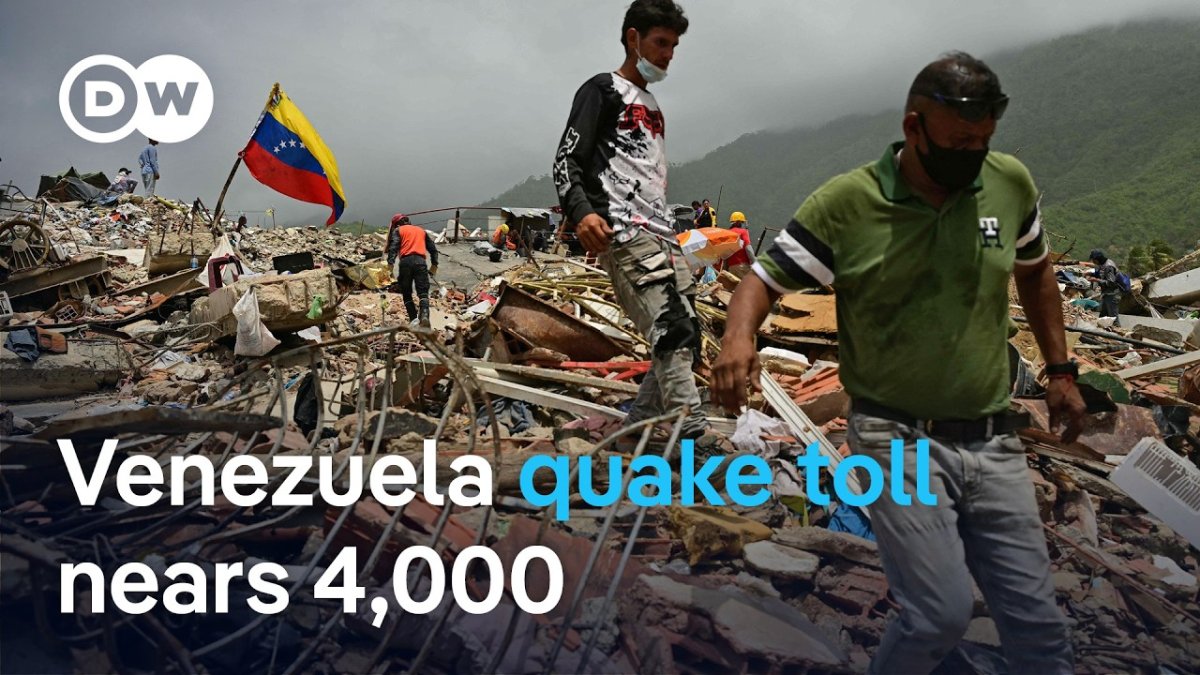
Mexico City, Mexico — More than 3,800 people have died and 16,700 have been injured in the twin earthquakes that struck Venezuela on June 24, with tens of thousands still listed as missing. The destruction is most severe in La Guaira state, where 80 percent of all buildings collapsed under the force of the doublet quake, the strongest to hit the country in 126 years.
A Catastrophe Unfolds in Less Than Two Minutes
The first earthquake, registering Mw 7.2, struck at 18:04 local time near Yumare in Yaracuy state. Just 39 seconds later, the Mw 7.5 mainshock followed near Yumare-Morón, catching residents with virtually no time to react. The shallow strike-slip rupture along the San Sebastián fault system produced shaking felt across northwestern and central Venezuela for up to two full minutes.
According to the U.S. Geological Survey, the mainshock was the most powerful in Venezuela since 1900. Over 130 aftershocks have rattled the region in the weeks since, keeping traumatized residents on edge. The Pan American Health Organization estimates 712,223 people were exposed to the highest seismic intensity levels.
La Guaira: 80 Percent of Buildings Collapsed
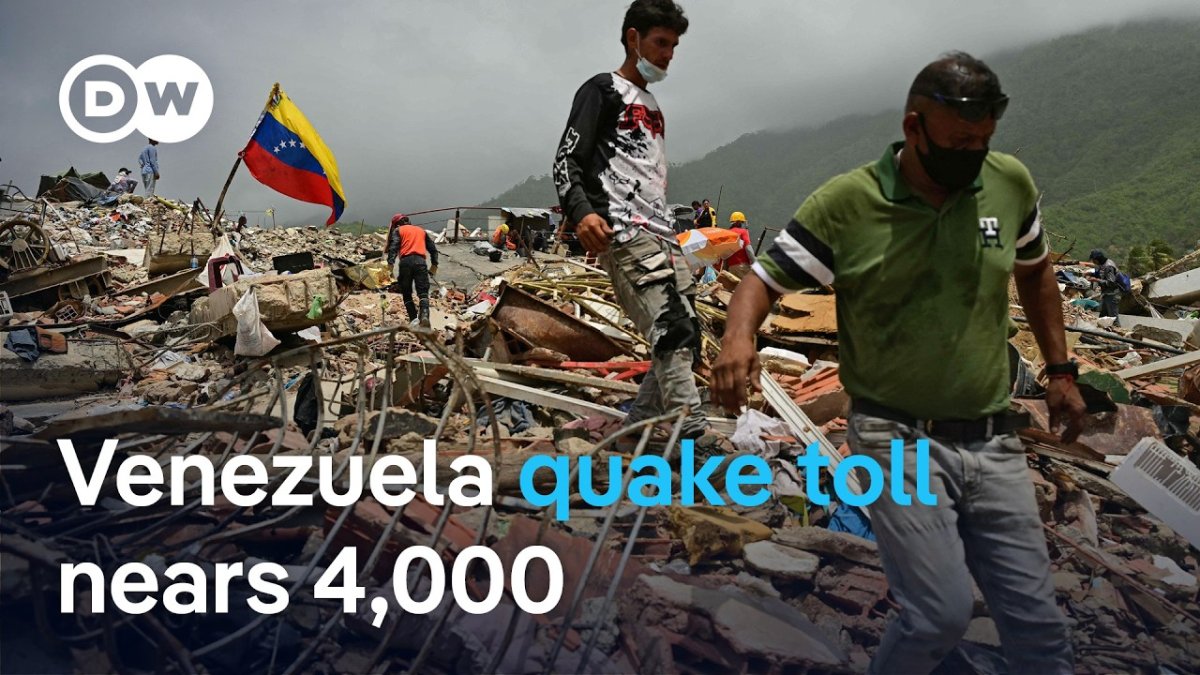
The coastal state of La Guaira bore the brunt of the destruction. Entire neighborhoods in the port city of La Guaira and the surrounding colonias were reduced to rubble. In Los Palos Grandes, Caracas, multiple apartment buildings pancaked, trapping hundreds. Forensic doctors report processing roughly 4,000 bodies, with 50 forensic workers commuting daily from Caracas to the overwhelmed La Guaira morgue.
Families continue searching through debris with bare hands, desperate to find missing loved ones. Some have paid up to $2,000 to rent cranes capable of lifting heavy concrete slabs — a sum that exhausts entire family savings in a country already facing years of economic hardship. The true death toll may be significantly higher than official counts, as search teams continue extracting victims from the wreckage.
Government Response Draws Sharp Criticism
Vice President Delcy Rodriguez has faced mounting criticism over the delayed deployment of heavy equipment and medical teams to the worst-hit areas. Local officials acknowledge that initial rescue efforts in La Guaira depended almost entirely on neighbors, community volunteers, and arriving international rescue teams rather than coordinated national resources.
Political tensions between Caracas and opposition-led municipalities have complicated the distribution of international aid. In Caraballeda, displaced families blocked major roads to demand shelter, waiting days for promised tents and supplies. The government has not released a comprehensive plan for temporary housing or debris removal, forcing organizations like Caritas La Guaira to fill critical gaps with church-based food and water distribution networks.
Mexico Leads Regional Humanitarian Response
Mexico's government responded swiftly through the Secretaría de Relaciones Exteriores, activating its embassy in Caracas and consular network across Venezuela to coordinate aid delivery. The Sheinbaum administration has emphasized regional cooperation as a pillar of Mexican foreign policy, building on the AMLO-era tradition of Latin American solidarity in times of crisis.
Mexican communities in Mexico City, Guadalajara, and Monterrey organized collection drives for clothing, medicine, and non-perishable food within days of the disaster. Families with relatives in Venezuela have reported daily calls to check on loved ones still missing in La Guaira and Yaracuy. The Mexican aid channel reflects a deep cultural commitment to mutual support across borders that has defined Mexican foreign assistance for generations.
International Organizations on the Ground
The U.S. State Department partnered with Global Empowerment Mission and Walmart to deliver relief supplies directly to La Guaira ports. Costa Rican and U.S. rescue teams joined local responders, bringing specialized equipment that the Venezuelan government lacked in the critical first days. PAHO/WHO has established field clinics treating hundreds of crush injuries and respiratory conditions from dust exposure.
UN OCHA and UNHCR are distributing shelter kits and psychosocial support materials, with a particular focus on vulnerable populations. Save the Children teams, featured in the DW News report, are working with children who lost both homes and schools. Many La Guaira students now attend makeshift classes in church courtyards while building safety assessments continue.
Economic Devastation and a Long Recovery Ahead
Direct damage estimates have reached US$37 billion, with entire local economies in Yaracuy and La Guaira effectively destroyed. Small business owners in the affected regions report losing decades of inventory and equipment in a matter of seconds, leaving most without income or any insurance coverage in a country where private disaster insurance is nearly nonexistent.
Recovery experts emphasize that rebuilding will take years, particularly in La Guaira, where four out of every five buildings must be replaced. International financial institutions have begun preliminary damage assessments but have not yet announced funding packages. Families who spent their savings on crane services to recover relatives now face the added burden of finding new shelter without resources.
What to Watch For
The weeks ahead will test the capacity of both Venezuelan institutions and international aid networks to deliver sustained relief. Mexico has signaled willingness to expand technical support for reconstruction planning, while Save the Children and UN agencies are preparing multi-year programs focused on education and mental health. The path forward depends on overcoming political barriers that continue to slow aid distribution.
For Mexican readers watching from across the region, the Venezuela earthquake is a stark reminder of shared vulnerabilities in the hemisphere and the importance of the regional solidarity networks that have already begun mobilizing. Recovery will require sustained coordination among governments, churches, civil society organizations, and international agencies for years to come.
By Rosa Martinez, Staff Writer
This article was produced with AI-assisted research and editorial support. Reporting is based on sources cited in the article.
What's Your Reaction?
 Like
0
Like
0
 Dislike
0
Dislike
0
 Love
0
Love
0
 Funny
0
Funny
0
 Wow
0
Wow
0
 Sad
0
Sad
0
 Angry
0
Angry
0
Latin America/Andes Correspondent at Global1.News. Based in Bogota, covering politics, environment, energy, and social movements across the Andean region. Passionate about environmental journalism and communities protecting their land.










Comments (0)