
Spain Wildfire Kills 12, 23 Missing in Almería — The Region's Deadliest-Ever Blaze
The Inferno That Struck Almería Folks, listen up because this one hits different. On July 9, 2026, a wildfire tore through Almería province in Andalusia, southern Spain, and it didn't just burn — it hunted. BBC News reports that by the time the smoke cleared enough to count, twelve people were confirmed dead, twenty-three still missing, and six injured. The Guardian's analysis
The Inferno That Struck Almería
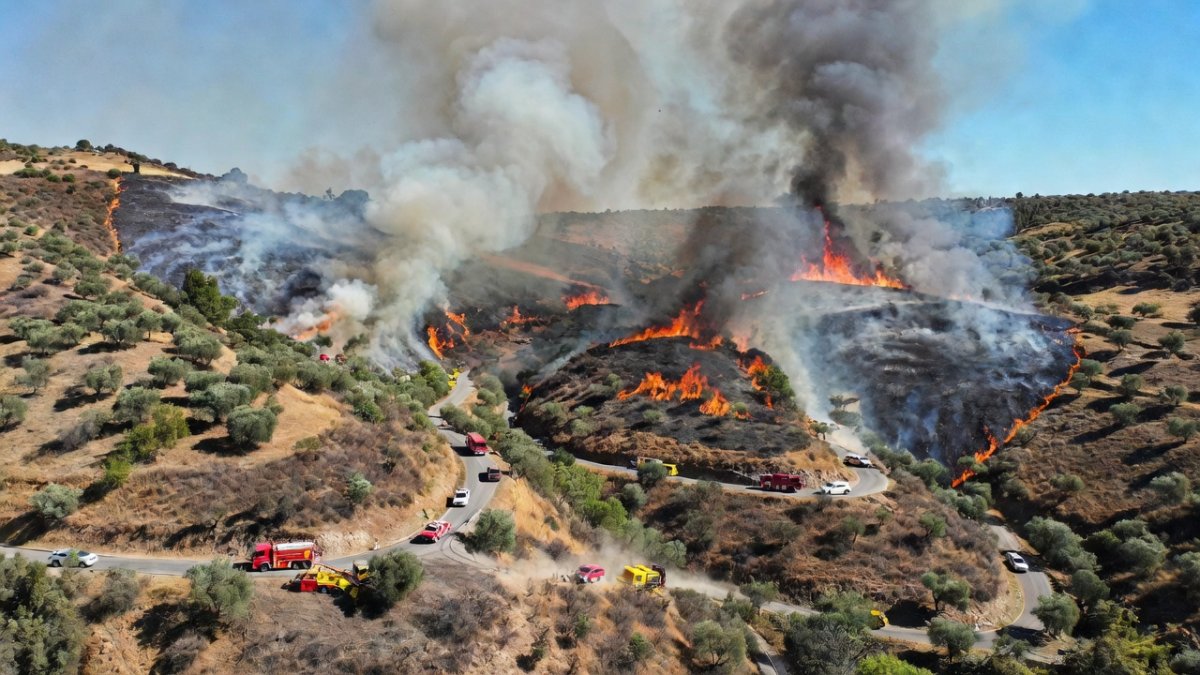
Folks, listen up because this one hits different. On July 9, 2026, a wildfire tore through Almería province in Andalusia, southern Spain, and it didn't just burn — it hunted. BBC News reports that by the time the smoke cleared enough to count, twelve people were confirmed dead, twenty-three still missing, and six injured. The Guardian's analysis notes four of those killed were British nationals. Roads turned into death traps, with multiple victims found inside their vehicles, trapped as flames closed in faster than anyone could run.
The New York Times reported that heat waves across Europe this summer have raised the risk of such fires, turning what used to be seasonal threats into year-round nightmares that hit harder and faster every time. NPR reported the fire started late Thursday July 9 and killed 12 by Friday morning July 10, a timeline that shows how little warning anyone got before the body count started climbing. The Guardian described it as "one of Spain's deadliest wildfires" and noted it broke out in Almería province during the country's second heatwave of summer, a detail that lands like a gut punch when you realize the conditions were already stacked against survival.
BBC News live coverage noted 23 unaccounted for as rescue teams continued searching, families holding their breath while crews moved through ash that still smoldered days later. Andalusia has had increasing fire risk due to prolonged drought conditions, the kind that turns every hillside into kindling waiting for the next spark. The European Forest Fire Information System recorded 2025 as Spain's worst wildfire year on record, burning 393,000 hectares nationwide. While this Almería fire is far smaller in total acreage, it has become the deadliest single fire in that province's history and the most devastating the region has ever seen by loss of life.
If you're as fired up as I am right now, you already know this wasn't some random spark. Spain was in the middle of its second brutal heatwave of the summer, and one downed power line lit the fuse. AP reports the fire ripped across more than 3,200 hectares — that's nearly 7,900 acres of forest and farmland — in hours. This is the most devastating fire the region has ever seen, according to Andalusian health minister Antonio Sanz himself.
The ignition point sat in a wooded area where that power line came down, instantly turning dry brush into a wall of flame. The blaze didn't stop at trees. It torched multiple vehicles and wiped out an entire hamlet, leaving nothing but scorched foundations and twisted metal. Those details paint a picture of destruction that moved with purpose, not chance.
How It All Began: A Power Line and a Heatwave
Picture this: dry-as-bone conditions, strong winds whipping everything into a frenzy, and one power line hitting the ground on July 9. That single failure ignited the blaze that would define Spain's summer nightmare. The flames moved with terrifying speed because the land was parched from prolonged drought and the second heatwave of 2026 had already baked the soil to dust.
Emergency services described the fire as "very complex, very fast-moving," the kind of language that tells you containment was never really on the table once it took hold. Homes in forested areas were particularly vulnerable, sitting right in the path where the flames found easy fuel and no natural breaks to slow them down. Some victims were found in vehicles on roads near Los Gallardos and Bedar, caught exactly where the fire complex in ravines made aerial water drops difficult and ground access nearly impossible.
We've seen this movie before. Last year, 2025, Spain suffered its worst wildfire season on record, scorching 393,000 hectares according to the European Forest Fire Information System. Climate scientists aren't mincing words — these fires are becoming more frequent and more lethal because heatwaves and drought are stretching longer and hitting harder. This Almería fire is the latest proof that the warnings were never exaggerations.
A study released last month put hard numbers on the human cost from those 2025 Iberian fires: two thousand people died early from toxic smoke exposure alone. Spain's second heatwave this summer pushed temperatures into territory that made every spark a potential catastrophe. The power line failure was the match, but the soaring heat and drought had already stacked the deck.
Lives Lost on Roads That Became Traps
Twelve dead. Twenty-three missing. Six injured. And the details are gut-wrenching: several victims never made it out of their cars. Roads that should have been escape routes became corridors of fire. People were caught in their vehicles as the blaze overtook them, turning what should have been a drive to safety into a final stand.
Four of the deceased are believed to be British nationals, a reminder that this disaster didn't stay local. Search and rescue operations were still ongoing as of July 11, with teams combing through the charred remains of Los Gallardos, Almocaizar, Fuente del Albarico, Los Pinos, La Serena, and El Pinar. These aren't just names on a map — they're communities that woke up to hell.
Civil Guard investigators are now working alongside rescue crews to determine exactly how roads were cut off so quickly. Some victims were burned in their cars because flames moved faster than any evacuation order could reach them. The missing count keeps families in limbo while crews sift through ash that used to be homes and vehicles.
The Massive Evacuation and Burned Land
Entire villages had to run. Los Gallardos, Almocaizar, Fuente del Albarico, Los Pinos, La Serena, El Pinar — all evacuated as the fire front advanced at breakneck speed. Over 3,200 hectares gone in what felt like minutes to those on the ground. Farmland and forest reduced to ash because the conditions were perfect for destruction and terrible for survival.
This wasn't a slow creep. The combination of bone-dry vegetation, relentless heat, and whipping winds turned the fire into a monster that outpaced containment efforts from the start. Evacuations happened under the worst possible circumstances, with people fleeing while the flames chased them down the very roads that later claimed lives.
The terrain made everything worse. The fire moved through an area packed with ravines that blocked heavy machinery from reaching the front lines and forced crews to navigate steep, narrow gullies where spot fires jumped unpredictably across dry creek beds. A hamlet was completely destroyed along with multiple vehicles caught in the path. What started as a contained spark became an unstoppable force because the landscape itself fought back against every attempt to slow it down.
Heroes on the Frontlines: Firefighters and Soldiers
One hundred fifty firefighters and two hundred twenty soldiers from Spain's Military Emergency Unit threw everything they had at this blaze, according to official deployment figures. They battled through the night and into the next day, trying to carve out containment lines while the fire refused to slow down. These are the men and women who run toward what everyone else is fleeing.
Minister Antonio Sanz didn't sugarcoat it when he called this the most devastating fire Almería has ever faced. That kind of language from an official tells you the scale is beyond anything the region has prepared for. The response was massive, but the fire's speed made every minute count in ways that still haunt the missing persons count.
The deployment included five fire trucks and dedicated medical units working in tandem with the ground crews. Even with that level of manpower, the ravines and extreme heat limited what equipment could actually reach. These responders kept going anyway, knowing the odds were stacked against them from the first hour.
Climate Change's Deadly Fingerprint
Spain's 2025 season already burned 393,000 hectares — the worst on record. Now 2026 delivers this Almería nightmare during the second heatwave of the summer. Climate scientists have connected the dots: longer droughts, more intense heatwaves, and stronger winds are creating the perfect storm for fires that move faster and kill more people than ever before.
This isn't abstract anymore. It's twelve bodies, twenty-three families still waiting for news, and thousands of acres turned to nothing. The downed power line was the trigger, but the conditions that let it explode were years in the making. Ignoring that link is how we keep ending up here.
The toxic smoke from last year's fires alone killed two thousand people early, according to that recent study. This year's heatwave simply repeated the pattern on a smaller but deadlier scale in one province. The science is no longer a prediction — it's the body count we're counting right now.
The Broader European Crisis
Spain isn't facing this alone. Other Mediterranean countries watched similar disasters unfold this summer as heatwaves rolled across the region. Greece battled multiple large fires that forced evacuations from islands and mainland villages, while Italy saw flames threaten towns near Rome and in Sicily. Portugal reported its own outbreaks that burned thousands of hectares under the same brutal temperatures.
What stands out in Almería is the speed and the body count. Other nations dealt with evacuations and property loss, but Spain's combination of downed infrastructure, ravine terrain, and second heatwave produced twelve confirmed deaths and a hamlet reduced to ash. The pattern across southern Europe shows fires arriving earlier, burning hotter, and overwhelming response teams that were already stretched thin from previous seasons.
These aren't isolated events anymore. The same drought and wind conditions that turned one power line into a killer in Andalusia showed up in multiple countries, proving the Mediterranean is now a tinderbox every summer. Spain's toll this week is the sharpest reminder that the crisis has crossed from environmental concern into direct loss of life.
What Happens Next and What You Can Do
Search and rescue continues. The missing are still missing. And Spain is staring down a future where these fires arrive earlier, burn hotter, and claim more lives unless the root causes get treated like the emergency they are. Analysis of the Almería response shows that early infrastructure hardening and real-time evacuation modeling could shift outcomes in similar terrain. Readers tracking regional alerts should cross-reference official updates from Andalusian authorities with heatwave forecasts to understand how quickly conditions can escalate. The data from this event and the 2025 season makes clear that preparedness timelines are compressing.
By Jessica Ali, Lead Anchor — Global 1 News
This article was produced with AI-assisted research and editorial support. Reporting is based on sources cited in the article.
What's Your Reaction?
 Like
0
Like
0
 Dislike
0
Dislike
0
 Love
0
Love
0
 Funny
0
Funny
0
 Wow
0
Wow
0
 Sad
0
Sad
0
 Angry
0
Angry
0

Editor-in-Chief at Global1.News. Atlanta-based journalist who cuts through the BS and tells it like it is. Lead anchor, host, and the voice you hear when the spin stops and the truth starts.












Comments (0)